
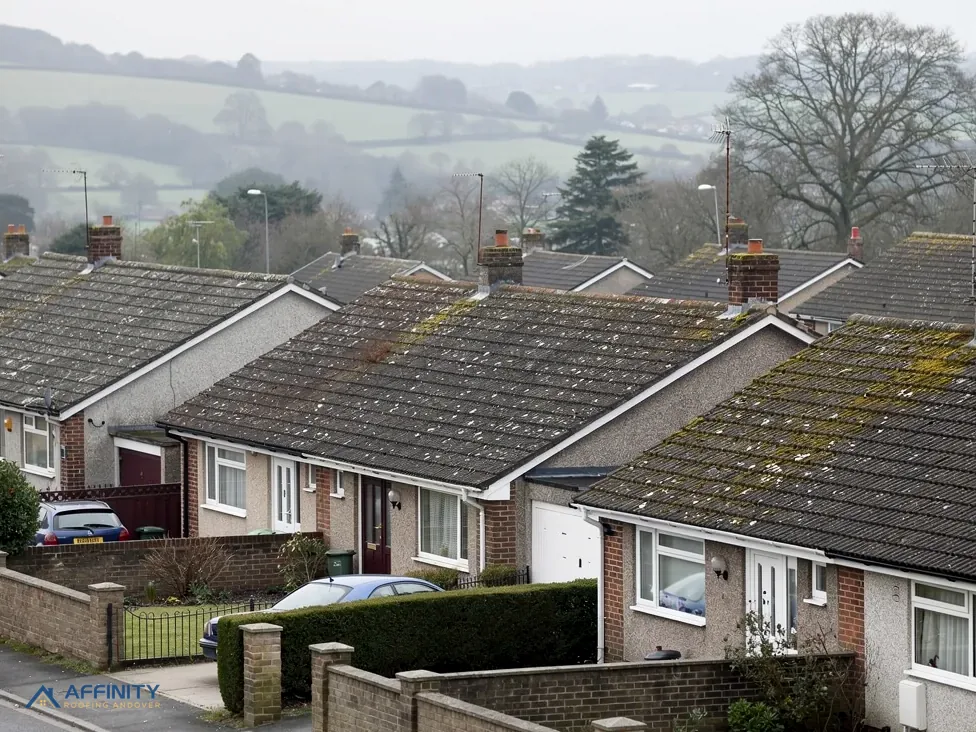
Roofers in Hursley
Round All Saints church and the lanes of old Hursley
Hursley is a Winchester district village with a Grade II* church and a conservation area. We survey each roof, share the photographs and recommend only what the roof needs.
Hursley roofs around the church
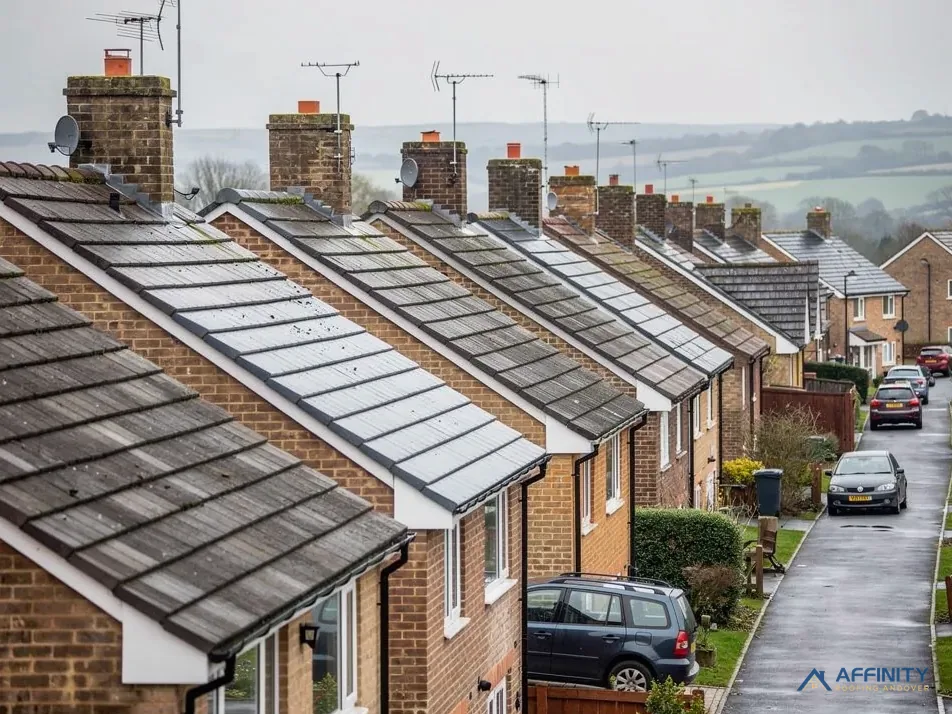
Houses by All Saints
Homes beside All Saints church, Grade II* since 5 December 1955, where a protected neighbour shapes the job.
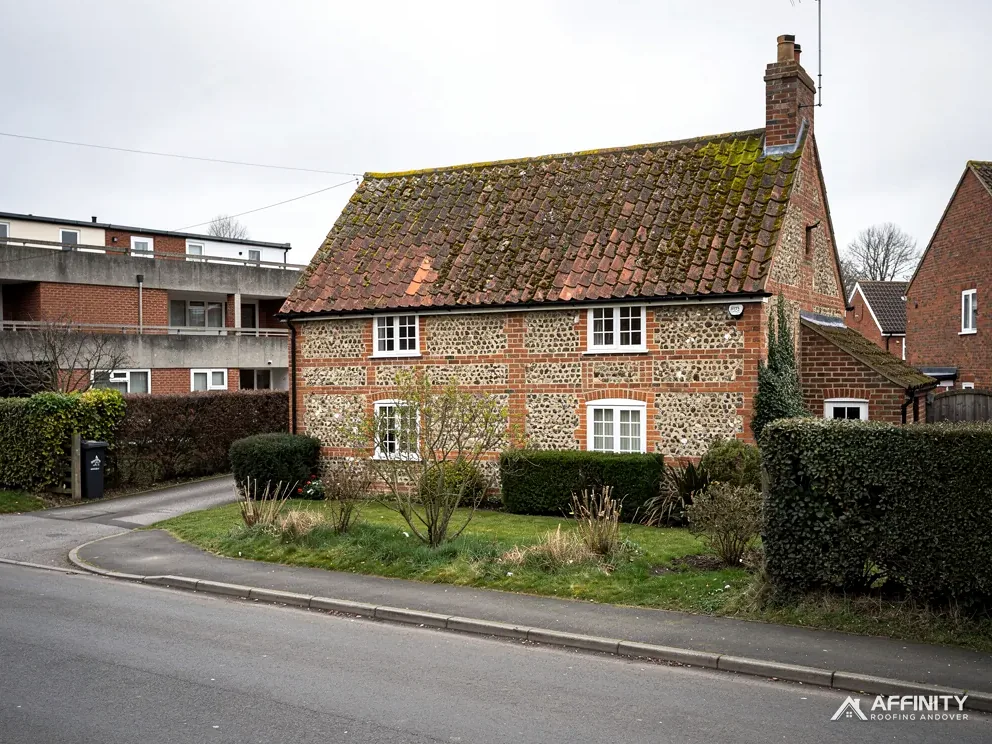
Home Close and its streets
Home Close, Grade II, listed on the church's date, with other listed houses close by.
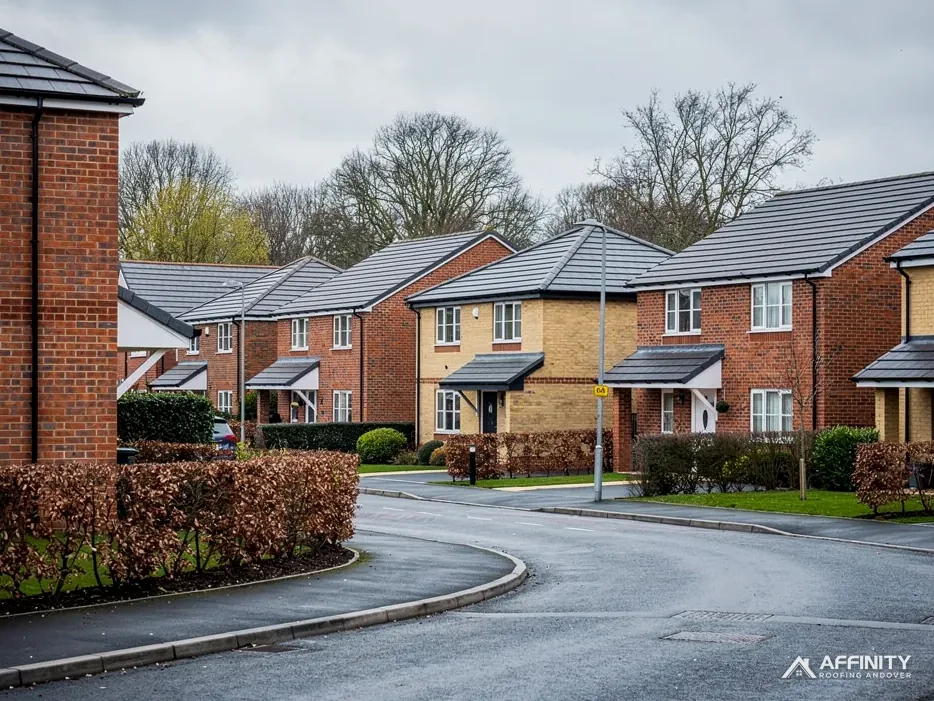
Cottages near the A3090
Houses along the A3090, where 97 and 97a are listed Grade II and a scaffold may meet the public highway.
Hursley, between Ampfield and Compton
Ampfield lies to the south-west and Compton to the east. Otterbourne is to the south-east, with Chandler's Ford, Valley Park and Allbrook a little further south.
- Distance
- 17.8 road miles south of Andover
- Planning
- Winchester City Council
- Council
- Winchester City Council and Hampshire County Council
The Hursley roof report
Local editionHursley, HampshireThatch in 1908, listings and Winchester rules
From low thatched cottages to Winchester's planners: how a Hursley roof is cleared
Hursley is 17.8 road miles south of Andover and belongs to Winchester district, not Test Valley. Inside: the village's listed buildings, Winchester's building control service and the county's scaffold licence.
Hursley's church, its cottages and its listings
Hursley is a village and civil parish of 933 usual residents, counted at the 2021 Census. In 1908 the Victoria County History described the approach from Winchester: entering Hursley, "low thatched cottages are grouped on the left and right". It paints the village as it was long ago, and it says nothing about any roof there now. If your own house does carry thatch, the thatch is work for a specialist thatcher, and a thatcher should be your first call.
What Hursley has now is a conservation area, within about 0.75 km of the village centre, and a spread of listed buildings. Historic England's list holds 34 listed buildings within about 500 metres of the centre. All Saints church holds Grade II* status (list entry 1095797), first listed on 5 December 1955. Home Close (1157201) is Grade II and has the same listing date, and 97 and 97a on the A3090 (1157272) are Grade II as well.
Winchester City Council is the planning authority, so it is the council to ask about the conservation area. Whether an Article 4 direction applies to your address is a question for Winchester City Council too. Only the council can answer that, and its own reply in hand is worth more than a guess.
Whatever the planning rules say about a covering, a listed house needs listed building consent before anyone alters what gives it character. Even for an unlisted house, a listed neighbour affects how and where we set up. Our guide to listed building roof repairs sets out how the consent route runs.
Because listed buildings sit so close together, we check the boundary before we price. A gutter that drains across a listed neighbour's land, or a chimney stack that shares its wall, changes who must be told about the work. Settling that early is easier than apologising later.
On a Hursley survey we go slowly over the details that tell a roof's story. The ridge and hip tiles show whether the roof has been repaired before. The valleys, the V-shaped channels where two slopes meet, show where water has been running. The flashings, the metal strips that keep rain out at a chimney or wall, show whether repairs were made in lead, mortar or a patch of sealant. We photograph every one of them, so that you are looking at your own roof and not at a general picture.
Where tiles must be replaced, we match size, colour and age, using reclaimed stock where the roof deserves it.
Winchester City Council and its own Building Control service
Hursley sits in the City of Winchester's area, with Hampshire County Council above it. Winchester City Council is both the local planning authority and the provider of building control: its own Building Control service, reached through the council on 01962 840 222. The service's page lists pre-application consultation among its functions, so a re-roof question can be asked before booking and not after the first tile is off.
A registered building control approver is the alternative. The register of approvers came into force on 6 April 2024, and private approvers existed before it. We tell you which route we think suits the job and why.
The opening question on a re-roof comes from the Planning Portal. Building control is not normally asked to approve a job touching less than 25 per cent of the whole building envelope and less than 50 per cent of the roof. Here the building envelope is every external surface of the house taken together, which is why re-tiling one slope sits so far inside the limit. Winchester publishes no percentage of its own for re-roofing, so we use the Portal's figures and ask the Building Control service where there is doubt.
Weight changes the picture. If the new covering would weigh 15 per cent or more beyond the old one, approval is needed under the Building Regulations, and the Portal advises having a surveyor or structural engineer check the roof before work begins. Lightweight slate replaced by concrete tile is the example. It comes up at the survey, never after delivery, so no pallet of tiles is returned.
Boundaries matter here. Ampfield, about two miles south-west of Hursley, is in Test Valley, so a neighbour there deals with a different planning authority from yours. Do not assume the route that worked for a friend in the next parish is the one that applies to you. We look up the council for your own address before we say anything about consent.
Hursley's repair jobs are often smaller than the paperwork suggests. A replaced hip tile, a rebedded ridge or a repaired valley rarely goes near any threshold. When one does, you hear it from us at the survey, with the council's number to hand if you prefer to ask for yourself, and a note of what to say.
You are given the survey photographs, a straight description of the fault, the route the job takes and one price in writing. If the route involves the council, we send the request ourselves and copy you in. A dated copy stays on your file.
“Hursley's planning and building control sit with Winchester, but its scaffold licence comes from Hampshire County Council.”
Scaffold on Hampshire highways near Hursley
For Hursley the highway authority is Hampshire County Council, even though Winchester City Council handles planning and building control. That matters for scaffold. A house at the road edge, on the A3090 or a village lane, puts scaffold poles in the highway, which calls for a section 169 licence under the Highways Act 1980. Winchester does not issue it.
Scaffolding contractors, not householders, lodge the application with Hampshire County Council, which wants a lead time of 10 clear working days. The county applies no tacit consent and grants no extensions. Hampshire County Council charges £211.90 on application for the first 2 weeks, then £72 for each further 2-week period, and expects a 1:500 plan with proposals for signing and guarding the work. Scaffold poles on a private road fall outside the licence.
The paperwork explains why we plan the sequence carefully. If a listed building consent decision is still awaited, we do not start the licence clock, because those weeks would be paid for with nothing happening. When the decision lands, we book the scaffolder and confirm the start date in writing.
A house set back from the lane, with room for a tower on its own ground, may need no licence at all. A rear extension roof is a frequent example. We tell you at the survey which situation applies, and what that means for the timetable.
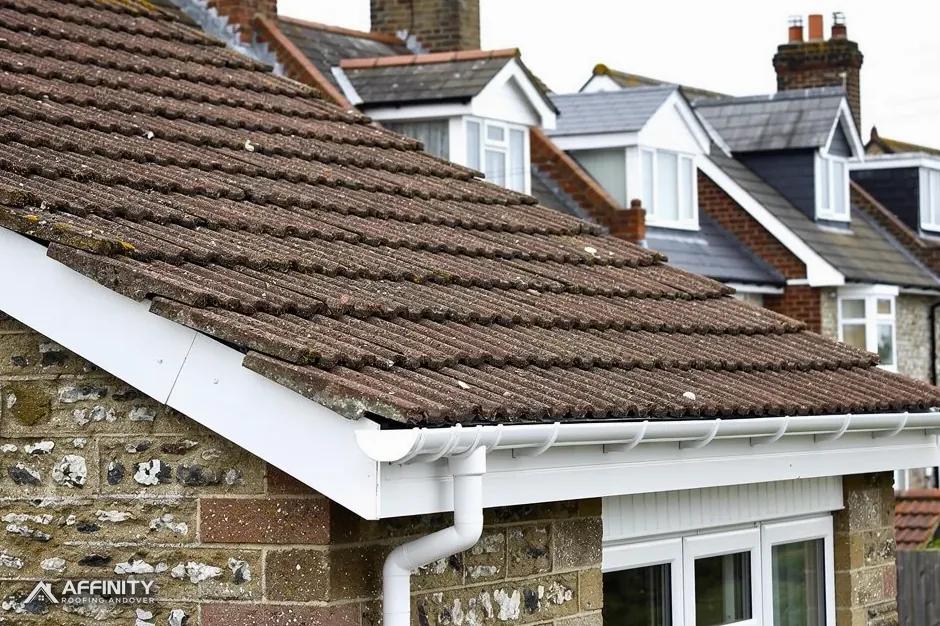
Most Hursley work falls into a few kinds. Roof repairs fix slipped tiles and failed flashings. Chimney repairs restore a stack whose mortar is crumbling. Guttering, soffits and fascias cover the roofline: the gutters, and the boards under and along the eaves that carry them.
A scaffold beside a village road has to protect people on foot. We agree with the scaffolder where the boards, netting and any covered walkway go, and how the lane stays passable while the frame is up. Skip and delivery positions are fixed in advance with you, so a neighbour's drive is never blocked without warning.
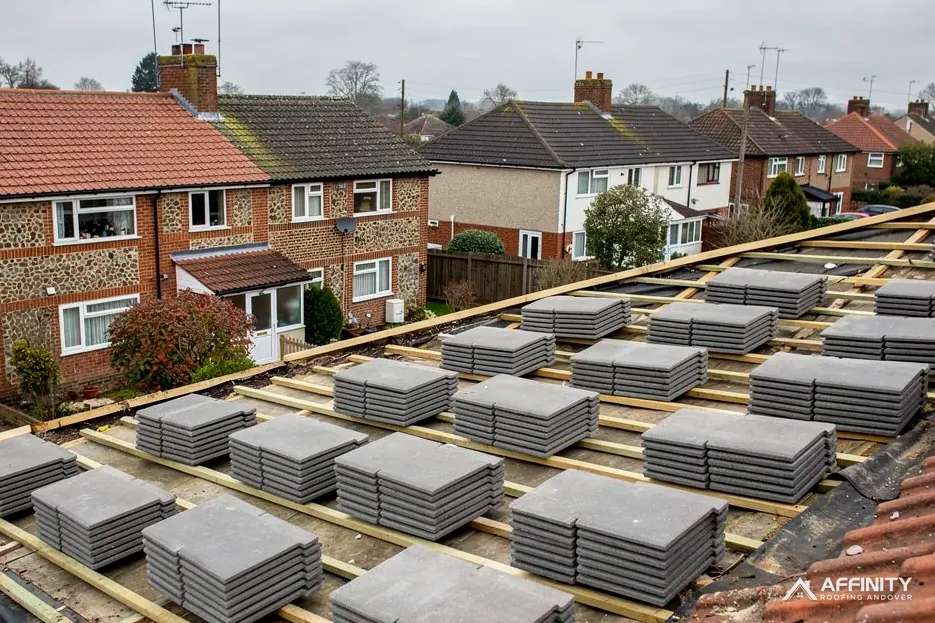
Licences run in 2-week blocks, so timing matters. We aim to have tiles, battens, underlay and lead on site before the frame goes up, and the scaffold comes down the day the work is signed off. If rain stops us, we move the start rather than stand an idle frame in the road for a fortnight.
Each job ends with a clear site, the waste gone and the photographs in your hands, a record of what was done and how the roof looked before. The pavement is swept and any boards taken off the verge, so the lane looks as it did.
Pitched, flat and roofline work in Hursley
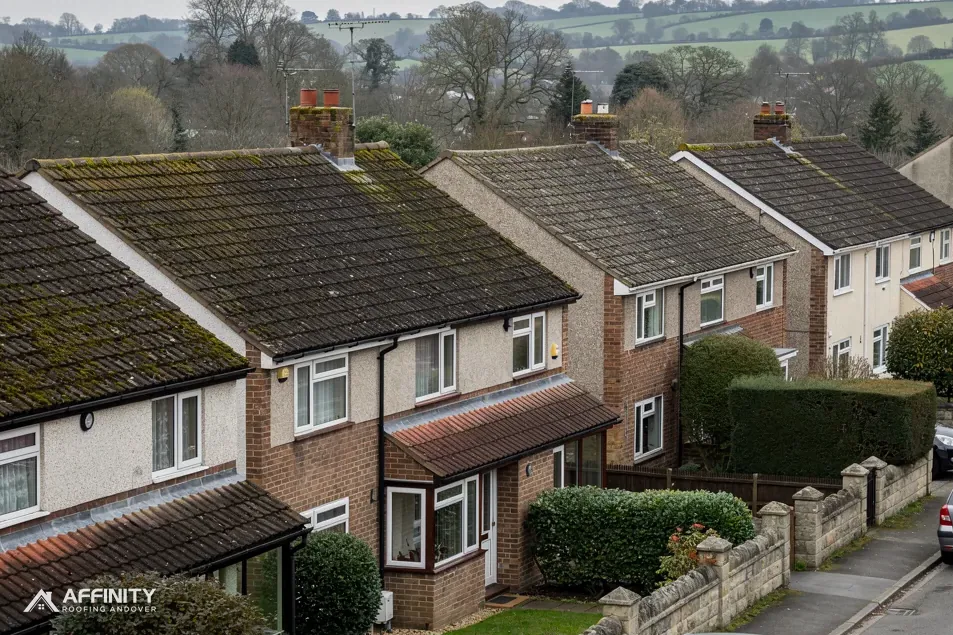
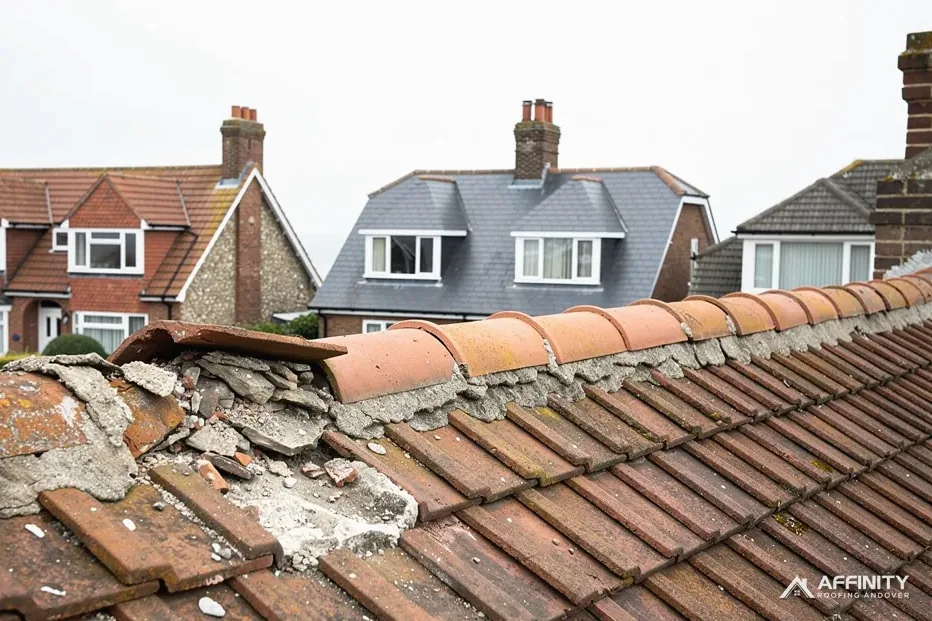
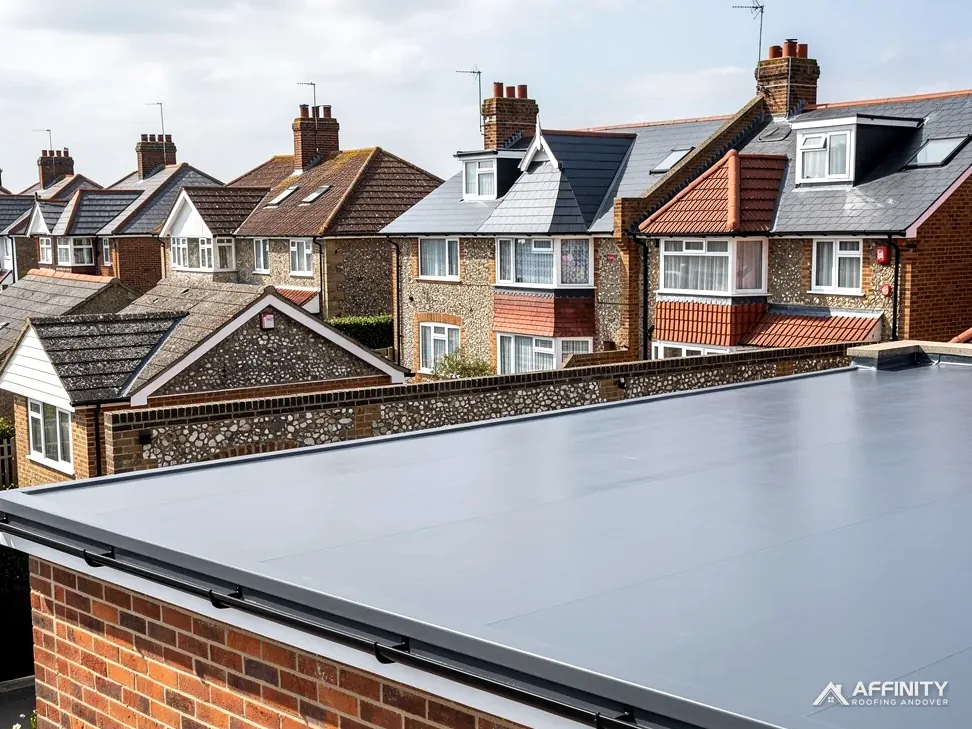
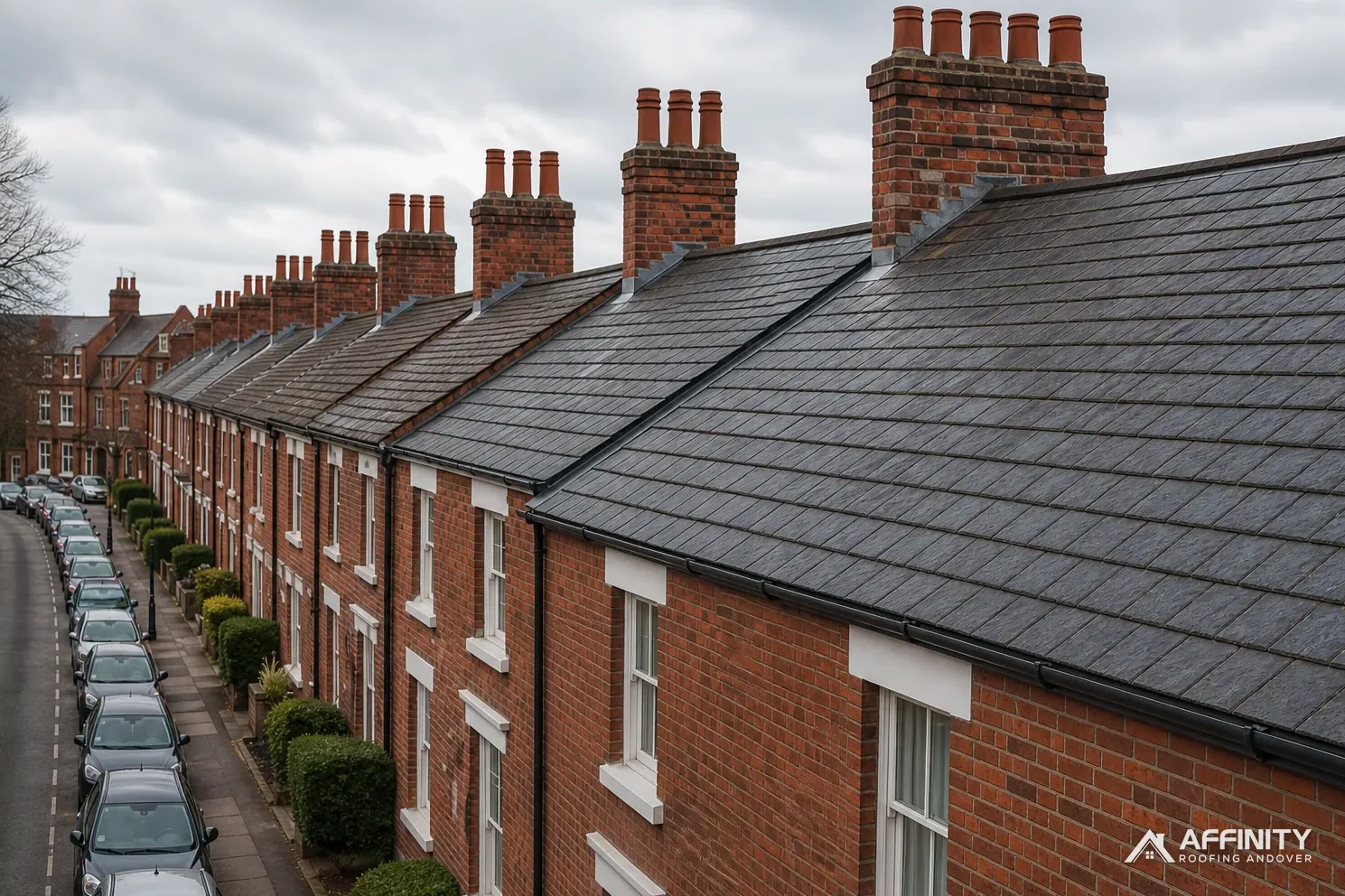
Hursley roofs: Winchester rules, listings and scaffold
My Hursley cottage has thatch. Who looks after the roof?
Thatch is specialist work, and a specialist thatcher is the right first call for the roof itself. The rest of the house is ours to survey and repair: a chimney stack, lead flashing, gutters or a tiled extension. If you tell us what covers each part, we will say what we would look at.
Is the Hursley conservation area a bar to re-tiling my house?
No, but it makes the street view of a roof a planning matter in the conservation area, so a change of tile colour or material belongs with Winchester City Council before you buy anything. Putting back the same tiles is the easiest case to argue. Ask the council whether an Article 4 direction applies to your address.
Who checks a Hursley re-roof under the Building Regulations?
Winchester City Council's own Building Control service, or a registered approver for those who want a private body. Two Planning Portal figures, 25 per cent and 50 per cent, indicate whether sign-off is normally needed, and a covering 15 per cent heavier or beyond always needs it. We ask before booking.
What does a scaffold licence cost for a Hursley house on the road?
Hampshire County Council charges £211.90 on application for the first 2 weeks and £72 for each further 2-week period. The firm erecting the frame files the form with Hampshire County Council, and the county needs 10 clear working days of notice. Scaffolding on private ground, or on a road that is not public, needs no licence. We agree the dates with the scaffolder.
Past the church: Winchester-district neighbours
Ask for a survey of your Hursley roof
Post your address with a snap of the roof. Survey first, consent check next, one written price last.
10-year workmanship guarantee, in writing.