
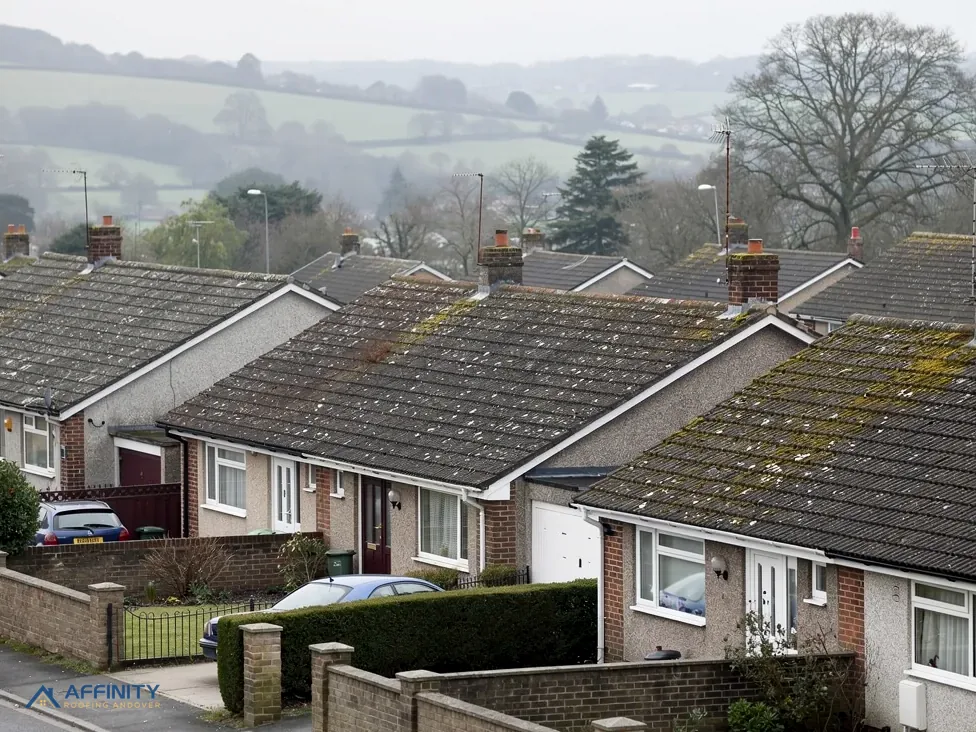
Roofers in West Lavington
All Saints, the Old Manor House and the roofs between them
West Lavington has 25 listed buildings within 500 metres of its centre, led by the Grade I Church of All Saints. Each roof is surveyed before any repair is chosen.
West Lavington roofs, from church to manor

Church of All Saints
Listed Grade I on 19 March 1962 and in Anglican use, so roof works go through the faculty system.

Old Manor House
Grade II, first listed on 19 March 1962 like the church, so any roof work begins by settling consent.

West Lavington Manor
A Grade II house among the 25 listed buildings, close to the conservation area boundary.
West Lavington and the villages along the downs
Market Lavington lies to the north-east, Urchfont further north-east, Potterne to the north and Devizes beyond it. Our surveys cover each of these villages.
- Distance
- 29.6 road miles west of Andover
- Planning
- Wiltshire Council
The West Lavington roof report
Local editionWest Lavington, WiltshireListed roofs under one council
West Lavington, Wiltshire: one council for planning, building control and the scaffold licence
West Lavington lies west of Andover, 29.6 miles by road, and Wiltshire Council handles nearly everything a roof job needs. This report covers what that council does, what the listed buildings change and how scaffolding gets licensed.
Wiltshire Council covers all three jobs
Wiltshire Council is a unitary authority, and that makes West Lavington straightforward in one respect. A single body decides planning applications, inspects building work and licenses scaffolding on the roads. The parish had 1,334 usual residents at the 2021 Census. There is no second tier above or beside the council, so a householder with a roof question has one door to knock on and a single council's web pages to read.
Wiltshire's Building Control Services sit at Monkton Park, Chippenham SN15 1ER, and inspections are booked by telephone on 0300 456 0113 in weekday office hours. That is a different team, a different number and a different set of forms from the ones we deal with on Hampshire jobs, which is why each survey opens by confirming the council behind the address. For West Lavington, the answer is Wiltshire and we read Wiltshire's pages.
For a re-roof, the Planning Portal's yardstick does the sorting. Its test lets a re-roof proceed without a building control application when it touches under 25 per cent of the envelope and under 50 per cent of the roof. A slipped-tile repair or a relaid valley falls far inside that. A complete strip does not, and on a strip we put the question to the council before any price is given.
The second trigger is weight. Where the new covering would load the roof 15 per cent or more heavier, Building Regulations approval follows, and the Portal suggests an assessment of the structure beforehand. Heavy concrete tile in place of natural slate is where owners meet this rule, so it pays to ask before ordering anything.
Some owners prefer a registered building control approver, a private option under a registration regime that began in April 2024. You get the body's name in writing, along with the pictures from the survey, before a scaffold is booked.
Houses on the village street, on side lanes and on private drives each pose a different access question. A scaffold on the street shares it with traffic and parked cars, while one on a back lane may stand wholly on private land. Those differences change the plan and the paperwork, and we sort out which applies at the survey and not on the day. A short note of the access plan goes into the written price, so the scaffold's position is agreed before anyone arrives.
Planning is a separate matter, because it turns on the house itself. Our guide to planning permission for roof work explains the position of houses, flats and listed homes, and is yours to read before we arrive.
All Saints, the manor houses and the conservation area
The Church of All Saints is a Grade I building (National Heritage List entry 1198014), first listed on 19 March 1962. The Old Manor House is Grade II (entry 1035894) and carries the same listing date, while West Lavington Manor, also Grade II, is entry 1035895. Historic England's list shows 25 listed buildings in a 500 metre radius of the village point, so protected roofs and chimneys are part of the everyday street scene.
The West Lavington and Littleton Panell conservation area lies within about 0.75 km of the centre, using the boundary that Wiltshire Council has given the national planning data. In an area like that, the outward look of a roof gets extra care, and a change of shape needs more than a repair would. Wiltshire Council can say whether an Article 4 direction reaches your road, so ask its planning team. Should it do so, mention it when you book and we will take the extra pictures an officer tends to want: the roof from the street, the eaves and the chimney.
Anyone altering the character of a listed house must first obtain listed building consent from Wiltshire Council. Our starting point is repair in kind: tiles or slates of the same dimensions and colour, ridge and hip detail copied from what is there, and lead in the weight already on the roof. Photographs of the roof as it stands let the planning officer see the whole picture before any decision.
A church is dealt with differently. All Saints still holds Church of England worship, which puts its roof under the faculty system and outside listed building consent. Catholic, Methodist and URC buildings follow their own denominations' procedures and Baptist chapels the Baptist Union's scheme, but a church that has closed, or a meeting house of the Quakers or Unitarians, goes back to listed building consent.
On the older houses the survey looks hardest at what lies beneath the covering. Battens that have gone soft, underlay that has torn and flashings that have lifted decide the verdict far more than a handful of slipped tiles do. Each of these shows up in the pictures we take, and the written price follows from what is really there.
That evidence also protects you at a sale, when the buyer's side can read what was done and why, with no one needing to remember. It is the sort of file that settles a query in a minute. West Lavington Manor and the Old Manor House show how varied the listed houses are here, so we never assume that the covering on one house tells us what lies on the next.
“In West Lavington one council answers for planning, building control and the scaffold licence.”
The MiPermit scaffold licence and the work
A scaffold that obstructs a road or pavement comes under section 169 of the Highways Act 1980, which puts the licence in the highway authority's hands. In West Lavington that authority is Wiltshire Council, and on its own page it is the firm supplying the scaffolding that applies, through the MiPermit portal. You do not touch the form. Wiltshire Council charges according to notice given: £143.80 if notice exceeds three working days, £164.70 if it does not. Each licence lasts 28 days from the start.
That is a fee set by notice, not by the week, and it differs from the Hampshire arrangement. We quote each council's rule in that council's own terms and never set them side by side as if the units matched. Poles that stand wholly on private land need no highway licence, and the survey tells you which case your house falls into.
Consent decides the calendar. If a listed building decision is outstanding, we hold off booking the scaffold, since a licence lasts only 28 days and idle poles use that time up. The start date is fixed only when the consents are in hand.
The everyday jobs are those older stone and brick houses call for. We take roof repairs when a tile has slipped or a valley has split, chimney repairs where pointing or flashing has failed, and lead roofing on porches, bay roofs and gutters. Each begins with a survey, with pictures of what the roof is really like, and one written price follows.
Lead is the traditional answer for valleys, abutments and chimney flashings on old roofs. Lead flashing can last for over 80 years (MyJobQuote, September 2026), so on a house of this age we check for shifting masonry or weak fixings before blaming age alone. We look for the cause before relaying it, otherwise the same leak returns.
On a listed house we would rather repair than replace, and we explain what each choice involves. Where a roof is worn out, the pictures of the battens and underlay show it, and you hear the options without any push towards the bigger job.
Waste is carted off and the site left clean. You are told what happens on each day of the work, so nothing arrives as a surprise on the drive or in the garden. If rain is forecast on a stripping day, the work waits, and a roof is not opened up further than can be covered again by evening, so the house is never left open overnight.
Jobs we price in West Lavington


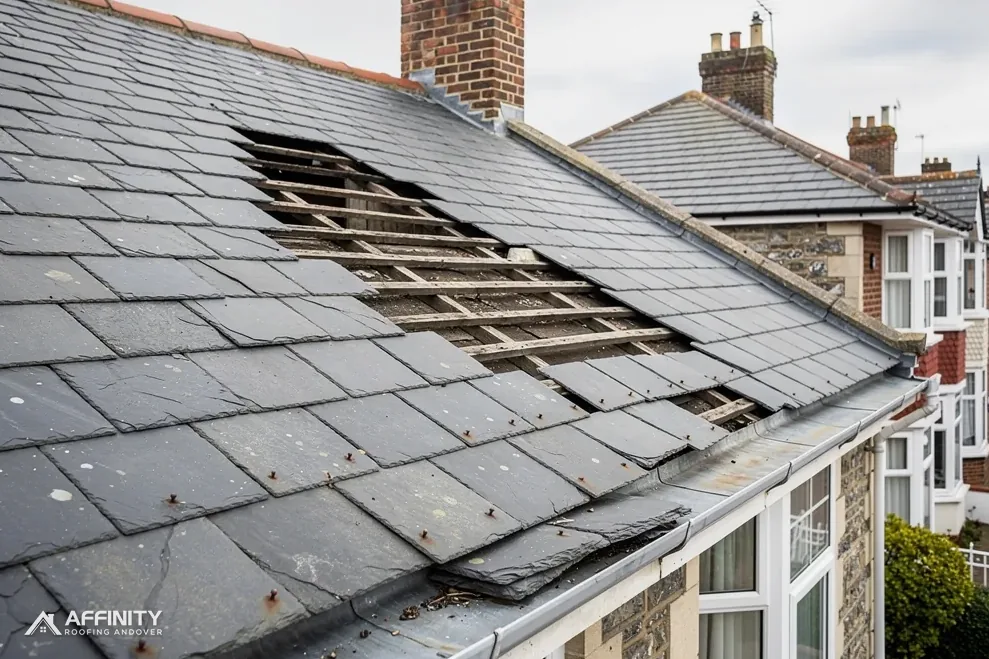
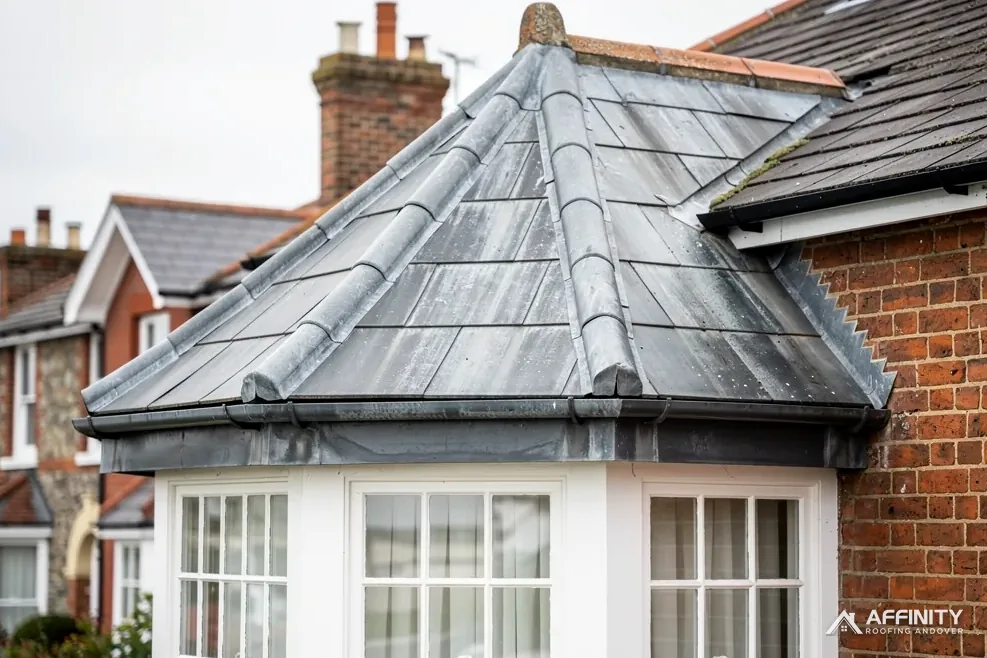

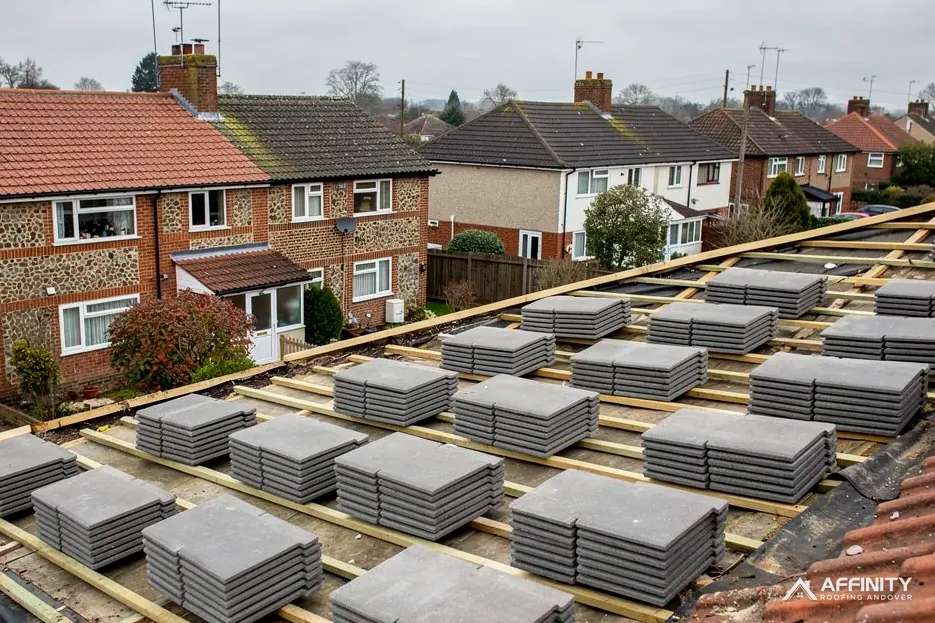
West Lavington roofs: church, manor and licence
Can a West Lavington house near All Saints be re-tiled without consent?
If your house is listed, you need listed building consent before changing its character. The church and the Old Manor House show how many listed neighbours sit here. Matching repair is the usual starting point. Wiltshire Council's planning officers will tell you for your address, and we photograph the roof so they see what is there.
Who do I ring about building control in West Lavington?
The Building Control Services team at Monkton Park, Chippenham SN15 1ER (telephone 0300 456 0113) handles inspections and support. A re-roof that stays below a quarter of the envelope and half of the roof normally goes ahead with no application, though a covering that adds 15 per cent or more in weight does require approval. We tell you which case you are in at the survey.
What does a scaffold on the road cost in West Lavington?
Wiltshire Council's licence fee depends on notice: £143.80 where the scaffold firm applies with more than three working days to spare, and £164.70 where it applies later. The scaffolding firm applies to Wiltshire Council through the MiPermit portal, and each licence lasts 28 days. That is the council's charge for the licence only. Poles kept entirely on your own land need no highway licence.
Does the Littleton Panell conservation area reach my West Lavington road?
The conservation area sits within about 0.75 km of the village centre, but only the council's map shows which side of the boundary your road falls on. Ask Wiltshire Council's planning team about it, and ask whether an Article 4 direction applies. Our photographs let the officer see the covering as it is.
Have your West Lavington roof surveyed
Give us the address and attach a picture. First the survey, then the Wiltshire Council route, then one written total.
10-year workmanship guarantee, in writing.