
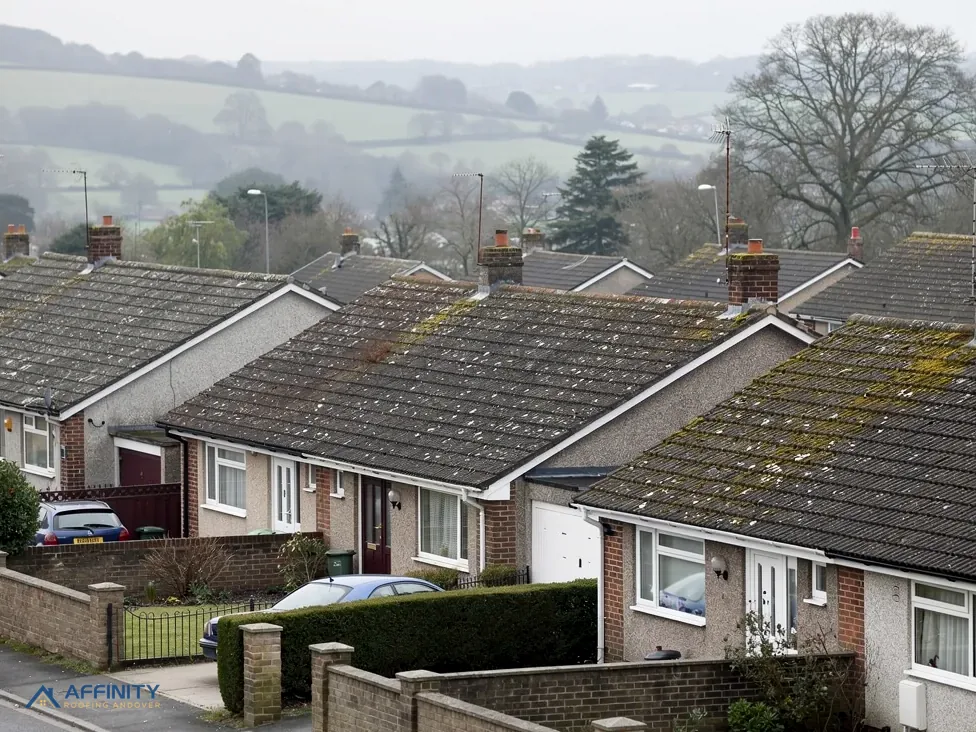
Roofers in Potterne
Porch House, St Mary's and a High Street of listed roofs
Potterne counts 47 listed buildings inside a 500 metre radius, and two are Grade I. Roofs here get a survey first and a repair that fits second.
Potterne roofs, Grade I to terrace
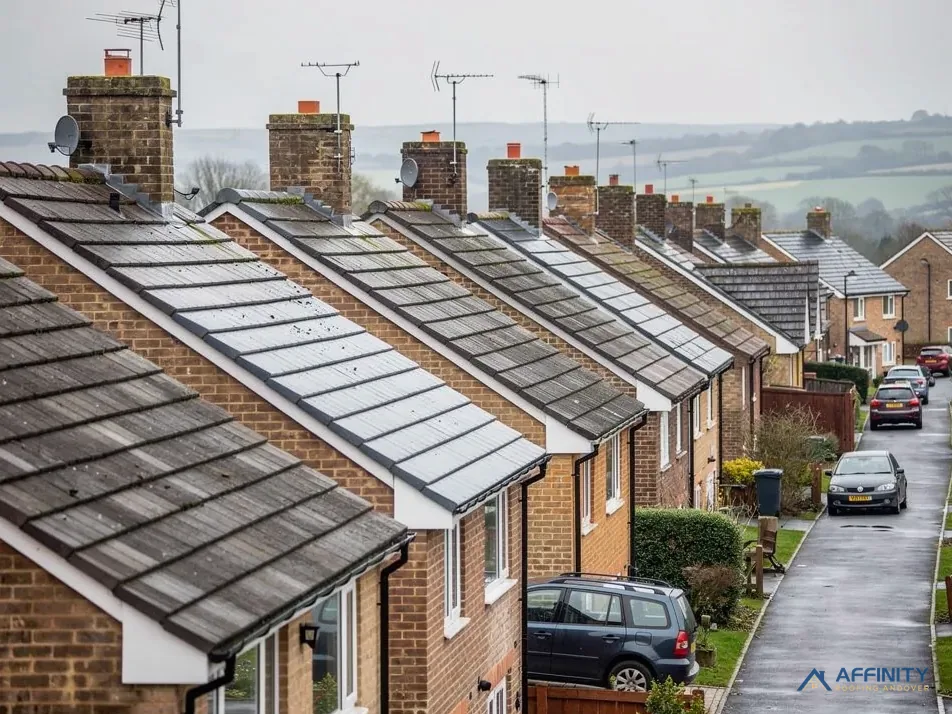
Porch House
Grade I, first listed on 19 March 1962, so any work on its roofs goes through listed building consent.
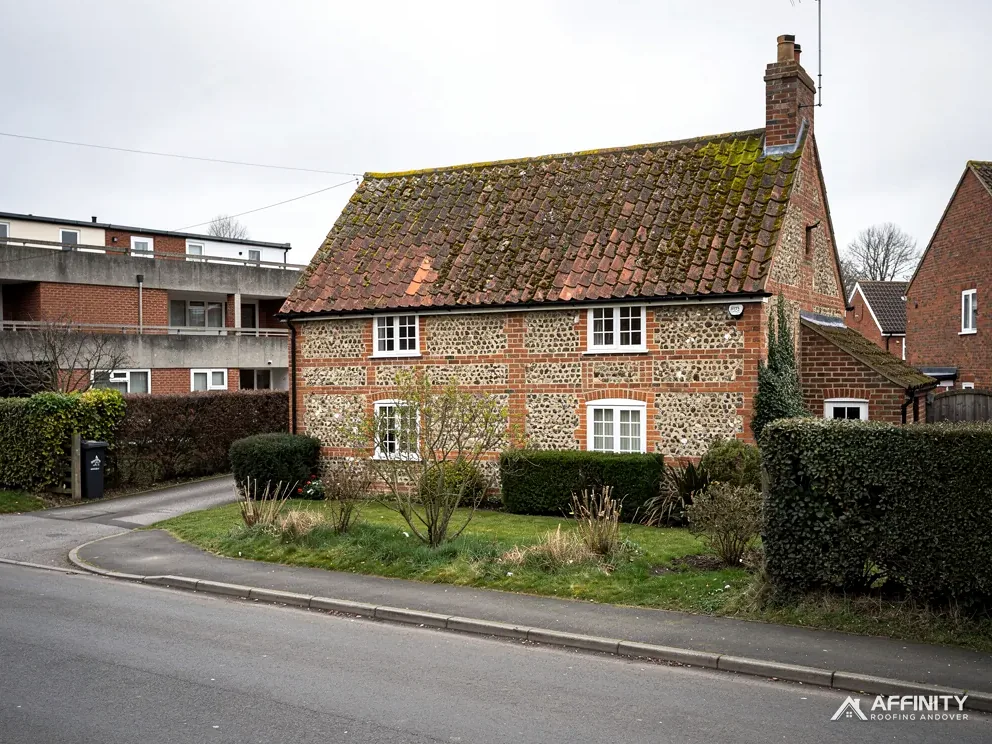
Potterne's parish church
A Grade I Church of England church in use, where roof works are authorised by faculty.
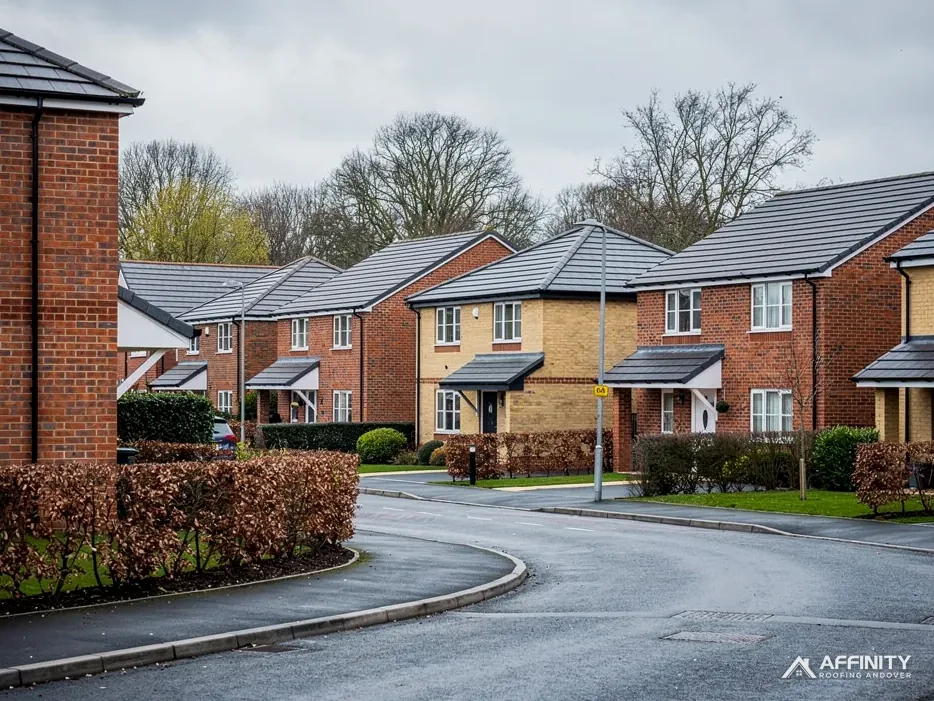
High Street houses
Numbers 7 and 8 and number 9 High Street are each Grade II listed, in a street of close neighbours.
Potterne between Devizes and the downs
Devizes lies just to the north, Rowde to the north as well, Urchfont to the east and West Lavington to the south.
- Distance
- 29.7 road miles west of Andover
- Planning
- Wiltshire Council
The Potterne roof report
Local editionPotterne, WiltshireForty-seven listed neighbours
Potterne's listed streets: what Grade I neighbours mean for a roof, and how we proceed
Potterne lies west of Andover, 29.7 miles by road, and its centre is thick with protected buildings. This report covers the listings, the three roles Wiltshire Council plays and the scaffold licence.
Forty-seven listings in a 500 metre radius
Historic England's list shows 47 listed buildings within 500 metres of the Potterne village point. For a village of 1,543 people at the 2021 Census, that is a lot of protected fabric, and it shapes how we treat every roof. Two are Grade I: Porch House (National Heritage List entry 1273182), and the Church of St Mary (entry 1258968). Both were first listed on 19 March 1962. Numbers 7 and 8 High Street (entry 1258978) and number 9 (entry 1258979) are Grade II.
The Potterne conservation area lies within about 0.75 km of the centre, on the boundary Wiltshire Council draws. Only the council's map shows which side of that line your house is on. We show you how to find out, and we ask the council on your behalf if you prefer.
The consent rules differ according to what is listed. St Mary's still serves a Church of England congregation, so its roof repairs need a faculty and not listed building consent. If your own house is on the list, you need listed building consent from Wiltshire Council before changing its character, and ordinary permission may be needed too. A house beside a listed one is a different case again: it needs no listed building consent of its own, but a poor repair can still look wrong next door.
Article 4 is the other question for your address, and it goes to Wiltshire Council: does an Article 4 direction apply to my road? We ask it as a matter of routine, and pass the reply on to you with the survey pictures.
On a listed building, our approach is to repair what is there. We photograph the covering, count the tiles or slates that can stay, and find matching material for the ones that cannot. Reclaimed slate or hand-made clay tile of the right size is the usual answer on an old roof, and the officer at the council can see for themselves what we propose.
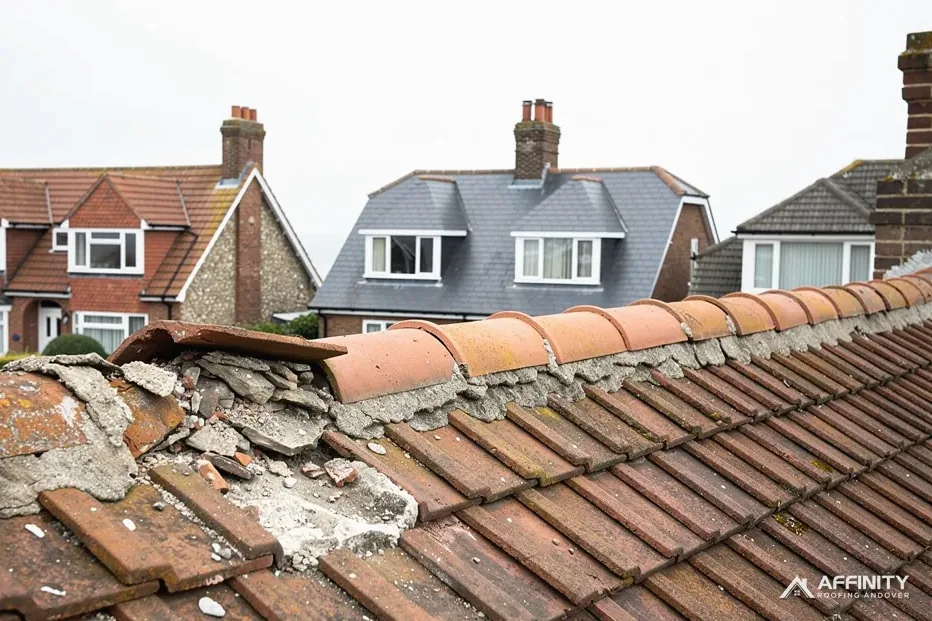
A listed roof also tells its own history. One that has stood for generations may have been repaired many times in different materials, and a survey reads those layers: a patch of machine-made tile in a field of hand-made, a cement fillet where lime mortar once ran, a bitumen strip where lead flashing used to be. Each tells us what has failed before and why, which helps us choose a repair that will last this time. On a High Street of shared walls, a tile that slips on one roof can let water into the house next door, so we look along the whole run.
Wiltshire Council: planning, building control and the highway
One council, Wiltshire Council, does three jobs for Potterne. It decides planning applications, operates its Building Control Services from Chippenham (Monkton Park) and issues licences for scaffolding on its roads. The number for inspections is 0300 456 0113, answered Monday to Friday, 9am to 4:30pm. Each job has its own team and its own web pages, and we tell you which of the three your roof needs rather than leave you to find out in a queue.
On building control, the Planning Portal's thresholds are our guide. A re-roof falls outside building control's net when it touches under 25 per cent of the building envelope and under 50 per cent of the roof. In practice a repair, a section of re-ridging or a replaced valley goes ahead, while a full re-cover is raised with the council first.
Weight can override size. A replacement covering that adds 15 per cent or more to the roof's loading puts Building Regulations approval on the table, whatever the size of the roof, and the Portal suggests asking for a structural opinion first. Heavy concrete tile on a frame built for lighter slate or thin clay is the example to avoid, and on an older house it needs real care.
A private firm on the register of building control approvers can stand in for the council; the registration regime began on 6 April 2024. We set out both routes, say which one your job needs and put the answer in writing before a scaffold date is fixed.
The planning side depends on the property. Our guide to planning permission for roof work covers houses, flats and listed homes. A roof on a listed building or in the conservation area is more likely to need an application than one on a modern house elsewhere, so a short call to the council early can save weeks.
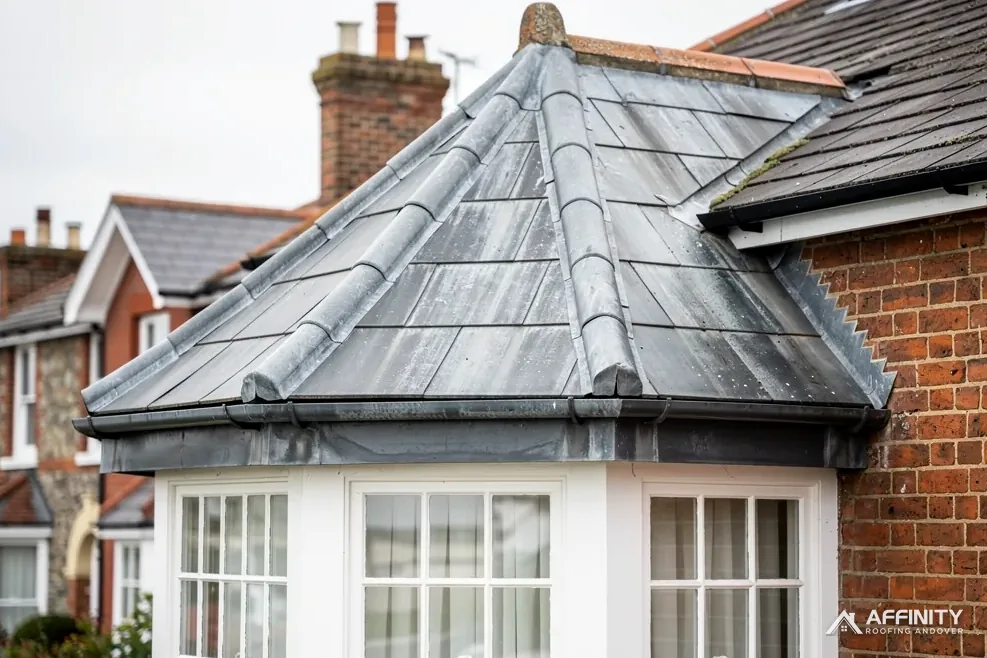
Potterne roofs show their age in particular places. Valleys between a main roof and an extension collect leaves and fail at the joints. Verges where the mortar has crumbled let wind lift the end tiles, and chimney flashings loosen as the stack moves. These are the places we photograph first, working down from the ridge, because they explain many leaks and seldom need the whole roof touched. The pictures go into the written report, so you can point to the exact spot when the work is discussed.
We treat the survey as the point at which these questions get answered, not something to be put off until the quote is accepted.
“Potterne's centre holds 47 listed buildings inside 500 metres, two of them Grade I.”
Source: Historic England NHLE radius search around Potterne
Scaffold, hoarding and the parking bay
Wiltshire Council licenses scaffolding that stands on the highway, under section 169 of the Highways Act 1980. Its page sets out several points that matter on a village High Street. Each site needs a licence of its own, and hoarding is licensed separately from scaffolding. If the scaffold takes over a marked parking bay, a parking bay suspension is needed as well. And £292.50 is the late fee where scaffolding is found standing unlicensed.
Applications to Wiltshire Council go through the MiPermit portal and come from the scaffolding firm, so the paperwork stays off your desk. Wiltshire Council's fee follows the notice given: £143.80 where notice runs past three working days, £164.70 where it falls short. All licences are valid for 28 days, so a job that stalls can outrun it. We therefore book only when consents and weather allow the work to run through.
High Street frontages are the awkward case. A scaffold in front of a row of listed houses can narrow a pavement and take a parking space, and a neighbour has every right to ask why. We tell the neighbours who will be affected and give the dates, which keeps the street goodwill that a long job needs. A yard or drive owned by the householder keeps the scaffold off the highway, so no highway licence is wanted.
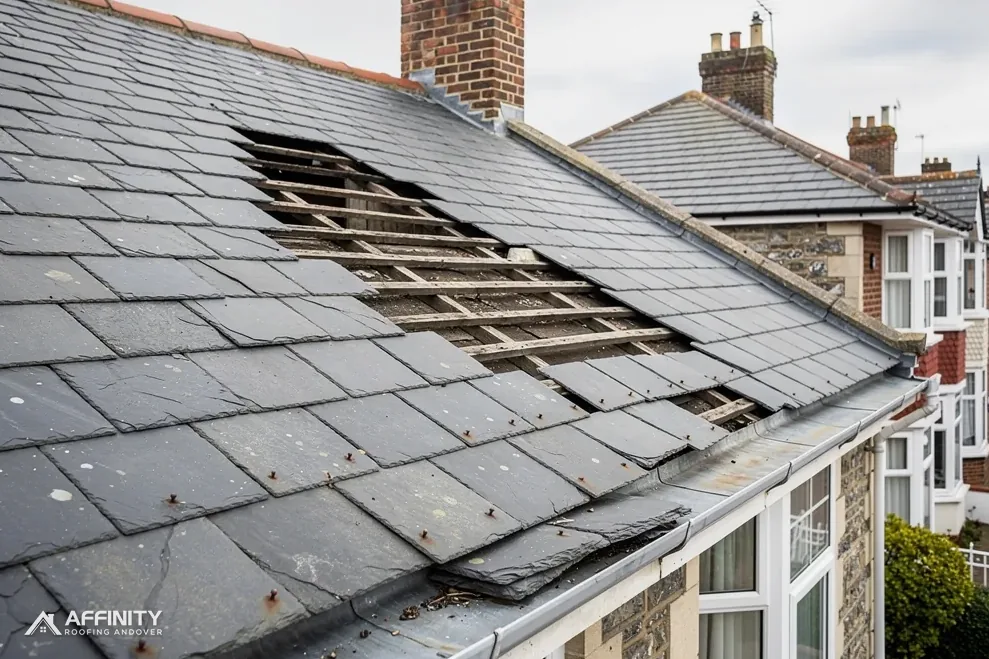
The work itself is the everyday kind. We take roof repairs after slipped or cracked tiles, slate roofing where an older slate roof has lost slates or nails, and chimney repairs where pointing and flashing have failed. A survey with pictures opens every job, and a single written price follows.
Timing in a village street is about courtesy as well as paperwork. Deliveries of tile and lead arrive when the lane can take them, skips are sited with the neighbours in mind, and the crew starts when the street is awake. A listed terrace shares walls, gutters and sometimes chimneys, so a repair on one house can affect the next. We tell both owners what is planned and where the work stops. On a rented or shared property the owner of the roof is not always the person living beneath it, so we ask who the owner is at the first call. The consent, the scaffold booking and the price then go to the person who can agree them.
Where a repair will do, you will hear that. Where a covering has finished its life, the battens and underlay in the pictures say so, and the choice stays with you. Waste is taken away, and the site is left tidy.
Potterne roof repairs and more
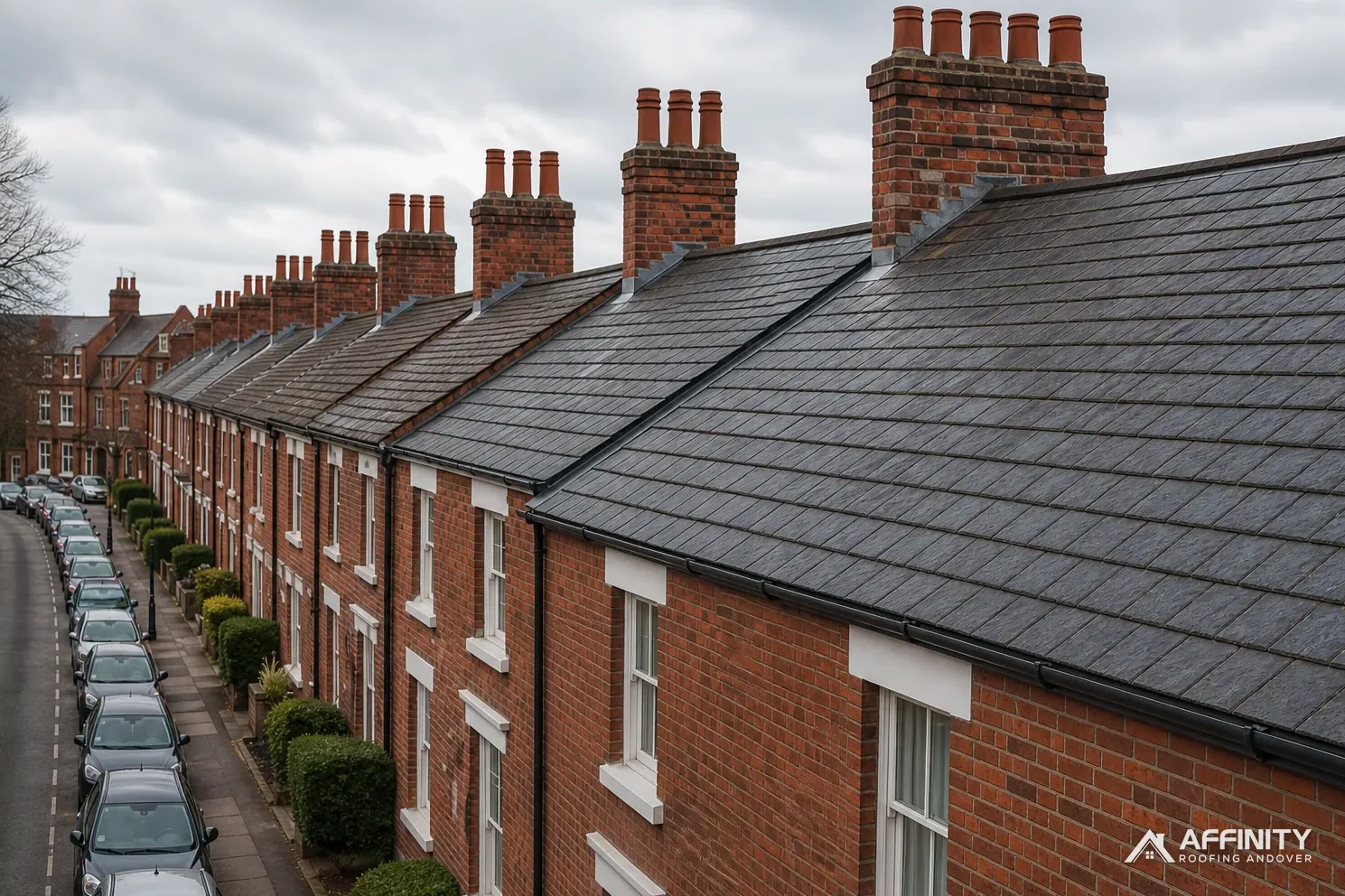
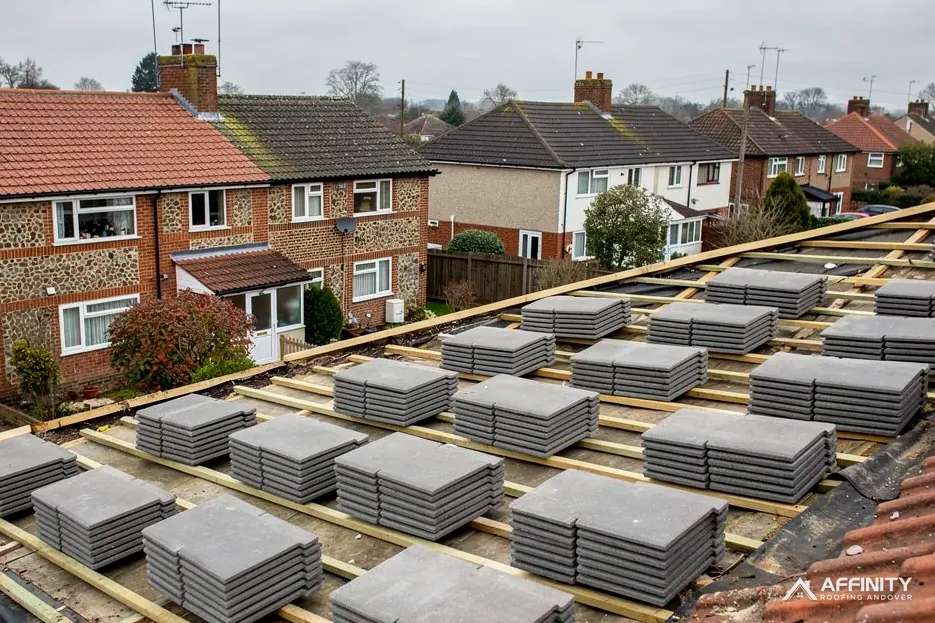
Potterne roofs: listings, church and the High Street
My Potterne house sits beside Porch House: do I need listed building consent?
Not for your own house unless it is listed too. Porch House is Grade I, and Historic England records 47 listed buildings near the village centre, so confirm yours on the National Heritage List. A neighbour's listing does not bind you, though a poor repair can look wrong beside it, and Wiltshire Council's planning team can confirm. Ask us for the entry number if you are unsure.
How do repairs to the Church of St Mary get approved?
St Mary's is Grade I and still in Church of England use, so its works need a faculty, not listed building consent. The parish takes that to the church authorities, and our part is to supply a description and pictures of the roof. Listed building consent does not apply to an Anglican church in worship use, which surprises some owners.
What if a scaffold takes over a parking space on the High Street?
Wiltshire Council requires a parking bay suspension when scaffolding occupies a marked bay, on top of the scaffold licence, and charges a late fee of £292.50 where scaffolding goes up unlicensed. Wiltshire Council takes that application through MiPermit from the scaffolding firm. We tell neighbours the dates, so nobody finds a bay blocked without notice.
Does the Potterne conservation area limit re-tiling?
A repair, or a new covering that copies the old, proceeds as it would in any village. Altering the roof's form, a dormer for instance, meets stricter planning rules inside a conservation area. The council's map shows whether your road is inside the boundary, and the planning team can answer in writing. We send photographs of the existing covering with the question.
Potterne's neighbours around Devizes
Survey your Potterne roof before any repair
Hand over the postcode and a picture. We survey, check listing with Wiltshire Council, then quote one written total.
10-year workmanship guarantee, in writing.