
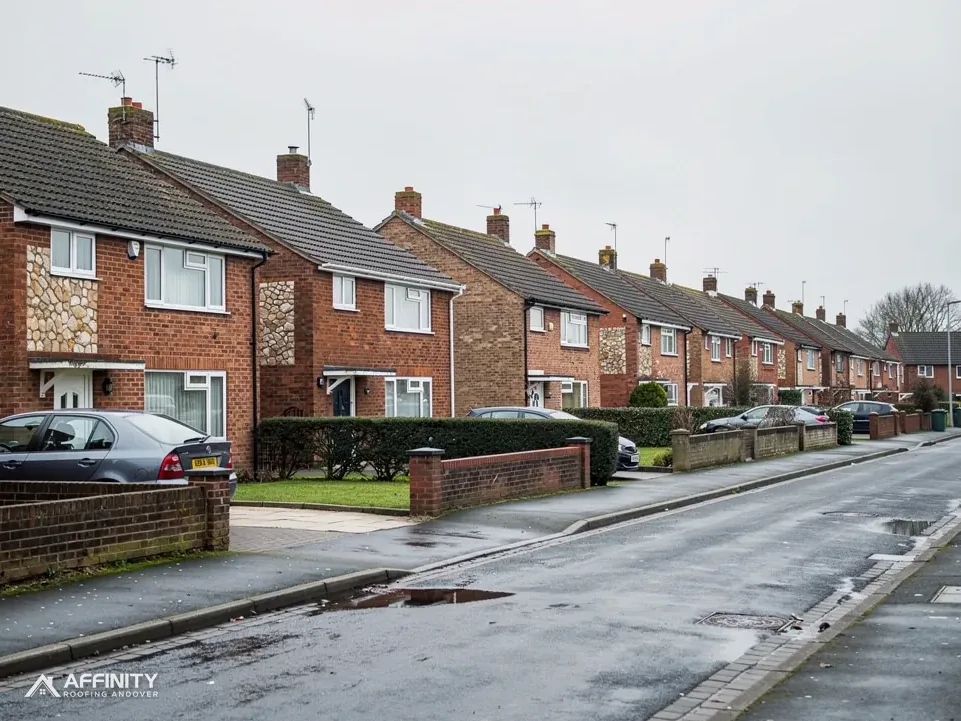
Roofers in Urchfont
From the Grade I church to Urchfont Manor and Mulberry House
Fifty-two listed buildings stand within 500 metres of the middle of Urchfont, including a Grade I church. A survey and photographs come first on every roof, however small the job.
Urchfont roofs, from church to manor farm
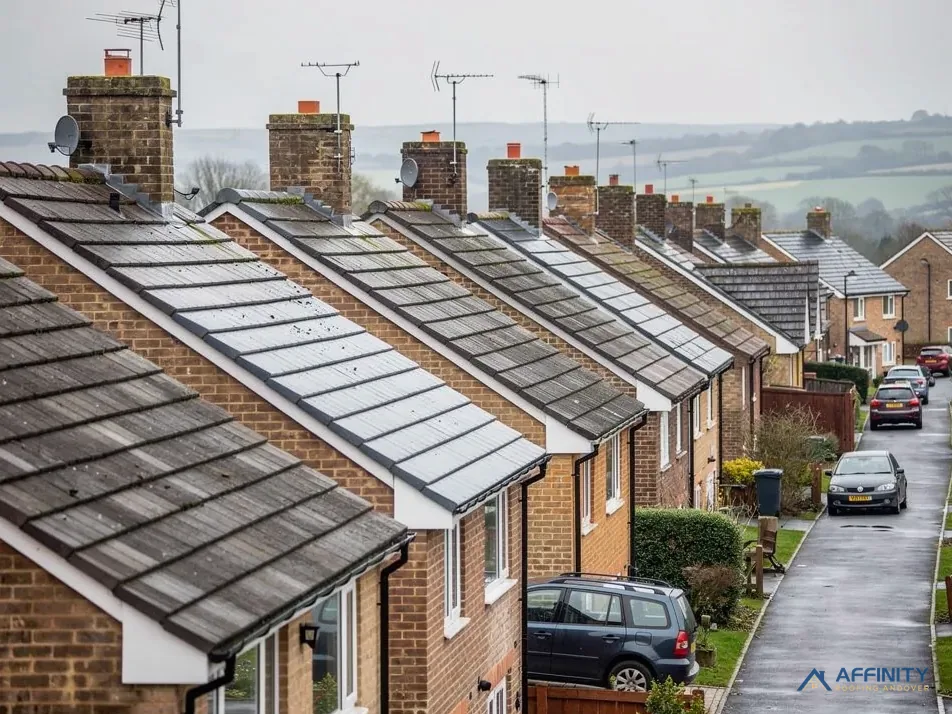
Top-grade church
Dedicated to St Michael and All Angels, the village's parish church has carried Grade I since 19 March 1962.
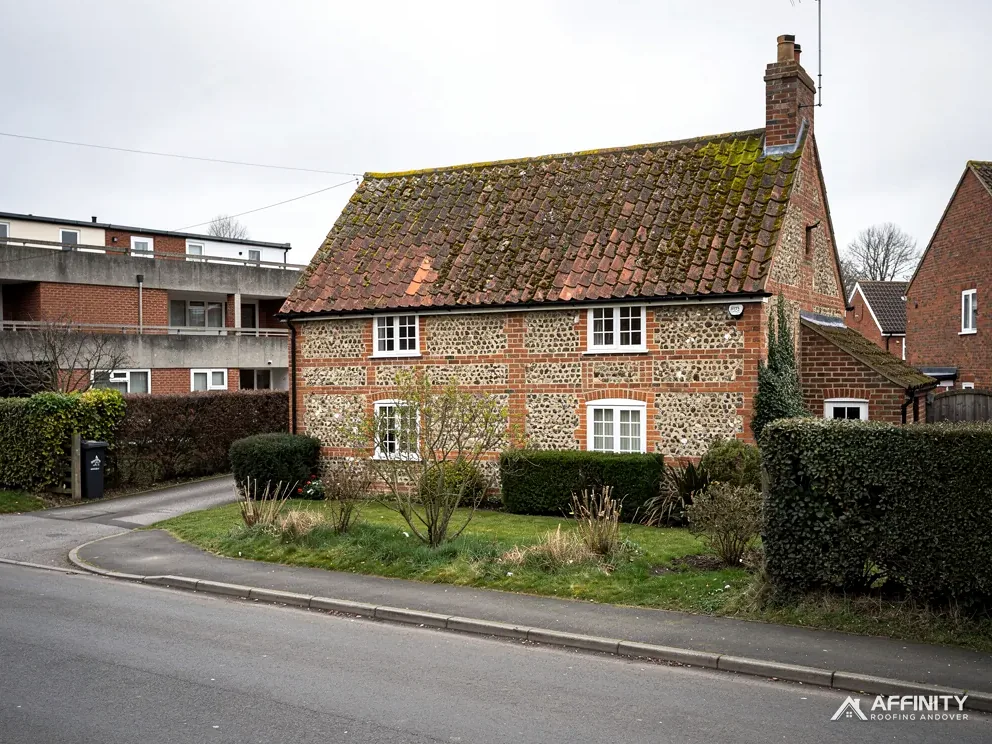
Manor and farmhouse
Urchfont Manor is Grade II*, with Manor Farmhouse and Mulberry House listed Grade II close by.
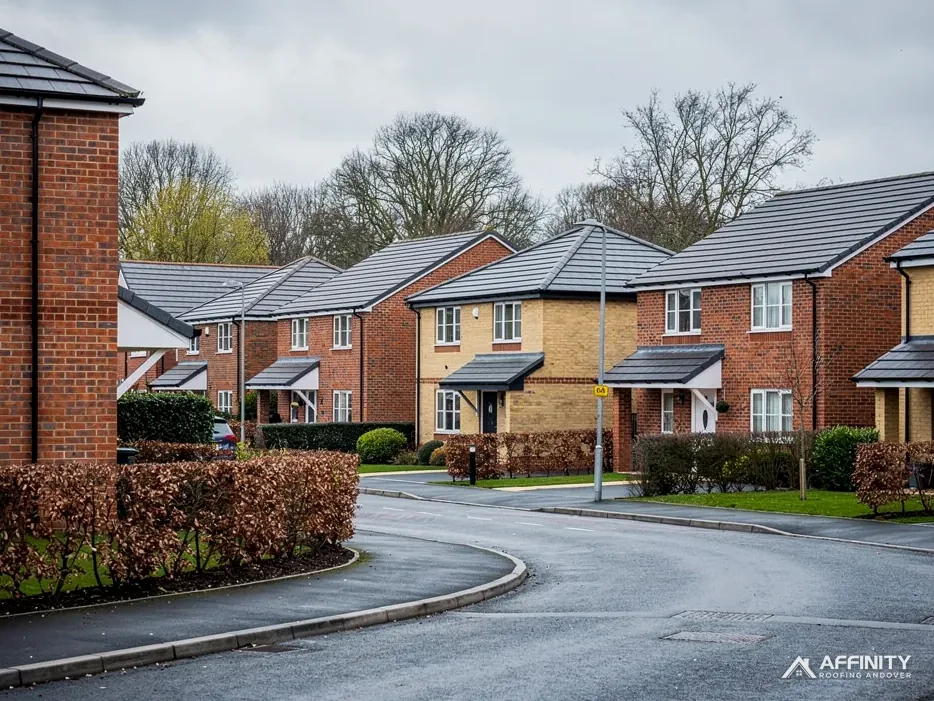
Conservation-area lanes
Houses near the Urchfont conservation area, which lies within about 0.75 km of the centre.
Urchfont between Devizes and Market Lavington
Devizes is north-west, Potterne west, and the two Lavingtons south-west, with Bishops Cannings to the north. Upavon and Pewsey lie further east.
- Distance
- 24.9 road miles west of Andover
- Planning
- Wiltshire Council
The Urchfont roof report
Local editionUrchfont, WiltshireA church, a manor and old lead
A Grade I church and 52 listed neighbours: what Urchfont roof work must clear
Urchfont lies west of Andover, 24.9 road miles by road, in Wiltshire Council's area. This report takes in the church, the manor, the Article 4 area named Urchfont, lead on older roofs and the MiPermit scaffold licence.
A Grade I church, a manor and the faculty route
St Michael and All Angels is Urchfont's grandest building, rated Grade I on 19 March 1962 (list entry 1364609). Urchfont Manor was listed in the same month at Grade II* (1035857), and Manor Farmhouse (1183155) and Mulberry House (1364618) are both Grade II. Historic England's list holds 52 listed buildings within 500 metres of the village point, in a parish of 1,183 usual residents at the 2021 Census. Each Urchfont address is checked against the list.
The church has its own consent route. Mapping shows it as Anglican and in regular use, and that denomination sits outside the ordinary listed building system. Repairs go through the Church of England's faculty system, Urchfont's faculty coming from the diocese's consistory court, not the council. A church roof waits while its custodians settle their own process, and we follow the order they set, because the building and its congregation come before our programme. For houses the position differs, and the council is the first call.
Listing also affects what a neighbour may do. A house beside a Grade I church or a Grade II* manor may itself be unlisted, yet the planning officer will still look at how its roof changes appear in the street. For that reason we show the council a photograph of the whole elevation as well as the close-ups, so that a decision is taken on the street scene and not only on the tile.
A listed house keeps the permitted development rights any house has, but any work that affects its character also needs listed building consent from Wiltshire Council. In practice the discussion starts with mending a roof in like materials. The council wants to see what exists now, how it is fixed and what we intend, so it receives near-field photographs and a brief written account before anything is ordered.
Listing applies to the whole building, not only to the face you see from the lane. When we survey a listed house we read the list entry for the address beforehand, then look at the roof with the entry beside us. The ridge, the verges, the chimney and the flashings are each photographed close up, and the covering is described by tile size, colour and how each piece is held. That record is what lets us find reclaimed material to match, and what the planning officer reads if a question comes back.
A house that is not listed can still sit beside one, and the survey notes that too, since it affects where scaffold can stand and how a shared boundary is handled.
Wiltshire Council and the Article 4 area
Urchfont is in Wiltshire, which means Wiltshire Council decides planning, licenses the highway and runs Building Control. Building Control bookings go to its Monkton Park office in Chippenham, on 0300 456 0113, Monday to Friday, 9am to 4:30pm, and a registered building control approver can be used in its place. Test Valley has no part in any of this, whatever the distance to Andover.
Within about 0.75 km of the village centre lies the Urchfont conservation area, whose mapped boundary is the council's own, so your address can be checked against it. A dormer inside it goes to the council's planners; the planning permission for roof work guide covers the other lines. Wiltshire Council also has an Article 4 area named Urchfont, which reaches the ground around the village, and its planning team can say which Urchfont streets it affects.
Under Article 4 a council can remove named permitted development rights across a set area. With 52 listed buildings within 500 metres of the village point, many Urchfont questions also turn on listing first. Which rights this one removes, and which properties it covers, is for the council to say. Only Wiltshire Council can tell you whether your address falls inside it, and a roof alteration is the kind of change a direction can reach. We put the question to the planning team before we price anything, and the reply stays with your file with the survey photographs.
A standard re-roof is tested against the Planning Portal's pair of figures: 25 per cent of the building envelope and 50 per cent of the roof. Beneath both, no application is normally required. A new covering that adds 15 per cent or more to the old one's weight brings in Building Regulations approval, and the Portal recommends a look from a structural engineer or surveyor first. A conservation area and an Article 4 area are not the same thing. The first is a designation of character that brings extra control over how a roof changes; the second is a direction removing named permitted development rights, and the two can overlap on one street. A listed building can need consent even where the building control tests are passed, which is why the order of questions matters: listing first, the area-wide direction second, building control third.
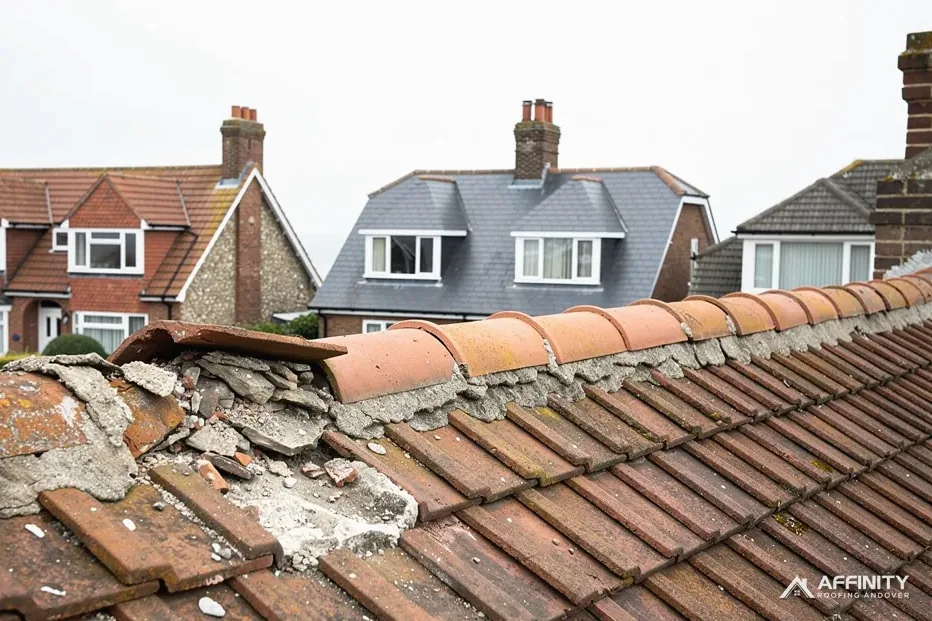
Small jobs sit comfortably inside the building control limits, and nobody should delay a leak repair for a form that does not apply to their house. A cracked tile or a lifted ridge falls under roof repairs, and on most listed houses a like-for-like fix is straightforward once the consent question has been answered in writing.
“In Urchfont the order of questions matters: the list first, then the council's area-wide directions, then building control.”
Lead on old roofs, and the MiPermit scaffold licence
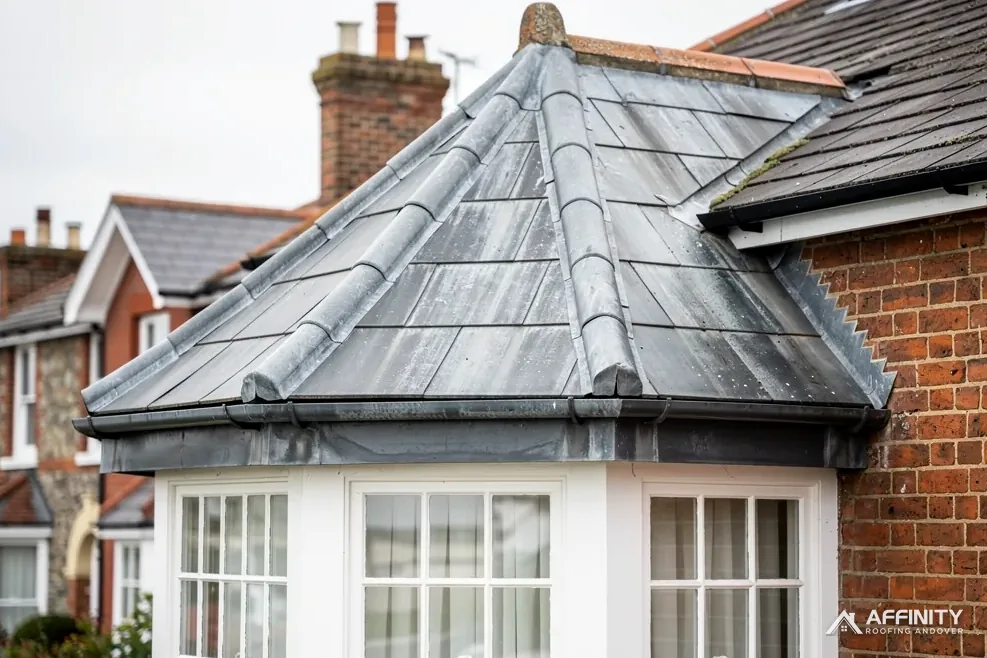
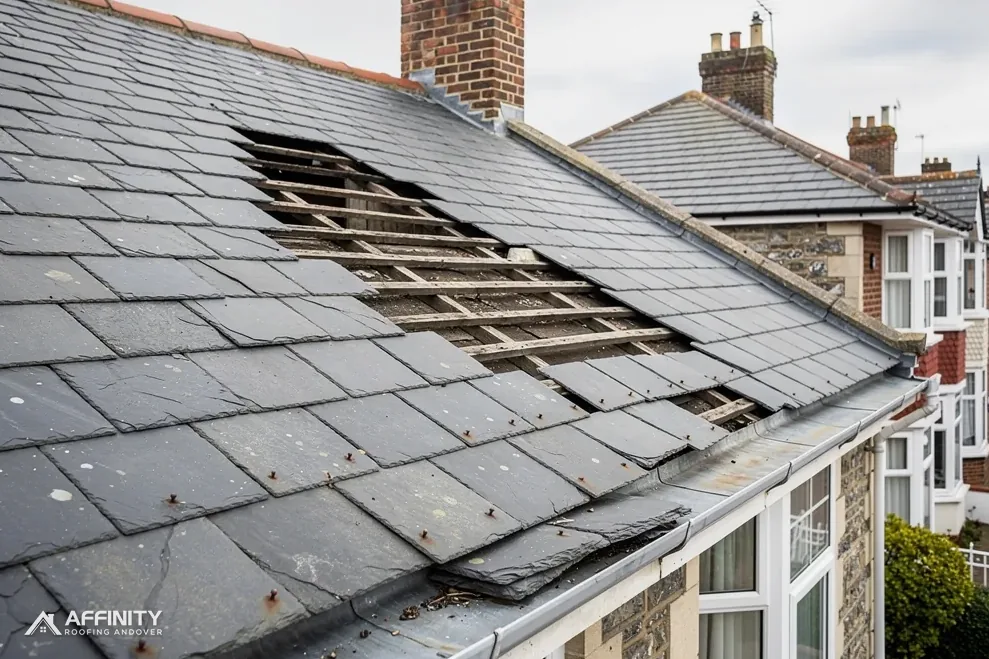
Older roofs often carry lead at the joints: soakers, the small lead pieces that tuck beneath the tile edge beside a wall, flashings that seal the gap along it, and valley gutters in the angle between two slopes. Royston Lead's brochure rates sheet by code. Code 4, at 1.80 mm, is the code Royston lists for soakers as well as flashings, and Code 5, at 2.24 mm, is listed for flashings and for the heavier work of parapet and box gutters. MyJobQuote's September 2026 page gives lead flashing an expected life above 80 years, a floor rather than a guarantee. Royston marks Code 4 sheet in blue and Code 5 in red, and we note the code, or the thickness if it is unmarked, on every listed roof we survey.
Lead matters on a listed roof because replacing it with something else is a change of material, and a change of material is a consent question. Where lead has failed we propose lead in the same code, or a thicker one only where the survey shows a reason. Lead roofing explains the work.
Where a house fronts a public road, a scaffold needs a licence from Wiltshire Council under section 169 of the Highways Act 1980. Wiltshire Council takes the request through its MiPermit portal, from the firm putting up the scaffold or hoarding, and wants just one licence per site. Wiltshire Council sets the fee by the notice given: £143.80 where it exceeds three working days, £164.70 where it falls short. A licence lasts 28 days, and the council wants public liability insurance of £5 million on the scaffold.
Hoarding is licensed separately from scaffolding, a marked parking bay also calls for a separate suspension, and putting scaffold up without a licence brings a late fee of £292.50. Our job is to fix the dates with you first and then to see that the licence is in hand in good time under Wiltshire's rules, and your total price takes in the licence, the hire and the waste carted off. A narrow lane with parked cars may need a suspension or a different scaffold layout, and we discuss both at the survey. A listed roof also deserves a longer programme than a modern one, because matching materials may have to be sourced and a consent decision may still be pending, and the scaffold should not stand idle while either is settled.
Chimneys on listed houses join the same conversation, since a stack can be part of the listed fabric. Our chimney repairs page sets out what we look at.
Roof jobs we handle in Urchfont
Urchfont roofs: the church, the list and the lead
Which consent route applies to the church roof in Urchfont?
Urchfont's Grade I church of St Michael is an Anglican church in regular use, so the Church of England's faculty system decides works on it, rather than listed building consent from the council. Houses nearby follow Wiltshire Council's planning route. Church roof work waits for a faculty from the diocese's consistory court, Urchfont's church included.
What does the Article 4 area named Urchfont mean for my roof?
For the village itself, Wiltshire Council has an Article 4 area named Urchfont, and the council can say which rights it removes and which properties it covers. An Article 4 direction can withdraw permitted development rights, so we ask the council's planning team whether it reaches your address before we price a job, and the reply is kept with your survey photographs.
How long does lead last on an old Urchfont roof?
MyJobQuote's September 2026 page puts lead flashing's expected life above 80 years, a floor rather than a guarantee. Condition matters more than age: we check lead at the survey for splits, lifted edges and thin patches, record its code or thickness, and say whether a repair or replacement is the sounder choice for that roof, with the photographs to show why.
What happens if scaffold goes up without a Wiltshire licence?
Wiltshire Council's page says a late fee of £292.50 applies to unlicensed scaffolding. We avoid that by fixing your dates first and making sure the licence is requested through MiPermit with time to spare. Wiltshire Council's fee is £143.80 with notice longer than three working days and £164.70 with less, and we plan for the cheaper notice period.
Villages and towns around Urchfont
Book a survey of your Urchfont roof
Send an address and one clear photo. We survey, confirm the consent route and set one written price.
10-year workmanship guarantee, in writing.