
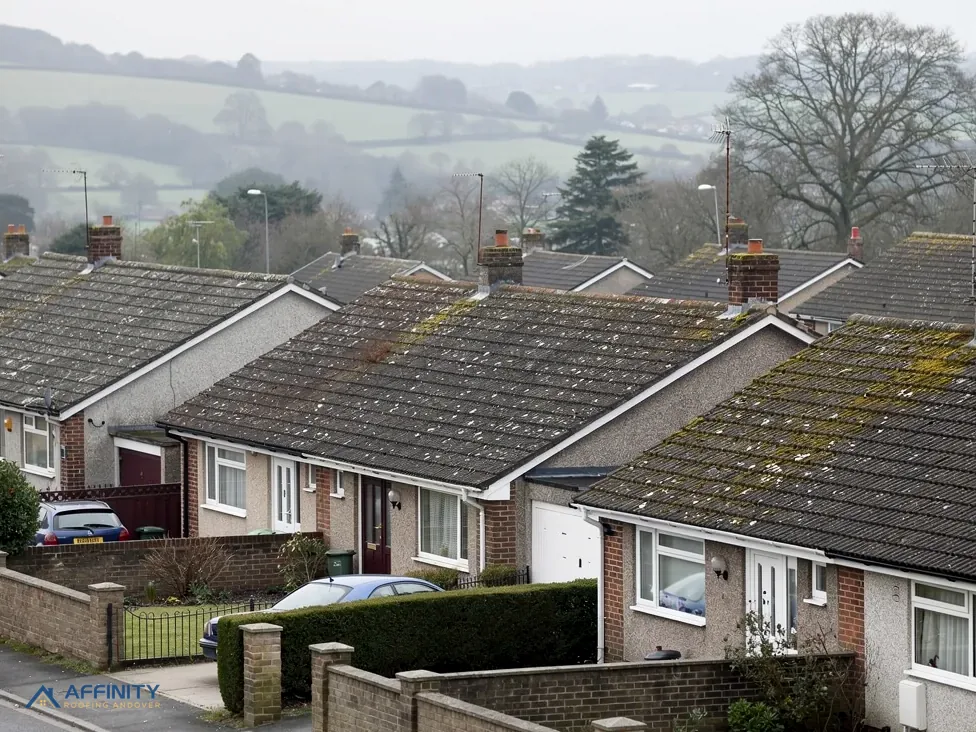
Roofers in Devizes
Market Place shops, Grade I churches and a castle site
Devizes has 314 listed buildings within 900 metres of its centre, from Market Place to the castle. We survey every roof, photograph it and quote one written price.
Devizes roofs, from Market Place to the castle ground

Market Place frontages
Number 17 Market Place is Grade I, and the Devizes conservation area lies close to the centre.

Church roofs in the town
St John the Baptist and St Mary are both Grade I churches, and each church's use decides its route.

Roofs near the castle site
Devizes Castle is a scheduled monument, so work close by can need extra care and extra consent.
Devizes among its Vale villages
Rowde lies to the north-west, Potterne to the south, Bishops Cannings to the north-east and Urchfont to the south-east. Our roofers work in all four.
- Distance
- 28.2 road miles north-west of Andover
- Planning
- Wiltshire Council
The Devizes roof report
Local editionDevizes, WiltshireA market town with 314 listings
Devizes has 314 listed buildings in reach of its centre: how that shapes a roof job
Devizes is a town of 16,700 people under one unitary council, with Grade I churches, a market place and a scheduled castle site. This report explains who decides on roofs here, what listings and monuments add, and how commercial and scaffold work are handled.
One unitary council for a town of 16,700
Devizes parish had 16,700 usual residents at the 2021 Census, which makes it a town and not a village. Its roofs answer to Wiltshire Council, a unitary authority: planning, the Building Control service at Monkton Park, Chippenham, and highway licensing all sit with it. A Devizes owner therefore needs one council's pages and one set of officers for the whole process, from the first sketch to the scaffold coming down.
The route depends on what the roof is doing. A repair that restores what was there needs neither planning permission nor an inspection application. A re-roof starts with the Planning Portal's two yardsticks: below 25 per cent of the building envelope and below 50 per cent of the roof, building control is not normally involved. Wiltshire Council publishes no figure that overrides them. Weight counts too: a replacement that adds 15 per cent or more brings in Building Regulations approval and a structural check.
Wiltshire Building Control's number is 0300 456 0113, answered Monday to Friday, and its email and postal details are on the council's website. A registered building control approver can inspect in the council's place if you prefer, a regime that began on 6 April 2024. We lay out both choices at survey and give you the difference in plain terms, so the choice is yours and not made by default.
In a market town, a roof can belong to a building with more than one occupier. Flats above shops, offices over a bank, a house converted to three: each raises the question of who is the client and who the contractor. On a project shared by two or more contractors, CDM 2015 asks the client to appoint a principal designer as well as a principal contractor. We ask at survey how many trades will be on site, because that decides how the job is organised.
Commercial clients should also check the money side. Standard-rate VAT is 20 per cent. The reverse charge belongs to the Construction Industry Scheme, so it can alter invoices passing between contractors, whereas a homeowner is never billed that way. Ask for the quote to state whether VAT is in the figure, and the scaffold with it, and file the survey photographs alongside the contract.
Flats sit outside the permitted development rights that houses enjoy, since a flat is not a dwellinghouse, so the owner of an upper-floor flat should put any roof change to Wiltshire Council's planning team first. Market Place, as the name implies, is a trading space, and frame and delivery times are planned around the people who use it, with the occupier told in advance.
314 listings, a castle site and two Grade I churches
Historic England's list shows 314 listed buildings within about 900 metres of the centre of Devizes. Number 17 Market Place is Grade I (list entry 1250423, first listed on 9 April 1954), the Church of St John the Baptist is Grade I (1262359, same date), and the Church of St Mary (1251640) and Brownstone House (1251612) are Grade I as well. Each of them is on Historic England's public list, which anyone can search by address.
The Devizes and Devizes Victoria Road Quarter conservation areas lie within about 0.75 kilometres of the centre, on Wiltshire Council's own mapped boundaries. Wiltshire Council's published Article 4 data also names an area called Devizes 2 that touches the town centre; which rights it removes is for the council to say, so ask the council's planning team whether it applies to your address before you design a visible change. Our guide to planning permission for roof work explains the limits.
Devizes Castle is a scheduled monument within about 500 metres of the centre (list entry 1021375). Scheduled monument consent, granted by the Secretary of State, is required for works to the monument, and works without authority are an offence under section 2 of the 1979 Ancient Monuments and Archaeological Areas Act. A house near the castle ground is not itself the monument, but the question of whether a scaffold or a skip touches the scheduled area is worth settling against Historic England's mapped boundary before the first delivery.
St John the Baptist is mapped as an Anglican church still used for worship, which puts its roof under a faculty from the diocese's consistory court. St Mary's route depends on how the building is used today: a church still used for worship by an exempt denomination follows that church's own system, while a closed church needs listed building consent, so we ask before pricing. Listed shops and houses are another matter: whenever their character is affected, listed building consent is needed as well as planning permission.
For these roofs the method is the same wherever they stand: like-for-like repair where the material allows it, reclaimed slate or tile where a match is needed, lead dressed back rather than replaced where it is sound, and photographs of everything before a finger is laid on it.
Because Devizes has so many protected buildings, we also look at the roof next door. A shared valley, a party gable or a neighbour's chimney can decide where the ladder goes and whether notice is owed, and a party wall surveyor, not building control, is the person to ask when a shared wall or chimney breast is affected.
“Devizes has 314 listed buildings within 900 metres of its centre, all under one council.”
Source: Historic England list entries within 900 metres of the Devizes centre
Shop roofs, parapet gutters and Wiltshire's scaffold permit
Where a Devizes building stands on a street, a scaffold may occupy the public highway, and section 169 of the Highways Act 1980 calls for a licence. Wiltshire Council grants it. On Wiltshire Council's page, MiPermit is the portal through which the scaffolding supplier makes the application. Wiltshire Council charges £143.80 for an application with over three working days to spare and £164.70 for a late one, and each licence lasts 28 days.
Hoarding needs its own licence, apart from the scaffold. Wiltshire Council wants public liability insurance of £5 million behind every firm that works on the frame, and a late fee is added if the scaffold goes up without a licence. On a market-town street timing matters, so we work out the sequence with the scaffolder before the work is priced.
Town centre roofs often have parapet gutters, the box-shaped channels behind a low wall at the eaves. They collect leaves and silt, and a blocked outlet can send water through the wall. Many such gutters are lined with lead, and Royston Lead's brochure points to code 5 and upwards where a parapet or box gutter is concerned. Lead flashing, MyJobQuote reports, can outlast 80 years, which is a floor and no forecast, so we inspect before suggesting a replacement.
Flat roofs behind shop parapets may be covered in felt, EPDM, GRP or a single-ply membrane such as TPO. EPDM is a synthetic rubber sheet and GRP is glass-reinforced plastic. For EPDM, HomeBuilding gives 25 to 30 years while Less gives 30 to 50 years, so published lives differ widely and neither is a promise. BS 6229:2025 sets a finished minimum fall of 1:80 on membranes of this kind, and we measure what is there, because a parapet roof that holds water will fail long before its stated life.
Our slate roofing work covers repair and re-covering, lead roofing covers valleys, flashings and gutters, and commercial roofing covers shops, offices and workshops. Every one starts from the same survey and photographs. Commercial clients get the same single written price, and we describe how access, tenants and trading hours are handled before work is booked.
Waste is taken away by the team, and the pavement and gutter in front of a shop are left clear, with the shopfront and signage protected while the frame is up. Trading hours matter on a shop roof, so we agree delivery times, noisy work and the sequence of the frame with the occupier before the first day, and we describe them in the written terms that accompany the price.
Ways we look after Devizes roofs

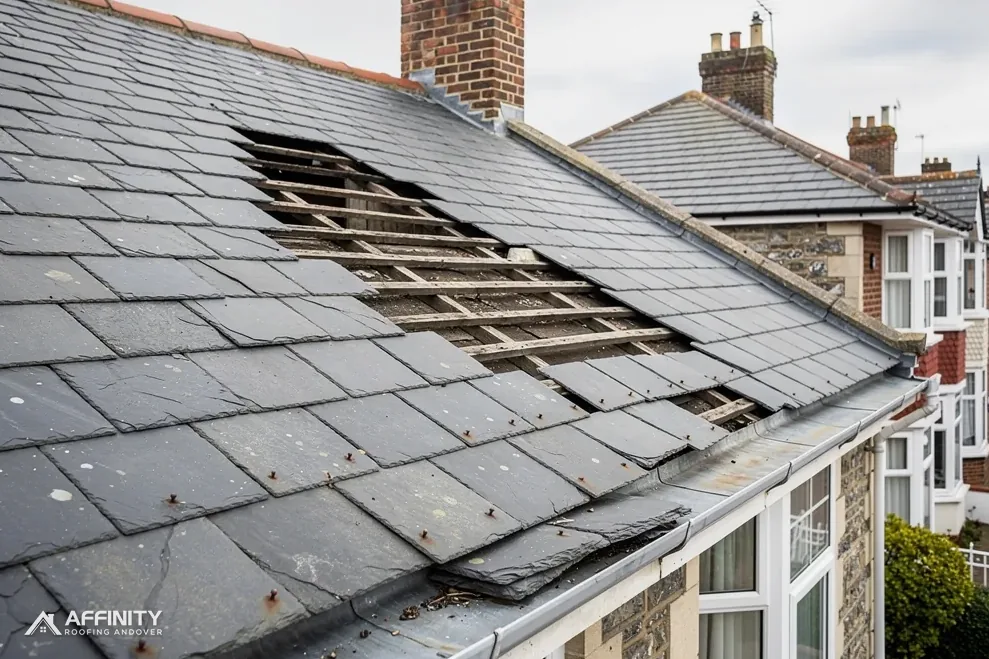
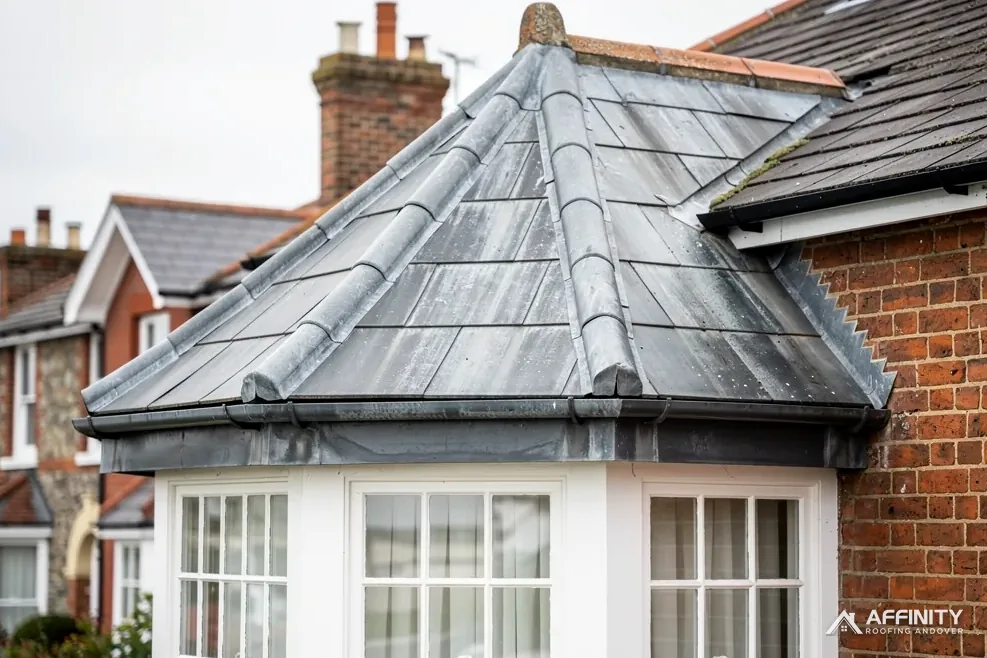

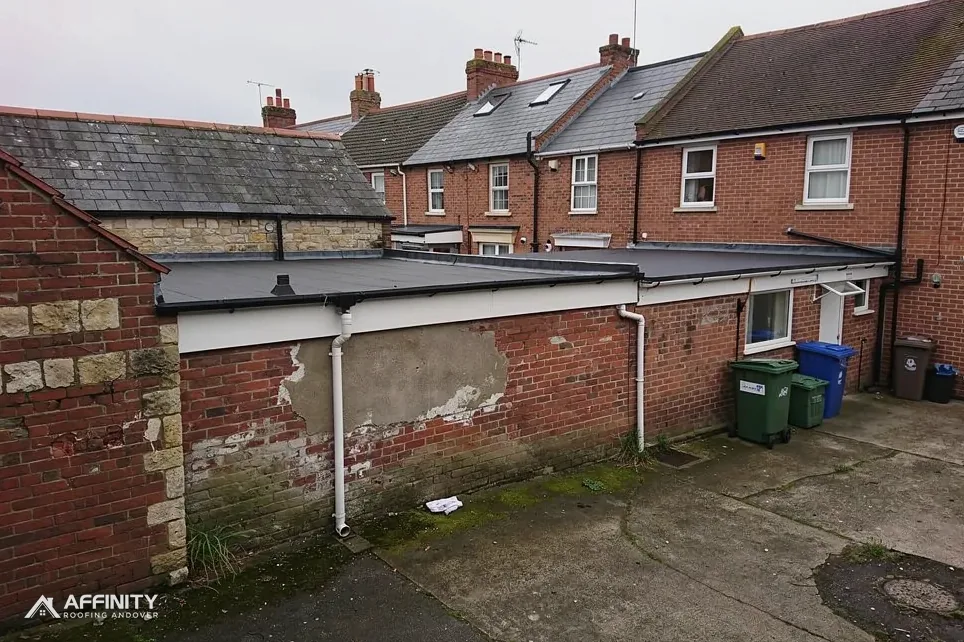

Devizes roofs: listings, the castle site and the permit
Does a house near Devizes Castle need scheduled monument consent for a roof repair?
Only if the work touches the scheduled area itself. Devizes Castle is a scheduled monument, and works to it need scheduled monument consent from the Secretary of State. A house nearby is not the monument, yet the scheduled boundary is checked on Historic England's list before a scaffold, skip or ladder goes near it, and the check is filed with your survey.
Can a Market Place shop roof in Devizes be re-covered in new slate?
Possibly, but a Grade I building such as 17 Market Place needs listed building consent for any alteration of its character, and the Devizes conservation area lies close by. The plan is a matching repair, with the slate photographed and a proposal put to Wiltshire Council's planning team before any order, so no slate is bought on a guess.
What is the Devizes 2 Article 4 area?
Wiltshire Council's published data names an Article 4 area called Devizes 2 that touches the town centre. Which rights it removes is for the council to confirm, so we do not guess. Ask Wiltshire Council's planning team whether it covers your address before you design a change that shows from the street, and file its reply for any future buyer.
Who licenses scaffolding in a Devizes street and what does it cost?
Wiltshire Council does, and the scaffolding supplier applies through MiPermit. Wiltshire Council charges £143.80 for an application lodged early and £164.70 for a late one, and each licence lasts 28 days. A hoarding needs a licence of its own. The scaffolder and we settle dates together, and the frame is included in the price. A late application costs more, so early planning saves money on the permit.
Survey your Devizes roof before anything is ordered
Share the address and, if you can, a roof photo. A survey, the consent route and one price follow.
10-year workmanship guarantee, in writing.