
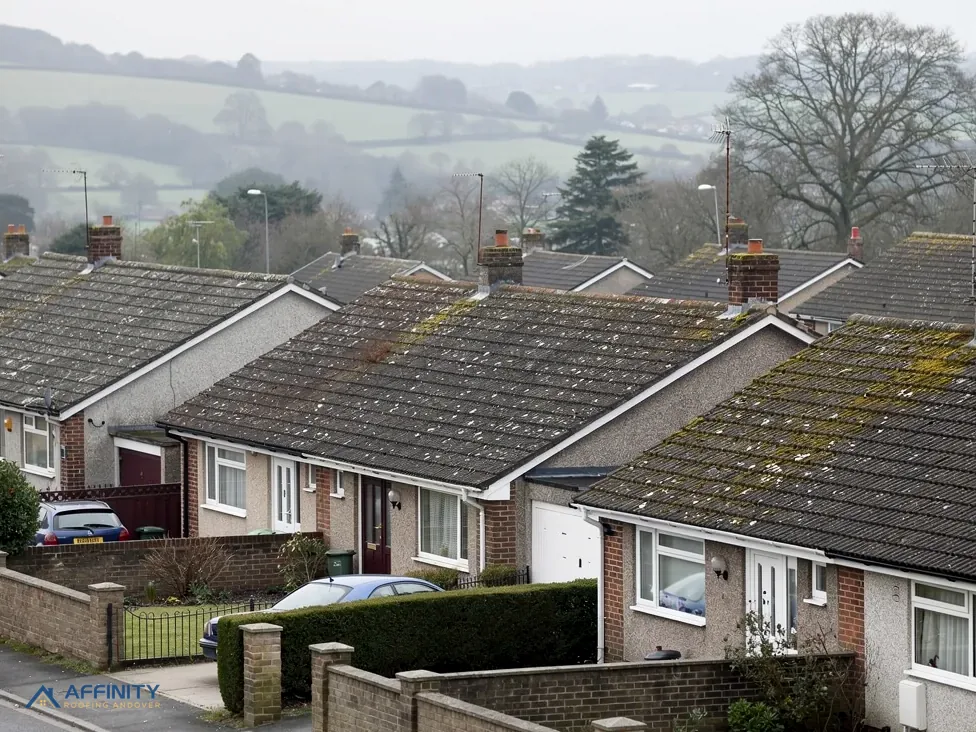
Roofers in Bishops Cannings
A Grade I church, farmhouses and the downland north of Devizes
Bishops Cannings has 21 listed buildings within 500 metres of its centre, and nearly all of it lies in the North Wessex Downs. Each roof is surveyed first.
Bishops Cannings roofs, from St Mary's to Blackwells Farm
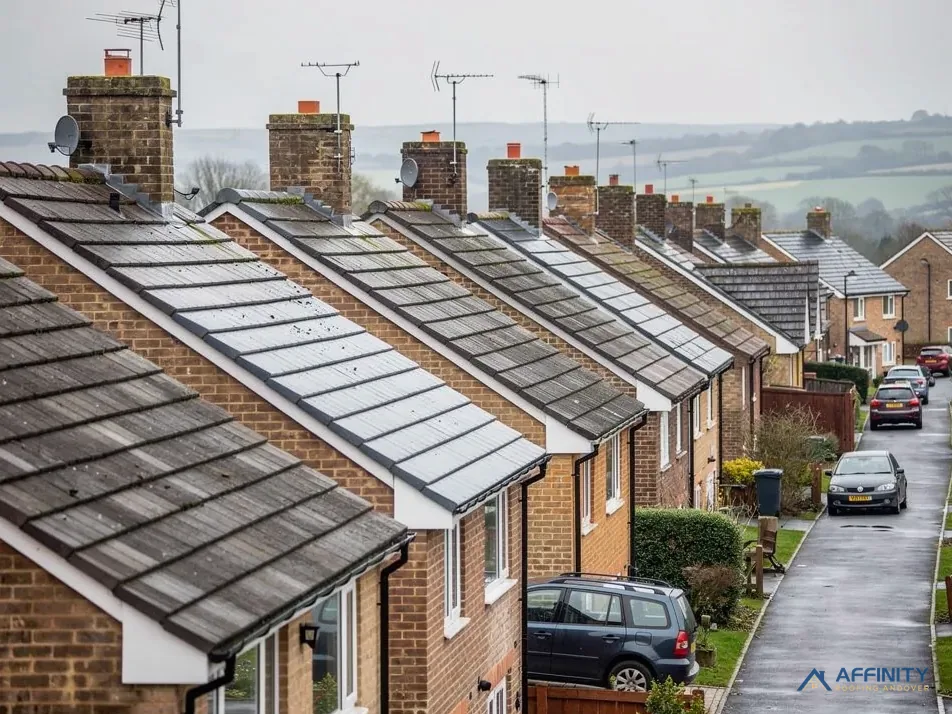
Church and churchyard roofs
The parish church is Grade I, so roofs beside it are repaired with that building in view.
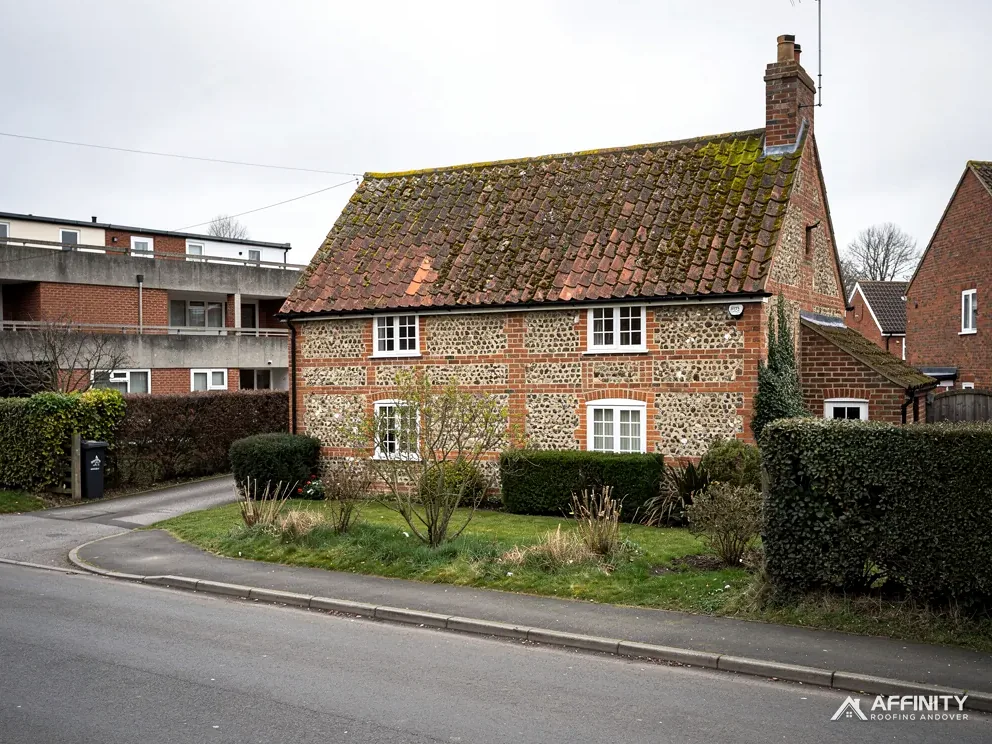
Lynes House and the farmhouses
Lynes House and Blackwells Farmhouse are Grade II, and their roofs are matched to the originals, not modernised.
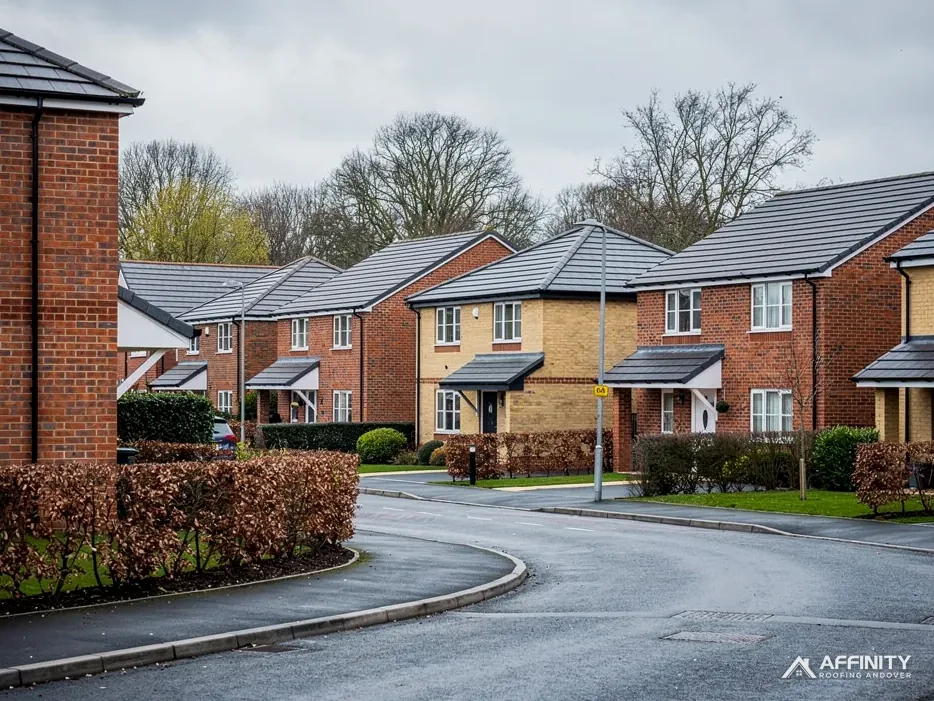
Cottages in the conservation area
Sunnyside Cottage is Grade II, and the Bishops Cannings conservation area lies close to the village centre.
Bishops Cannings north-east of Devizes
Devizes lies to the south-west, Rowde to the west, Urchfont to the south and Market Lavington further south. Our work reaches all of these places.
- Distance
- 28.9 road miles north-west of Andover
- Planning
- Wiltshire Council
The Bishops Cannings roof report
Local editionBishops Cannings, WiltshireA Grade I church under the Downs
Bishops Cannings sits under the North Wessex Downs: who decides about a roof here
Bishops Cannings is a Wiltshire parish of 3,463 people with a Grade I church, farmhouses and a conservation area, nearly all inside a National Landscape. This report covers the council's roles, what the listings add, and how ridges and scaffold are handled.
The Downs advise, Wiltshire Council decides
Bishops Cannings parish had 3,463 usual residents at the 2021 Census, and about 98 per cent of the area around the village centre falls inside the North Wessex Downs National Landscape, the designation formerly known as an AONB. The Downs partnership is non-statutory and advisory, so it takes no planning decisions. Natural England is a statutory consultee, but the council is the authority, and here that means Wiltshire Council.
Wiltshire Council also runs its own Building Control service from Monkton Park in Chippenham, reached on 0300 456 0113, and it licenses scaffold on the road. One council is therefore behind every question on a Bishops Cannings roof, and that makes the process easy to map: planning to its planning team, inspection to its Building Control, and the road to its highways licensing.
A like-for-like repair needs none of those. A re-roof goes through the Planning Portal's yardstick first: under 25 per cent of the building envelope and under 50 per cent of the roof, and building control need not normally be told. Wiltshire has published nothing that overrides this. Weight is the second yardstick, because a new covering that is 15 per cent or more heavier needs Building Regulations approval and a structural check. If you prefer, a registered building control approver can inspect instead.
What the Downs designation does change is the freedom to alter a roof's shape. A new dormer, for example, meets closer limits on this land and in the conservation area, and our guide to planning permission for roof work explains the limits. Wiltshire Council's planning team can also say whether an Article 4 direction touches your address.
The route is worked out at the survey. We photograph the battens, underlay and fixings, note how much of the roof a job would touch, and put any doubtful point to the council before the price is fixed.
Storms are the other reason people ring a roofer. The Financial Ombudsman Service accepts that wind, rain, hail or snow can each amount to a storm, weighs the Beaufort scale, and applies what your policy says. Tell the insurer first, arrange a temporary repair, and keep dated photographs and receipts. If no final response arrives within eight weeks you may take the complaint to the Ombudsman, whose helpline is 0800 023 4567, and you have six months from a final response to do so. Making a leaking roof safe comes first for us.
St Mary the Virgin, Lynes House and 21 listings
Historic England's list shows 21 listed buildings within 500 metres of the centre of Bishops Cannings. The parish church, St Mary the Virgin, ranks Grade I (1193298, first listed on 19 March 1962), and Lynes House (1365981) is Grade II. Grade I is the highest of the three listing grades, which run I, II* and II, so the church sets the tone for the whole group, and every repair nearby is judged with it in mind. Sunnyside Cottage (1033740) and Blackwells Farmhouse (1033741) are Grade II as well. In a parish of 3,463 people, that means many repair jobs sit close to a protected building, so the matching has to be right.
The Bishops Cannings conservation area reaches within about 750 metres of the village centre, on Wiltshire Council's own mapped boundary. A change to the roof's appearance from the road is worth discussing with the council before work starts. For a listed house, farmhouse or cottage there is a further hurdle, listed building consent, which any alteration to its character requires on top of any planning permission.
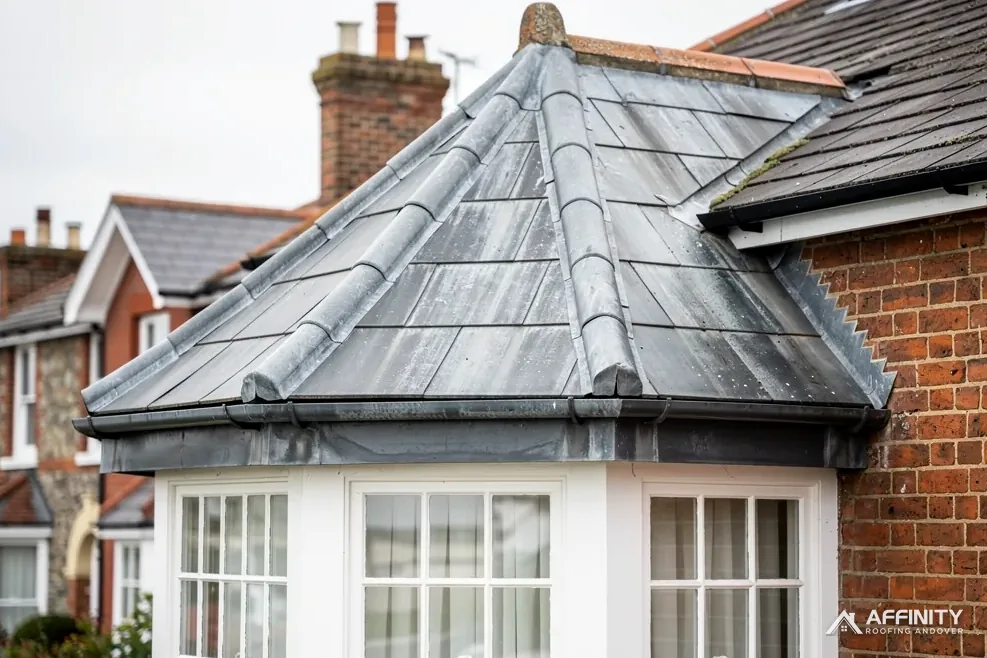
St Mary's is an Anglican parish church in use, so the faculty system, under which the diocese's consistory court grants a faculty, covers work on its roof, not the council's listed building consent. Lead is sold by code, and Royston Lead's brochure lists code 3 for soakers alone, with codes 4 to 6 for flashings and the heavier codes for valleys and gutters. According to MyJobQuote, lead flashing lasts over 80 years at the least.
That 80 years is a minimum and not a forecast, so a sound flashing is dressed back and kept. When lead has split or lifted, the survey photographs show it and the recommendation says whether a patch or a new piece is the honest answer.
Old roofs of tile, slate and lead can shelter wildlife. GOV.UK treats every bat species and its roosts as fully protected, and names roof repair among the work that can disturb them. Intentionally or recklessly blocking a bat's access to a roost is an offence under the Wildlife and Countryside Act 1981. We look for droppings and entry gaps on every rural survey, and we stop and take advice if we find any.
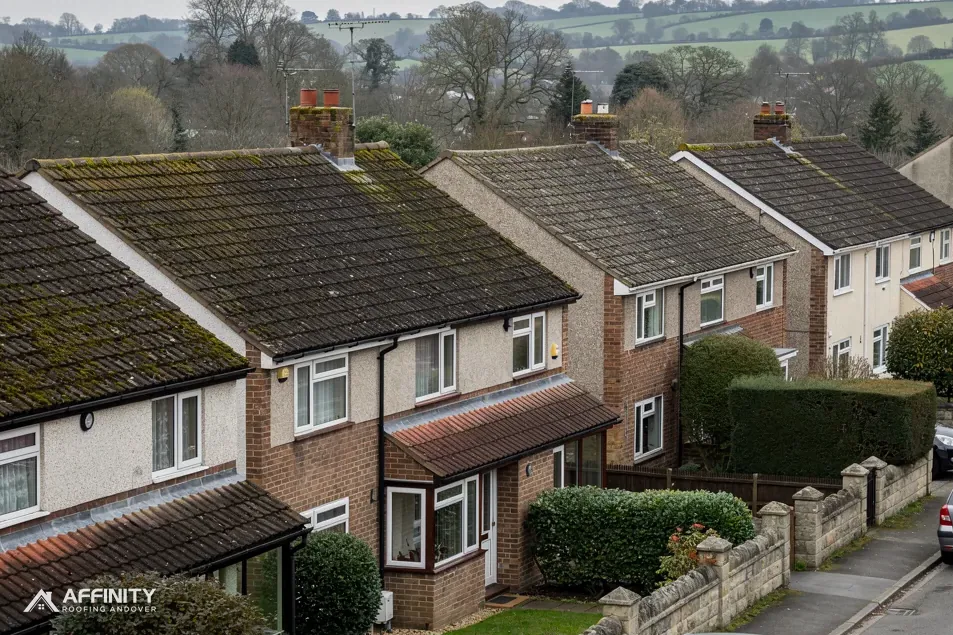
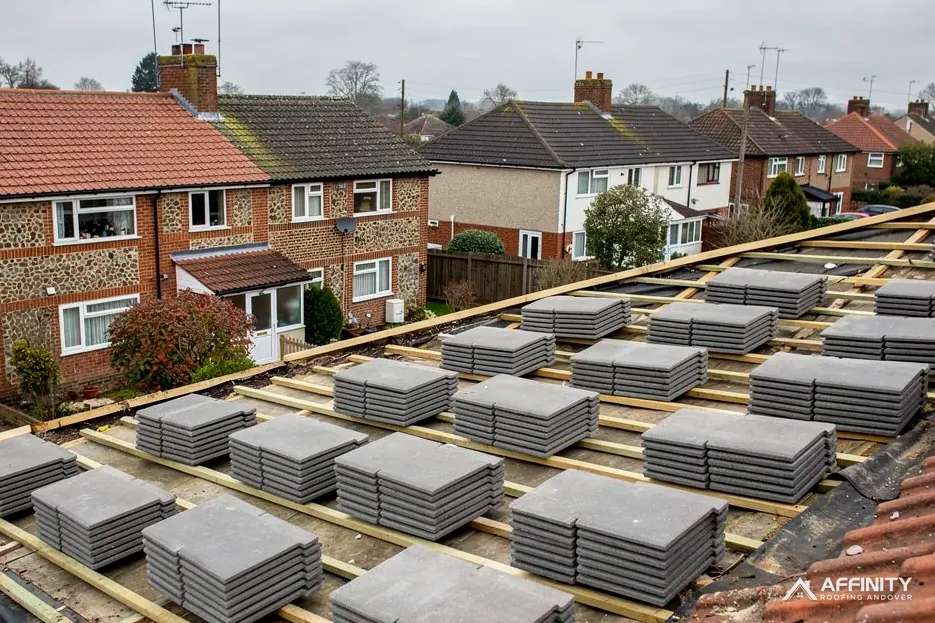
On farmhouse and cottage roofs the method is the same: match the existing covering in size and colour, fix it as the original was fixed, and send the council a plain description with photographs. Reclaimed tile or slate is found first, because a new piece beside a weathered one stays visible for years.
“At Bishops Cannings the Downs advise, and Wiltshire Council decides every roof question.”
Ridges, verges and a Wiltshire scaffold permit
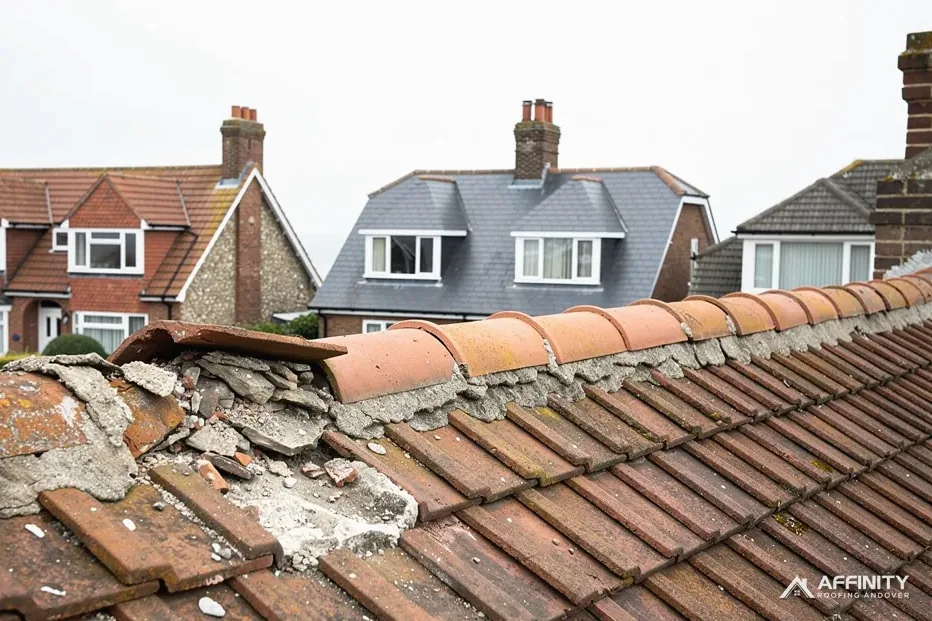
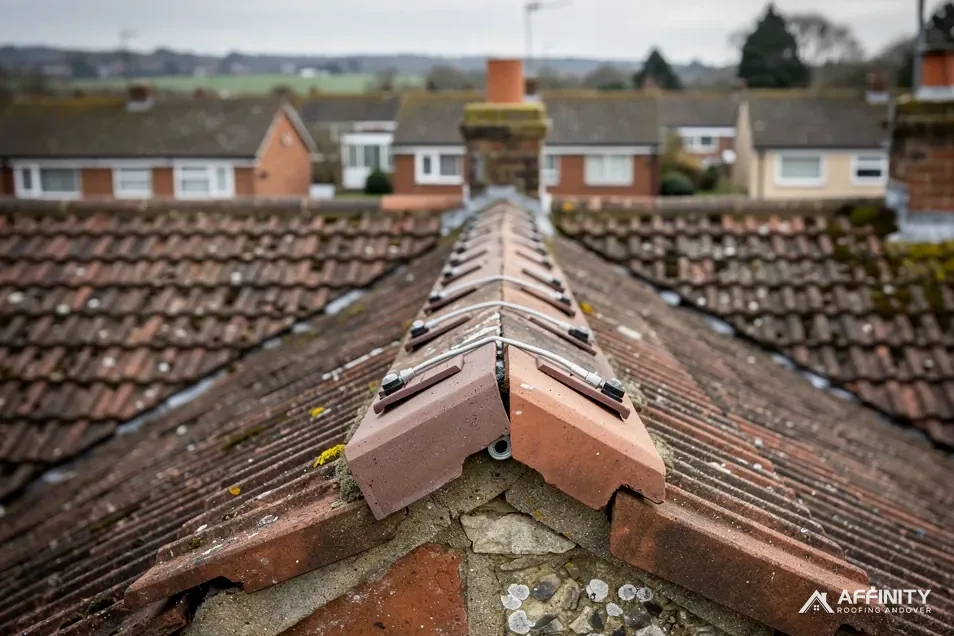
Ridge tiles cap the top of a pitched roof, and at a gable end the verge finishes the edge. Both were once bedded in mortar alone, and the modern alternative is a dry-fixed system clipped to the roof. Marley links the shift to the 2014 revision of BS 5534, and a separate standard, BS 8612, tests the dry systems. Mortar remains legal; it is just no longer the only thing holding the tile.
Our dry ridge and verge work uses mechanical fixings, so a cracked bed of mortar no longer lets a ridge slide. BS 5534 is guidance rather than statute, and the survey says which of your Bishops Cannings ridges are fixed to it. A loose ridge tile costs little to fix early and much more after a storm.
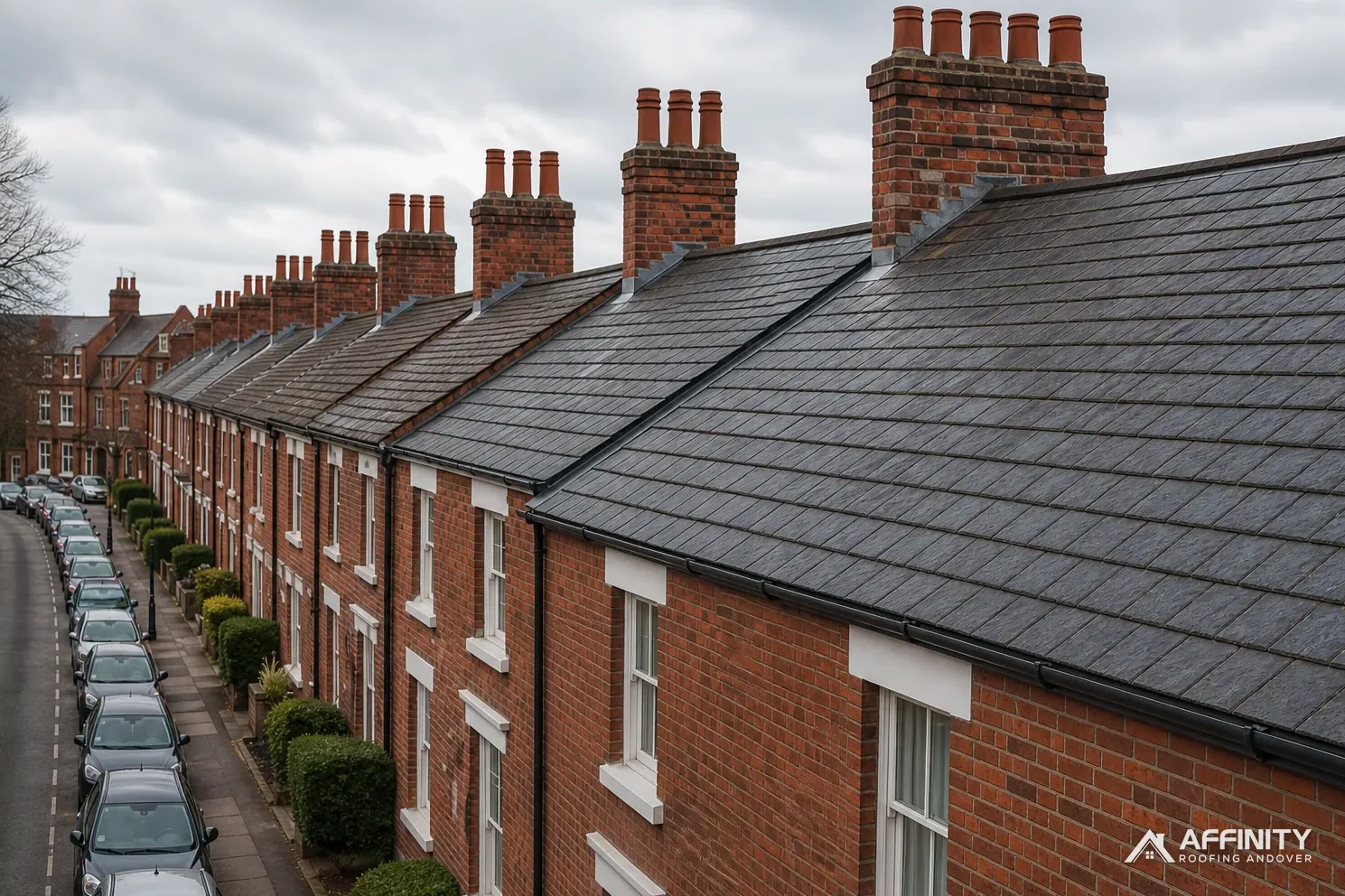
Chimneys on farmhouses and cottages get the same attention from the survey. We look at the pot, the mortar collar called flaunching that seats it, the brick pointing and the lead where the stack leaves the roof. A stack with failing pointing can let water into the house wall below, so the damp shows up in a bedroom and not in the loft, and the photographs trace the route from the top.
On the road, a scaffold needs a licence under section 169 of the Highways Act 1980. Wiltshire Council issues it, and the scaffold supplier applies through the MiPermit portal. Wiltshire Council charges £143.80 for notice of more than three working days and £164.70 for less, and each licence lasts 28 days. Wiltshire Council also asks scaffolders for public liability insurance of £5 million. Frames on private land sidestep the licence.
Roof water needs a mention. The current European standard for roof drainage, BS EN 12056-3:2000, covers layout and calculation, and Brett Martin's guidance is a gutter fall of 1 mm for every 600 mm. A gutter laid flat holds water that rots the fascia behind it, and one laid with too steep a fall can overshoot the downpipe. We check gutters on every survey and photograph any run that sags or leaks at a joint.
Services that fit Bishops Cannings roofs include roof repairs for slipped tiles, pitched roofing for full re-covering and chimney repairs for stacks that have lost pointing or flashing.
A price comes only after the survey, and it is one written total. It includes the scaffold, the labour, the materials and the clearing away, and we explain what is in it before you agree. Small repairs are quoted the same way, after the same survey, so you can compare a patch with a fuller job on equal terms.
Services for roofs in Bishops Cannings
Bishops Cannings roofs: the Downs, lead and ridges
Can a Bishops Cannings farmhouse roof be re-covered in new tiles?
If it is listed, only with listed building consent for alterations to its character, and Wiltshire Council's planning team decides. We aim for a match in size, colour and fixing, using reclaimed pieces where needed, and we photograph the existing roof before proposing anything. Nothing is ordered until the consent position is clear, and the council's reply is attached to your price.
Does the North Wessex Downs designation affect a Bishops Cannings repair?
Not for plain repair. The partnership advises, Natural England is consulted and Wiltshire Council decides. Re-covering like for like is judged as it would be elsewhere in the county, and the council can confirm that for your address in a short call. A new dormer, or any change that alters the roof's shape, meets closer limits here, so check with the council's planning team first.
Do ridge tiles in Bishops Cannings have to be dry-fixed?
Not by law. BS 5534 is a code of practice, and Marley links the 2014 revision to the move away from relying on mortar alone, with BS 8612 testing the dry systems. Mortar is not banned. We say at survey which of your ridges are sound and which would be better clipped, and why, with a photograph of each tile that concerns us.
How long does a scaffold licence last in Bishops Cannings?
Each Wiltshire Council licence is valid for 28 days. Wiltshire Council's fee is £143.80 for notice of more than three working days and £164.70 for less, and the scaffold supplier applies through MiPermit. Private land needs no licence. We time the application to your consent and cost the scaffold inside the one price.
Have your Bishops Cannings roof surveyed first
Give the address, plus a photo if you can. A survey, consent check and one price follow.
10-year workmanship guarantee, in writing.