
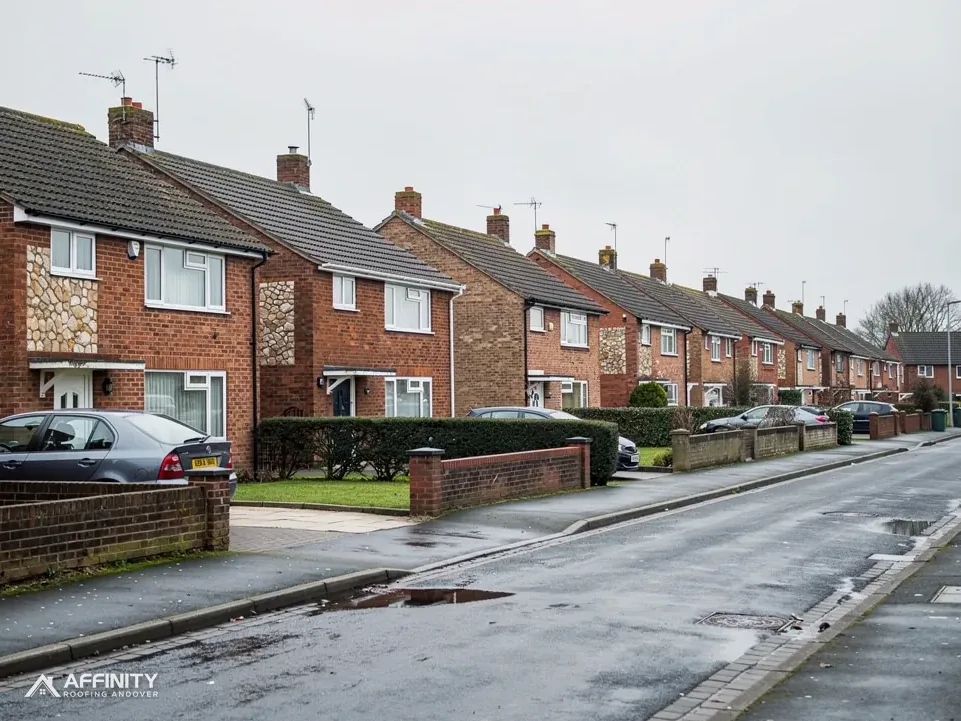
Roofers in Timsbury
Listed cottages and an inn, in the southern Test valley
Timsbury has four listed buildings within about 500 metres of its centre, including two Grade II cottages and an inn. Every roof is examined first and priced afterwards.
Timsbury roofs, from the cottages to the inn
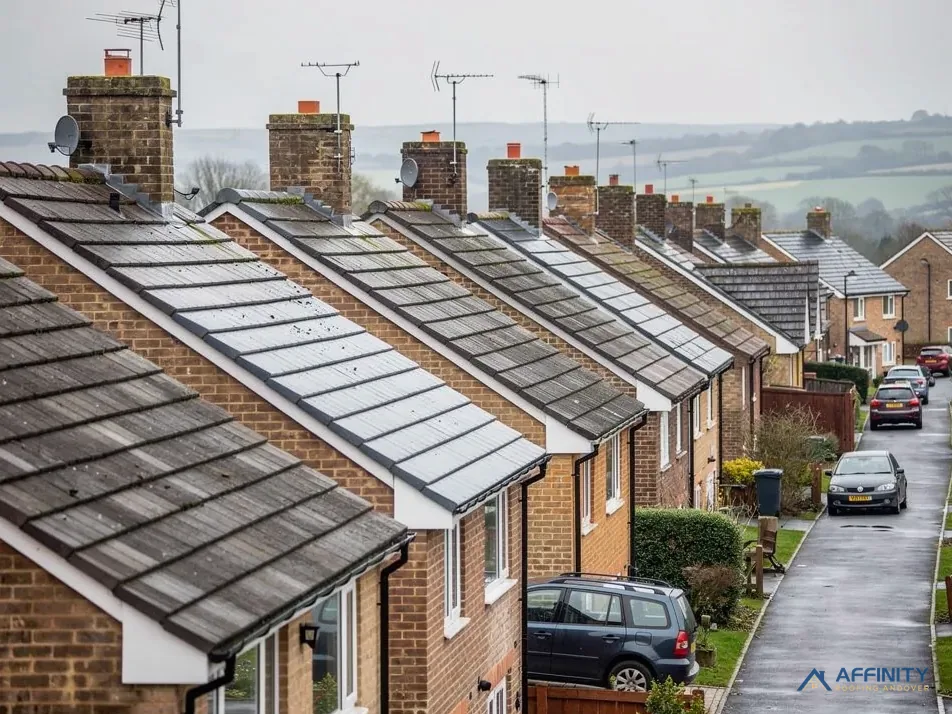
Elizabethan Cottage
Listed Grade II since 22 January 1985, a house where any roof repair is made in step with its listing.
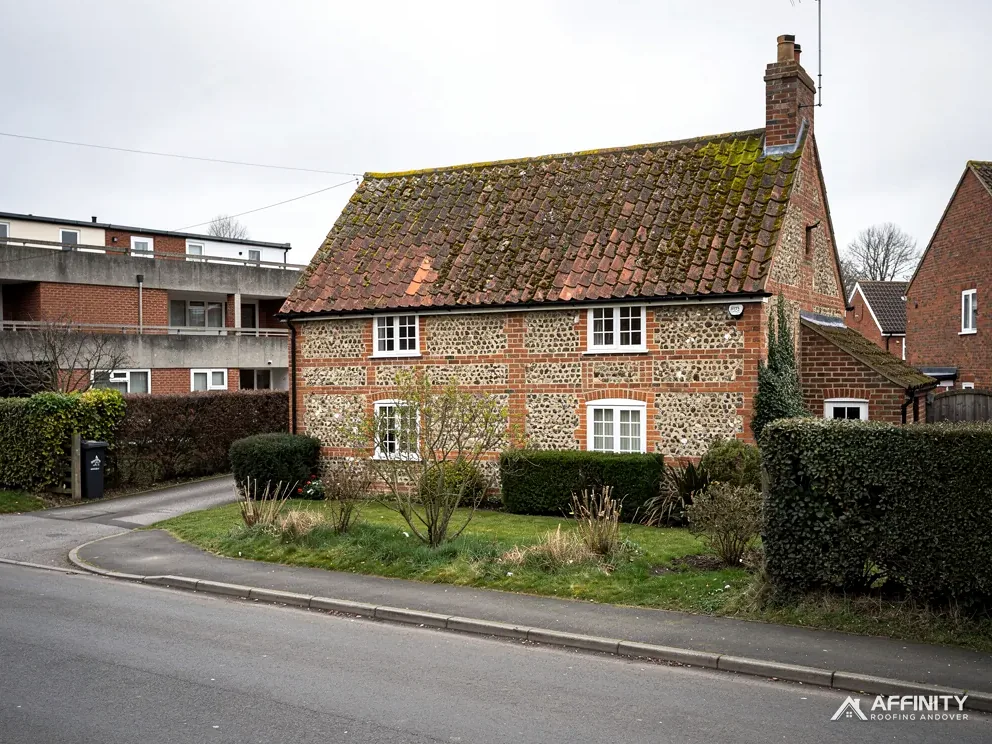
Warblers Cottage
Grade II listed since 11 April 1986, so a repair here is matched to the covering already on the roof.
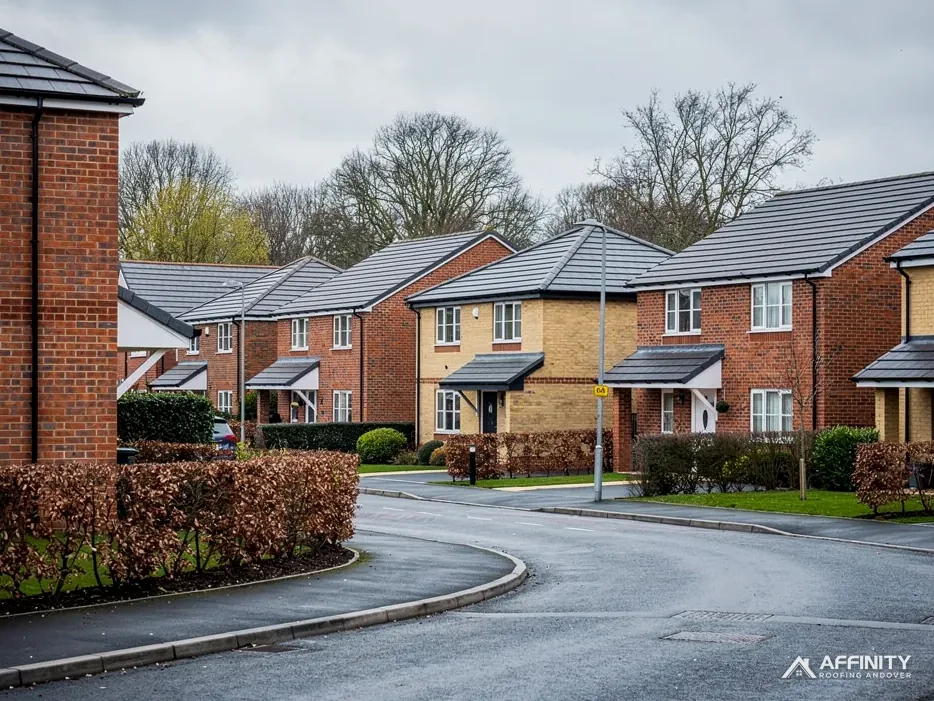
The Malthouse Inn
A Grade II listed inn, so its roof carries the same listing rules as a house.
Timsbury between Michelmersh and Romsey
Michelmersh is the next village north, with King's Somborne beyond it. Lockerley lies to the west, Ampfield to the east and Romsey to the south.
- Distance
- 14.8 road miles south of Andover
- Planning
- Test Valley Borough Council
- Council
- Test Valley Borough Council and Hampshire County Council
The Timsbury roof report
Local editionTimsbury, HampshireAndover's council, the valley's far end
Timsbury roofs: Andover's council in a southern village, four listings and the age of a covering
Timsbury lies 14.8 road miles south of Andover under the same planning authority. Inside: who holds authority over a roof there, what the listed cottages and the inn ask of a repair, and how to judge a covering's age.
Andover's council, at the far end of the valley
Timsbury lies 14.8 road miles south of Andover, in the parish of Michelmersh and Timsbury, where the 2021 Census counted 894 usual residents. Its planning authority is the one Andover has: Test Valley Borough Council decides planning questions in both places, while Hampshire County Council covers the county and the roads. A homeowner here therefore deals with the same planning team as someone in Andover, even though Romsey is the nearer town.
For Building Regulations on a Timsbury roof, the inspecting body is your building control body, and finding out which one applies is part of our first visit. We do not guess it from the postcode. The answer is written next to the price, so you know who will inspect the work and when to expect them. A private inspector can be used instead, provided they are a registered building control approver.
On the national side, two limits come from the Planning Portal for any re-roof: 25 per cent of the whole building envelope, and 50 per cent of the roof. Stay within both limits and no building control application is normally required; step beyond either and the question needs asking. Renewing one slope of tiles sits inside the lines, and stripping the whole roof usually does not. None of the councils round here sets its own percentage, which leaves the Planning Portal's lines as the working rule.
The second line is weight. If a changed material adds 15 per cent or more to the load the frame carries, that is a Building Regulations matter, and the Planning Portal adds that an engineer's or surveyor's view should come first. Heavy concrete laid over a frame built for lighter clay is the typical worry.
None of that need slow a repair. A cracked tile, a ridge piece that has moved or a flashing that has lifted counts as a repair, and the report states as much when that is all the roof needs. Larger work is named separately. The larger questions only arise when the survey finds a failing slope, and by then you have the photographs to hand.
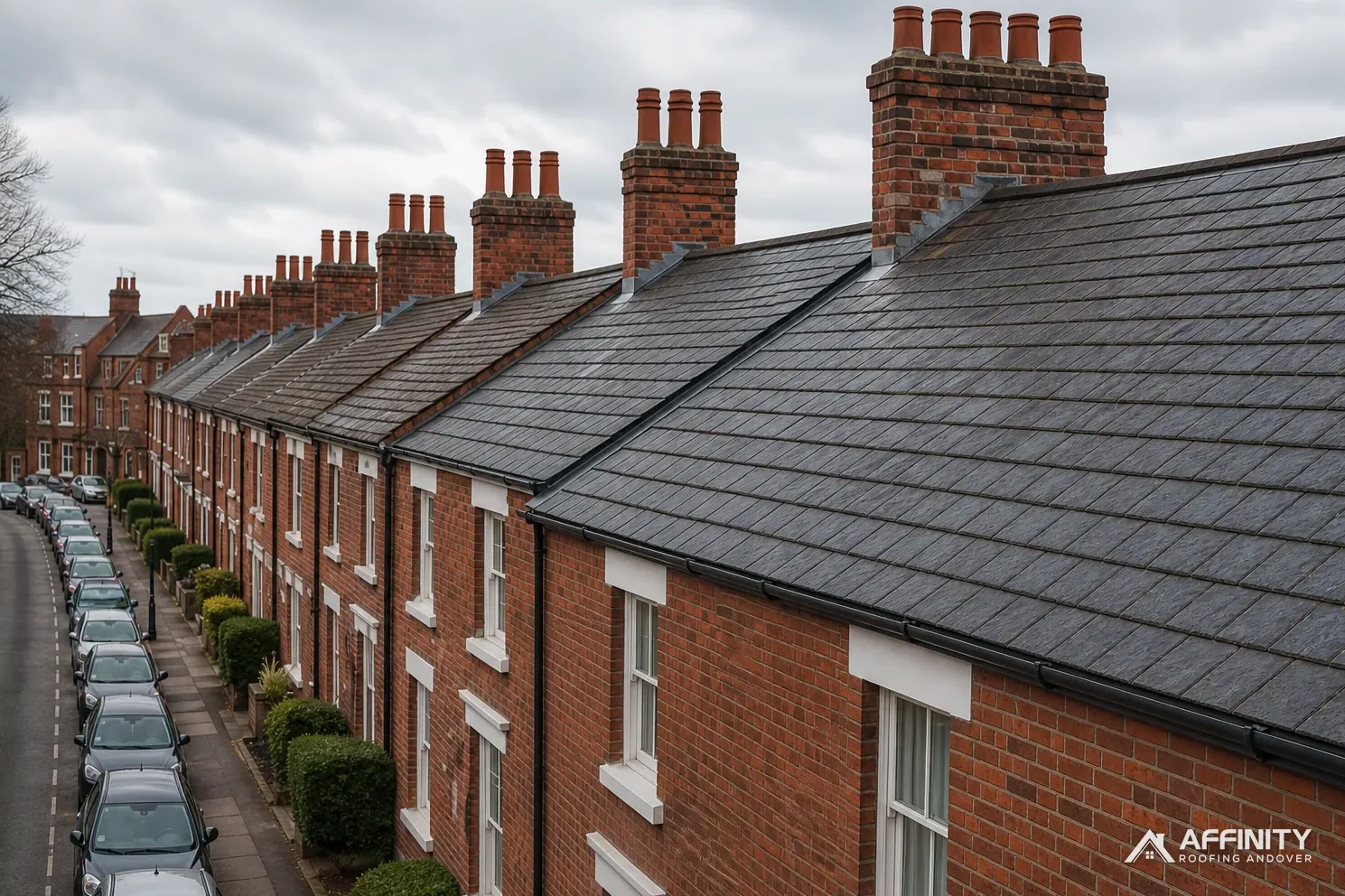
A few trade words are worth having. Three terms help: the ridge is the roof's crest, a valley is the fold where two slopes join, and flashing is the metal strip (often lead) sealing a junction like a chimney base. The report uses each one plainly.
We lift a few tiles at the eaves and the ridge wherever access allows, inspect the timber battens that carry them and the underlay beneath, and take close photographs of each defect. You are shown them before any figure is written.
Two cottages and an inn, and the villages next door
The National Heritage List records 4 listed buildings within about 500 metres of the centre of Timsbury. Elizabethan Cottage is Grade II (list entry 1167800, first listed on 22 January 1985). Warblers Cottage is Grade II as well (1093750, first listed on 11 April 1986), and so is The Malthouse Inn (1339120). It is a short list, which means every listed roof is part of how the village looks from the road, and a poor repair on one is noticed by everyone who passes.
Reclaimed plain tiles are the usual answer where a listed roof needs a few replacements, because they carry the colour and surface of the old ones, which new tiles take years to acquire. Finding them takes a while, so the survey makes an allowance and puts a time on the wait before any date is fixed.
A listed house needs listed building consent as an extra permission for changes touching its special character, which can include the roof covering. We begin from the least change that cures the fault, using the material already on the surrounding roof. Before any application goes to Test Valley Borough Council, we measure and photograph the tiles or slates, note how they are fixed, and write a brief description to accompany the pictures.
For an inn the rules are the same as for a cottage, but the building has to keep working. Deliveries, customers and neighbours share the lane, so the survey records those constraints and the scaffold plan answers them: where the boards stand, how the entrance is kept clear and which days are least disruptive.
Roofs on old buildings are seldom straight. Rafters sag, courses wander and valleys follow the frame rather than a ruler, so we measure each slope on the survey instead of ordering by a standard size, and a few tiles are laid dry to check the lap before the full order goes in.
Conservation areas at Michelmersh and Mottisfont lie nearby, but neither one settles anything for a particular Timsbury address. Boundaries follow streets and plots, not parishes, so the map is checked house by house. Whether a conservation area or an Article 4 direction touches a particular house is something the borough's planning team can say, and we put the question to them before pricing anything that alters the roof's form or materials.
Where a house is not listed and no such area applies, a like-for-like re-covering is usually the simplest case of all. Our guide to planning permission for roof work shows where the edges lie.
“Timsbury answers to Andover's council, but its roofs are judged one cottage at a time.”
Covering lifespans and the scaffold clock
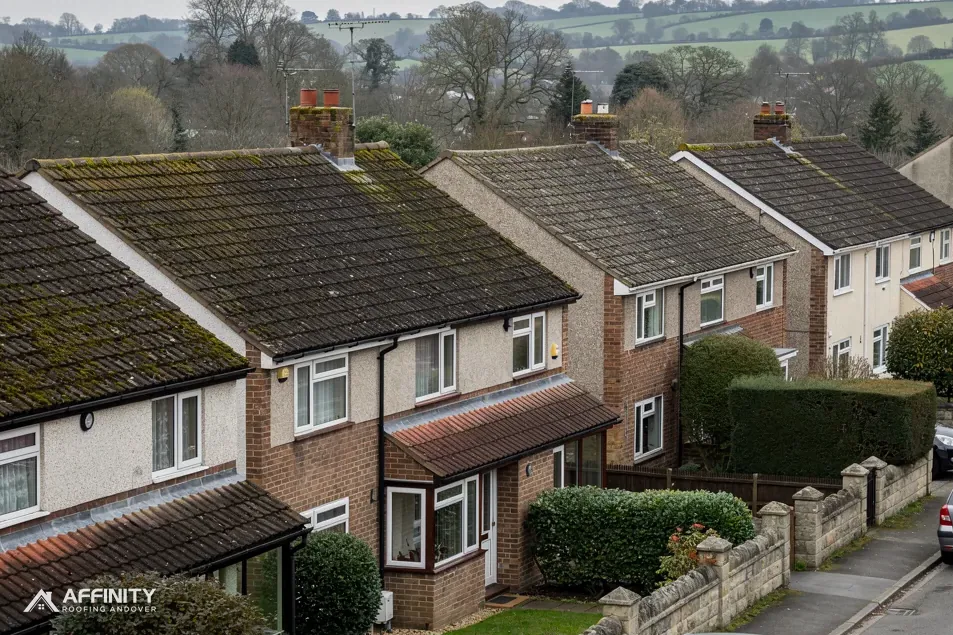
Cottage roofs age, and the question owners ask is when repair stops making sense. The published ranges give a starting point, never a promise. Marley quotes the BRE's minimum life expectancy of 60 years for clay roof tiles, a minimum that holds for clay only, and HomeBuilding gives 60-80 years for clay. For plain concrete tiles HomeBuilding says 40-50 years, while Marley says concrete tiles are expected to last around 60 years and that this is not a guarantee. The sources differ, which is why we name them both.
A tile's age is only part of the picture. The timber battens, the underlay and the nails or clips beneath have lives of their own, so the survey looks at them too. A roof of sound old clay tiles on rotten battens needs the battens renewed and the tiles relaid, and that can cost less and sit more gently on a listed building than a new covering would.
Where the work needs scaffolding on the public highway, section 169 of the Highways Act 1980 calls for a licence, and in Timsbury the highway authority is Hampshire County Council. Hampshire County Council's rules put the application with the scaffolding firm, acting for the customer, and it must be in at least 10 clear working days before work begins. Hampshire's fee is £211.90 on application for the first 2 weeks and £72 for each further 2-week period. Licensing does not extend to private roads.
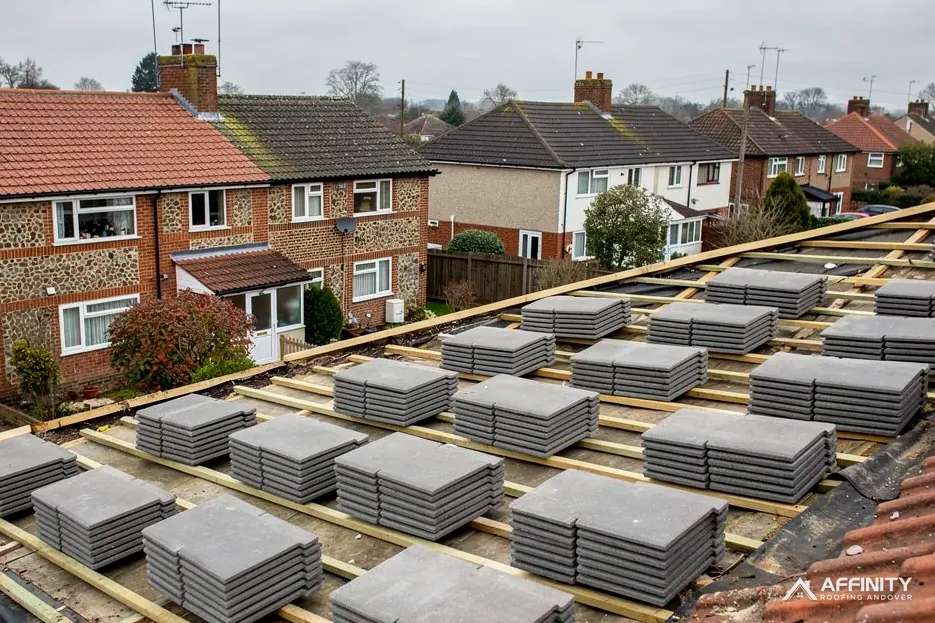
Managing the scaffolder falls to us, and the programme is built so the scaffold stands no longer than the work needs. For a listed roof that means waiting for the consent decision before the licence is applied for, since the county does not grant extensions.
Timsbury roofs are served by roof repairs, pitched roofing and the occasional full replacement. Whichever it is, the site is tidied daily and the waste is taken off with us.
A tile roof can outlast its gutters. A gutter that sags or clogs spills down the wall, and fascia boards rot where water lands on them, so guttering, soffits and fascias are checked on the same visit. A flat porch or rear extension follows different rules from a pitched roof, and the report marks which parts of the house are which, so each is priced for what it is.
National cost guides publish averages, for example MyJobQuote's figure of around £650 for the average roof repair in 2026 (MyJobQuote, Oct 2026), a typical UK figure. An average cannot see your roof, and the survey exists to replace it with the facts of one house.
Which service does your Timsbury roof need?
Timsbury roofs: the listings, the age of tiles and the licence
Can the roof of Warblers Cottage or Elizabethan Cottage in Timsbury be re-tiled?
Both are Grade II listed, so listed building consent comes into play for any change touching their special character, with Test Valley Borough Council's planning team deciding. The usual starting point is a repair in the same material. We record the existing tiles, photograph the faults and supply a plain description for the application.
Who inspects building control on a re-roof here?
Your building control body, and we establish which one at the start of each job rather than assume it. The Planning Portal's yardsticks are under 25 per cent of the envelope and under 50 per cent of the roof, inside which building control is not normally asked. A private registered building control approver is also an option.
Is a mortar-bedded ridge a problem on an older roof?
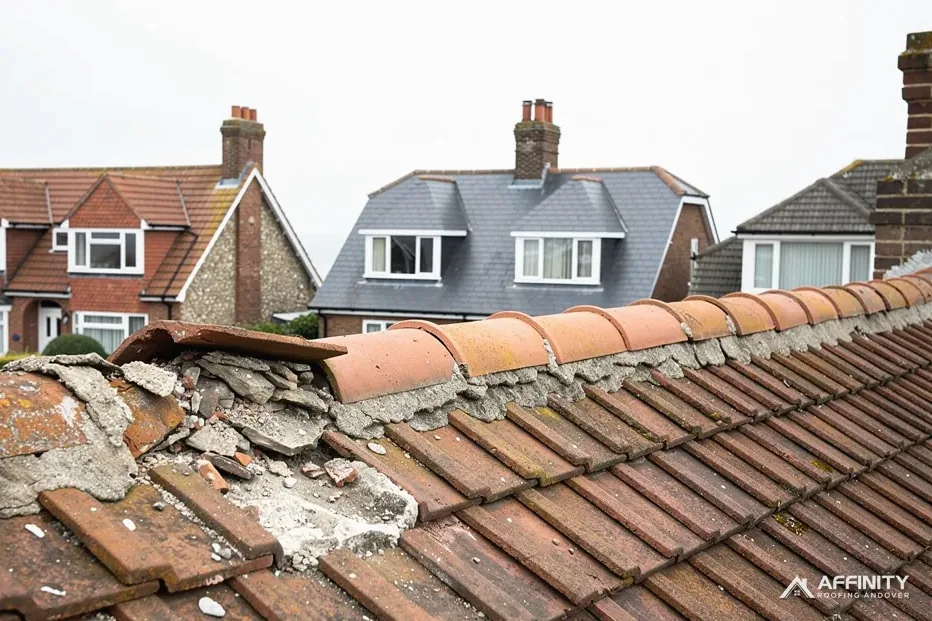
Not by itself. Mortar remains permitted, but it is no longer trusted to hold ridge tiles by itself, and BS 8612 is the test standard for dry-fixed systems. A cracked bed with loose tiles beside it is a repair, and we explain whether re-bedding or a dry-fix ridge suits the roof before pricing either.
How much notice does a scaffold licence need on a house here?
Hampshire County Council gives no extensions, assumes nothing from silence, and wants 10 clear working days of lead time. Under Hampshire County Council's rules the scaffolding contractor submits the application, and we pass it to the scaffolder. Private land is outside licensing, and the written price says which applies.
Timsbury and the villages beside it
Ask for a Timsbury roof survey
Tell us where the house is and add a photo; the survey, the consent route and one written price follow.
10-year workmanship guarantee, in writing.