
Roofers in Ampfield
Ampfield House, the White Horse and the lanes between Romsey and Winchester
Ampfield has a Grade II* house, a conservation area and neighbours under three different councils. We inspect every roof, photograph the findings and sort out which rules apply.
Ampfield roofs from the House to the pub

Around Ampfield House
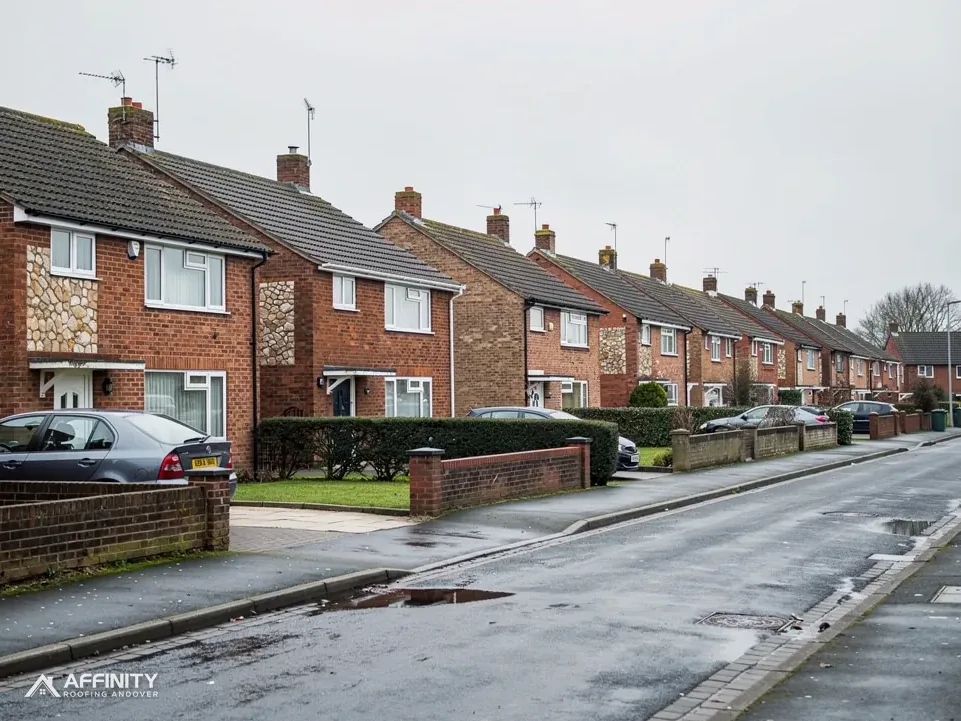
Homes near Ampfield House, Grade II* since 29 May 1957, where the listing shapes how a nearby job runs.

The Old Vicarage and neighbours
The Old Vicarage, Grade II, listed on the same date as the House, with 12 listed buildings within 500 metres.

The White Horse pub
The White Horse public house, Grade II, where a commercial roof and a village street meet.
Ampfield between North Baddesley and Hursley
North Baddesley lies to the south and Hursley to the north-east. Valley Park and Chandler's Ford are south-east, Chilworth to the south and Romsey to the west.
- Distance
- 19.3 road miles south of Andover
- Planning
- Test Valley Borough Council
- Council
- Test Valley Borough Council and Hampshire County Council
The Ampfield roof report
Local editionAmpfield, HampshireA village where three councils meet
Three councils within three miles: which rules reach an Ampfield roof
Ampfield is 19.3 road miles from Andover, yet within three miles of villages and a town that answer to Winchester and Eastleigh. This report sorts out whose rules apply here, what the listings change, and how a Hampshire scaffold licence works.
Where Test Valley, Winchester and Eastleigh meet
Look at a map of Ampfield and you find three councils within a few miles. Ampfield itself is in Test Valley borough. Hursley, 2.1 miles to the north-east, is in Winchester district. Chandler's Ford, 2.6 miles to the south-east, is in Eastleigh borough, and its building control comes from Southampton and Eastleigh Building Control, a partnership between Southampton City Council and Eastleigh Borough Council. North Baddesley and Valley Park, close by, are Test Valley places like Ampfield.
For an Ampfield roof, the planning authority is Test Valley Borough Council. For Building Regulations, ask your building control body, or use a registered approver as the private alternative. The highway belongs to Hampshire County Council, the one authority all of these places share. A friend two miles away may therefore have dealt with a different planning team and a different building control provider, so their experience may not carry over to your address.
Moving between councils is part of working in this corner of Hampshire. The roof is the same wherever it stands; the forms are not. We keep the contact route for each authority to hand, so the question reaches the right desk first time and you do not wait while it is passed along from one office to the next.
This is why we begin every job with a postcode check and not with an assumption. At the survey we confirm which council decides planning for the house, who handles building control and which body would license a scaffold, and we write the answers into the survey note.
Hampshire County Council's rules for county roads are the one constant. A scaffold on the public highway needs a licence from the county whichever district you live in. Hampshire County Council charges £211.90 on application for the first 2 weeks, then £72 for each further 2-week period, and its page wants 10 clear working days of lead time with no extensions.
On a survey we read the roof the way a surveyor reads a building: the covering first, then how water leaves the roof, then what lies beneath. Slipped tiles and cracked ridge pieces show on the outside. Rotten battens, damp rafters and failed underlay show only in the loft, which is why we go in.
The photographs are yours to keep, with a plain note on each. Where one picture shows a fault that matters, the survey note marks it and says what happens if it is left, so that the repair you agree to is a decision and not a hope. If something can safely wait a season, we say that as well, with the sign to watch for.
Ampfield House, the Old Vicarage and the conservation area
Ampfield parish had 1,819 usual residents at the 2021 Census. Historic England's list records 12 listed buildings within about 500 metres of the village centre. Ampfield House is Grade II* (list entry 1093686), and the Old Vicarage is Grade II (1339162). Both were first listed on 29 May 1957. The White Horse public house (1339163) is Grade II as well. The Ampfield conservation area lies within about 0.75 km of the centre.
For an owner, these designations mean questions rather than prohibitions. Is your own house listed? If so, listed building consent is required before any work that alters its character begins. If your house stands in the conservation area, how the roof looks from the street is a matter for Test Valley Borough Council's planning team. Is an Article 4 direction in force on your road? That is for the council to say, and we ask it for you if you prefer. Our guide to listed building roof repairs sets out how consent works.
Even an unlisted house inside the conservation area deserves care. A cracked ridge tile replaced with a tile of the wrong colour is noticed by every neighbour, and by the council if it ever looks at the street. We match colour and texture from sample tiles held against the old ones in daylight, which is more reliable than a catalogue photograph.
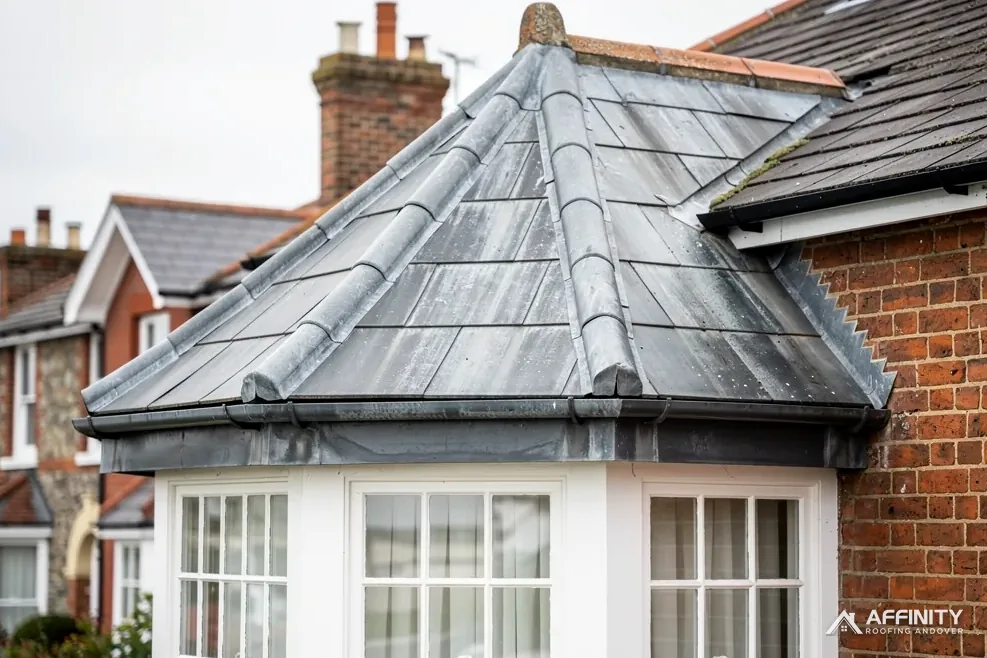
Listed buildings differ in what they ask of a roofer. A Grade II* house with an old covering deserves repairs made in matching materials and fixings, not substitutes. A village pub has a commercial roof, with different priorities: keeping trading space dry and safe while work goes on. A plain family house in the conservation area wants an honest like-for-like repair, with the colour and texture of what was there.
We measure and photograph the existing covering before ordering. Tile or slate size, thickness, colour and the way each course is laid are recorded on the survey note. If reclaimed stock exists that matches, we use it; if only new will do, we choose the closest in colour and texture and say so.
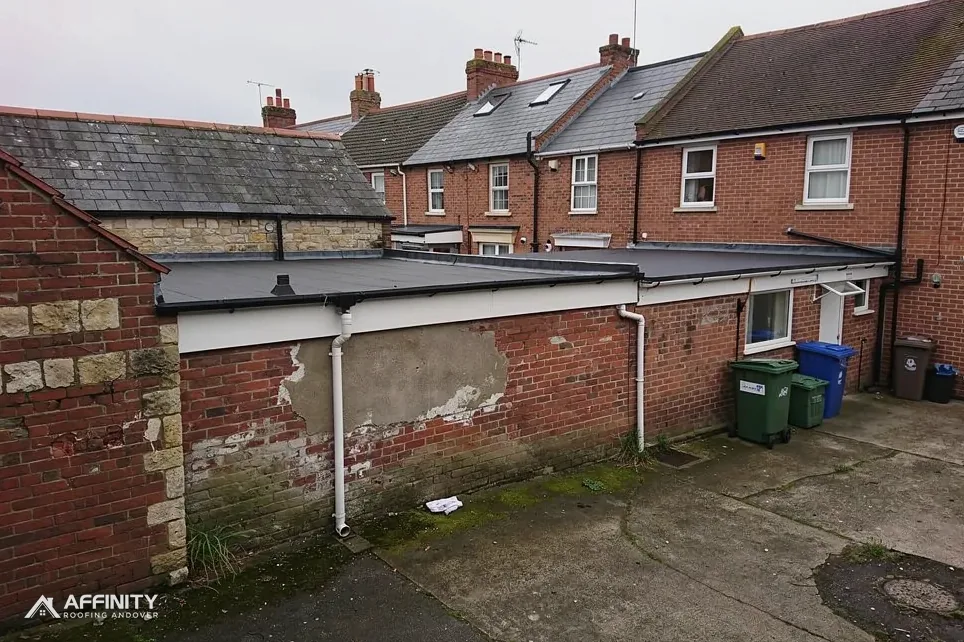
Commercial roofs add questions of access and trading hours. Where an Ampfield business is open to the public, we plan the scaffold so that the entrance stays clear and the working day suits the premises, and we tell the owner exactly which days are noisy.
Whatever the building, the same discipline applies: photograph first, decide second, quote last.
“A few miles around Ampfield, three councils decide planning and building control for neighbouring roofs.”
Weight, scaffold dates and the order of a job
Two rules decide most Ampfield re-roofs, and neither is about planning. The first is weight. If a new covering would be 15 per cent heavier than the old one, or more, Building Regulations approval is required however small the house, and the Planning Portal points to a structural check as the first step. Replacing slate or plain clay with concrete tile is the usual case. We note the covering now on the roof at the survey, so you know the answer before you choose a replacement, and not after the tiles have been delivered.
The second is the size of the job. The Portal's test asks whether under 25 per cent of the building envelope and under 50 per cent of the roof is affected; if so, an application is normally unnecessary. A repair to one slope is far inside that. A full re-cover of a larger house may not be, and in that case we put the question to your building control body before a tile is ordered.
Hampshire County Council's scaffold licence follows. The scaffolding contractor applies to Hampshire County Council on your behalf, and the county wants 10 clear working days between that form and the first day. If a listed building consent is outstanding, we leave the booking until the decision lands, since a frame cannot be stretched or paused once the licence starts.
Plenty of Ampfield jobs avoid the highway entirely. Where a drive or front garden gives room, the frame can sit wholly on land that is yours, and a low outbuilding can be reached from a tower. Land that is not public highway lies outside the licence altogether.
Ampfield roofs call on plain services. Roof repairs follow slipped tiles and failed flashings. Chimney repairs restore a stack with crumbling mortar. Commercial roofing covers pubs, shops and small units.
People walk past scaffolds, so the safety details matter. The lowest lift is fenced, boards are fixed, and netting or fans catch anything that might fall. Deliveries are timed so that the lane is not blocked, and neighbours are told in advance when the frame will go up and come down.
Weather is the other variable. Rain stops roof work but not the licence clock, so the start is set with spare days, the forecast is read before the scaffolder is committed, and any open slope is sheeted when the crew leaves each evening.
At the end, the site is cleared, the waste removed and the photographs handed over.
Roof jobs we handle in Ampfield




Ampfield roofs: the House, the pub and the borders
Does a roof near Ampfield House need listed building consent?
Only when the roof belongs to a listed building. Ampfield House is Grade II* and the Old Vicarage Grade II, yet a neighbour's listing puts no consent duty on your house. We look up your address on the National Heritage List at the survey and record the result, with the entry number, in your file for any future buyer.
Which council decides planning for an Ampfield re-roof?
Test Valley Borough Council, with Hampshire County Council as the highway authority. A house in Hursley, 2.1 miles away, is in Winchester district, so its owner deals with a different planning team and a different building control service. We check your address at the survey and tell you which council applies before any application goes in.
Can the pub or a shop in Ampfield have its roof repaired while trading?
Usually in stages. We plan scaffold and working days around opening hours, keep the entrance clear and agree noisy days with the owner. A commercial roof still needs a survey first, and the same consent questions apply if the building is listed. We give the business a written plan before the frame goes up, so the people who work and drink there are not surprised.
How much notice does Hampshire County Council need for a scaffold licence?
Hampshire County Council wants 10 clear working days of notice and offers no extensions, so a late request means a late start. The fee is £211.90 for the first 2 weeks and £72 for each further 2-week period, and the scaffolding company applies to Hampshire County Council. Private ground sits outside the licence, so we check the plot first.
Between Romsey and Winchester: neighbours of Ampfield
Ask for an Ampfield roof survey
Tell us your road and send a photo. We inspect, sort out the councils, then give one written total.
10-year workmanship guarantee, in writing.