
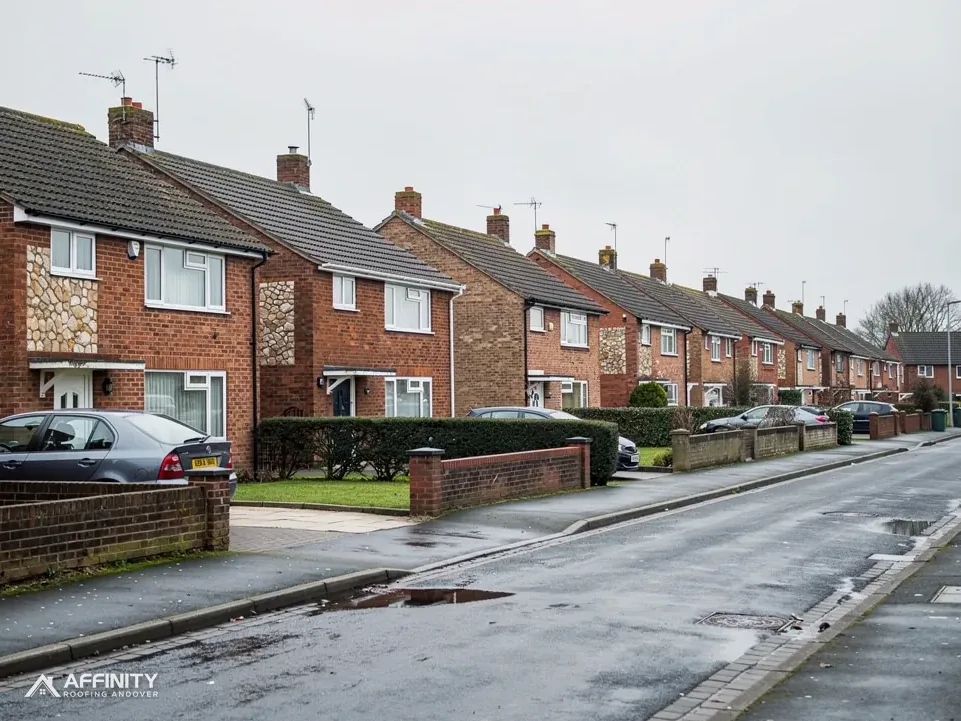
Roofers in Romsey
From King John's House to the streets around the Abbey
Romsey's roofs stand among Grade I landmarks and a conservation area. We survey each roof, show you what we find and choose the repair that suits how it was made.
Romsey roofs beside the Abbey and the old bridge
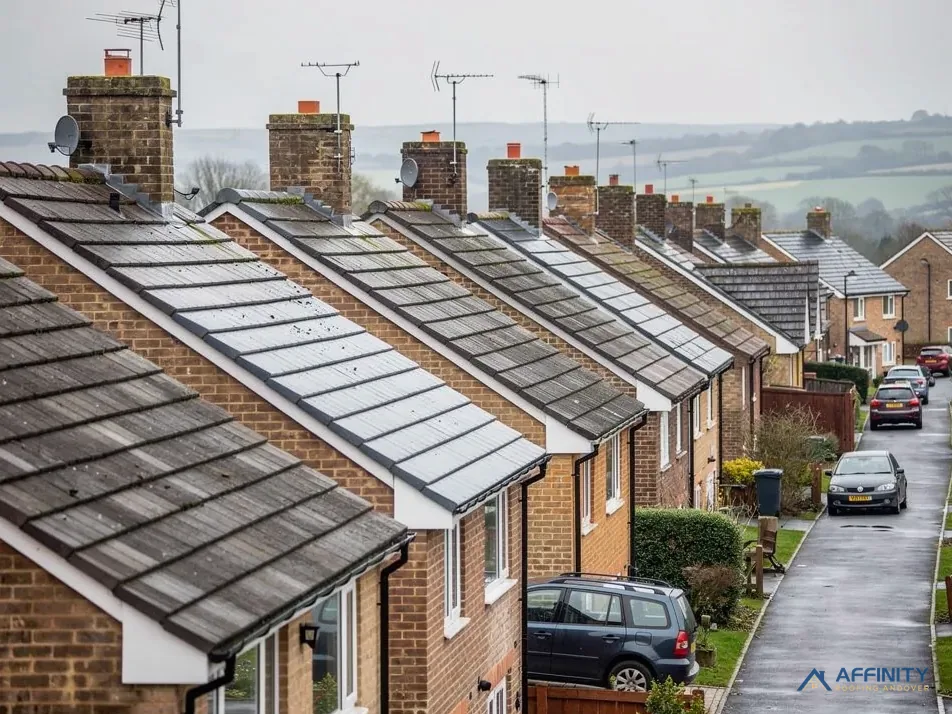
Streets near the Abbey
Houses close to the Grade I Abbey Church of St Mary and St Ethelflaeda, with many listed neighbours close by.
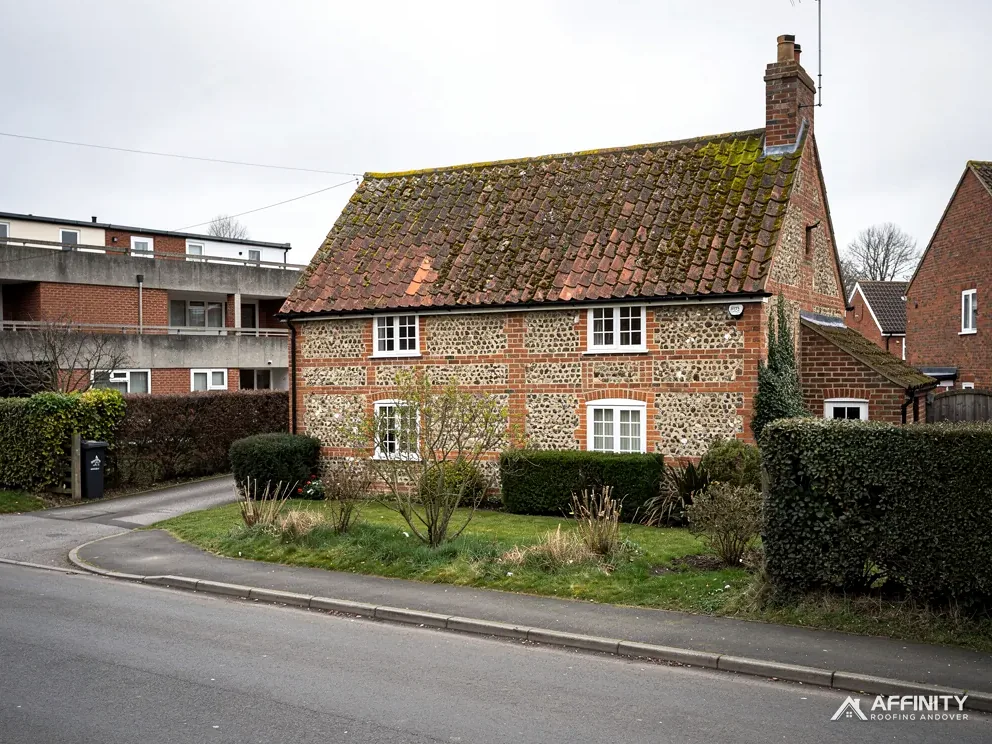
Around King John's House
Roofs near King John's House, listed Grade I on 28 August 1951, where matching old materials comes first.
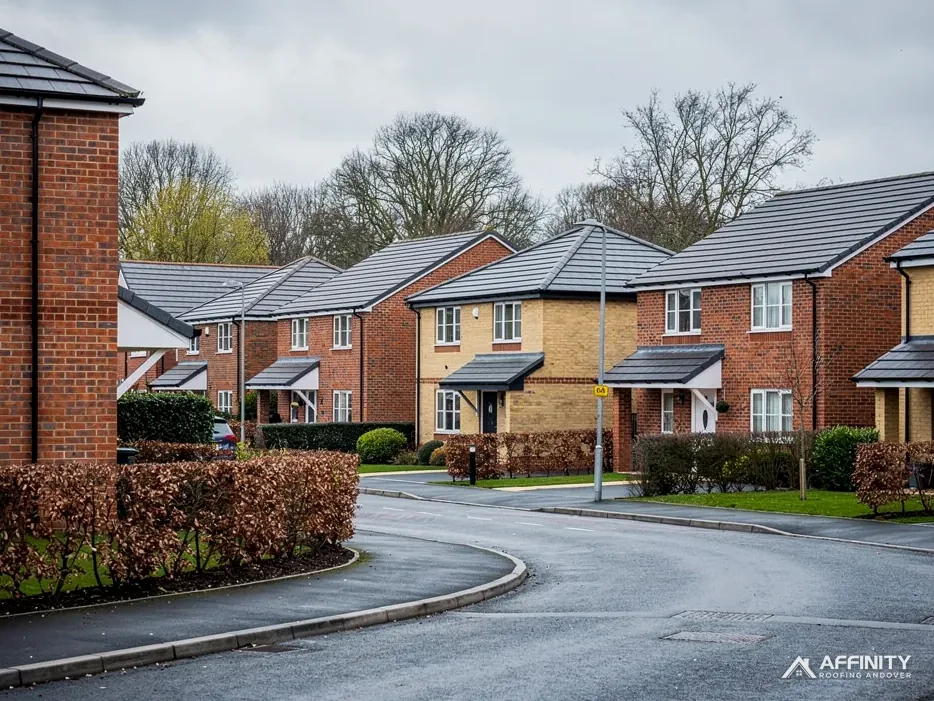
Homes by Middle Bridge
Houses near Middle Bridge, also Grade I since 28 August 1951, in the part of town the conservation area covers.
Romsey, with Timsbury and North Baddesley close by
Timsbury and Michelmersh lie to the north, North Baddesley and Ampfield to the east, and Rownhams and Nursling to the south-east. Our crews work in all of them.
- Distance
- 17.5 road miles south of Andover
- Planning
- Test Valley Borough Council
- Council
- Test Valley Borough Council and Hampshire County Council
The Romsey roof report
Local editionRomsey, HampshireLandmarks, councils and scaffold rules
Three Grade I landmarks and one borough: how Romsey roof work is cleared
Romsey is a Test Valley town, 17.5 road miles from Andover. Here we cover the listings around the Abbey, how planners and building control treat a re-roof, and where scaffold licences come from.
The Abbey, King John's House and Middle Bridge
Romsey parish had 14,442 usual residents at the 2021 Census, and its centre is dense with protected buildings. Historic England's list records 198 listed buildings within about 900 metres of the town point. Three of them are Grade I: the Abbey Church of St Mary and St Ethelflaeda (list entry 1092649), King John's House (1231745) and Middle Bridge (1339680). The house and the bridge were both first listed on 28 August 1951.
The Romsey conservation area also lies within about 0.75 km of the centre. Inside one, a change to the street view of a roof belongs in a conversation with the planning authority before materials are ordered, and here that authority is Test Valley Borough Council. If you want to know whether an Article 4 direction covers your street, ask the council for its answer rather than relying on ours.
With nearly two hundred listed buildings so close together, the roof you own may share a wall, a gutter or a boundary with a protected one. That changes the order of the work more than the repair itself. Listing does not strip a house of its ordinary permitted-development rights, but alterations touching its character also need listed building consent, which must be granted before work begins.
A church still used for worship follows a separate route. Where the church belongs to the Church of England, the faculty system replaces listed building consent for works to the church itself, while a house roof beside it stays its owner's own matter. We raise it because the Abbey stands close to houses, and a scaffold pole resting on church stonework needs the church's agreement first.
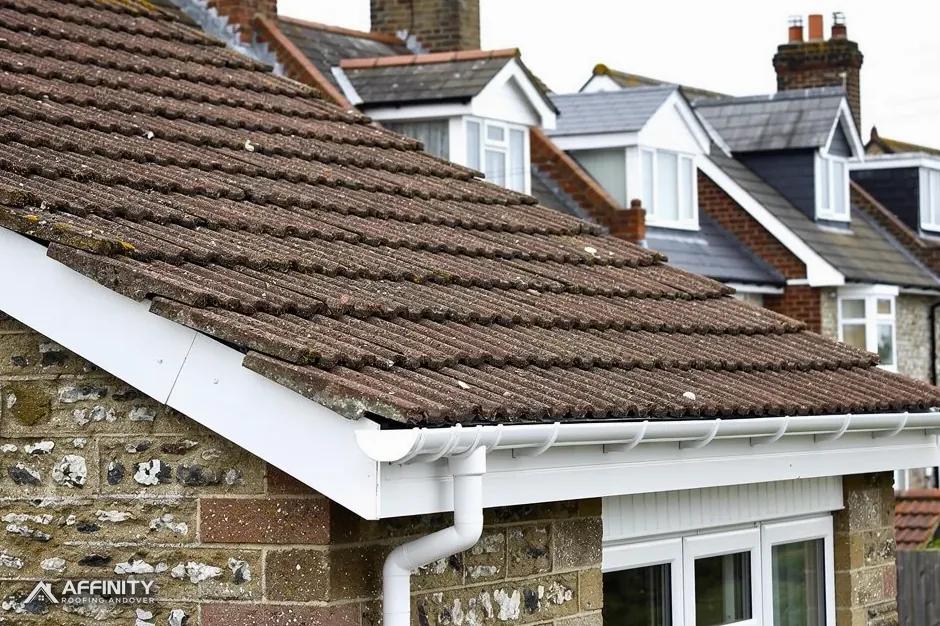
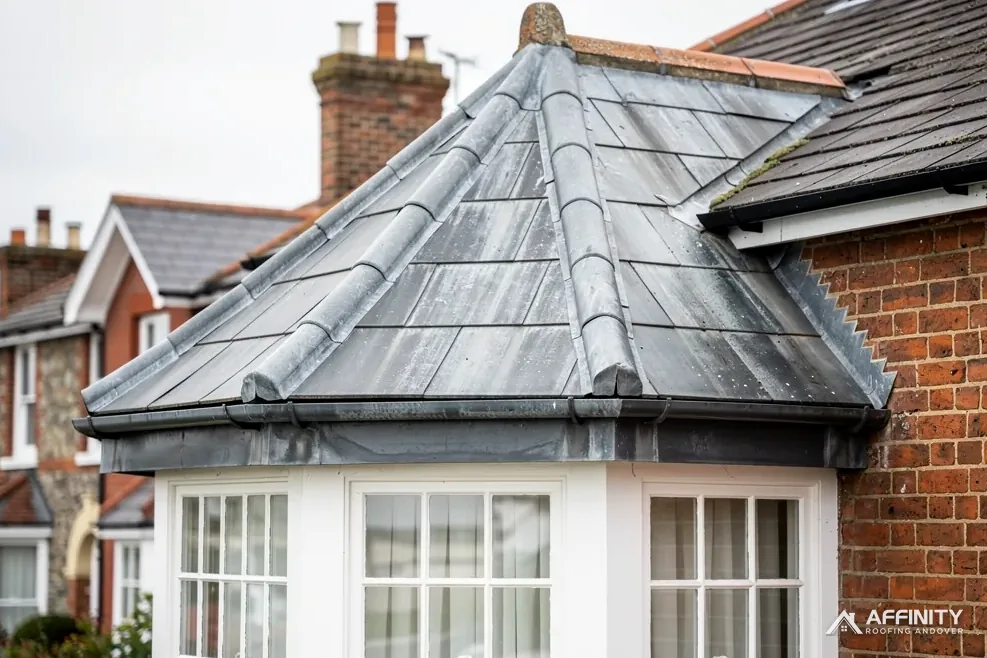
On a survey in these streets we record what the roof is made of before saying what it needs: tile or slate sizes, colours and thicknesses, how the ridge, the capping along the roof's crown, is bedded, and what the flashings are cut from. Flashings are the metal strips sealing joins against walls and chimneys. Every detail is photographed so you can check our reading yourself. Where a tile must be replaced, we search for a reclaimed match first, because new ones sit badly beside old on a street where roofs are seen together.
Most Romsey jobs are smaller than the listings suggest: a few slipped tiles, a cracked hip tile at a corner of the roof, a valley gutter that has begun to leak. The heritage questions seldom block those repairs. They tell us how carefully to work.
Planning, building control and the weight of a new roof
Planning in Romsey is Test Valley Borough Council's job, while Hampshire County Council holds the roads. When a roof question turns on a council rule, we put it to the council ourselves and bring you its answer with the survey photographs.
Building Regulations are a separate matter from planning, and they decide whether your building control body must be told about a re-roof. The Planning Portal's test asks two questions. Is under 25 per cent of the building envelope touched, and under 50 per cent of the roof? The envelope is the whole outer shell of the building, walls and floor and glazing included, not the roof alone. A repair to one slope passes both tests comfortably. A full re-cover of a large roof needs a closer look, so we ask before the job is booked.
Weight is the other trigger, and size does not matter. When a new covering would put 15 per cent more weight on the rafters, or beyond, building control approval is needed, and the Portal wants a structural check beforehand. Heavy concrete tile laid in place of light slate is the textbook case. It is a question about the timbers beneath, not about planning, and it is settled before a tile is ordered.
Councils answer in their own time, and a reply that arrives after the tiles are on site helps nobody. We put the question while the survey photographs are fresh, note the date, and tell you how long we expect the answer to hold up the job, so that you can plan around a real delay instead of an imagined one.
Take a Romsey house whose slates have failed across both slopes. We photograph the battens, the thin timber strips that carry the covering, and the underlay, a waterproof membrane laid beneath them. We note the weight of what is there and of what you want laid, and put both to your building control body. Similar weights leave the 15 per cent line untouched. A heavier choice means the structural check comes first.
You can use your building control body or a registered building control approver. The register for approvers came into force on 6 April 2024, and private approvers worked before then too. Either route suits a roof job, and we tell you which one we think fits.
The planning side has its own detail, including when a conservation area changes the answer. Our guide to planning permission for roof work keeps it in one place. By the time you decide, you hold the photographs, an account of each fault, the way the work will be cleared and a written total.
“In Romsey, Test Valley decides the planning and Hampshire County Council licenses the scaffold.”
A Hampshire scaffold licence on Romsey streets
A Romsey house with its front wall on the pavement needs scaffold poles set in the public highway. A frame like that needs a licence under section 169 of the Highways Act 1980, issued by Hampshire County Council in its role as highway authority. A district council such as Test Valley issues no scaffold licences.
Hampshire County Council wants your scaffolding firm, not you, to submit the application, and it needs at least 10 clear working days of notice before the licence starts. The county grants no tacit consent and no extensions. Hampshire County Council's fee is £211.90 on application for the first 2 weeks of the licence, then £72 for each further 2-week period. The structure must meet BS EN 12810/12811 or NASC guidance TG20:13. Poles set on private ground, such as your own drive, need no licence at all. We count those working days into the start date, so you are not caught out by a form you never knew about.
Those rules shape a Romsey timetable. If listed building consent is still being decided, we hold back the scaffold booking, since a Hampshire licence cannot be stretched and a frame standing idle is paid for all the same. Your start date arrives when the paperwork is in hand.
Not every job calls for a tall scaffold. A small repair to a low roof can often be done from a tower or ladder placed on private ground, and then there is no licence to arrange. A porch, an extension roof or a rear slope behind a gate often falls into that group. At the survey we tell you which kind of access the job needs.
Romsey roofs call on plain, practical services. Roof repairs answer a slipped tile or a valley that has failed. A roof replacement comes when the covering has run its course and patching no longer pays. Chimney repairs deal with a stack whose mortar or flashing has gone. If the fix is a repair, we recommend a repair, however large the quote for a whole new roof might have been.
When the work starts, we set out each day's plan with you, keep the pavement side of the scaffold tidy and carry every scrap of waste away. A roof beside a Grade I building deserves a site that looks cared for. If rain interrupts the work, the frame stays standing, so the start date carries some margin, with wet days counted in before the scaffolder's date is fixed. Overrunning a licence period costs money, and we would rather avoid it.
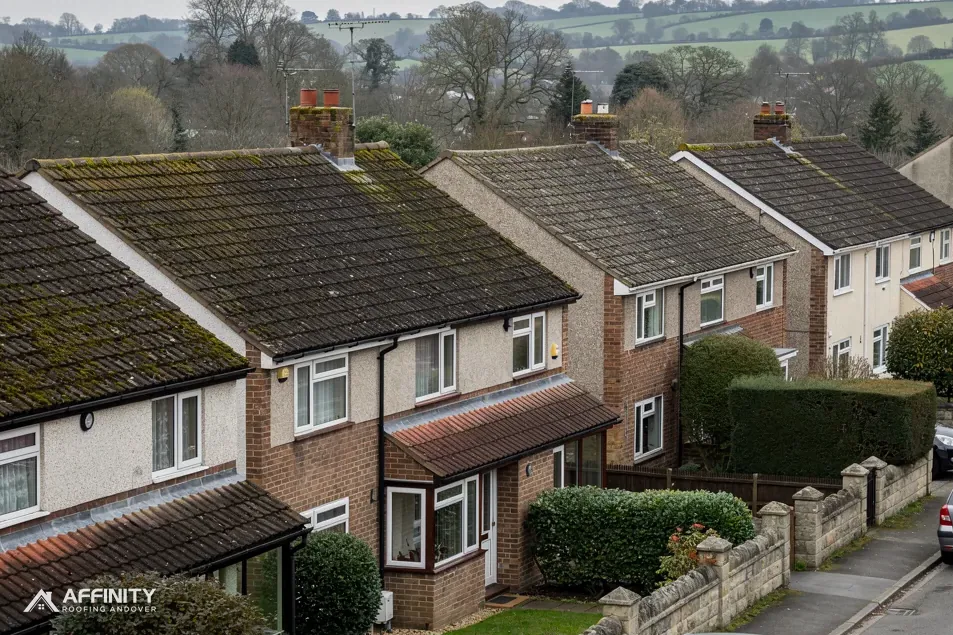
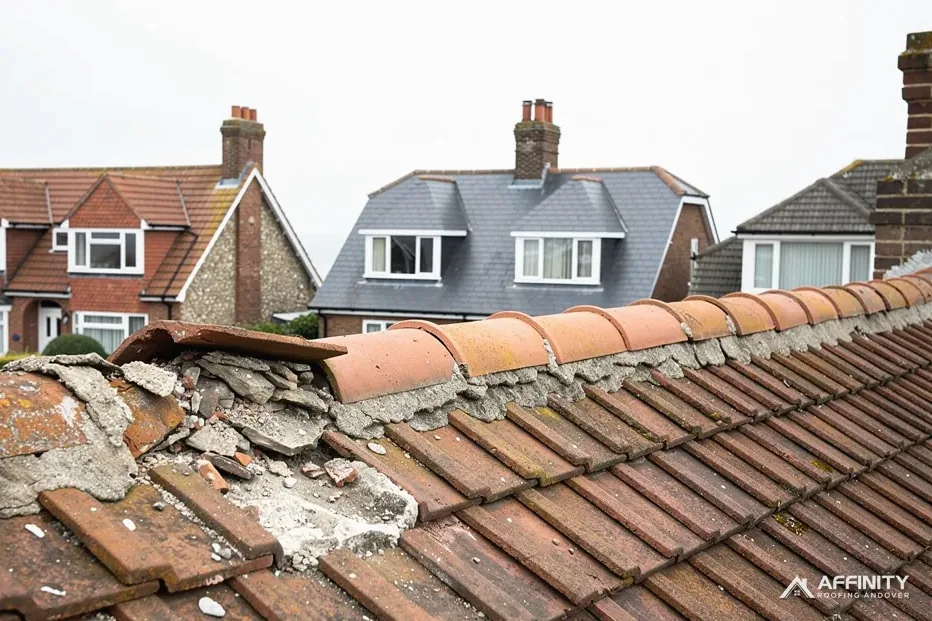
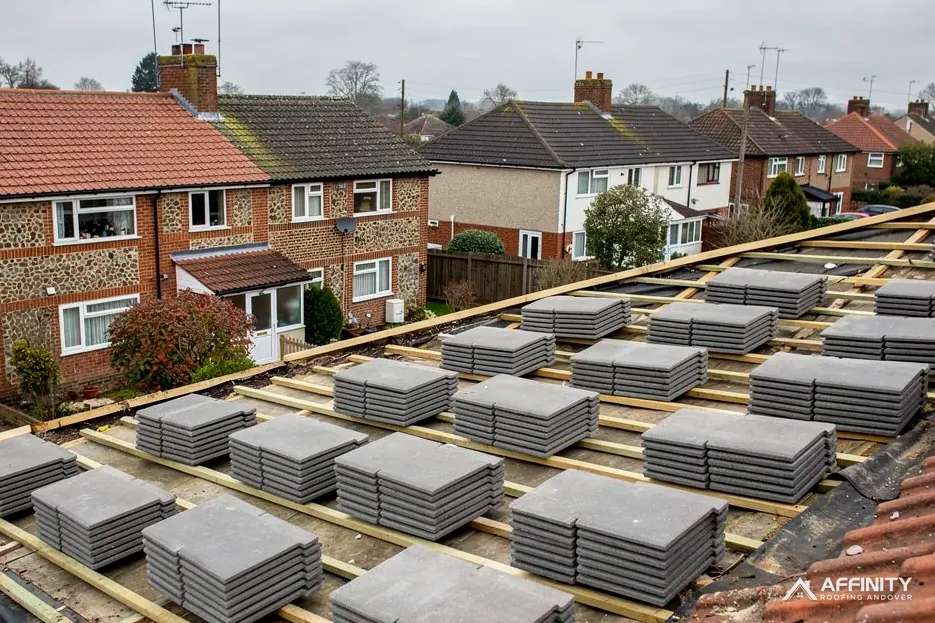
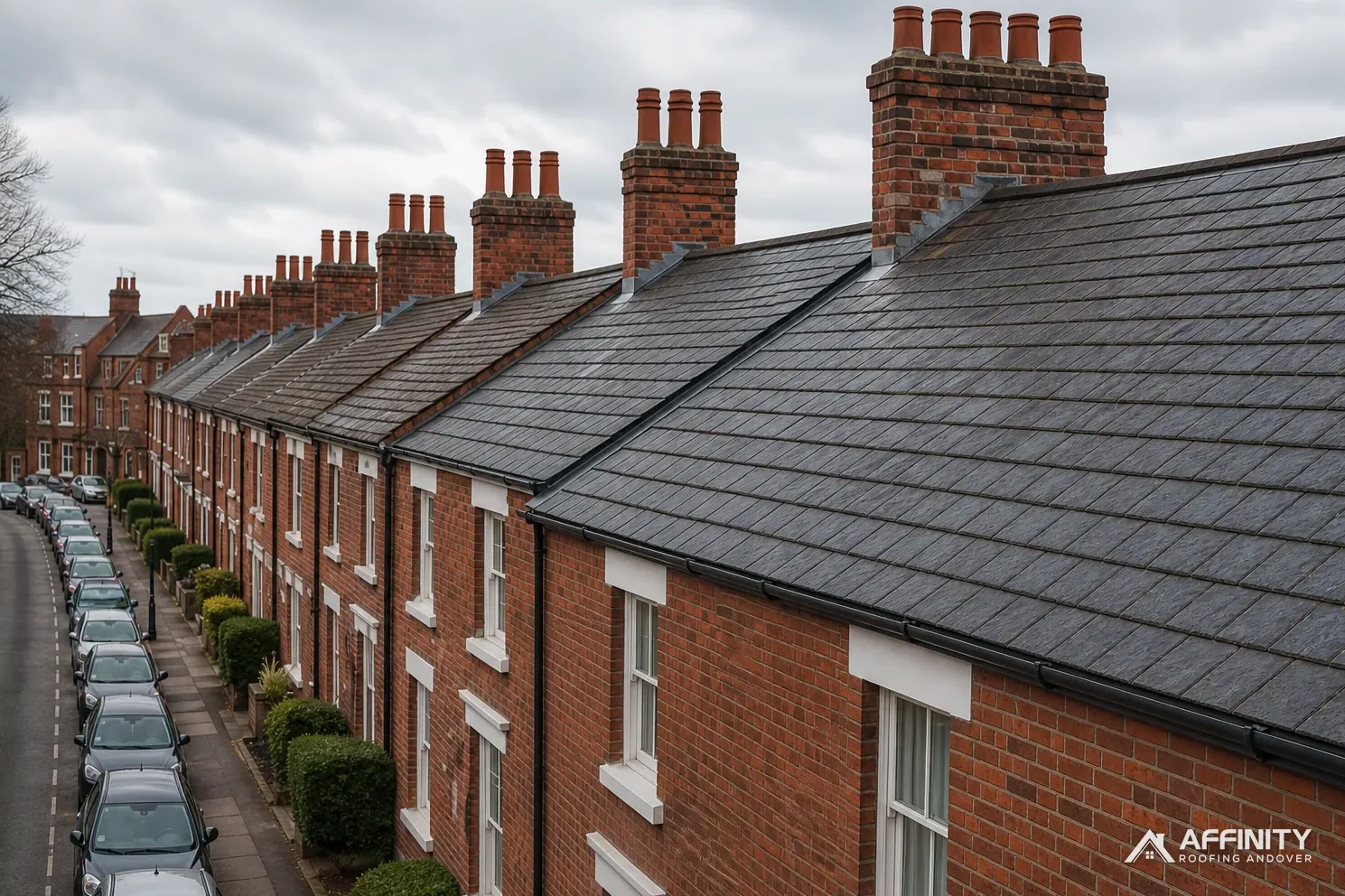
Romsey roofs: listings, rules and the scaffold
Can I re-roof a house near Romsey Abbey without listed building consent?
The answer depends on your own house: is it listed itself, or does it merely stand beside a listed building? Consent attaches to the listed property, not to its neighbours. At the survey we look up the Historic England entry for your address and write down which route applies, before anything is booked or ordered.
Does the Romsey conservation area change how a tiled roof is repaired?
Putting back what was there is where we start. In a conservation area, how a roof reads from the street is a planning matter, and any new colour or material belongs with Test Valley Borough Council before you buy. Ask the council whether an Article 4 direction covers your street, and file the reply safely.
Who handles the scaffold licence when a Romsey house opens straight on to the pavement?
Your scaffolding firm applies to Hampshire County Council, leaving at least 10 clear working days. Hampshire County Council charges £211.90 for the first 2 weeks and £72 for each further 2-week period. Frames kept on private land need no licence. We arrange the booking through the scaffolder and tell you the start date.
Will a new covering on my Romsey roof need Building Regulations approval?
Not always. The Planning Portal's test looks at whether under 25 per cent of the building envelope and under 50 per cent of the roof is involved. A covering 15 per cent heavier needs approval, as does anything beyond that, after a structural check. We ask your building control body before a re-cover and pass on what it says.
Parishes close to Romsey
Have your Romsey roof surveyed
Name the street and send a photo. Survey first, then one written price follows.
10-year workmanship guarantee, in writing.