
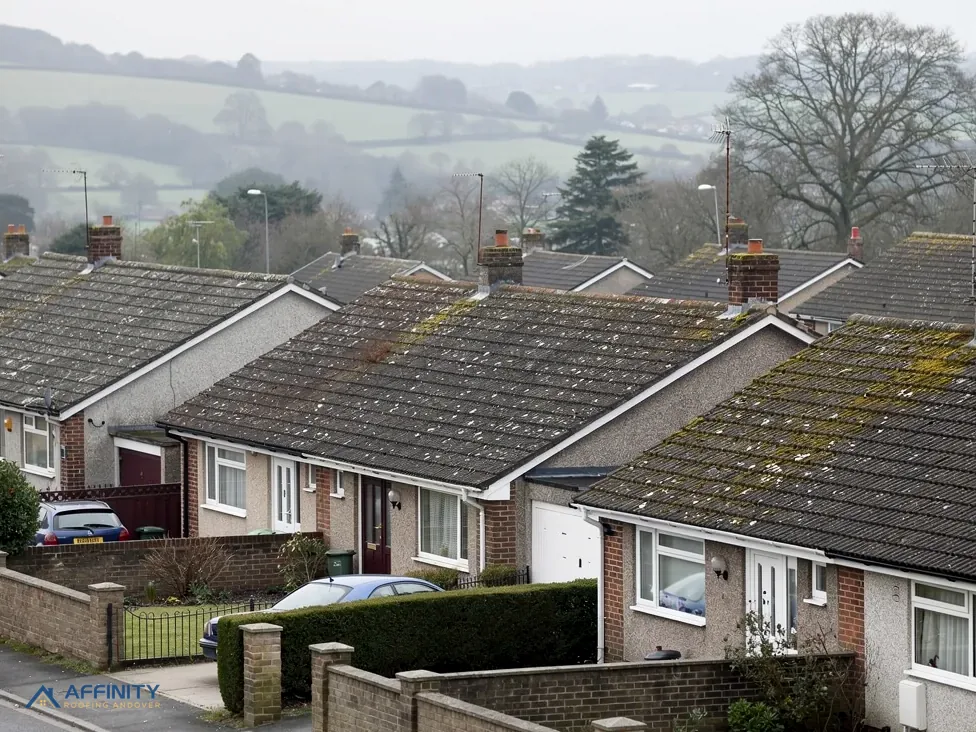
Roofers in Lockerley
Lockerley Mill, Mill Cottage and the village roofs around them
Lockerley is a small village with a listed mill and a few listed neighbours. We read each roof closely, show you the photographs and explain the options plainly.
Lockerley roofs by the mill
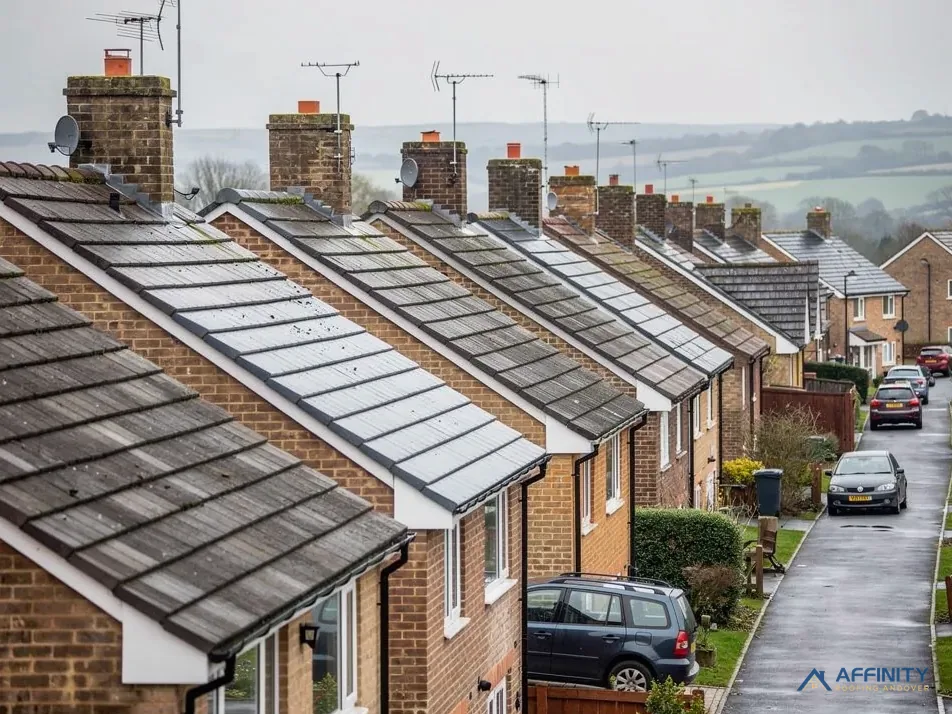
Lockerley Mill
The Grade II listed mill, whose neighbours need care over scaffold position and access as well as the roof itself.
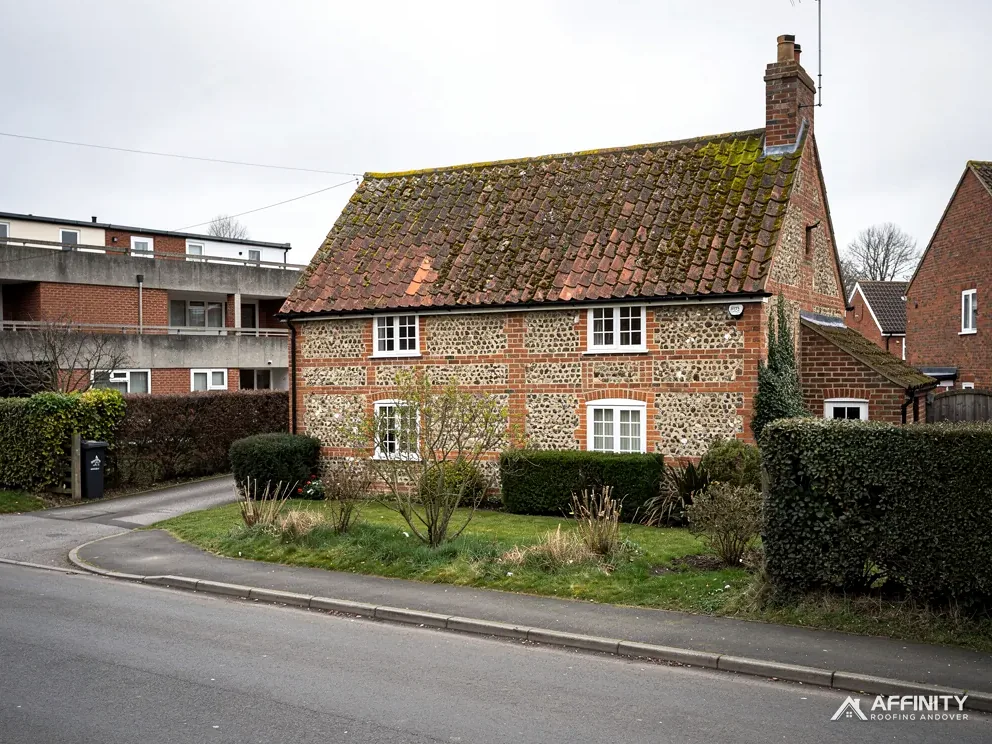
Mill Cottage and Cromwell's
Two Grade II houses, both first listed on 11 April 1986, where altering the roof needs listed building consent.
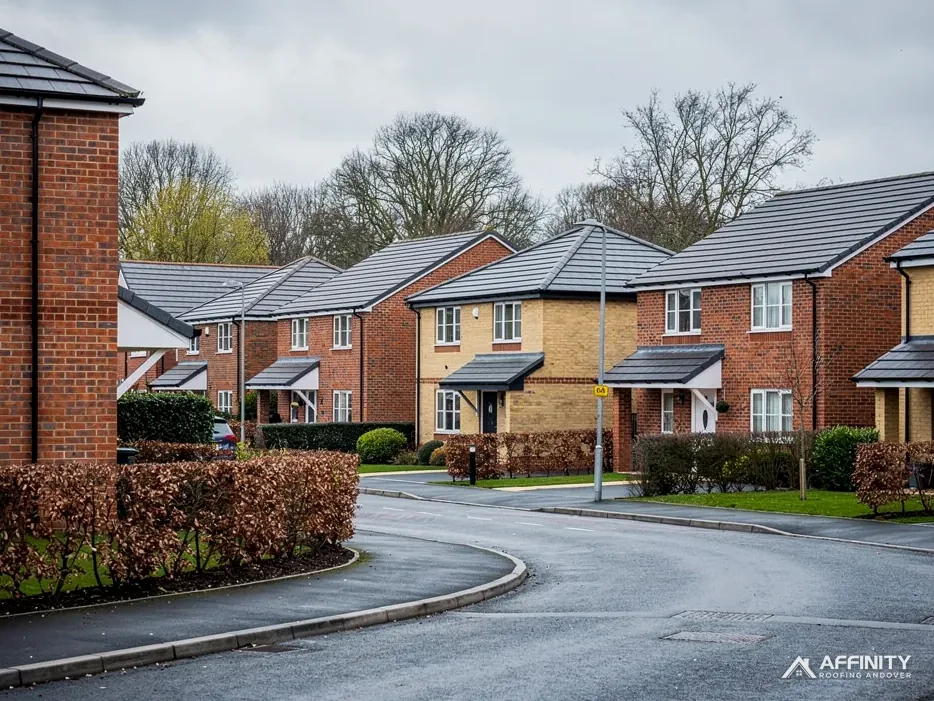
Houses with listed neighbours
Homes among the 6 listed buildings within about 500 metres of the centre, where a neighbour's listing shapes the job.
Lockerley, between Romsey and Whiteparish
Sherfield English lies to the south, with Whiteparish to the south-west. Timsbury and Michelmersh are to the east, Broughton to the north and West Wellow further south. Lockerley lies 17.7 road miles south of Andover, measured from East Street.
- Distance
- 17.7 road miles south of Andover
- Planning
- Test Valley Borough Council
- Council
- Test Valley Borough Council and Hampshire County Council
The Lockerley roof report
Local editionLockerley, HampshireA village mill and its listed neighbours
Small village, listed mill: what to settle before a Lockerley roof is touched
Lockerley is 17.7 road miles south of Andover, in Test Valley and Hampshire. This report looks at the listed buildings around the mill, the planning and building control questions for a re-roof, and the county rules for scaffold.
A mill, a cottage and six listed neighbours
Lockerley is a village of 886 usual residents, counted at the 2021 Census across the parish. It is small enough that its protected buildings can be listed on one hand. Historic England's list records 6 listed buildings within about 500 metres of the centre. Mill Cottage (list entry 1093742) and Cromwell's (1167724) are both Grade II, and both were first listed on 11 April 1986. Lockerley Mill itself is Grade II too (1339118).
A short list does not make the question simple. A listed building is a neighbour whose wall you may need to work beside, and its owner can fairly ask how the work will be done. If your own house is one of the six, work that changes its character needs listed building consent before the scaffold arrives. If it is not, your repair still has to be carried out so as not to damage what stands next door. Our guide to listed building roof repairs explains the consent route in full.
Conservation areas are the other check. Whether a conservation area covers your Lockerley address is for the council's own map to show, since its boundaries follow individual streets. Planning questions go to Test Valley Borough Council, whose planning team can say whether a conservation area or an Article 4 direction covers your address. We can ask on your behalf if you prefer.
Buyers and sellers lean on the same record. A surveyor's report on a village house can raise a roof question that has to be answered before completion, and a set of photographs with a written account of the repair gives both sides something firm to work from.
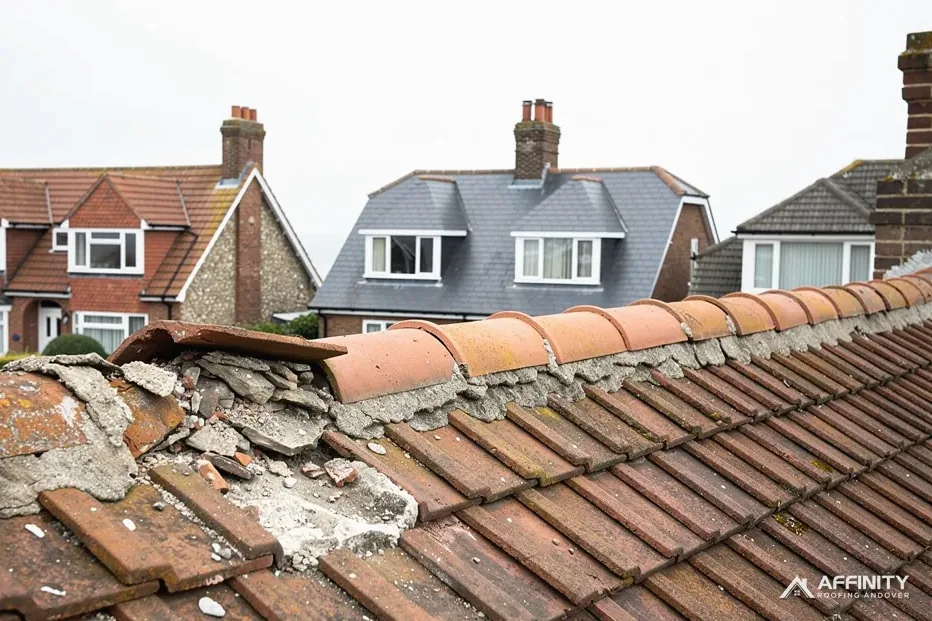
Our survey begins outside and finishes in the loft. We start at ground level and then use a ladder or tower to examine the tiles, the ridge, the verges (the edges of the roof at the gable ends) and the lead or mortar flashings at each chimney. Inside we look at the rafters, the sloping timbers that carry the roof, then at the battens and underlay, the thin strips and the waterproof sheet that sit beneath the covering. The underside tells us more about condition than the surface does, which is why the loft is never skipped.
We photograph each of these so that you can see what we saw. If the answer is a few new tiles and a bed of fresh mortar, that is the quote. If the roof has reached the end of its useful life, the same photographs show why, and the written price covers the whole job.
Planning, building control and the 15 per cent line
Lockerley lies in Test Valley borough. Planning decisions in Lockerley rest with Test Valley Borough Council, while Hampshire County Council acts as the county council and is the highway authority for the roads. For Building Regulations on a re-roof, speak to your building control body. That is one route; a registered building control approver, whose register opened on 6 April 2024, is the private alternative.
The Planning Portal frames the first test as two questions. How much of the whole building is being touched, and how much of the roof? Where the job involves under 25 per cent of the building envelope and under 50 per cent of the roof, building control approval is not normally sought. The envelope here means the walls, floor, glazing and roof together, which is why a single slope of a bungalow is almost always inside the limit.
One rule does not depend on the size of the job. A replacement covering that turns out 15 per cent heavier, or more, brings in Building Regulations approval, with a surveyor or engineer inspecting the timbers beforehand, as the Portal suggests. A cottage that has carried light plain tiles for generations is the case to watch if someone suggests heavier concrete ones. The timbers may not take the extra weight, and a surveyor needs to say so before anything is ordered.
No council in this area publishes its own percentage for re-roofing, so we work from the Planning Portal's figures and ask early.
Asking early costs nothing. A short email to the council's planning team about a listed neighbour, or to your building control body about a full re-cover, saves a stalled job later. We will send it for you and copy you in.
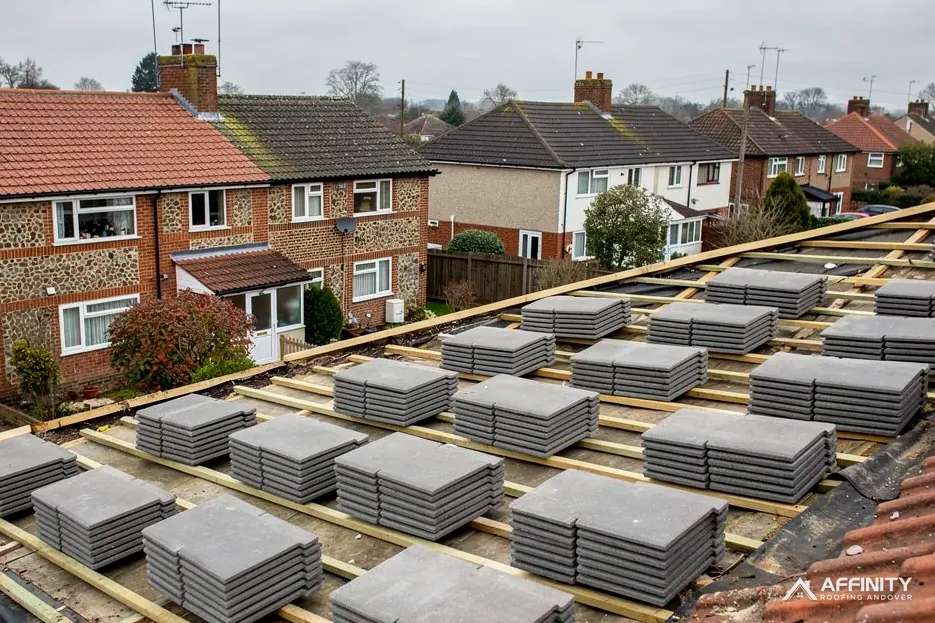
Take a Lockerley cottage whose tiles have worked loose along one slope. From a ladder we see the slipped tiles, from the loft we see daylight and damp battens, and a closer look at the nail fixings shows whether the tiles are failing one by one or all together. If it is one by one, the answer is a repair with matching tiles and a refreshed bed for the ridge. If it is all together, the answer is a re-cover, and then the thresholds above come into play before a single tile is ordered.
Everything you need to decide arrives together: the photographs, a plain account of what is failing, the route we think the work follows and a single written total. Where a question is still open, you hear what it could hold up before you agree a date.
“In Lockerley a roof job begins with one question: whose wall are we next to?”
Hampshire scaffold rules on a village road
When a Lockerley house stands right at the road, the scaffold may need poles on the public highway. That needs a licence under section 169 of the Highways Act 1980, and the body to grant it is the highway authority. At a Test Valley address, that body is Hampshire County Council. The scaffolding contractor lodges the form with Hampshire County Council, never the householder, so we deal with the contractor and you are spared the paperwork.
Hampshire County Council insists on ten clear working days of lead time, never grants a licence by default and does not stretch one once it is issued. Hampshire County Council charges £211.90 on application for the first 2 weeks, then £72 for each additional 2-week period, and it expects a 1:500 plan, together with signing and guarding proposals for the site. The scaffold must meet BS EN 12810/12811 or NASC guidance TG20:13. A private road lies outside the licence.
Plot shape matters in a village. A house with a front garden may keep every pole on its own ground, which means no licence at all. A cottage opening straight on to the lane is the opposite case. We settle which it is at the survey, so you know before you commit whether ten working days of notice are in play.
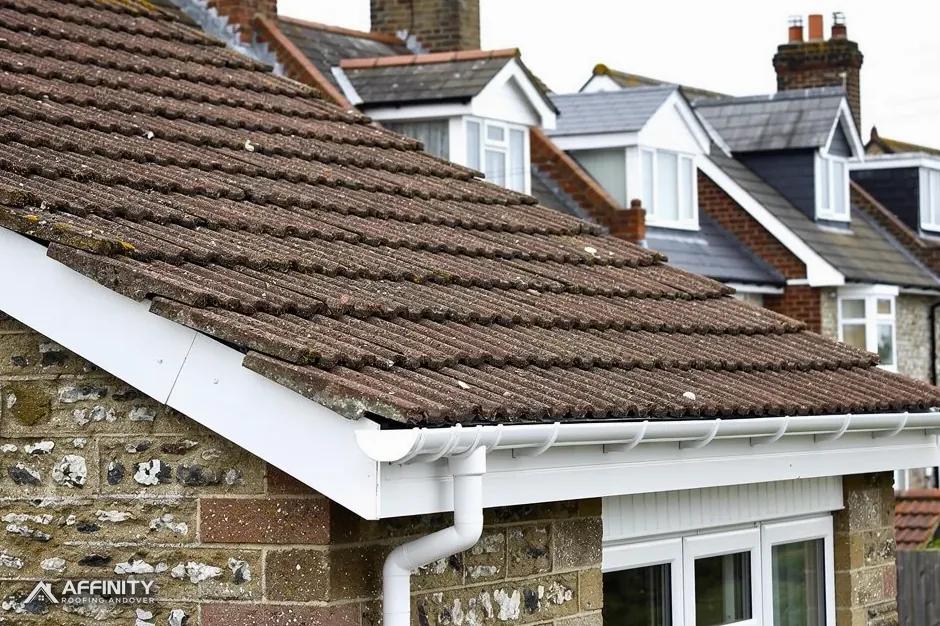
Lockerley roofs need the services you would expect. Roof repairs deal with slipped or cracked tiles. Chimney repairs cover a stack with crumbling mortar or a failed flashing. Guttering, soffits and fascias cover the roofline. The fascia is the board along the lowest edge of the roof, the soffit lines the underside of the overhang, and the gutter fixes to the first.
A frame beside a village road also has to protect people walking past. With the scaffolder we settle how the lower lifts are boarded, where the netting hangs and how the pavement or verge stays open for anyone passing. A neighbour with a pushchair or a mobility scooter should never have to ask us to move.
Weather can interrupt any roof job, and a village roof is no exception. If rain stops work, the frame stays up and the licence clock keeps running, so we choose a start date with a margin and check the forecast before we commit the scaffolder.
Because the licence is paid by the 2-week period, we plan the scaffold's time with care, and tell you the expected weeks before you commit. The frame goes up when the materials are ready and is struck as soon as you have approved the finished work, so you pay for the weeks you need and no others.
Lockerley roof repairs and more

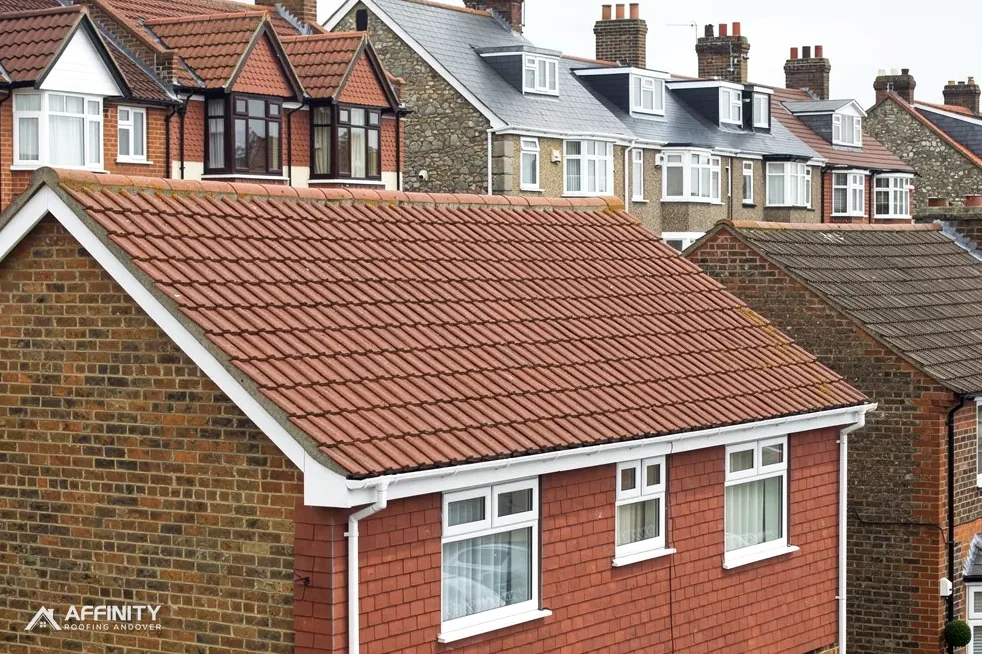
Lockerley roofs: the mill, the listings and the scaffold
Can a roof beside Lockerley Mill be repaired without listed building consent?
It depends on whether the property being repaired is itself listed. Lockerley Mill and Mill Cottage are both Grade II, though a neighbour's listing places no consent duty on your own house. We check the list entry at the survey, and we suggest asking Test Valley Borough Council's planning team if any doubt remains. A written answer is worth having on file.
Is there a conservation area I should check before re-tiling in Lockerley?
That turns on your exact Lockerley address, not on the village name alone. Ask Test Valley Borough Council's planning team whether a conservation area or an Article 4 direction covers your address, and keep the reply with your paperwork. We will ask the council for you and pass on its reply.
Who books the scaffold licence when a Lockerley roof job meets the road?
Hampshire County Council expects the contractor to file the form, not you, with plenty of notice. Hampshire County Council charges £211.90 for the first 2 weeks and £72 for each further 2-week period. Poles that stay on private ground need no licence. Dates are fixed with the scaffolder before you choose a start, so the licence weeks match the real programme.
What does a heavier roof covering mean for an older Lockerley cottage?
A covering 15 per cent heavier than the old, or beyond, needs Building Regulations approval, preceded by a structural check. Older roof timbers may not suit heavy concrete tiles, so we note the existing covering at the survey and tell you what it means before you choose a replacement, and put that in writing.
Villages near Lockerley
Start with a survey of your Lockerley roof
Name the lane and send a photo. We survey, check which consents apply, then give you one written price.
10-year workmanship guarantee, in writing.