
Roofers in Michelmersh
A conservation-area village with a scheduled farm site nearby
Michelmersh has a conservation area, a scheduled monument within about 500 metres and listed houses such as Waldens. A survey and close photographs of the faults come first for each roof.
Michelmersh roofs, from Waldens to the farm site
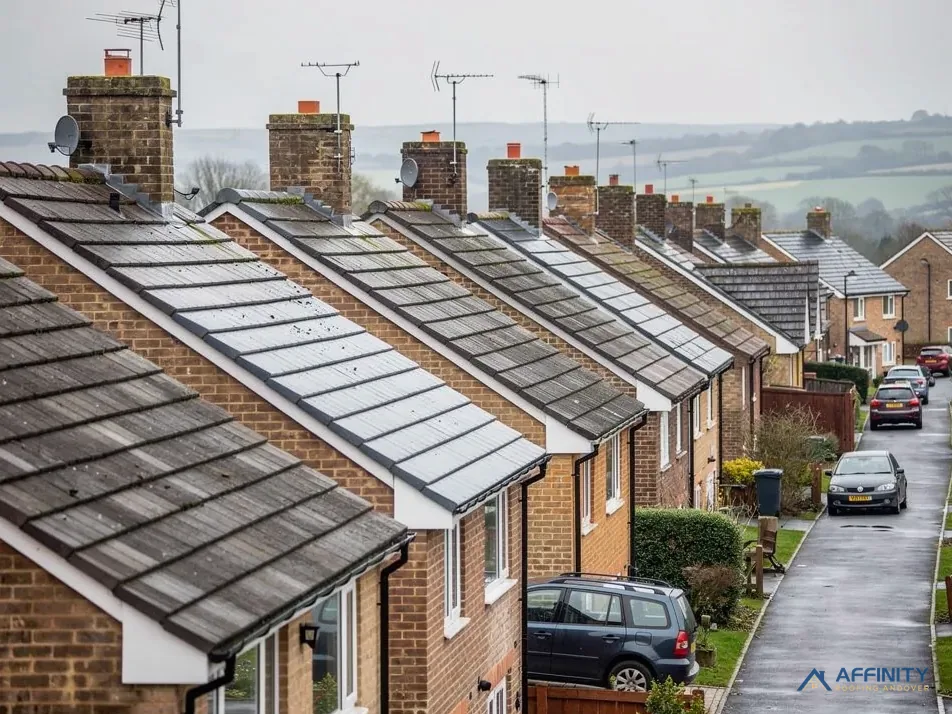
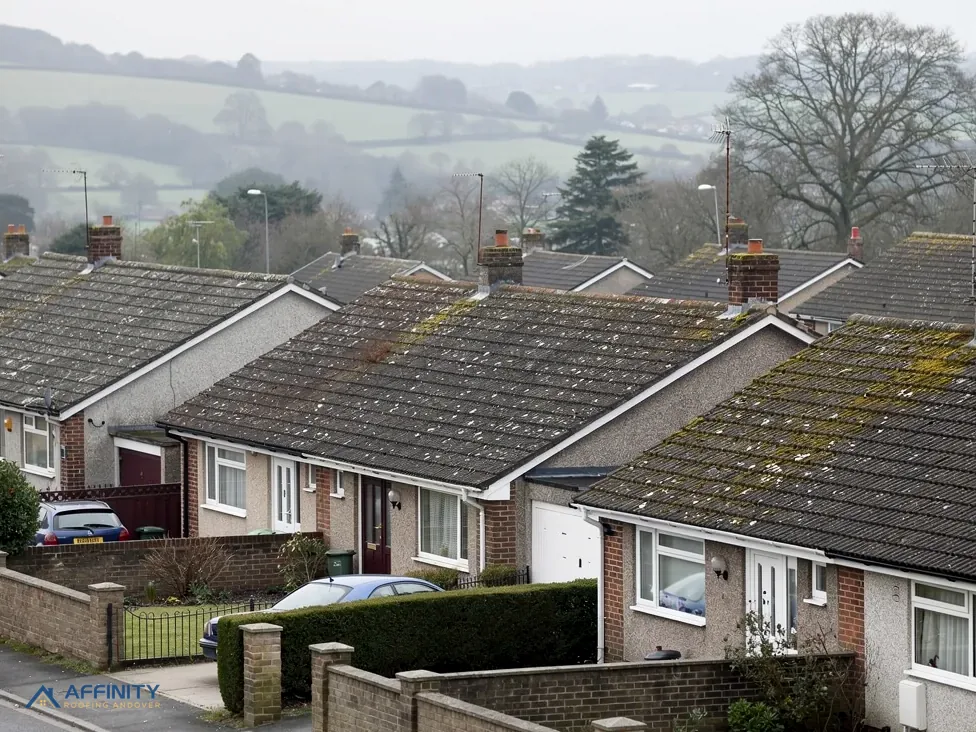
The conservation area
Houses within about 0.75 km of the centre fall inside the reach of the Michelmersh conservation area.
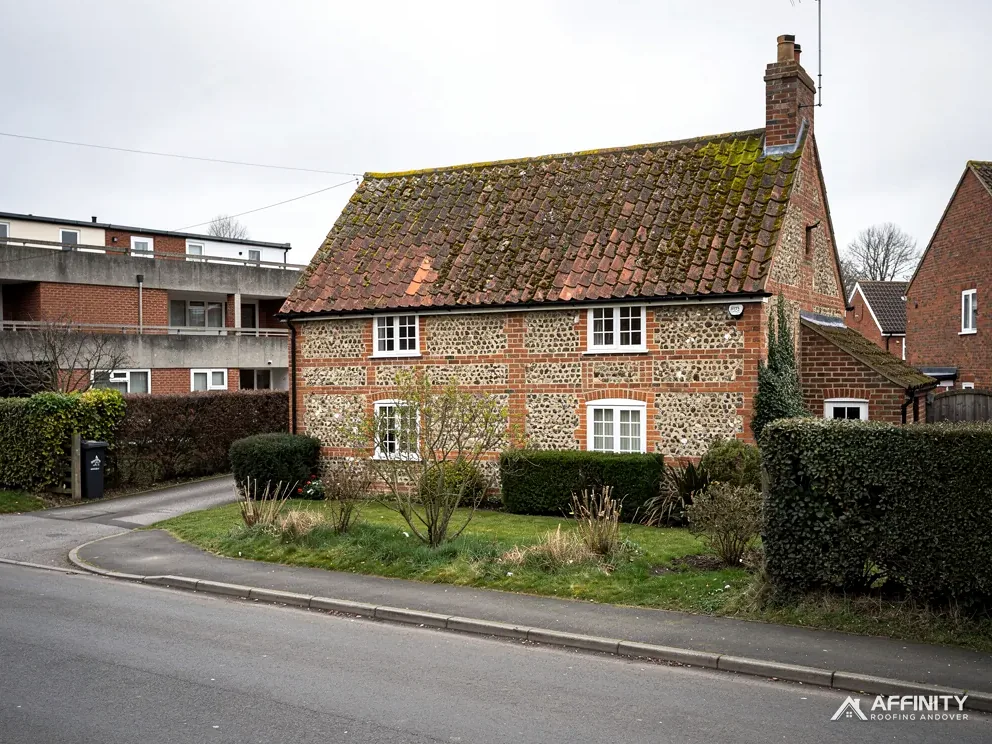
Waldens and neighbours
Waldens is a Grade II listed house (list entry 1339121), in a group where repairs are matched.
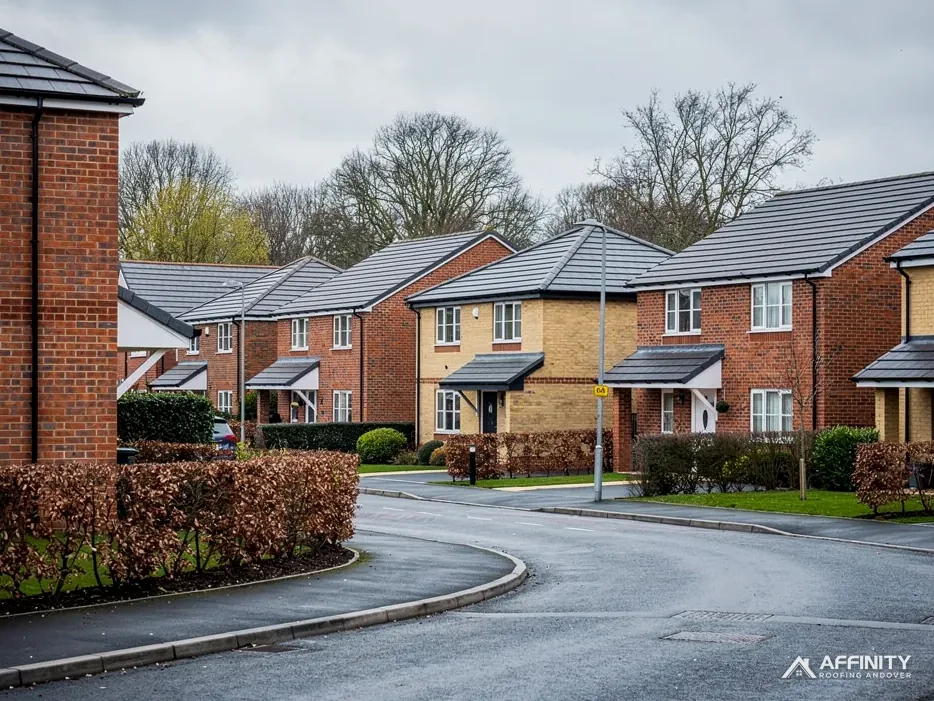
The Manor Farm site
A scheduled monument within about 500 m of the centre (list entry 1001781), with its own consent rules.
Michelmersh above Romsey
King's Somborne lies to the north, Lockerley to the west, Timsbury and Romsey to the south, Sherfield English to the south-west and Ampfield and North Baddesley to the south-east.
- Distance
- 15.1 road miles south of Andover
- Planning
- Test Valley Borough Council
- Council
- Test Valley Borough Council and Hampshire County Council
The Michelmersh roof report
Local editionMichelmersh, HampshireA village report on lead and listings
Michelmersh roofs: a conservation area, a monument next door and the lead that keeps water out
Michelmersh is 15.1 road miles south of Andover and shares its planning authority. This report covers what the conservation area and the scheduled monument mean for a roof, how listed houses are repaired, and why lead flashings and chimneys deserve a careful look.
Test Valley planning, and a building control body to confirm
Michelmersh lies 15.1 road miles south of Andover, and the parish of Michelmersh and Timsbury had 894 usual residents at the 2021 Census. Test Valley Borough Council is both its planning authority and Andover's, and Hampshire County Council looks after the roads. For Building Regulations the inspector is your building control body, and identifying it for a particular job is the first thing we do, not an assumption we carry in.
That caution is deliberate. Planning and building control are separate questions with separate answers, and a roofer who blurs them gets one of them wrong. Planning asks what a roof looks like and whether the change needs permission. Building control asks whether the work is sound, safe and energy-efficient. A private route exists through a registered building control approver, the register having begun in April 2024.
For a re-roof the Planning Portal supplies the national yardsticks. With under 25 per cent of the building envelope affected, and under 50 per cent of the roof, building control would not normally be asked to consider an application. No council in the area sets a roof-covering threshold of its own. A single section of tiles renewed is well inside the yardsticks, and a complete re-roof is not.
Changing the material can engage the weight rule. Should the new covering come out 15 per cent heavier or more, that needs Building Regulations approval too, and the Planning Portal advises taking an engineer's or surveyor's view of the roof first. Slate replaced by concrete, and thin clay by thick, are changes to flag early.
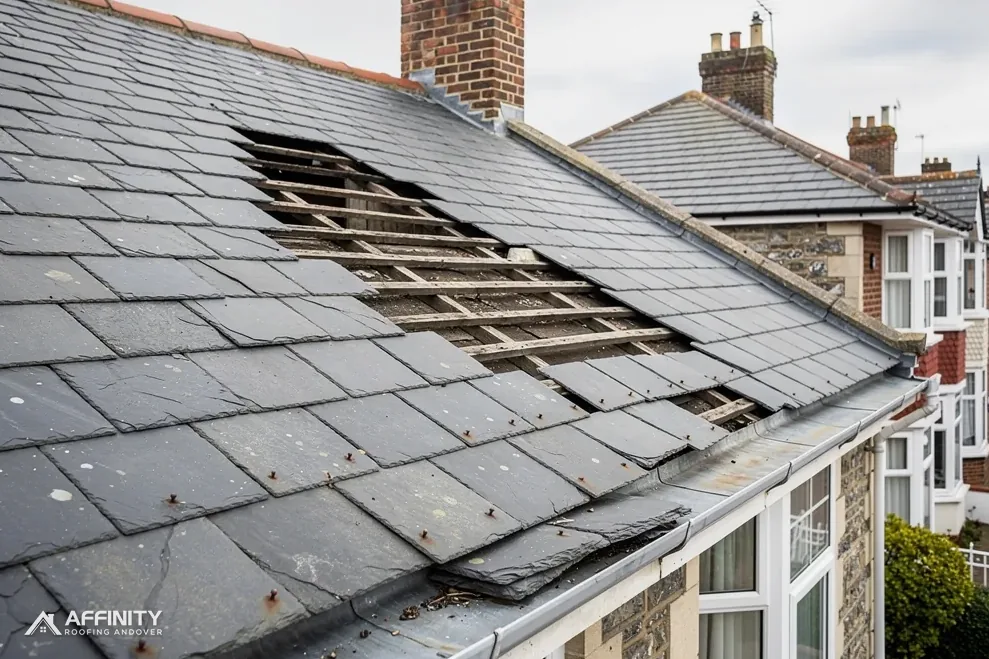
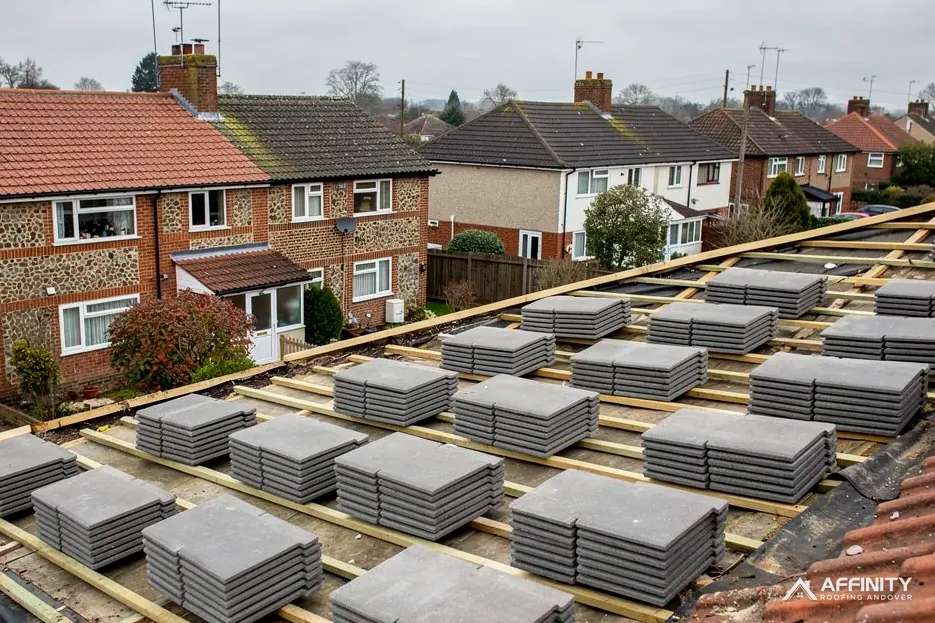
On the survey we climb to each slope, lift tiles at the eaves and ridge when conditions allow, study the timber battens and the underlay, and photograph each defect for the report. The report states in plain words whether the roof calls for a repair, a bigger repair or a new covering, with photographs to show why. The report is organised slope by slope, with numbered photographs, so a fault on the north side is easy to tell from one on the south.
The honest question on any old roof is whether to repair or replace. A repair suits a roof whose battens and underlay are sound and whose faults are local. A re-roof suits one whose fixings have failed across a slope. The photographs show which of the two you have, and what you pay depends on that answer, not the other way round. None of it is a guess about your building: the route comes from the address, the age of the house and what the survey finds.
Waldens, the Manor Farm monument and the village core
The Michelmersh conservation area boundary, published on planning.data.gov.uk, lies within about 0.75 km of the village centre. Any plan for a dormer, or to alter the roof's appearance, deserves a question to Test Valley Borough Council's planning team before anything is drawn. Whether an Article 4 direction covers your address is that team's to answer, and we ask before pricing any change of shape or material.
Waldens is listed Grade II (list entry 1339121), and every listed roof in the village is surveyed on its own merits, with its own photographs, never priced from a neighbour's. Elizabethan Cottage (1167800) and Warblers Cottage (1093750) are Grade II in the same parish. Historic England's list holds 5 listed buildings within about 500 metres of the centre of Michelmersh, so every listed roof is part of the view, and an obviously new patch on an old roof is noticed.
The scheduled monument is Manor Farm (uninhabited Area), within about 500 metres of the centre (list entry 1001781). Under section 2 of the 1979 monuments legislation unauthorised works to a scheduled monument are an offence, which is why consent comes first and the survey flags any such ground. A monument is not a roof, and it does not stop a roof repair on a house. It does tell us that the ground nearby is protected, and that anything which would disturb it, such as digging for a scaffold footing, has its scheduled monument consent position checked first.
Alongside the ordinary rules, a listed house wants listed building consent for any change that touches its special character. Our first aim is the minimal change that cures the fault, in the existing material. Reclaimed tiles and slates suit an old roof better than new ones, because they arrive with the weathering of the originals, so we look for them before specifying new. Our guide to listed building roof repairs sets out the route in full.
The covering is only half of a listed roof. The ridge, the verge and the junction with the wall belong to the roof's character, so each is photographed and described before the council hears anything.
If your house is in or next to the conservation area, please supply the address, a ground-level photograph of the roof and any consent letters from earlier work. Once those are in, the visit can concentrate on the points a planning officer will look for, so little needs chasing later. Nothing is ordered until the council has replied, so no tiles sit in a yard waiting for a decision that might change them.
“On an old Michelmersh roof, the junctions need as much attention as the tiles.”
Lead flashings, chimneys and the scaffold licence
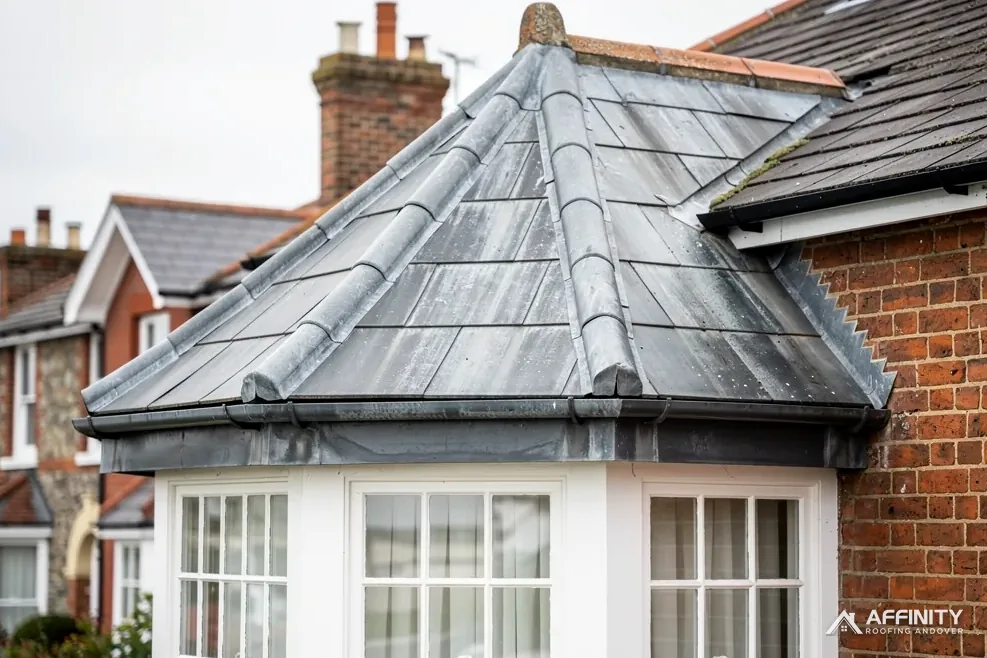
Junctions are where a pitched roof is easiest to breach, and the junction is a flashing: the strip of metal, usually lead, that seals a roof against a chimney, a wall or a valley. Lead flashing is quoted by MyJobQuote at over 80 years of life, as a floor and not a promise (MyJobQuote, Sept 2026). Lead that old can still fail where it has been stretched, torn or pulled out of its chase, the slot cut into the brickwork to hold it.
Lead is sold in codes. Royston's brochure shows code 4, at 1.80 mm, used for soakers, flashings and valleys, and heavier codes 5 and 6 for flashings, valley gutters and parapet or box gutters. Approved Document C refers lead roofing to BS 6915. We specify the code on the survey, and the written price carries it, so a replacement flashing is not thinner than the one it replaces. Our lead roofing page explains the work.
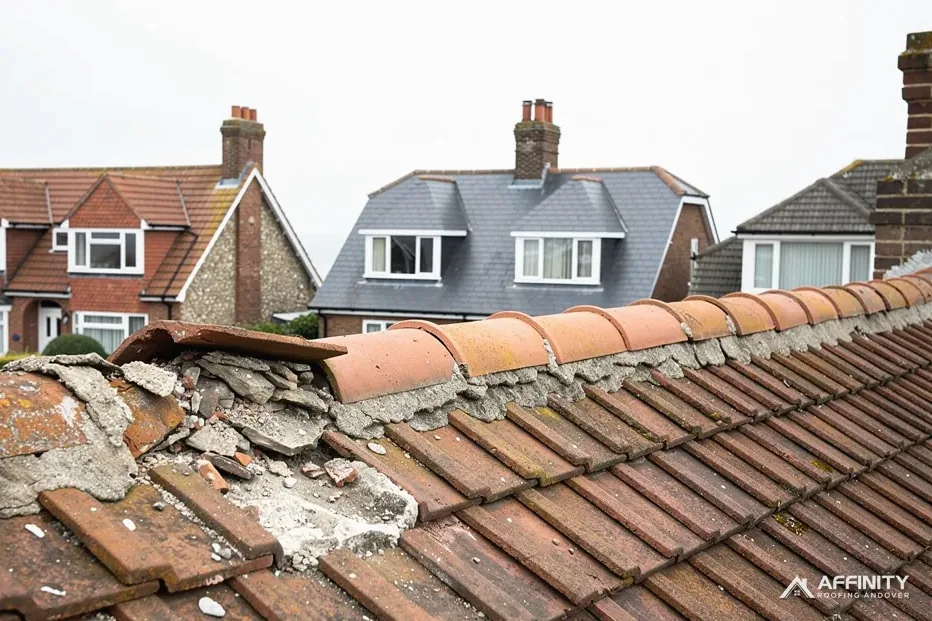
Chimneys are the other likely source of trouble on older houses. The stack can lose its pointing, the flashing round its base can lift, and the cap or flaunching, the mortar crown on top, can crack and let water in. Chimney repairs are carried out from the scaffold, since the same frame lets us check the flashing, the pointing and the tiles around the base in one visit.
Three flashing types come up on older houses. A soaker is a small piece of lead bent to turn up a wall and lie under a tile, a step flashing follows the line of a sloping wall, and a valley gutter carries water between two slopes. Each has its own way of failing, and the report names which one is at fault, with a close photograph beside the note so the fault is easy to find on the roof.
MyJobQuote gives a typical UK range of £350 to £920 for full chimney leadwork, depending on the scaffold needed (MyJobQuote, Sept 2026). The range moves with access, which is why the scaffold is planned before the price is written.
A licence under section 169 of the Highways Act 1980 is required for scaffolding erected over the public highway, and in Michelmersh the highway authority is Hampshire County Council. Hampshire County Council makes the scaffolding firm the applicant, for its customer, and wants 10 clear working days in advance. Hampshire's fee is £211.90 for the first 2 weeks and £72 for each further 2 weeks, and the county grants no extensions. Private land needs no licence.
We sweep the site daily, take the waste away and say what comes next.
Getting a Michelmersh roof sorted
Michelmersh roofs: lead, the monument and the village core
How do I tell if the lead flashing round my Michelmersh chimney has failed?
Look for lead lifted out of its chase, splits at folds, or stains on the ceiling below the stack. MyJobQuote quotes over 80 years for lead flashing, a lower bound, so age alone is not proof of failure. We check it from the scaffold, photograph it and say whether it needs a repair or replacement.
Does the Manor Farm scheduled monument affect repairs to my roof?
Not a house roof repair. Scheduled monument rules govern work on the monument itself, which lies within about 500 metres of the centre. Should a job disturb ground close to it, a scaffold footing for example, whether scheduled monument consent applied would be settled first. Ordinary roof work follows the usual planning and building control rules.
Is my Michelmersh house in the conservation area or an Article 4 area?
The Michelmersh conservation area lies within about 0.75 km of the village centre, but its edge follows particular streets and plots, so check your address with Test Valley Borough Council's planning team. Ask the council as well whether an Article 4 direction applies. We ask both questions before pricing a change of shape or material.
How much does the scaffold licence add to a Michelmersh roof job?
Hampshire County Council charges £211.90 on application for the first 2 weeks and £72 for each further 2-week period, and it wants 10 clear working days before the start. The fee is folded into your one total, and no licence applies where the scaffold stands wholly on private land. We handle the scaffolder.
Michelmersh's neighbours up the Test valley
Get a Michelmersh roof looked at
Send the address with one photo. We survey, check consent with the borough, then write one price.
10-year workmanship guarantee, in writing.