
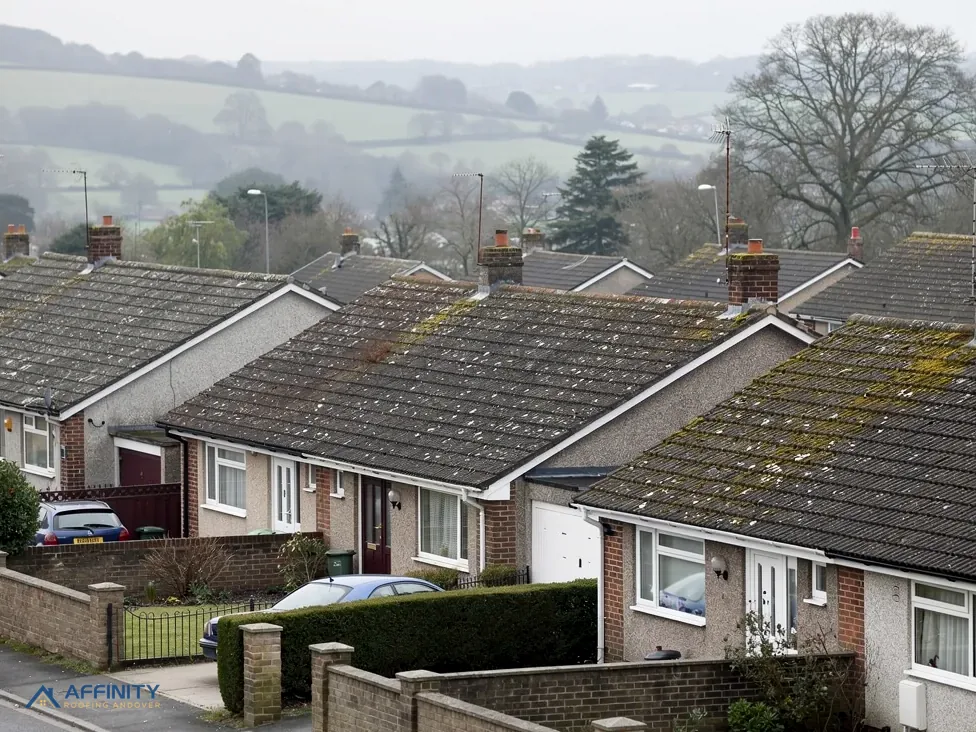
Roofers in Ropley
Thatch, handmade clay tile and slate on a ridge-top village
Ropley's conservation area appraisal describes its roofs, from thatch on the oldest buildings to clay tile and later slate. Each roof is surveyed before pricing, and the findings are photographed.
Ropley roofs, from thatched cottages to slate villas

Thatched older buildings
The council's appraisal says thatch is the main roofing on Ropley's oldest buildings, which call for a specialist thatcher.

Clay-tiled half-hipped roofs
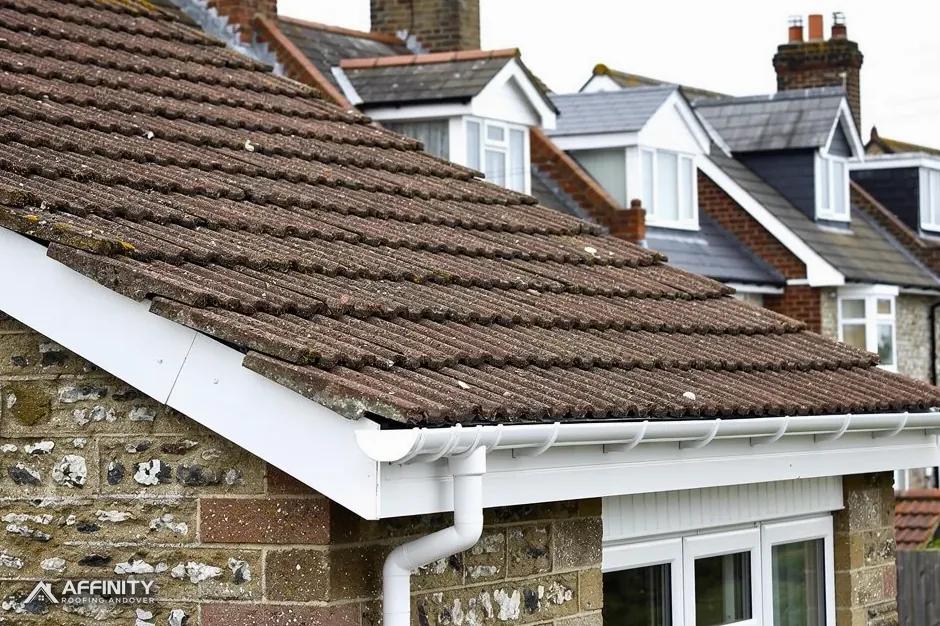
Handmade clay tiles are used widely in the village, often on half-hipped roofs, and repairs follow the existing pattern.

Later slate-roofed houses
Slate appears on houses of the later 19th and early 20th centuries, and we repair it slate for slate.
Ropley between New Alresford and Four Marks
Four Marks lies to the north-east, Medstead to the north, New Alresford to the west and West Meon to the south. We cover roofs in each village.
- Distance
- 27.4 road miles south-east of Andover
- Planning
- East Hampshire District Council
- Council
- East Hampshire District Council and Hampshire County Council
The Ropley roof report
Local editionRopley, HampshireA conservation area that describes its roofs
What Ropley's conservation area appraisal says about its roofs, and what it means for repairs
East Hampshire District Council has written down how Ropley's roofs are made and which changes harm the village. Beside it we set the rules an owner meets for planning, inspection and scaffold, and the wildlife law that reaches every roof.
A district council, its inspectors and the county road
Ropley parish had 1,723 usual residents at the 2021 Census, and its roofs sit under East Hampshire District Council. The district is the local planning authority, and it runs its own building control team, reached on 01730 234207. Hampshire County Council stands above the district as the highway authority. The two-council arrangement is the one most Hampshire villages know, and it means a re-roof can involve planning, an inspector and the road at different counters.
For a re-covering, the Planning Portal gives the first test. Below 25 per cent of the building envelope and below 50 per cent of the roof, building control is not normally told. No East Hampshire figure replaces that test, and we call the council whenever a roof sits close to the line. Weight is the second test: When the replacement covering is 15 per cent or more heavier, Building Regulations approval follows, and a structural check is advised by the Planning Portal.
Whichever route applies, a registered building control approver may be appointed in place of the council, under a regime that began on 6 April 2024. At the survey we set out both choices and how they differ, so you decide with the facts in front of you and not under pressure from a booked scaffold.
A roof in a village like this also has tenants that do not appear on any plan. Birds nesting under tiles are covered by section 1 of the Wildlife and Countryside Act 1981, and it is an offence under that section to intentionally damage or destroy an active nest. Bats have stronger cover. The Habitats Regulations make harm to their roosts an offence even if unintended, and the 1981 Act reaches intentional or reckless disturbance and blocked access as well. GOV.UK counts re-roofing among the jobs that can affect bats, so the survey looks for signs, and we pause to take advice if any appear.
None of this is meant to alarm anybody; it explains why a survey comes before a price. Droppings under a ridge, a gap at the eaves that birds use, a stained timber where bats hang: each is noted and photographed, and the plan for the work adjusts around what is found. Wildlife can also change the timing of a job, which is better settled before a frame is booked. A short pause for advice costs far less than a stopped job, and it protects the roof's occupants as well as the people who own it.
Thatch, clay tile and slate in the Ropley appraisal
The Ropley Conservation Area Appraisal, published by East Hampshire District Council, is unusually specific about roofs. It records thatch as the main roofing on the village's oldest buildings, that handmade clay tiles are used widely and often laid on half-hipped roofs, and that slate appears on houses of the later 19th and early 20th centuries. A hip is the sloping ridge where two roof planes meet at an outside corner; a half-hipped roof cuts back the gable end only part of the way down.
The appraisal also lists concrete roof tiles among the modern changes that harm the conservation area. That is a sentence worth reading before any re-roof here, because it tells you what the council's officers are likely to think of a change in covering. A roof of handmade clay reads differently from one of uniform machine-made tiles, and a whole street can show the difference. When you ring the planning team, quote the appraisal's own wording and ask how it applies to your roof. The designation dates from 1976, and the boundary is drawn from East Hampshire's own mapping. Our guide to planning permission for roof work explains where the limits fall.
A thatched roof calls for a specialist thatcher, and we encourage you to get a written description and price from whoever you approach. The tiled and slated parts of the same house, the chimney stack, the rainwater goods and the extension roofs are where we can help. The appraisal also names tile-hanging, tiles fixed to walls as cladding, among the village's materials, so a tiled wall and a tiled roof can sit side by side on one building.
St Peter's is the parish church. The Victoria County History in 1908 described its tower as a good example of timber framing, weather-tiled in the upper part and finished with a low-pitched pointed roof. The church was badly damaged by fire in 2014, rebuilt with money raised largely by local people, and reopened in 2022. It is listed Grade II (list entry 1339053, first listed on 31 July 1963). Because it remains an Anglican place of worship, the faculty system and not listed building consent covers its roof.
Several houses near the centre are listed too: Archbishop's Cottage (1179845, listed 11 October 1985), Cromwell Cottage (1093930) and Dover Cottage (1339055), each Grade II. Historic England's list shows 24 listed buildings within 500 metres of the village, so a Ropley repair starts with a check of the list. The appraisal and the list entries are public, which means you can check every fact above yourself before you instruct anyone.
“Ropley's conservation area appraisal names concrete roof tiles among the changes that harm the village.”
Scaffold on a ridge-top village road
Ropley sits on a ridge east of New Alresford, between the A31 and the Petersfield road. A scaffold that stands on the road itself needs a licence under section 169 of the Highways Act 1980, and in Ropley Hampshire County Council grants it. Hampshire County Council's page tells scaffolding firms to apply for the householder, so no form is yours to fill in.
The licence cannot begin until 10 clear working days after the application, and Hampshire County Council gives no extensions. Hampshire County Council charges £211.90 for the first 2 weeks and £72 for each further 2-week period, and it expects scaffolding firms to carry public liability insurance of £10 million. The frame itself must meet BS EN 12810/12811 or NASC guidance TG20:13. Nothing is needed for a frame wholly within your own boundary. The arrangements go through the scaffolder, and the scaffold sits within the one price you receive.
Read the quote for what it includes. VAT at the standard 20 per cent is worth asking about, and so is whether the scaffold is in the figure. The domestic reverse charge is not how a homeowner is billed by a roofer. Citizens Advice guidance is to obtain written quotes from at least 3 traders, and a quote that names the covering, the area and the fixings is easier to compare than one that does not. Keep the written price and the survey photographs together for your records.
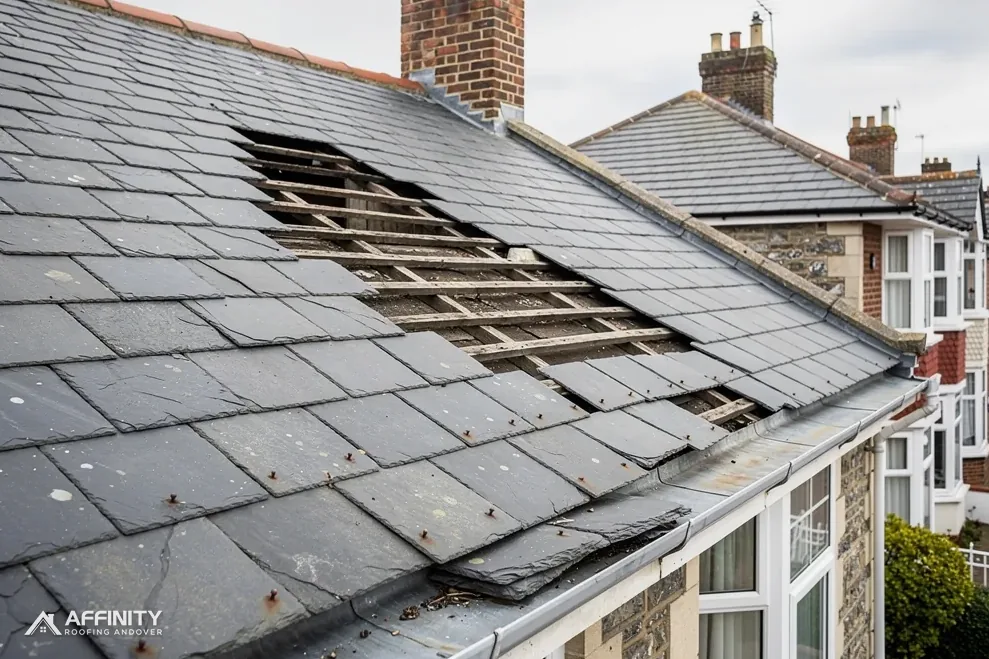
Slate and clay both reward a careful hand, and a patient one. A single cracked slate can be replaced without disturbing its neighbours if the nails are accessible, and a slipped clay tile can be re-hung on its batten. Battens, the thin timber laths holding the tiles, and the underlay membrane under them are photographed whenever we lift the covering, so you can judge their condition yourself. The same spots are shot again when the work is done, for a fair before-and-after.
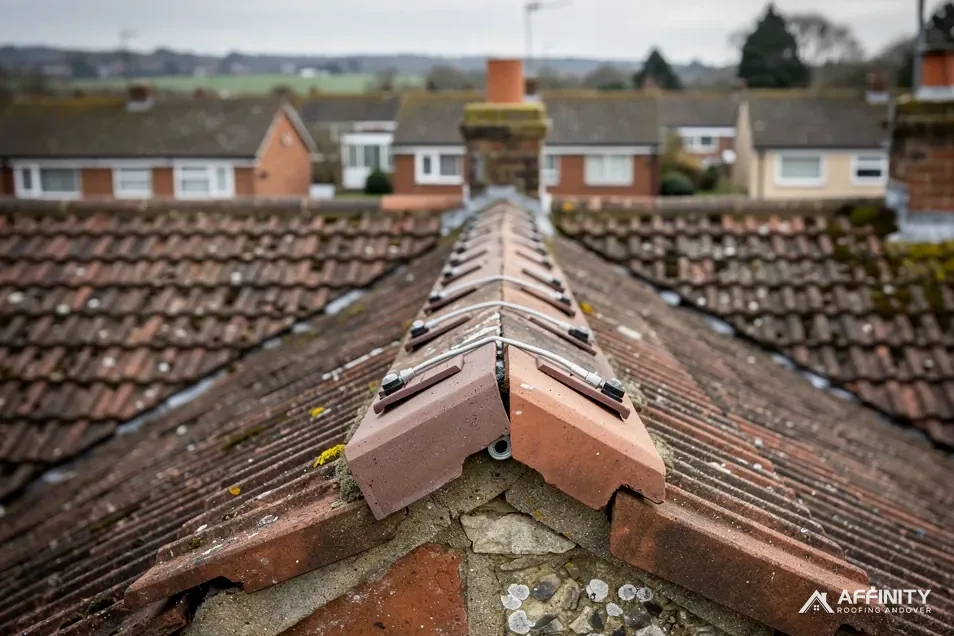
Our slate roofing work covers repair and re-covering, pitched roofing covers tiled slopes, and chimney repairs deal with stacks, pots and the flashing around them. Half-hipped roofs bring their own details at the hip and at the short gable, where the ridge tile meets the slope, and we photograph those specially. A tile that looks sound from below can be cracked underneath or hanging on a single nail, and only a close look from the slope will show it.
If a thatched cottage shares a boundary with a tiled neighbour, tell us at the start. Scaffold and ladders near a thatched roof need extra care, and we plan the access so the thatch is not disturbed.
Work we carry out around Ropley



Ropley roofs: appraisal, church, wildlife and scaffold
Can I replace clay tiles on a Ropley house with concrete ones?
It is worth asking East Hampshire District Council first. The appraisal for the village counts concrete roof tiles among the modern changes that harm the conservation area, and a heavier covering raises the Building Regulations weight test as well. Clay is normally repaired or replaced like for like, the roof is photographed, and the proposal goes to the planning team before any material is ordered.
Who can mend a thatched roof in Ropley?
For the thatch itself, call a specialist thatcher, and put the same questions to anyone you approach: what they will do, what it costs in writing and how long they expect it to last. We can then deal with the tiled or slated parts of the property and the chimney, so each job goes to the right trade.
What happens if bats are found in a Ropley roof?
We stop and ask for advice before carrying on. All bat species and their roosts have full legal protection, and roof repair is one of the activities that can affect them. Harm to a roost is an offence under the Habitats Regulations whether or not it was meant, and the Wildlife and Countryside Act 1981 covers disturbing bats intentionally or recklessly.
How is scaffolding for a Ropley roof licensed?
Hampshire County Council licenses scaffold on its roads, and the scaffold contractor submits the application for the customer. Hampshire County Council charges £211.90 for the first 2 weeks and £72 for each further 2 weeks, with 10 clear working days needed beforehand. If the frame goes up on your own drive, no licence arises, and the cost is in our price. Dates are agreed first.
Ask us to survey your Ropley roof
Address first, photo if you have one; then a survey, the consent route and a single price.
10-year workmanship guarantee, in writing.