
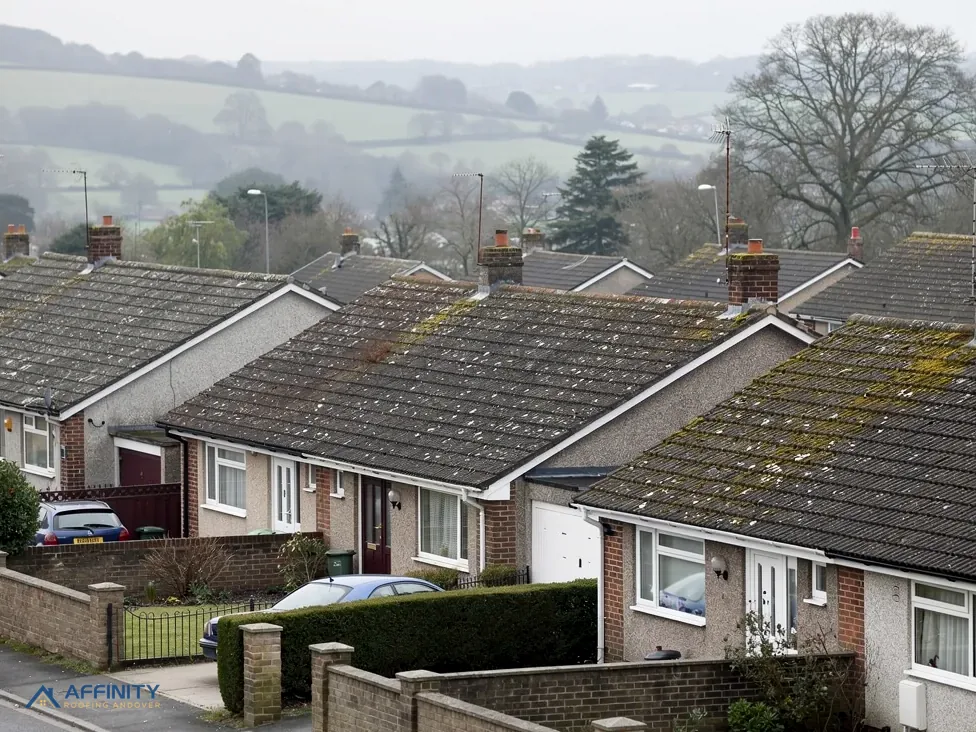
Roofers in Meonstoke
Roofs between Corhampton Church and the Old Vicarage
Meonstoke lies wholly inside the South Downs National Park, and 25 listed buildings stand within 500 metres of its centre. A survey comes before any repair choice.
Meonstoke roofs, from Corhampton to the farmhouse

Corhampton Church
Grade I, and Anglican worship continues there, so any roof works follow the faculty route.

Church of St Andrew
Listed Grade II* on 6 March 1967, the date Corhampton Church was listed too, and in Anglican use.

The Old Vicarage and farmhouse
Grade II listed houses near the centre, where repair in matching materials is where we start.
Meonstoke and the villages around it
West Meon lies to the north-east, Upham to the west, and Bishop's Waltham and Waltham Chase to the south-west. Roofs in each village are surveyed before a repair is priced.
- Distance
- 29.4 road miles south-east of Andover
- Planning
- South Downs National Park Authority
- Council
- Winchester City Council and Hampshire County Council
The Meonstoke roof report
Local editionMeonstoke, HampshireA roof inside a National Park
Meonstoke inside the South Downs: two councils, one park authority and a Grade I church
Meonstoke lies south-east of Andover, 29.4 miles by road, wholly inside the South Downs National Park. The report covers the authorities involved, the effect of the listings, and the rules for putting a scaffold on the road.
Park, city council and building control
Three bodies touch a Meonstoke roof, and each has a separate job. The South Downs National Park Authority, the SDNPA, is the local planning authority for addresses inside the park, and that covers the whole of this village. Winchester City Council acts as a host authority: it processes most applications on the SDNPA's behalf, while called-in cases go to the park team at Midhurst. Building control is the third job, and it stays with Winchester City Council, which runs its own Building Control service and can be reached on 01962 840 222. A national park authority handles planning and nothing else.
That split catches people out. A householder who telephones the park about a leaking valley has reached the planning body, not the one that inspects work against the Building Regulations. We keep the three apart and write down which one your job needs, with its contact details beside it. The parish of Corhampton and Meonstoke had 878 usual residents at the 2021 Census, and every one of them deals with the same three bodies.
Everyday work seldom needs an application of any kind. A slipped tile, a lifted ridge section or a failed run of flashing is repair, and repair leaves a house looking as it did. A full re-roof is where questions begin. The Planning Portal sets the line for building control at 25 per cent of the building envelope and 50 per cent of the roof; a re-roof below both thresholds usually goes ahead without an application. Light repairs sit comfortably below both. If the replacement would put 15 per cent or more extra weight on the rafters, the answer changes to Building Regulations approval, supported by a structural check.
We work out which side of those lines you are on during the survey, using the photographs and measurements, and send you the route in writing before a date is fixed. A private alternative also exists: a registered building control approver, a role regulated since April 2024.
Planning is the other half of the picture. Our guide to planning permission for roof work explains how the rules apply to houses, flats and listed homes, and why a National Park alters some of the answers.
Corhampton Church, St Andrew and the Old Vicarage
Corhampton Church holds Grade I status (National Heritage List entry 1179686; first listed 6 March 1967), while Grade II* is the rating of the Church of St Andrew (entry 1179671), listed on the same date. Two Grade II houses sit nearby: the Old Vicarage (entry 1095597) and Corhampton Farmhouse (entry 1095598). Historic England's list records 25 listed buildings within 500 metres of the village point, which is a great deal of protected fabric packed around one small parish.
Corhampton Church is an Anglican parish church that remains in worship use. Repairs to it are authorised by faculty, the Church's own consent route, and not by listed building consent. St Andrew's, Meonstoke's own parish church, also holds Anglican worship, so the faculty route covers it too. Listed building consent comes back into play only for a church that has closed, or for a building of a denomination with no exemption, such as a Quaker meeting house.
The Corhampton and Meonstoke conservation area lies within about 0.75 km of the centre. Planning looks harder at the street appearance of a roof inside such an area, and a change to a roof's shape deserves a call to the planning team before anyone draws a plan. Whether an Article 4 direction covers your road is a question for the planning team at Winchester City Council or the park authority.
A listed house needs listed building consent on top of any planning question, whenever work would alter its character. The sensible opening move is repair in kind, using the same clay tile or slate in the same size and colour, with matching ridge and lead. We record the roof exactly as it stands, including the verge, the eaves and the chimney, so that whoever reviews the application sees exactly what exists before deciding what may change.
On an old house the covering is only part of the story. Battens may be sound for another generation, or soft after decades of damp, and an old underlay can be torn where rafters have moved. Those findings decide whether a patch is the right call or a full strip is the only sensible answer, and you are shown the evidence for whichever verdict we reach.
The same goes for chimneys. A stack with crumbling pointing or a lifted flashing lets water into the loft long before a stain reaches the ceiling, and we photograph the top of every stack we can safely reach. Lead on a stack or in a valley gets the same attention: we note whether it is lifting, split or simply dirty, because only the first two need a repair.
“In Meonstoke the park decides planning, and the city council still decides building control.”
Park rules and the Hampshire scaffold licence
Planning law treats the South Downs National Park as protected land, in the same family as conservation areas and National Landscapes. The practical result is tighter rules for anything that changes the shape of a roof, a dormer being the usual case. Repairs, or coverings chosen to match the existing ones, carry on as normal. The guide linked in the first story sets out the detail, and the planning team at the park authority or Winchester confirms it for a given address.
Section 169 of the Highways Act 1980 licenses scaffolding that occupies a road or pavement, and in Meonstoke the licensing body is Hampshire County Council, not Winchester and not the park. On Hampshire County Council's own page the scaffolding firm is the applicant, working for its customer, which means the form never lands on your doorstep. Hampshire County Council charges £211.90 on application for the first 2 weeks of a licence and £72 for each additional 2 weeks, and it expects the application to precede the start date by ten clear working days. It does not offer extensions.
Those rules shape the calendar. A job that waits on consent holds back its scaffold booking until the decision is in, so the two-week charge is not spent on idle poles. If the scaffold can stand on private land, no highway licence is needed, and our survey notes which of the two cases your house falls into.
Meonstoke roofs call on ordinary services. We take roof repairs after a slipped slate or a leaking valley, chimney repairs where flashing or pointing has failed, and lead roofing where a flat section or gutter needs relaying. Each begins with a survey, with photographs of what we find on your roof, and a price in writing comes after.
Sometimes a repair is the right answer and sometimes a new roof is, and we say which. When the battens and underlay have failed along with the tiles, the evidence is in the pictures and the decision is yours.
Gutters and fascias along the same wall get a look while the scaffold is there. A sound run is left alone, and a dropped bracket is shown to you before it is touched.
Access is the other practical question. A cottage that fronts a narrow lane may leave no room for a scaffold without taking up part of the road, and then the highway licence matters a great deal. A house with a front garden between it and the lane is simpler. The survey tells us which of the two yours is, and the written price reflects it.
Roof, roofline and chimney work in Meonstoke

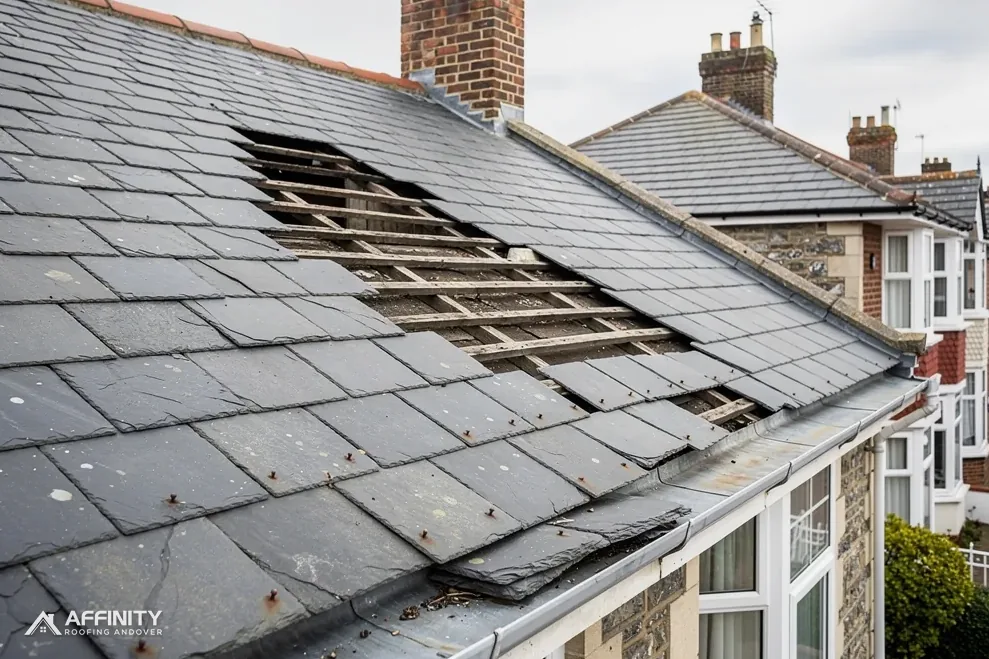


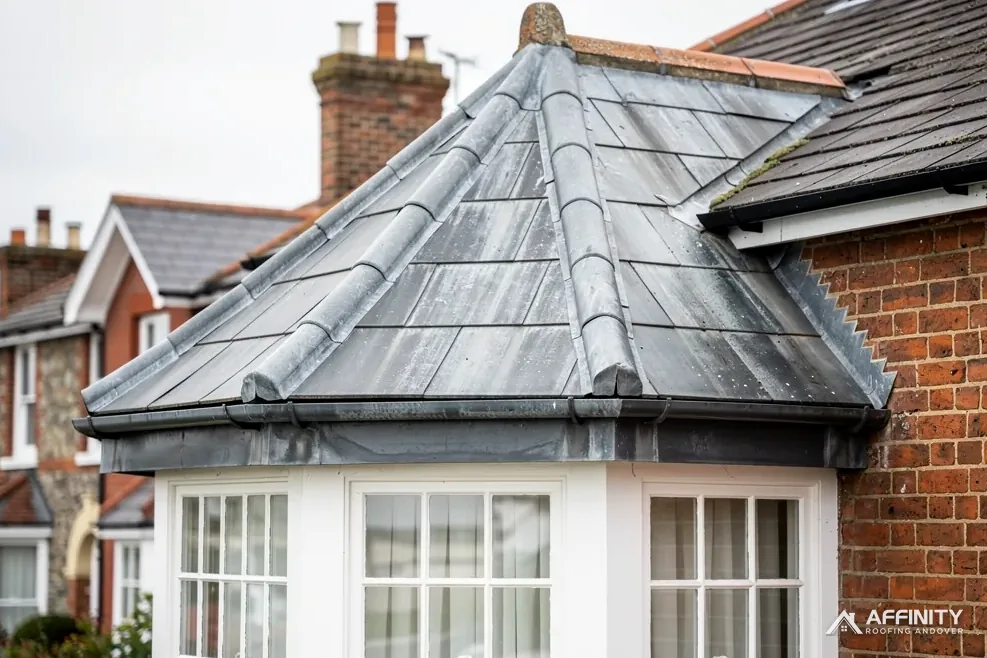
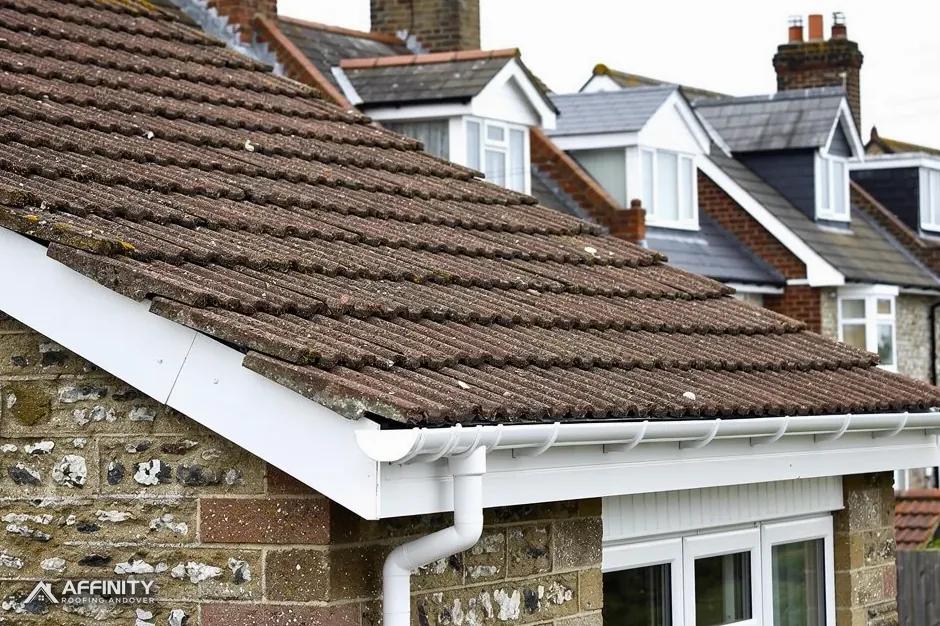
Meonstoke roofs: park, church and scaffold
Do I need the National Park Authority's permission to repair a Meonstoke roof?
Not for a repair. Replacing slipped tiles or relaying a valley changes nothing about how the house looks. A new dormer, any other change to the roof's shape or a change to a listed building is another matter, and the park authority decides planning here. We tell you at the survey which category your job falls into.
Is Corhampton Church treated like an ordinary listed building?
No. It is Grade I and still holds Anglican services, so works go through the Church's faculty route rather than listed building consent. A listed house nearby follows the ordinary listed building consent route instead. For a church roof, the faculty is sought through the Church of England's own system. We can describe the covering and the repair for that application.
How do scaffold licences work for Meonstoke houses on the road?
Hampshire County Council grants the licence, and the scaffolding firm applies for you with ten clear working days between the two dates. Hampshire County Council charges £211.90 on application for the first 2 weeks, then £72 for each further 2 weeks. Scaffolding sited wholly on your own land needs no highway licence at all.
Who does building control for a re-roof in Meonstoke?
Winchester City Council, through its own Building Control service, even though the South Downs National Park Authority is the planning authority. A national park authority deals with planning only. Where a re-roof affects under 25 per cent of the envelope and under 50 per cent of the roof, building control usually needs no application. We say at the survey which side of those limits your job falls, and why.
Park villages near Meonstoke
Get your Meonstoke roof surveyed
Send a photo with your address. After the survey we check the route with the park and Winchester, then quote one written total.
10-year workmanship guarantee, in writing.