
Roofers in Medstead
Slated cottages, St Andrew's church and 697 ft of high ground
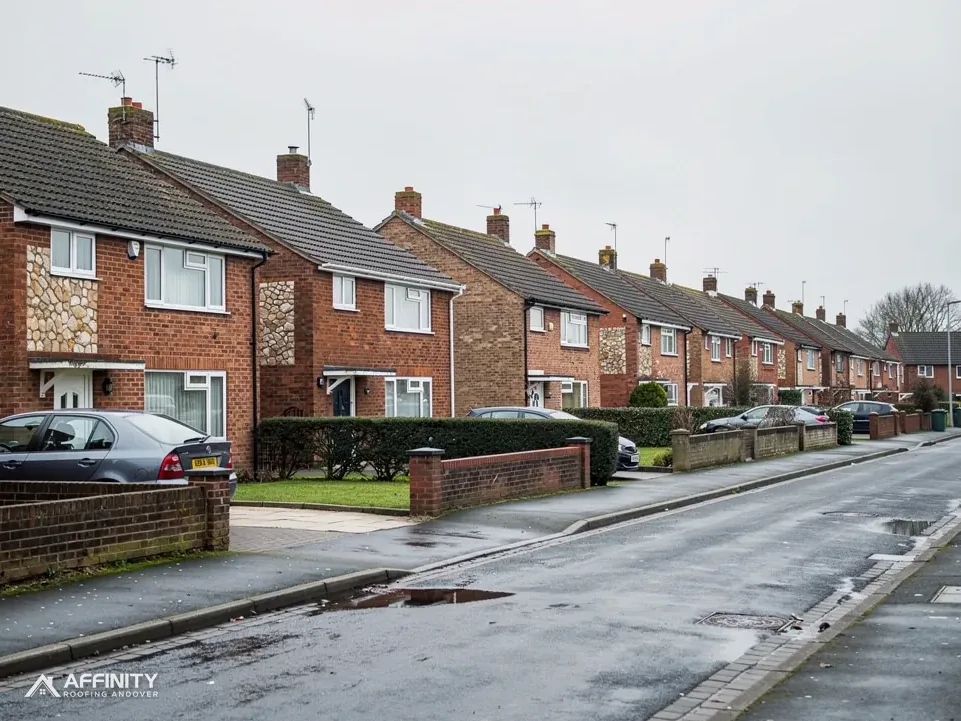
Medstead stands on high chalk ground, and the VCH in 1908 described its main street as lined with low slated cottages. We read each roof before pricing it.
Medstead roofs, from the main street to St Andrew's
Main street cottages
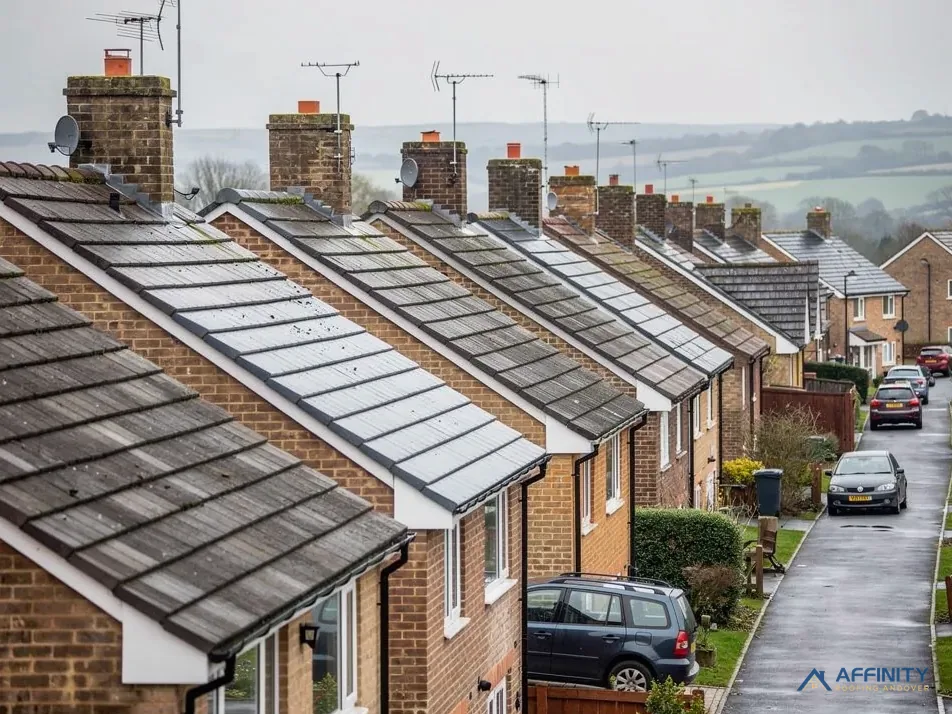
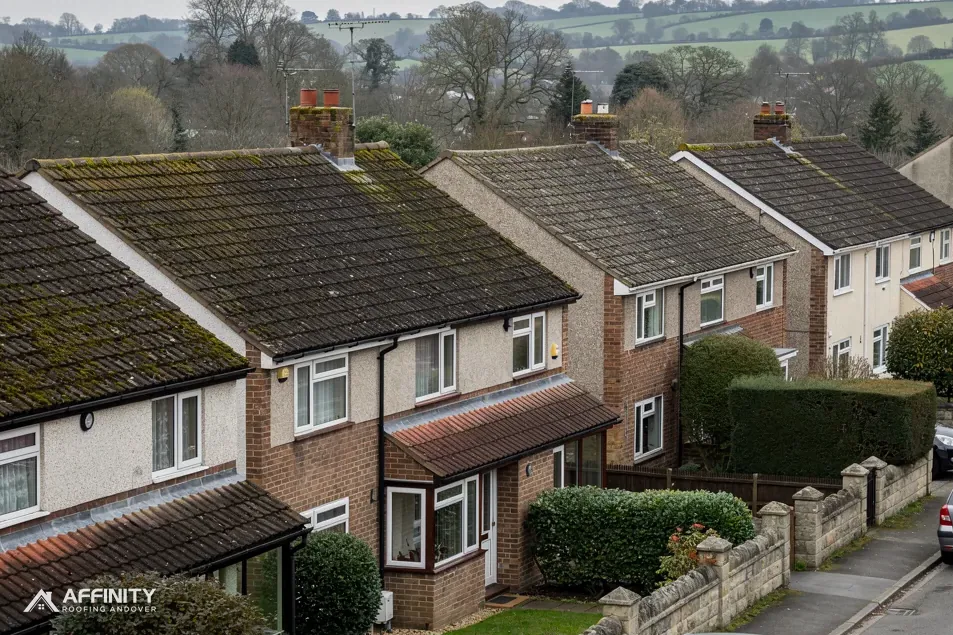
In 1908 the VCH described the main street as lined with low slated cottages and small shops.
Church of St Andrew
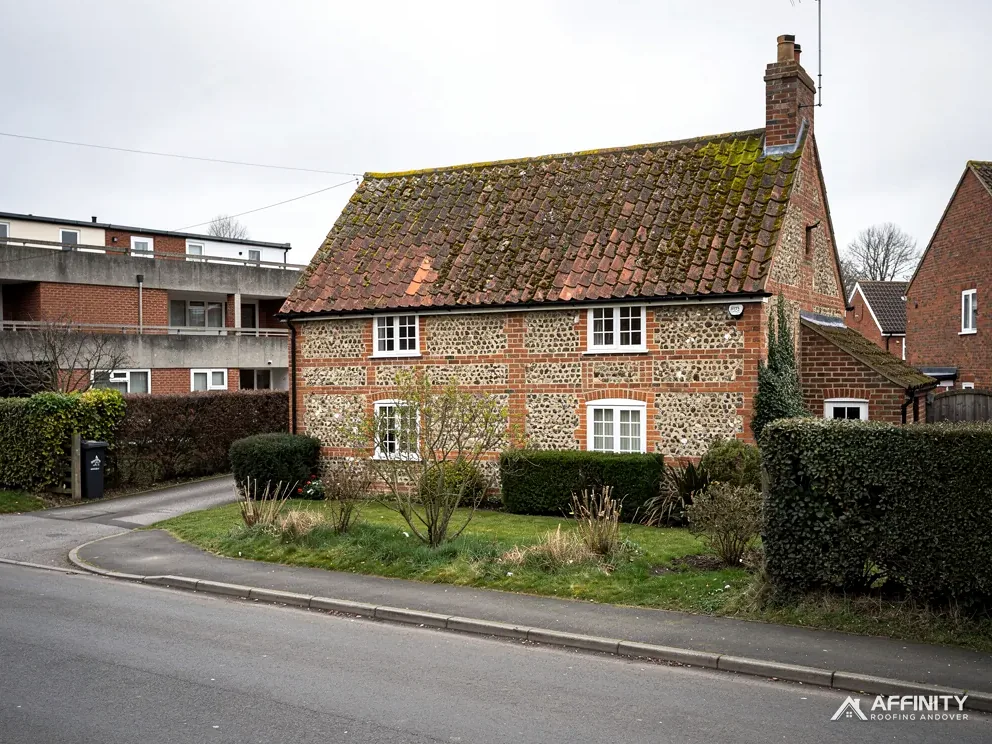
Listed Grade II on 31 July 1963 and in use for worship, so repairs follow the faculty system.
Houses of the parish
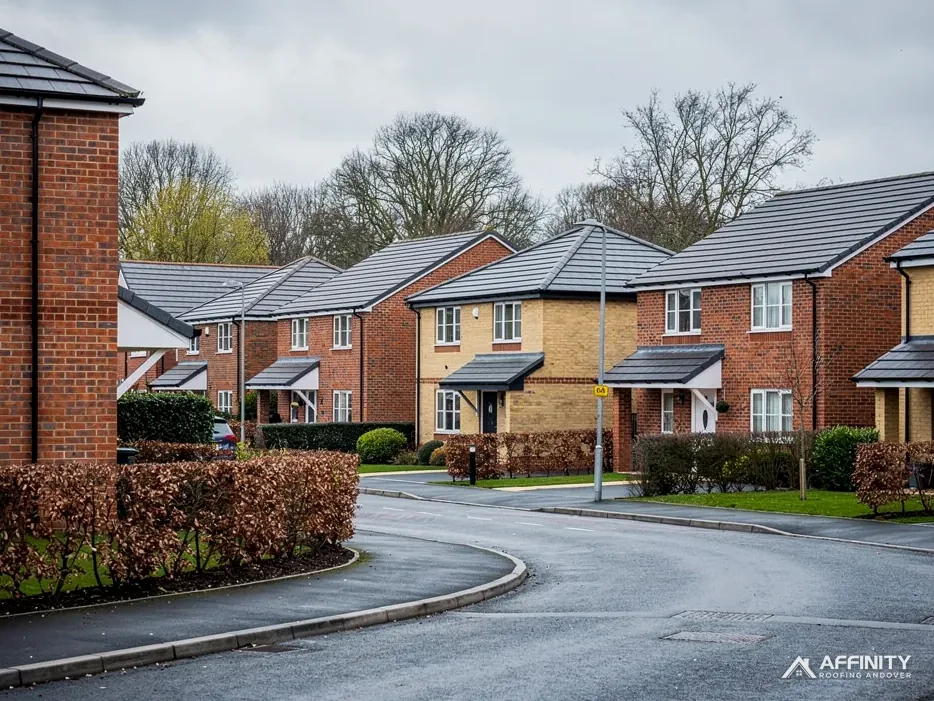
The 2021 Census counted 3,013 usual residents in Medstead civil parish, in homes under East Hampshire District Council.
Medstead between Four Marks and Ropley
Four Marks lies south-east, Ropley south and Alton east, with New Alresford south-west and Dummer and North Waltham north-west.
- Distance
- 23.5 road miles east of Andover
- Planning
- East Hampshire District Council
- Council
- East Hampshire District Council and Hampshire County Council
The Medstead roof report
Local editionMedstead, HampshireEast Hampshire rules and a high-ground village
Medstead's roofs from the high chalk ground: what East Hampshire decides and what slate asks of a survey
Medstead is a Hampshire village of 3,013 people north-west of Alton. This report covers which council plans and inspects here, what the nearby Upper Wield conservation area and the village church change, and how a county scaffold licence works.
East Hampshire plans and inspects; the county does the roads
Medstead sits north-west of Alton, in East Hampshire. That puts the planning decisions for a roof in the hands of East Hampshire District Council, and the same council employs the building control team that inspects the work (01730 234207). Hampshire County Council is the county council and the highway authority, so anything that touches a pavement or a public road comes under its licences. Three desks are involved, then, but only two organisations.
For a re-roof, the Planning Portal draws the main line. A job that leaves under a quarter of the building envelope and under half the roof affected is not normally a building control application, which keeps small repairs simple and light on paperwork. That is the line we use for a Medstead address, and a scheme that creeps towards either limit is put to the district's team before it is booked. Where a roof is being altered and not just re-covered, planning joins the list of questions.
Weight is the other trigger, and it is easy to overlook. Where a new material weighs 15 per cent or more above what it replaces, Building Regulations approval is required. The Planning Portal also advises a structural check in that case. We measure and record the rafters beneath each slope before we recommend any change of material.
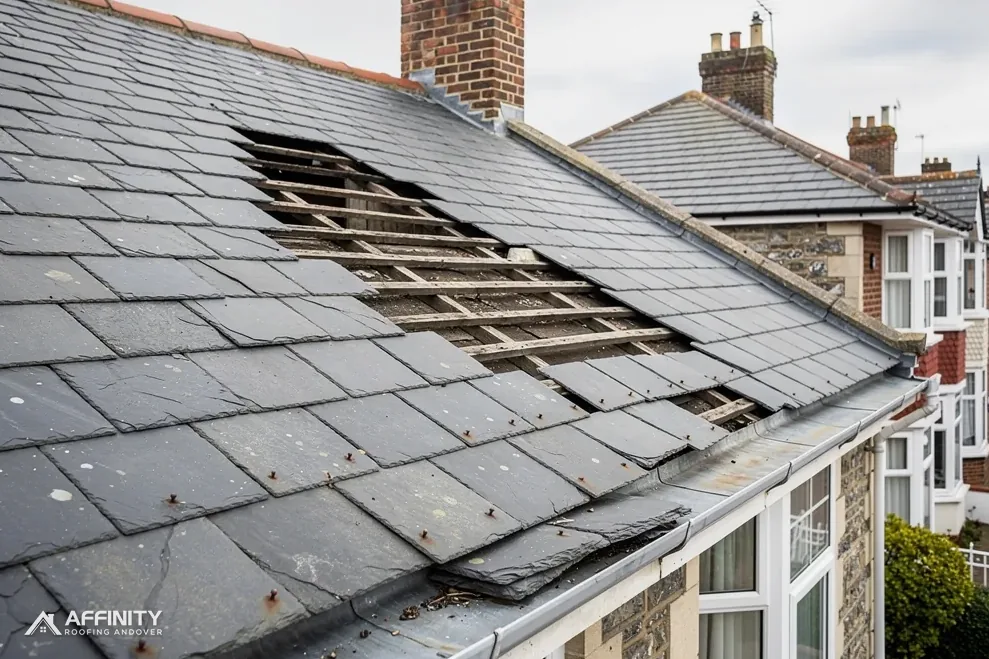
The VCH said in 1908 that the main street was lined with low slated cottages, and slate calls for its own way of working. Slates are fixed individually, usually by nail or clip, over battens and underlay, and a slipped slate can mean a failed fixing as much as a failed slate. We look at the nails, the lap between courses and the state of the battens. A repair has to go back the way the roof was built.
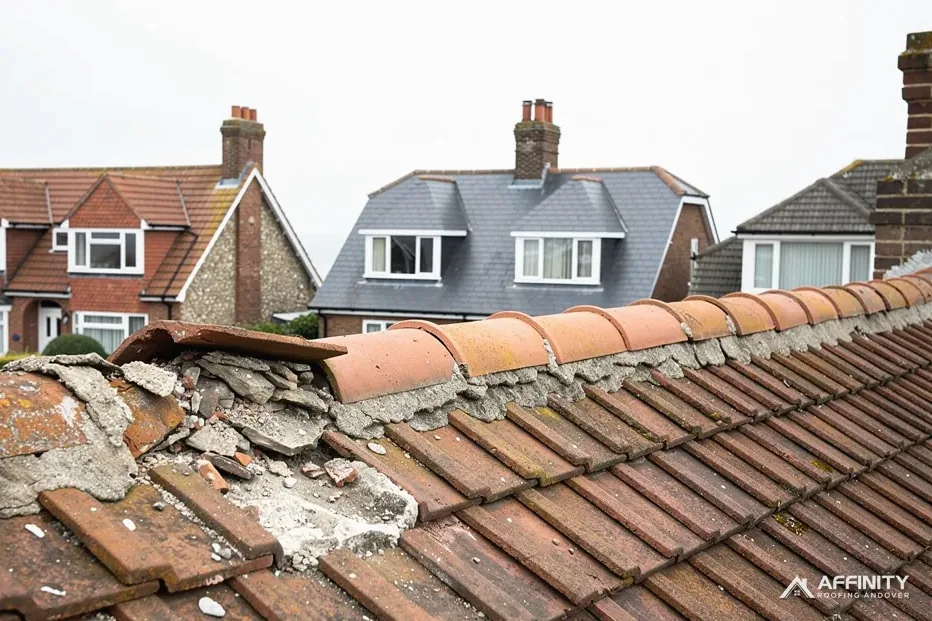
On every roof we photograph the covering from a distance and then each junction in close-up: ridge, hips, valleys, chimney flashings and the eaves. Lifted slates or tiles show the battens and underlay beneath, and those pictures are matched to the findings in the report.
A registered building control approver is open to anyone who would rather not use the district, and the route is settled on paper before a date is fixed.
The VCH's 1908 description is well over a century old, so we record what the roof is today. Some cottages may have been re-covered since, others may still carry old slate, and the survey notes tell you which is which, with the pictures to prove it. That record is also what the district planning team will ask to see if a question comes up.
Upper Wield nearby, St Andrew's and 697 feet up
Medstead stands on high ground. The VCH in 1908 put the highest point of the parish at 697 ft, near the village. Elevation is not a planning matter, and on its own it is no reason to change a roof. We check every ridge and verge for loose or missing fixings and record what we find. Where a fixing has failed, the repair uses the right one for the covering.
Gutters and downpipes get the same scrutiny. A blocked gutter can soak the eaves boards and the top courses of slate, and the damage is easily blamed on the roof itself. We trace stains back to their source first.
St Andrew's church has a Grade II listing (list entry 1338947, first listed on 31 July 1963) and the mapped record shows Anglican worship there now. Church of England buildings in use are exempt from listed building consent and use the faculty system instead, a faculty being granted by the diocese's consistory court. If a roof survey helps a faculty application, we supply close-up pictures along with a written description of the roof and the proposed work.
Historic England's list records 2 listed buildings within about 500 metres of the village centre. The nearest conservation area to the village is Upper Wield, about 2.5 km away from the centre of Medstead. Upper Wield is a different village, so its area says nothing about whether your own street is covered. East Hampshire's own map settles it for your address, and its planning team answers any doubt.
Listed or not, an old house deserves the same care. Where a repair would change what makes a listed house special, listed building consent is required alongside any planning permission, and we start with like-for-like materials. For an unlisted house, matching the existing slate or tile is simply good practice, and it keeps the roof looking right from the road.
Whether any Article 4 direction touches your house is a further question for East Hampshire. Our guide to planning permission for roof work explains where a dormer or other alteration crosses from permitted to needing an application.
Weighing repair against a full re-cover is easier with the photographs spread out, and another roofer can read them too.
Roofs in a village centre are seen daily by neighbours, so appearance matters. Matching the slates, keeping the ridge line straight and finishing the verges neatly are all part of the job. When the original slates cannot be saved, reclaimed ones of matching size and weathering come first, because new slate looks out of place beside old.
“In Medstead the first question is how the slates are fixed, not how many are missing.”
Hampshire's licence rules, and the work itself
Section 169 of the Highways Act 1980 makes a licence compulsory for scaffold standing on a public road or pavement, and the highway authority issues it. For Medstead that is Hampshire County Council. East Hampshire District Council does not issue them. Under Hampshire County Council's rules the scaffolding company, not the householder, makes the application.
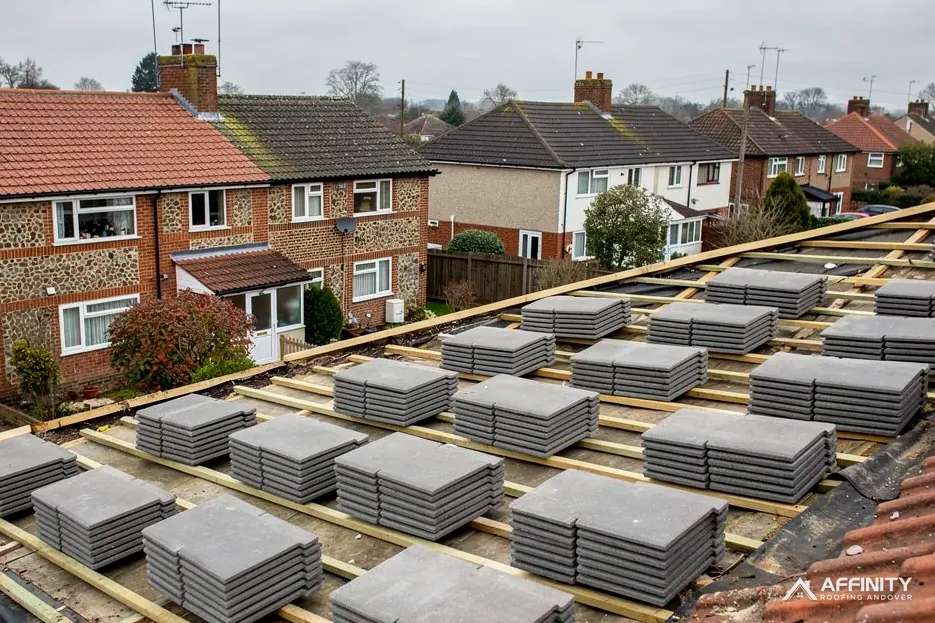
On site, the routine is the same for a repair or a re-roof. Each morning we tell you what is planned for the day. Access is rigged with care, waste leaves the site as it is produced, and the place is left tidy each evening, with the roof closed in if rain is forecast. The same routine runs whether the house is an old cottage or a later home.
When the work is finished we walk you through the photographs of the completed roof, to compare with the survey pictures taken at the start.
Hampshire County Council's licence costs £211.90 on application for the first 2 weeks, then £72 for each further 2-week block. It needs 10 clear working days between applying and starting, and it grants no extensions. Scaffold that stays on private land sits beyond the licence, and the survey says whether your plot qualifies, so no one pays for a licence that is not needed.
Because extensions are not available, the sequence matters a great deal. If a roof needs a consent decision first, we hold back the licence until the decision arrives. A scaffold standing idle for want of a signature still has to be paid for, and we would rather you did not.
The work covers what a village roof asks for. Slate roofing suits the older cottages that carry it, with repairs sized to the slates already there. Roof repairs deal with slipped coverings and perished flashings. Chimney repairs look after stacks with weathered pointing or worn lead.
Sometimes the honest answer is that a slate roof has years left. A slipped slate or two on sound battens is a repair, and the survey will say so. A slope where the nails have rusted through, row after row, needs stripping and re-fixing, and the photographs show that too. You see which case you have before any price is written.
Four Marks, Ropley, Alton, New Alresford, Dummer and North Waltham are all within reach of a survey, and each is treated as its own case, with the planning position and the building control contact written into the notes. Each village has its own parish and planning map, so every address is checked again and the finding recorded in the survey file.

Medstead roofs: slate, the church and the county licence
Can slipped slates on a Medstead cottage be repaired rather than replaced?
Often, yes, provided the battens are sound and the cause is a failed fixing, not a failed slate. We look at the nails, the laps and the battens, lift slates where it is safe and photograph what lies beneath. If the fixings have corroded across the slope, re-fixing or a new covering is the better route, and the photographs show which case it is.
Who inspects a re-roof in Medstead, the district or the county?
East Hampshire District Council, through its own building control team, which can be reached on 01730 234207. Hampshire County Council is the highway authority only. A replacement covering heavier by 15 per cent or more than the present one needs Building Regulations approval. We raise larger jobs with the district team before booking, record its reply, and pass it to you with the survey photographs.
Is Medstead inside the Upper Wield conservation area?
No. Upper Wield is the nearest conservation area to Medstead, within about 2.5 km of the centre, and it is a different village. A street is covered only if East Hampshire's boundary includes it. East Hampshire's own map decides the position for an address, its planning team can verify, and the reply is filed ahead of a quote.
Does the householder apply for a Medstead scaffold licence?
The scaffolding firm applies for you under Hampshire County Council's rules, at least 10 clear working days before the licence is due to begin. Hampshire County Council charges £211.90 for the first 2 weeks and £72 for each further 2-week block. No licence applies on private land, and any cost that does arise is part of your one price.
Start with a Medstead survey
Give us the address and describe the slates or tiles. We will arrange a survey, then send one written price.
10-year workmanship guarantee, in writing.