
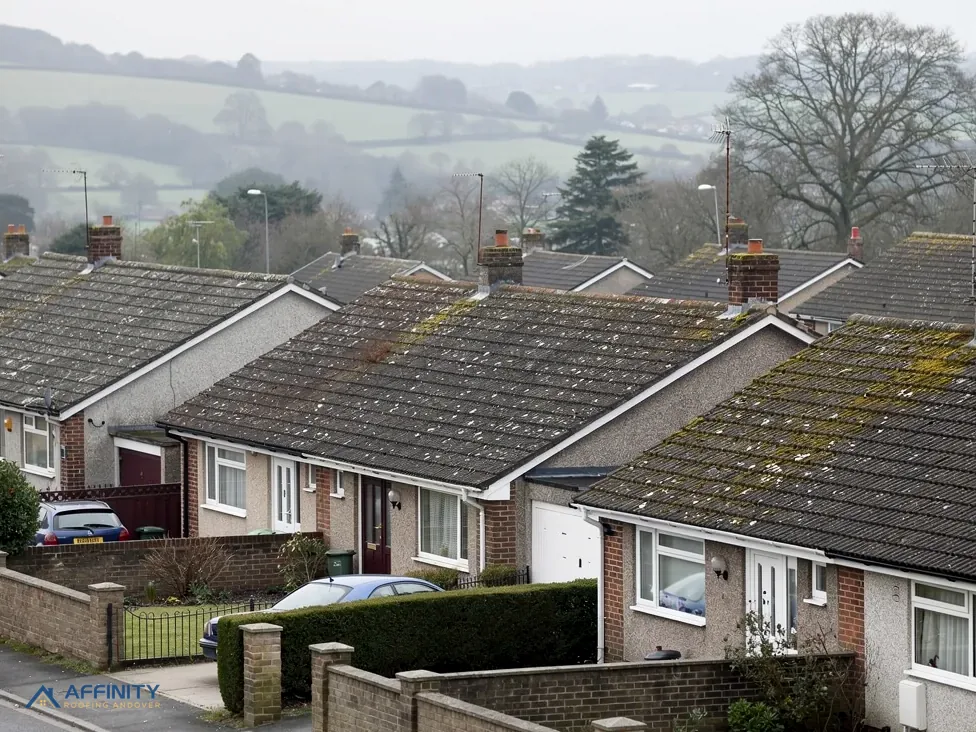
Roofers in Pangbourne
Thames-side streets, Bere Court and the Whitchurch toll bridge
Pangbourne grew into a Victorian riverside resort, and its main streets still hold 17th and 18th century buildings. Every roof here is surveyed before a repair is chosen.
Pangbourne roofs, from Bere Court to the riverbank
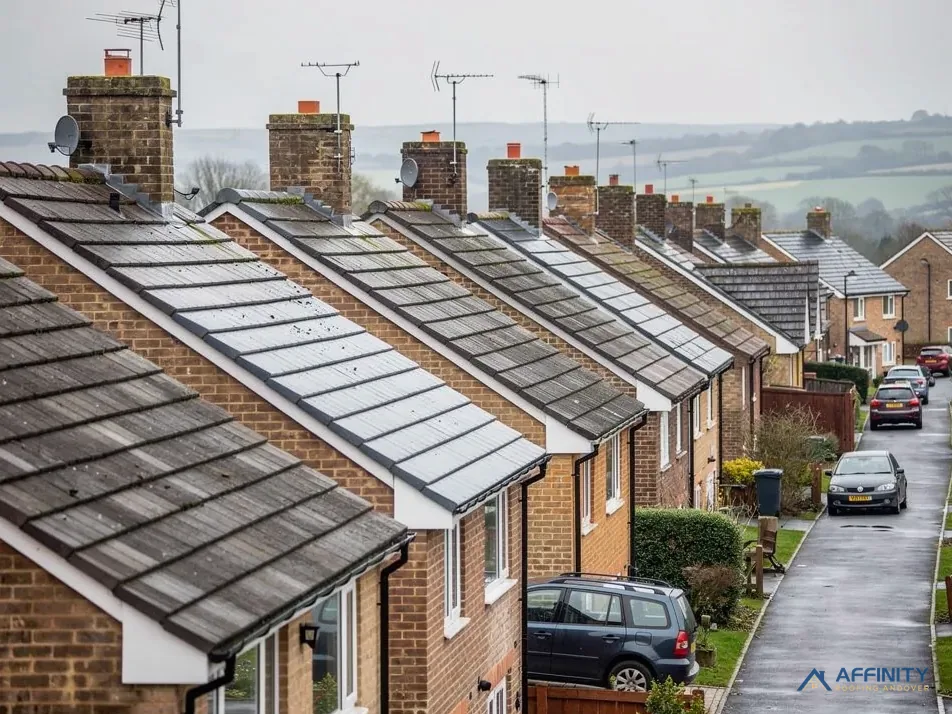
Bere Court in 1923
In 1923 the VCH described Bere Court as a square red brick house, two storeys, under a tiled hipped roof.
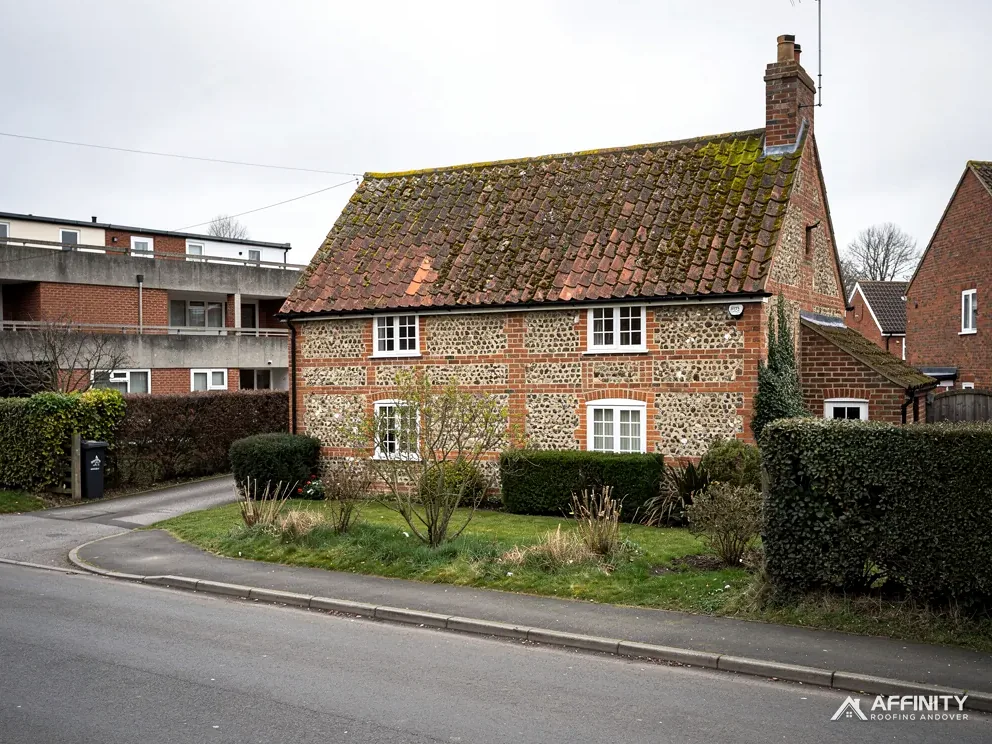
Shooters Hill House
Built in 1898 by the architect Leonard Stokes and listed Grade II*, so roof work starts with the consent question.
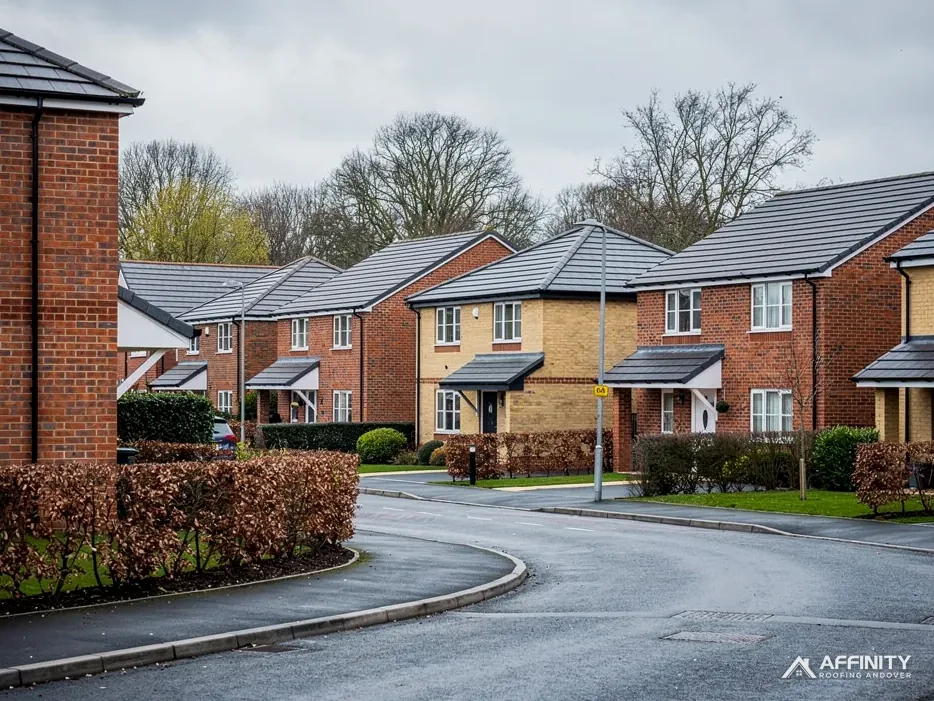
Streets near St James
Houses in the conservation area near the Grade II* church, with 29 listed buildings inside 500 metres of the village point.
Pangbourne and the Thames bank opposite
Whitchurch-on-Thames lies just north across the river, with Theale to the south, Tilehurst to the south-east and Bradfield to the south-west.
- Distance
- 29.2 road miles north-east of Andover
- Planning
- West Berkshire Council
- Council
- West Berkshire Council (unitary)
The Pangbourne roof report
Local editionPangbourne, BerkshireTwo banks of the Thames, two councils
Pangbourne and its river: whose rules cover a Thames-side roof, and what we check first
Pangbourne lies north-east of Andover, 29.2 miles by road, on the Berkshire bank of the Thames. This report sets out the councils involved, what the village's listed buildings change, and how a scaffold gets approved here.
West Berkshire, BCS and the river boundary
Pangbourne belongs to West Berkshire Council, a unitary authority. One body therefore decides planning applications for the village and licenses scaffolding on its roads. Across the water lies Whitchurch-on-Thames, in Oxfordshire, which answers to a different set of councils altogether. The Thames divides two sets of rules, and a roofer working both banks in one week has to keep them apart. At the 2021 Census the parish of Pangbourne had 3,277 usual residents.
Building control for the village runs through Building Control Solutions, usually called BCS. It is a partnership between West Berkshire Council and Wokingham Borough Council, and its telephone number is 0300 790 0580. For a Pangbourne address we work from that body's guidance and not from the Hampshire pages that apply to our jobs nearer Andover. A council's own page can differ from the national summary, and it is the council's page that counts once you are standing at the door.
A re-roof is tested first against the Planning Portal's two limits: less than 25 per cent of the building envelope and less than 50 per cent of the roof. Work inside both limits does not normally call for an application. Renewing a few tiles, patching a valley or running a fresh strip of lead flashing sits well inside those limits. Stripping a detached house to the rafters does not, and then we put the question to BCS before we price the work instead of after.
Weight comes second. Should the replacement add 15 per cent or more to what the rafters carry, Building Regulations approval follows, and the Planning Portal tells owners to get the structure inspected before work begins. A switch from natural slate to concrete tile is the textbook case. It is worth settling before any materials are ordered, because the answer can change which covering is sensible at all.
You can use a registered building control approver in place of the council body. That is a private route, and the registration regime that regulates it began on 6 April 2024. We explain which path your job needs, and why, on paper ahead of any date. Planning is a separate matter that turns on the house itself, and our guide to planning permission for roof work covers houses, flats and listed homes so you can read the rules before we visit.
When the paperwork is clear, the only open question left is the roof itself. That is where the survey earns its place, since it replaces opinion with pictures. We go up, look at the covering, the battens, the underlay and the flashings, and report in plain words what each one is doing.
Bere Court, Shooters Hill House and the church
Pangbourne's buildings tell the village's story. After the Great Western Railway arrived, Pangbourne grew popular in Victorian times as a riverside resort, and its main streets keep many buildings from the 17th and 18th centuries, according to the West Berkshire heritage walk leaflet. Bere Court, once a country house of the abbots of Reading, was by 1923 a square red brick house of the early 18th century, two storeys high, with a tiled hipped roof, as the Victoria County History of Berkshire records.
The same leaflet picks out two more listed landmarks. Shooters Hill House, built in 1898 by the architect Leonard Stokes, is Grade II* listed. Whitchurch Bridge is a Grade II listed toll bridge on the site of earlier wooden bridges; South Oxfordshire's 2026 appraisal says the current structure was rebuilt in 2013-14, reusing elements of a 1901-2 rebuild. The Church of St James the Less, in Church Road, is Grade II* as well (National Heritage List entry 1213980, first listed on 14 April 1967).
St James the Less still serves the Church of England congregation, so any works go through the faculty system, not listed building consent. A listed house is the reverse case: listed building consent is required whenever work would affect its character, alongside any ordinary permission, and the application goes to West Berkshire Council. Repair in matching materials is the usual route in, and our photographs of the covering as it stands give the officer something concrete to assess.
The Pangbourne conservation area reaches within about 0.75 km of the Pangbourne village centre, and the Whitchurch conservation area touching it across the river. Historic England's list records 29 listed buildings within 500 metres of the village point. Before any change to the roof's look from the street, check with West Berkshire Council whether an Article 4 direction applies.
On a house of this age our survey writes down the covering, the way the ridge and hips are bedded, the state of the lead and the condition of the timbers we can safely reach. A record like that is what lets a repair match its neighbours. It also saves a second visit when the council or a buyer's surveyor wants to know exactly what was there.
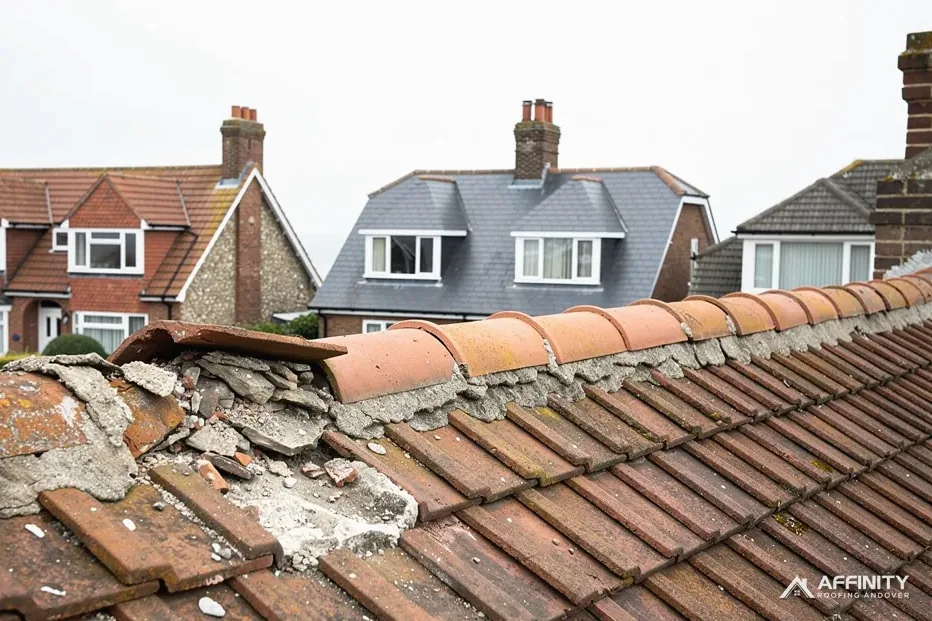
Hipped roofs deserve a special look. Each hip carries its own ridge tiles and a bedding line that moves with the building, and a hairline crack there lets water into the rafters long before a stain shows below. We photograph every hip end for that reason, and the pictures come with the price.
“One river separates two councils and two sets of roof rules.”
Scaffold fees, two landscapes and the river
Poles and boards that obstruct the public highway fall under section 169 of the Highways Act 1980, which makes the highway authority's licence a legal requirement. For Pangbourne the authority is West Berkshire Council. Its page states that the scaffolder files the application and the resident does not. West Berkshire Council charges £125 plus £71 per week, and wants applications at least ten working days ahead. Scaffolding on a private road is exempt.
Those ten working days shape the calendar. Where a listed building consent decision is outstanding, we delay the application, because the weekly charge keeps running while poles stand unused. You receive a start date only when the consents and the licence line up. Nobody wants a scaffold up for a fortnight with no work on it. Once everything is in hand, the crew arrives on the agreed morning and the first job is to protect the garden, the drive and the neighbours' boundary.
The landscape designations add a second layer, and Pangbourne has two of them. The place point sits inside the North Wessex Downs National Landscape, formerly an AONB. About 27 per cent of the 1.5 km box around the village falls inside the Chilterns National Landscape, on the Whitchurch bank to the north. The North Wessex Downs partnership gives advice only. West Berkshire Council keeps the planning decisions on the Pangbourne side, and South Oxfordshire District Council makes them across the river.
For the homeowner the practical effect is limited. Repairs, and re-covering to match what is already there, go ahead as they would in any village. Altering a roof's form, with a dormer as the usual example, runs into tighter planning rules in a National Landscape and in a conservation area alike. That guide, linked earlier, sets those rules out.
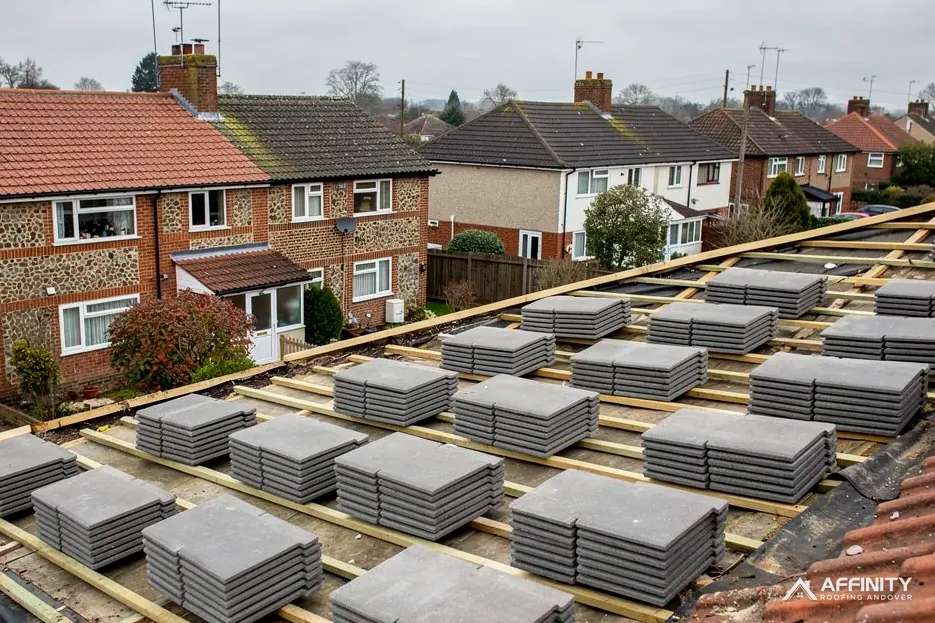
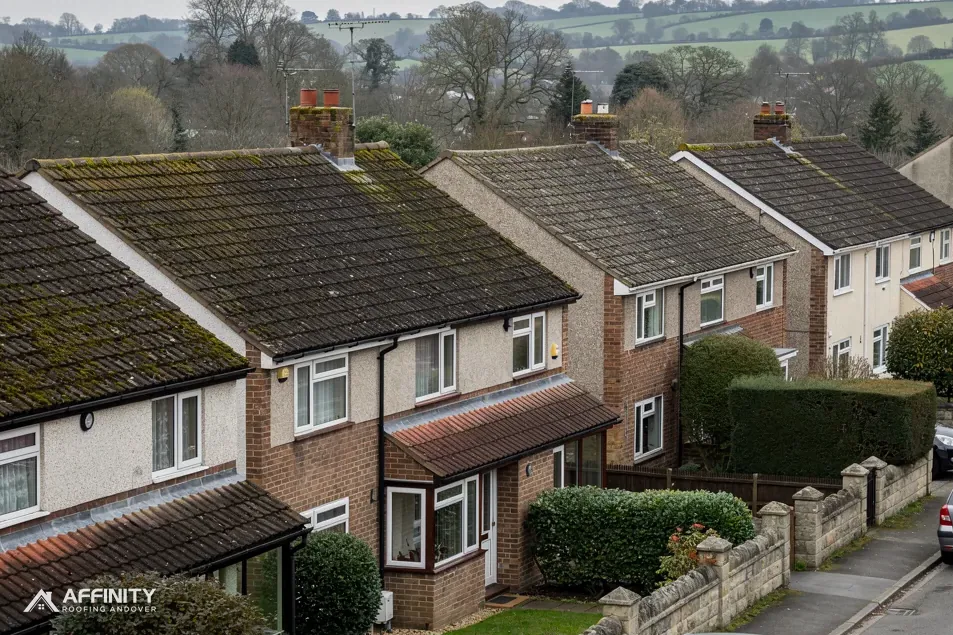
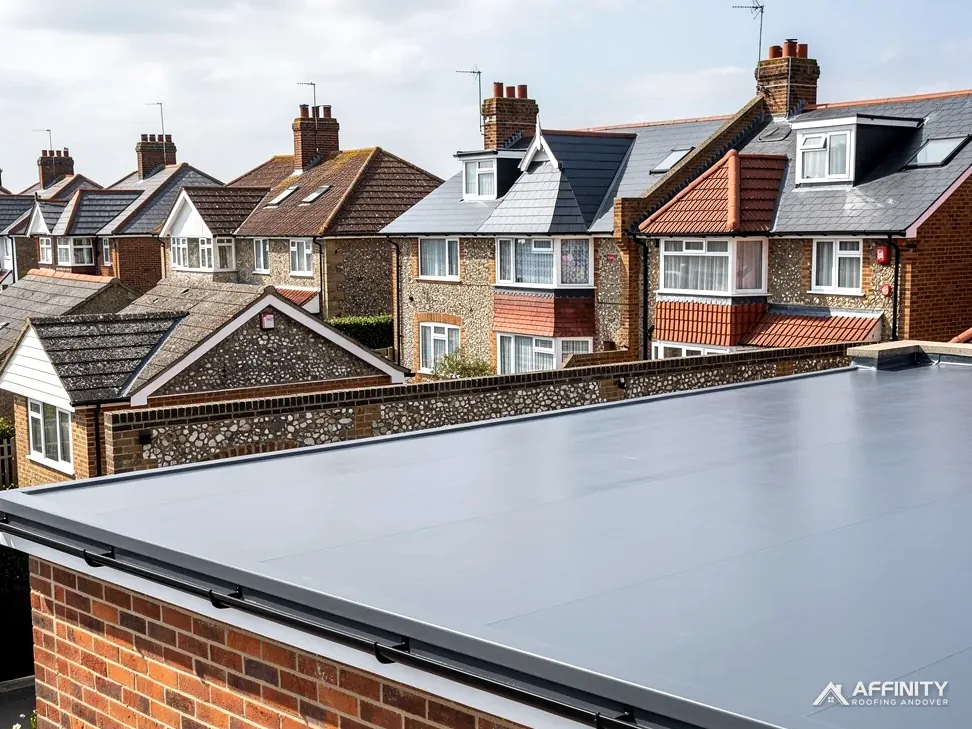
Pangbourne roofs take services of an everyday kind: roof repairs after a slipped tile, roof replacement where a whole slope has failed, and flat roofing on an extension or porch. Each begins with a survey and pictures of what is up there; the written price comes after. Gutters and downpipes get a look too, because a Thames-side street still sends rain down the wall when an outlet is blocked, and wet brick and soft mortar follow.
If a repair is the better buy, we tell you so and show why: sound battens, underlay still in one piece, fixings that hold. If the covering has had its day, you see that in pictures too, and the choice is yours.
Pangbourne: the jobs we take on

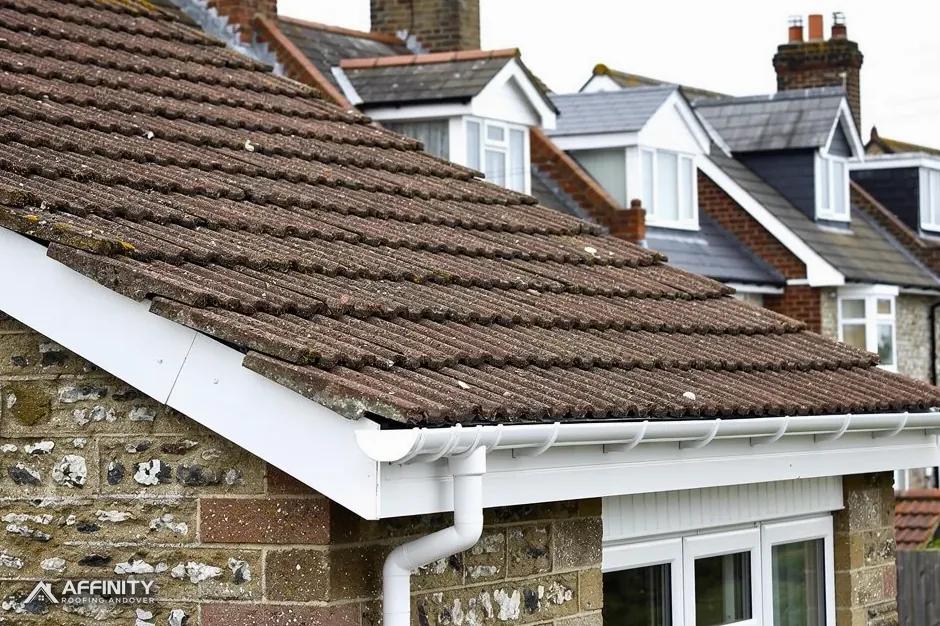
Pangbourne roofs: two banks, listings and licences
Does re-tiling a hipped roof like Bere Court's in Pangbourne need building control approval?
Not always. Provided the work touches under a quarter of the building envelope and under half of the roof, no application is usually needed. A new covering that adds 15 per cent or more to the load calls for approval and a structural check, and BCS can confirm both points. Its answer for your address goes to you in writing, with the survey pictures, before a date is fixed.
My Pangbourne house faces the Thames: which council do I ask?
West Berkshire Council, since Pangbourne is on the Berkshire bank. The houses opposite, in Whitchurch-on-Thames, belong to South Oxfordshire District Council and a different building control service. The river is the boundary, so we confirm the address first and read the right council's pages before we give you a route. The survey report names the council for your address.
How long does a scaffold licence take in West Berkshire?
West Berkshire Council wants ten working days' notice at minimum, and the scaffolder files the application for you. West Berkshire Council's fee is £125 plus £71 per week. If your job also waits on listed building consent, we time the application so you are not paying weekly charges for poles with no work on them.
Does the Chilterns designation across the river affect my roof?
Only on the Whitchurch bank, where the Chilterns National Landscape lies; Pangbourne's own centre is in the North Wessex Downs. West Berkshire Council stays the planning authority on the Pangbourne side, and the North Wessex Downs partnership is advisory. A repair is judged by the same yardstick as in any neighbouring village, while a change of roof shape meets tighter rules, which our planning guide sets out in full.
Request a survey for your Pangbourne roof
Pass on the address with a photograph. We survey, check West Berkshire Council's route, then quote one written total.
10-year workmanship guarantee, in writing.