The short answer
No single number applies, because the count varies with the slate's size and with the head-lap and gauge it is laid to. A larger slate covers more roof, and a bigger head-lap means more slates to the metre. The maker's data sheet states the count for a chosen size and lap, and the order needs an allowance on top for cuts and breakage.
What decides the number
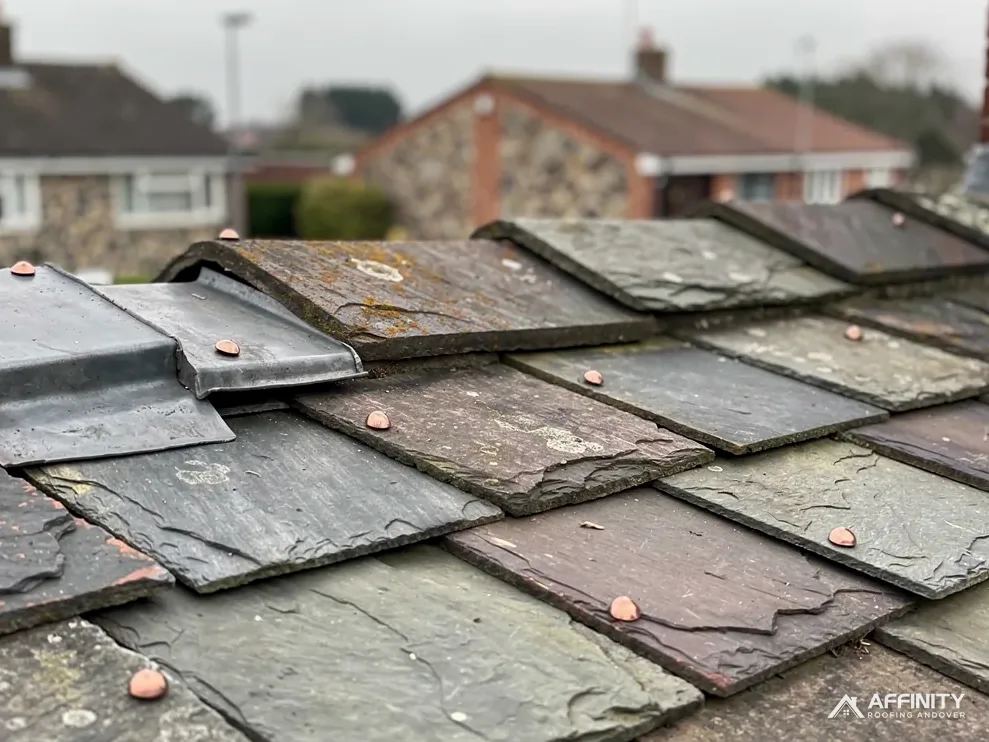
Think of the roof as a grid, with every slate occupying one cell. Each slate shows only part of itself, the exposure, which is the visible band between the tail of the slate and the tail of the one above it. Across the roof, slates sit side by side with a narrow gap between them. The area one slate really covers is therefore its width multiplied by its exposure.
A square metre divided by that area gives the number of slates needed, which is why the count changes with each of the inputs. A bigger slate covers more, so fewer are needed. A larger head-lap leaves less of each slate showing, so more are needed. Sizes come in a range, from small, thin slates to large ones, and the same roof can take quite different quantities.
The exposure itself comes from the head-lap: take the slate's length, subtract the head-lap and halve what is left. If you change one input, the rest follow. Our answer on slate head-lap explains how the overlap is set. The sum is simple, but it must be done on the real figures rather than rounded ones, since a small difference repeats across every course of the roof.
Reading the data sheet
Slate suppliers publish a data sheet for each product. For a stated size, it lists the head-lap needed at each pitch, the resulting gauge between battens and the number of slates per square metre. That table is the document to use, and it is more reliable than any rule of thumb because it reflects that supplier's slate.
Look at the pitch column first. The minimum head-lap rises as the pitch falls, and the lowest pitch a slate may be used at is also on the sheet. BS 5534 indicates a minimum roof pitch of 20 degrees for natural slate, and the slate's own data sheet should be checked too.
Then check the fixings the sheet allows, since nails and hooks have separate limits at low pitch. Cupa advises against hooks below 25 degrees. A roofer working from a data sheet can give an exact count for your roof once the pitch and area are known, which is why we measure the roof on the survey rather than estimate from a drawing or photograph.
Waste, cuts and spares
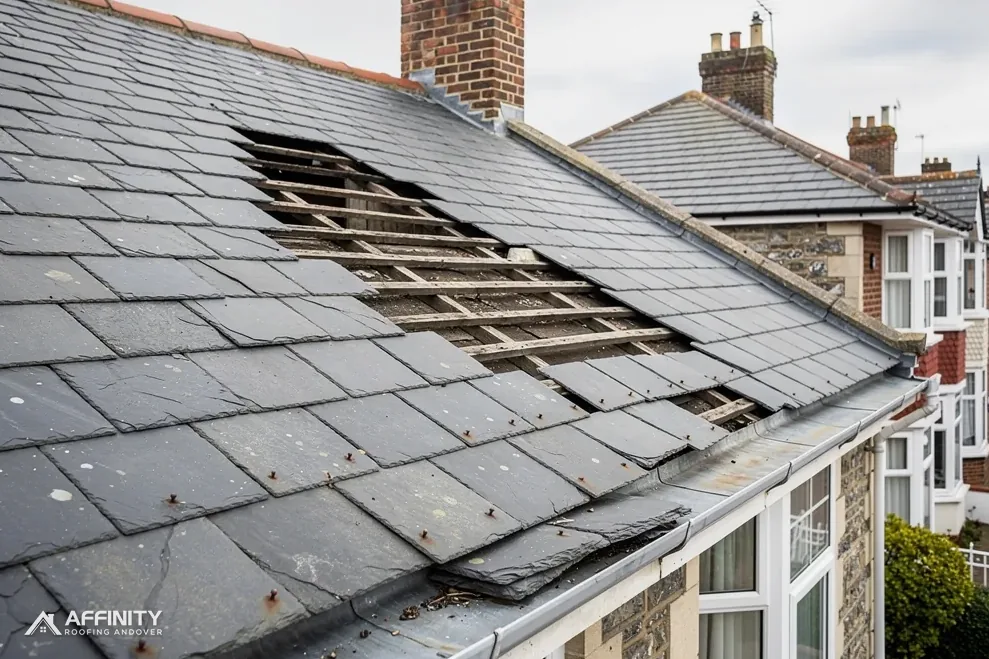
The calculated count is for the plain field of the roof, where every slate is a full one. A real roof has edges. At the eaves, the ridge, the hips, the verges and around chimneys and roof windows, slates are cut to fit, and some pieces fall off the end of the cut unusable. Valleys produce a lot of offcuts, because slates are cut at an angle.
Slate is brittle, so some slates break in handling or in the bundle. Natural slate also varies, and a slate may be sorted out for a defect such as a hole in the wrong place or a hairline crack. Suppliers recommend an allowance above the calculated figure, and the allowance you need depends on how complicated the roof shape is, so a plain gable needs less than a roof with several valleys.
A handful of spares left in the loft is worth having too. In years to come a broken slate can be replaced from the same batch, which matters when the original quarry no longer supplies a matching colour. Our reuse of old roof slates answer covers recovering stock on a re-slate.
Why the count matters to the price
Slate is bought by the slate, so the number you need drives the materials cost. In HomeBuilding's supply-only table, Spanish natural slate, reclaimed Welsh slate and new Welsh slate carry three clearly different prices per square metre, with Welsh the dearest, so the choice of product moves the total a good deal.
The count also affects labour and weight. More slates to the metre means more nailing and more time on the roof, and a heavier finished roof, which is relevant to the 15 per cent Building Regulations test in our answer on slate roof weight.
The way to compare options is to ask each roofer for the slate size, the head-lap and the gauge in the quote, and to check that the total price covers scaffolding and VAT. Citizens Advice advises collecting at least 3 written quotes. We give you one written total after the survey, and tell you the size, lap and gauge we plan to use. More on the job is on our slate roofing page.