The short answer
Head-lap is how far the tail of a slate reaches down past the head of the slate two courses beneath it. It keeps wind-driven rain from travelling through the joints to the batten and underlay. A steeper roof needs less head-lap and a shallower one needs more, and the slate supplier's data sheet gives the figure for each slate and pitch.
How the overlap works
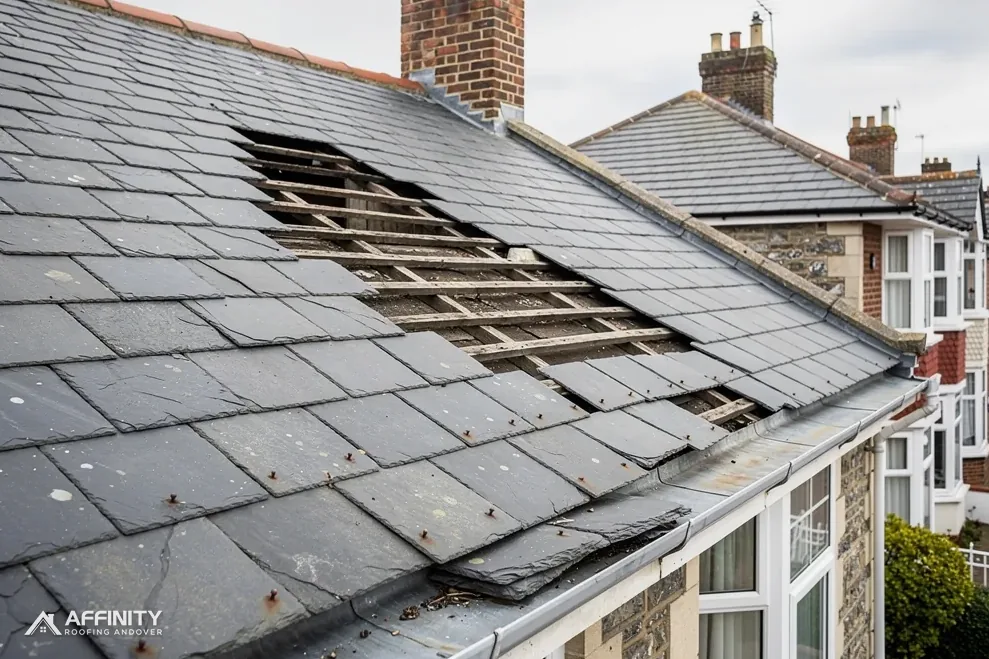
Slates are laid in courses, which are the horizontal rows running up the roof. Each slate sits across the gap between two slates in the row below, the way bricks do in a wall, so no joint lines up with the one beneath. That alone breaks the straight path a raindrop would need to reach the roof timbers.
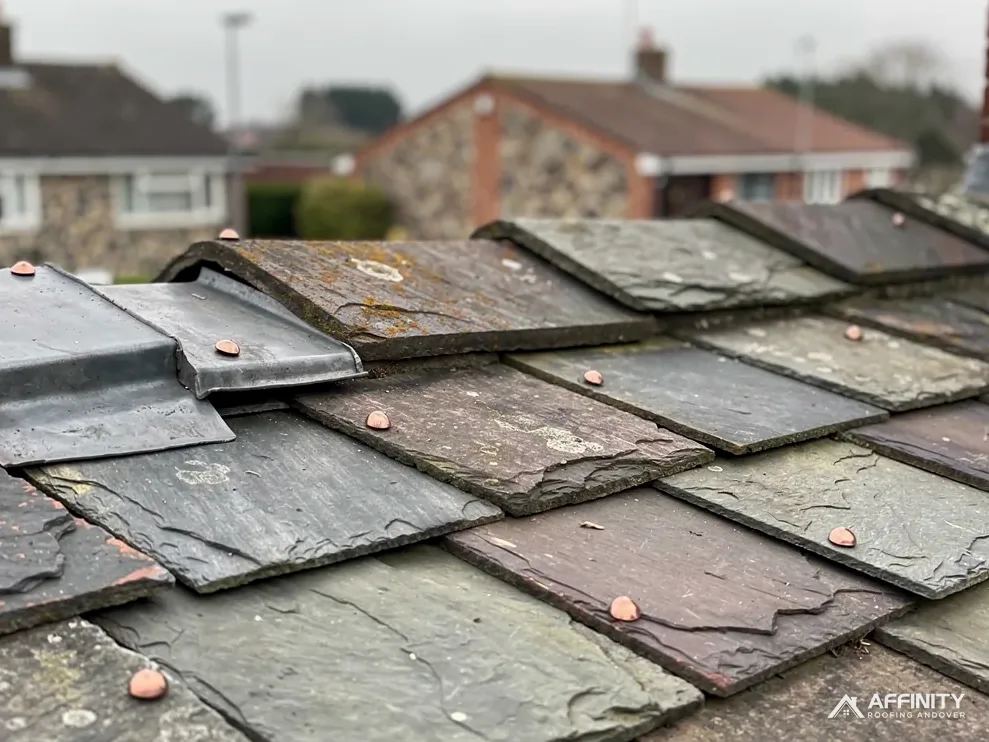
Head-lap is the second layer of protection. The head is the top edge of a slate and the tail is its bottom edge. Head-lap measures how far the tail of one slate covers the head of the slate two rows beneath it. Because every point on the roof sits under two thicknesses of slate, this style is called double-lap slating.
The overlap matters because water does not only run straight down. Wind pushes rain sideways into the joints, and a thin film of water can creep upward between two flat surfaces that sit close together. A generous lap gives that water a long way to travel against gravity, and it runs out of reach before it gets to the nail holes, the batten or the underlay. Take the lap away and the same joint becomes a short, easy route into the roof.
Why a shallow roof needs more lap
Rain leaves a steep slope quickly. On a shallower slope it moves slowly, lingers in the joints and is easier for wind to push upward, so the overlap has to be larger to give the same protection. That is why head-lap is never a single number for every roof. It depends on the slate and on the pitch, which is the angle of the slope measured in degrees.
There is also a floor on pitch itself. BS 5534 indicates a minimum roof pitch of 20 degrees for natural slate, and the slate producer Cupa advises against hooks under 25 degrees. Our answer on the minimum pitch for slate covers that limit in more detail.
Close to those limits, increasing the head-lap is one of the ways a slater makes the roof work, and the slate's data sheet is where the required figure for each pitch is found. A slope that looks only a little flatter than its neighbour can need a different lap, so we take the pitch from the roof itself, never from a drawing.
Head-lap and the visible exposure
The part of each slate you can see from the ground is called the exposure. It is also the distance between the battens, the timber laths the slates hang from, which slaters call the gauge. Head-lap and exposure are linked by simple arithmetic: take the length of the slate, subtract the head-lap, then halve what is left.
This explains something you may notice. Two roofs covered in slates of the same size can look different if one has a larger head-lap, because the larger lap leaves less of each slate on show. A bigger exposure, with the battens spread further apart, means a smaller lap, fewer slates to the square metre and a lighter roof, but it also means less margin for rain.
The link also works as a check. If the battens on a roof are set at the wrong gauge for the slate, the head-lap will be wrong too, however neat the slating looks. Slates that were reclaimed from another roof often differ slightly in length, so the gauge has to be worked out for the batch in hand. Our answer on slates per square metre shows how the same sums feed the quantity.
Checking head-lap on an existing roof
Head-lap cannot be judged from the ground and is not something to test by prising slates up, since old slates crack easily and the nails behind them may already be weak. The place to see it is on a survey, with a ladder or a tower in place and the slates lifted by someone who knows how to put them back.
We look for the signs that a lap has been lost. Slates that have slid down a few millimetres from their nails leave less cover than the roof was built with. Repairs made with slates that are shorter than the originals reduce the lap along that course. A band of damp stains in the ceiling directly below a row of old repairs can point the same way. You will see the evidence in the photos we take, and we explain what each one shows.
If a roof is being re-slated, the head-lap is set again at that point, with battens fixed to the gauge the new or reused slates need. The written price follows the survey. Slate roofing is covered in full on our slate roofing page.