The short answer
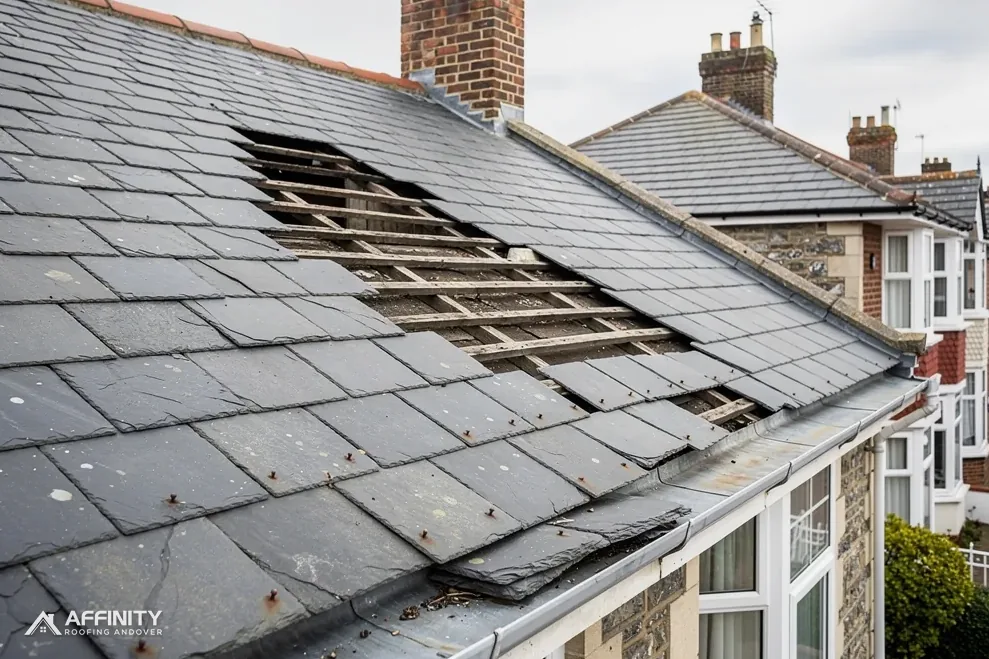
Not always. A slate or two on a low slope may need only a roof ladder, and a tower covers a modest job. Larger repairs, high slopes and work needing safe edges call for scaffold. If the frame sits on the pavement or over the road, the highway authority must issue a licence before it goes up, which for Hampshire addresses means Hampshire County Council.
Roof ladder, tower or full scaffold
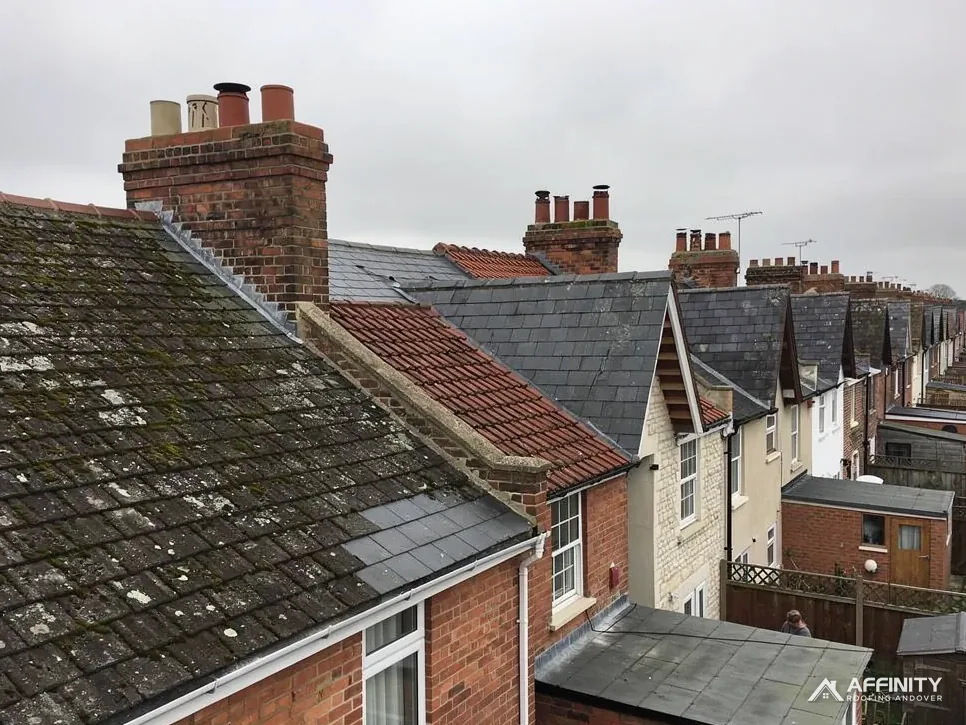
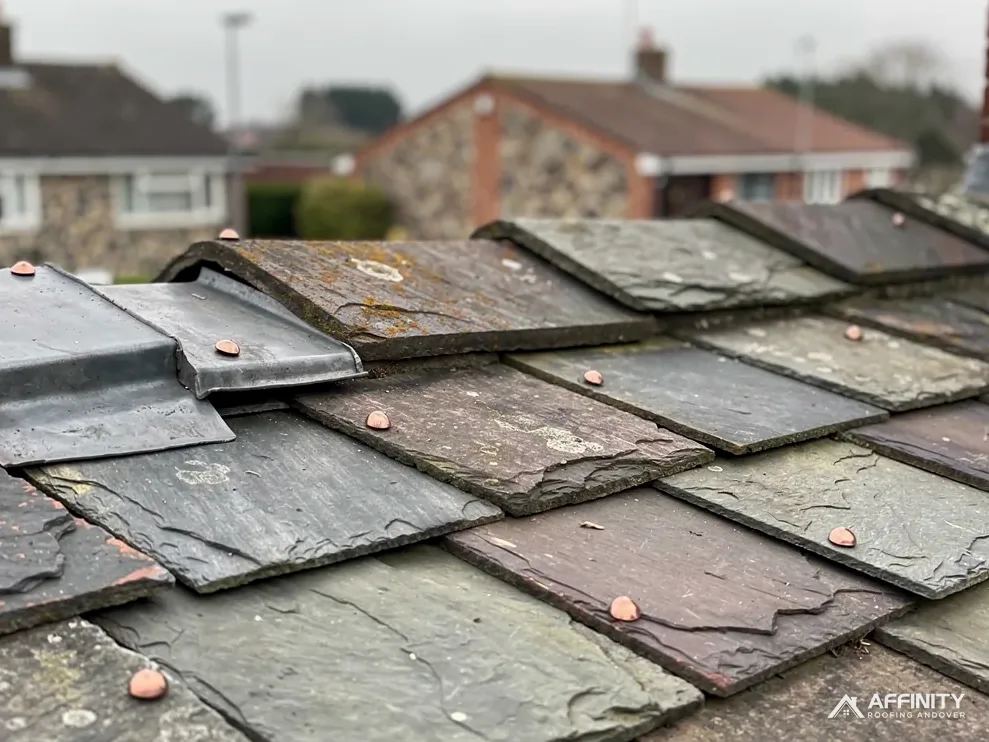
Slate is brittle underfoot, so the first rule of access is to keep weight off the slates. A roof ladder does that. Its hooked end lies over the ridge and the rest rests along the slope, so a roofer's weight is carried by a board that spans several courses rather than by any one slate. For one or two slates over a porch or garage, it can be enough by itself.
A tower is a step up: a frame built against the wall that gives a stable platform at eaves height. It suits short jobs on a lower elevation where the ground below is firm and flat.
Full scaffold covers everything else. A tall slope, a long run of repairs, work at the ridge or a steep pitch all need a working platform with edge protection and a safe way up that does not depend on the roof. HSE treats work at height as a risk to be planned, and guarded platforms are the usual answer wherever a fall could cause serious harm.
We pick the access at survey from the height, the pitch and the extent of the repair. Where a ladder alone would not be safe, we tell you, and the price covers whatever access the job needs.
When the highway authority must license it
Nothing is needed from the council for a scaffold in a back garden or other private land. One that obstructs the public highway does, and the pavement outside the house usually counts. Under the Highways Act 1980 s169, nobody may erect or retain such a structure without the highway authority's licence.
For Andover and the other Hampshire districts, the highway authority is Hampshire County Council. On Hampshire County Council's page the applicant is the scaffolding firm and the householder does not apply. The council wants 10 clear working days between application and start, with no extensions, so a licence cannot be stretched if the job runs on. Hampshire County Council charges £211.90 on application for the first 2 weeks and £72 for each further 2-week period.
Just over the county line, Wiltshire Council runs its own system: applications go through the MiPermit portal, from the supplier of the scaffolding, and each licence is valid for 28 days. Fees there depend on how much notice is given, so the timing matters in both counties.
At any other address, ask who applies and when. The Hampshire district councils and the national park authorities issue no scaffold licences, so they are not the place to enquire.
Timing a repair around the licence
The notice period changes how a small repair is planned. With 10 working days to wait and no extensions, the application must be lodged well ahead, and a job that overruns its licence may need another one. That favours inspecting the whole roof once and fixing everything in a single visit, instead of returning for a second slope next month.
Weather matters just as much. Gales and heavy rain stop slate work while the licence period keeps running, so a repair booked for a settled spell is likelier to finish inside the time you have paid for.
If the leak is active and cannot wait, a temporary cover such as a secured tarpaulin may be possible from a roof ladder while the licence is arranged, depending on the roof. Phone us and we will tell you what can be done safely, and how soon it can be done.
Our answer on a leaking slate roof covers what to do while you wait. The single slate replacement answer shows a repair small enough to manage from a ladder.
Staying off the roof, and what moves the price
Please do not walk on a slate roof yourself, even for a quick look. Slates slip and break, the surface may be damp or mossy, and a drop from the eaves can be life-changing. A few pictures taken at ground level give us plenty to work with.
Access is a genuine cost. A roof ladder is cheap and quick, a tower adds some, and full scaffold with a highway licence adds the scaffolder's work, the licence fee, the notice period and hire for the length of the job. We put no figure on scaffold in general, because it depends on the house, the height and where the frame stands.
When the survey is finished you get the repair priced as one written total, access already chosen and built in, so the scaffold's arrival adds nothing. Slate work is usually unhurried once the frame is up, because the roofer can move around the slope without fear of breaking more slates.
For the wider picture of slate repairs, our slate roofing page is the place to start, and a survey is where each of these choices is settled for your roof.