A drip from a roof window is alarming, and the first reaction is to blame the window. Often the window is fine. The water may be arriving through the metalwork that seals it into the roof, through a tile above it, or from the room itself as condensation.
Telling these apart matters because the remedies are so different. Sealant squeezed around a frame will not cure a failed lead apron, and a new window will not cure damp air. A wrong guess costs money and leaves the leak running.
This guide sets out the usual causes in the order they are worth checking. It starts with the simplest test, whether the water appears only after rain, and works through the flashing kit, the seals and glazing, and the roof above the window. It ends with how to limit the damage in the meantime and how the repair is chosen.
Approved Document C expects a roof to resist the penetration of precipitation to the inside of the building (paragraph 6.2). A roof window that lets rain in has failed that basic test, and it should be put right properly instead of patched.
Is it really a leak, or is it condensation?
A large share of calls about leaking roof windows turn out to be moisture from inside. The first job is to sort one from the other.
Clues that point to condensation
The water appears on cold, still mornings and clears by midday. It forms on the glass and the frame in a thin film or small beads, and runs down the pane to the bottom rail. It is worse in bedrooms, bathrooms and kitchens, and in winter. It happens in dry weather as readily as wet.
Clues that point to a leak
The water follows rain. It arrives at the corners or the side of the frame, or as a stain on the lining or ceiling beside the window, and it may continue for hours after the rain stops. It is worse in wind-driven rain. Opening a window or running a fan makes no difference to it.
A log for a week
Write down when you see water, what the weather is doing and which part of the window is wet. A pattern appears quickly, usually within a fortnight, and it tells the surveyor where to start looking.
Both at once
The two can co-exist, and many roof windows show a little of each. A frame that leaks slightly keeps the timbers damp, and a damp, cold frame attracts condensation. If you see both, address the leak first.
Our guide to condensation on roof windows explains the ventilation and glazing causes in detail, and the remedies that cost nothing.
If the water follows rain, the rest of this guide is for you. If it does not, ventilation is the place to begin, and the changes cost little or nothing to try over a fortnight.
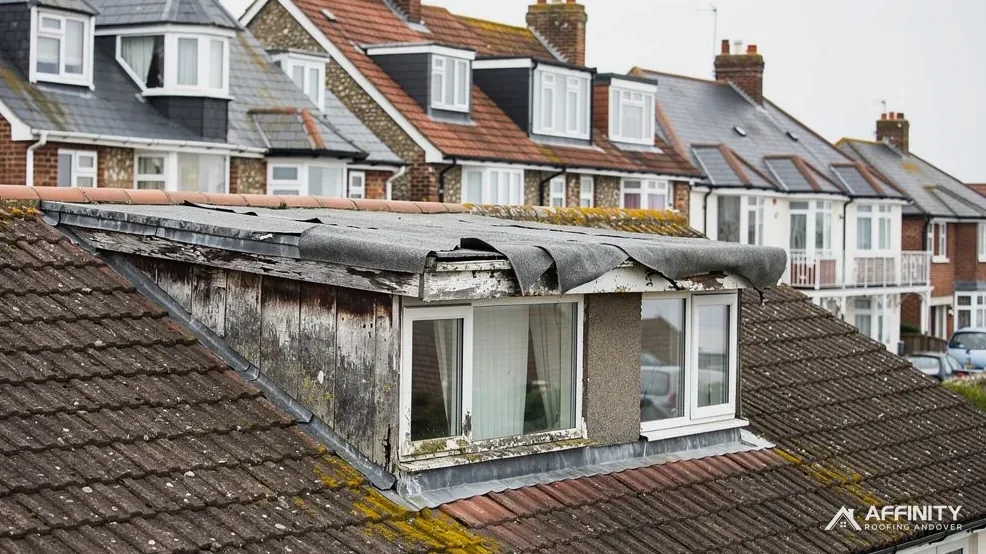
Failed flashing round the frame
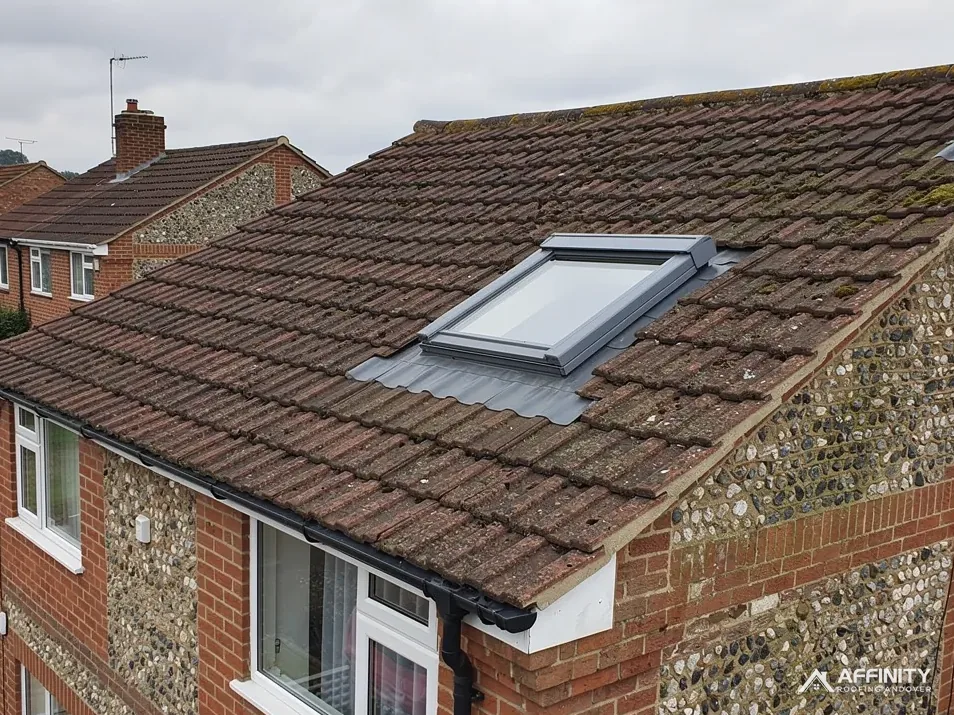
The flashing kit is the set of metal pieces that seals the window to the roof covering. When water gets in around the outside of the frame, this is the first place to look.
How a kit fails
Lead and aluminium both move with temperature, and over years the joints can open. Fixings corrode, laps lift, and a corner that was folded and not dressed can crack. An old kit may also have been fitted for a covering that was later replaced, so it no longer matches the roof.
The lead apron
Below the window, a lead apron carries water over the tiles beneath. If it has lifted, split or been dislodged by a slipped tile, water runs behind it. Lead is a long-lived material, and MyJobQuote gives over 80 years for lead flashing, but the fixings and the tiles around it do not always last as long. Code and thickness matter too: Royston lists code 4 at 1.80 mm and code 5 at 2.24 mm as suited to flashings.
Signs
Stains at the lower corners of the lining, damp timber at the sill, daylight or stained underlay in the loft beside the frame, and tiles that sit unevenly around the window.
Remedy
Sealant is not a cure. The fix is to lift the surrounding tiles, replace or redress the flashing, and relay the covering. See our guide to flashing kits for tiles and slate for how the pieces fit together, and why the right kit for the covering matters.
This is a roofer's job, not a window fitter's, because it concerns the tiles and metalwork more than the glass.
Seals, sash and glazing
If the flashing is sound, the next suspects are the window's own parts.
Seals
The sash closes onto rubber or foam seals. Over time these harden, shrink and lose their grip. A sash that no longer closes tightly lets wind-driven rain in at the edges. The signs are water at the sides or bottom of the sash, often visible on the inside of the frame after a storm.
Drainage in the frame
Many frames have small channels and weep holes that carry stray water out. If they clog with dirt, spiders' webs or paint, water backs up and spills inside.
Cracked or failed glass
A cracked pane lets water in directly. A sealed unit that has failed lets in humid air, which shows as misting between the panes and not as dripping. The unit cannot be dried out, and the answer is a replacement unit or window.
Fixings and frame
A frame that has moved on its fixings, perhaps from rotten rafters or a settled roof, opens gaps at the corners, and the gaps grow with every wet season. A timber frame that has swelled or rotted lets water through the joints.
What a repair might involve
New seals can sometimes be fitted by the maker or an installer. A new sash or sealed unit can sometimes be fitted into the existing frame. If the frame itself is rotten, the whole window needs replacing, as covered in the like-for-like replacement of a whole window.
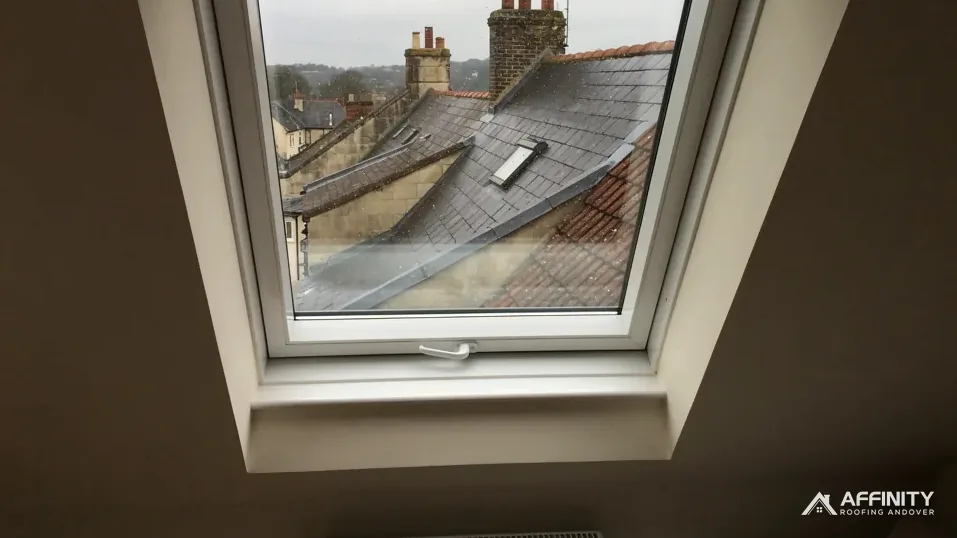
Photographs of the frame corners and the seal, taken from inside in dry weather, help the installer identify the cause before a visit.
Looking above and around the window
Water often enters away from the window and shows up beside it. Roofs channel water, and a defect higher up can run down onto the window and make it look at fault.
Tiles above
A slipped, cracked or missing tile above the window sends water into the underlay at that point. It then runs downslope to the nearest obstruction, which is the window frame. The stain appears at the window, but the hole is a metre or two higher.
The underlay
Old or torn underlay passes water onto the timbers. Look in the loft for dark patches and wet insulation around the frame. A failed underlay across the roof is a replacement matter, and our guide to the signs you need a new roof explains how to judge it.
Valleys, ridges and abutments
If the window sits close to a valley, a chimney or a wall, leaks from those details can be mistaken for window faults.
Gutters and roofline
A blocked or overflowing gutter below the window can push water back under the eaves.
Bad pitch for the covering
If the roof is shallower than the covering's minimum, driven rain can be forced up under the laps. Marley's minimums and the BS 5534 figure of 20 degrees for natural slate show how this limit varies.
How to find it
A survey from the loft with the lights off on a bright day, and a ladder inspection of the tiles, usually finds the point of entry. A controlled water test, working from the bottom up, can confirm it.
Do not climb onto the roof yourself. A weakened batten gives way, and a wet slope is unforgiving. Ask the surveyor to show you photographs of the entry point so that you can see for yourself what is happening up there.
Limiting the damage until it is fixed
A leak needs containing first and diagnosing second. These steps limit the damage.
Contain the water
Stand a bucket or tray beneath the drip and fold a towel along the sill. Cover nearby furniture with plastic sheet. If the lining is bulging with trapped water, a small hole made carefully with a skewer lets it drain into a bucket and avoids a ceiling coming down.
Photograph everything
Take dated pictures of the stain, the window and the loft. They help the diagnosis, and they are evidence if an insurer becomes involved.
If a storm did it
Where severe weather caused the damage, contact your insurer before arranging anything beyond emergency protection, and keep every receipt. Your policy's own wording decides what counts as a storm, and the Financial Ombudsman Service publishes how it looks at such complaints. Damage from a roof that was already wearing out is a different matter, since policies often exclude gradual deterioration. No outcome can be guaranteed either way.
Temporary protection
A competent roofer can sheet the window or the tiles above it for a short time. That protects the room while the cause is investigated, and it is a sensible first call if the weather is still bad.
Avoid the quick fix
Silicone or mastic round the frame may stop a drip for a few days, but it can trap water and hide the real fault. Better to leave the frame alone until it is inspected.
We make a leaking roof window safe first, then survey it and photograph the cause.
Deciding between repair, re-flashing and replacement
Once the cause is known, the choice follows from what failed and how old the window is.
Re-flash only
If the window is sound and only the kit has failed, lift the tiles, fit a new kit and relay the covering. This is the least costly permanent cure.
New seals or sash
If the leak is the sash and the frame is sound, new seals or a new sash can be a proportionate answer, if the maker still supplies parts for your model.
Replace the window
If the frame is rotten, the glazing is blown, or the model is old and unsupported, replacement is better. A modern window will also meet the current Part L window figure of 1.4 or WER Band B and run warmer, which reduces condensation. The 2.2 figure is for rooflights.
Repair the roof around it
If the leak is the tiles or underlay above, the window may need nothing.
Costs
MyJobQuote gives around £650 as an average roof repair in 2026 (06/10/26), and around £1,100 for a standard mid-range roof window with a straightforward swap about £100 less (22/09/26). These are national figures, not a price for your roof. Our guide to the cost of replacing a roof window explains what moves the number.
The written price
After the survey you get one written price for the option that fits the cause, with photographs. Our roof windows and skylights page covers the range of work.
Fix the cause, not the symptom, and the repair lasts.