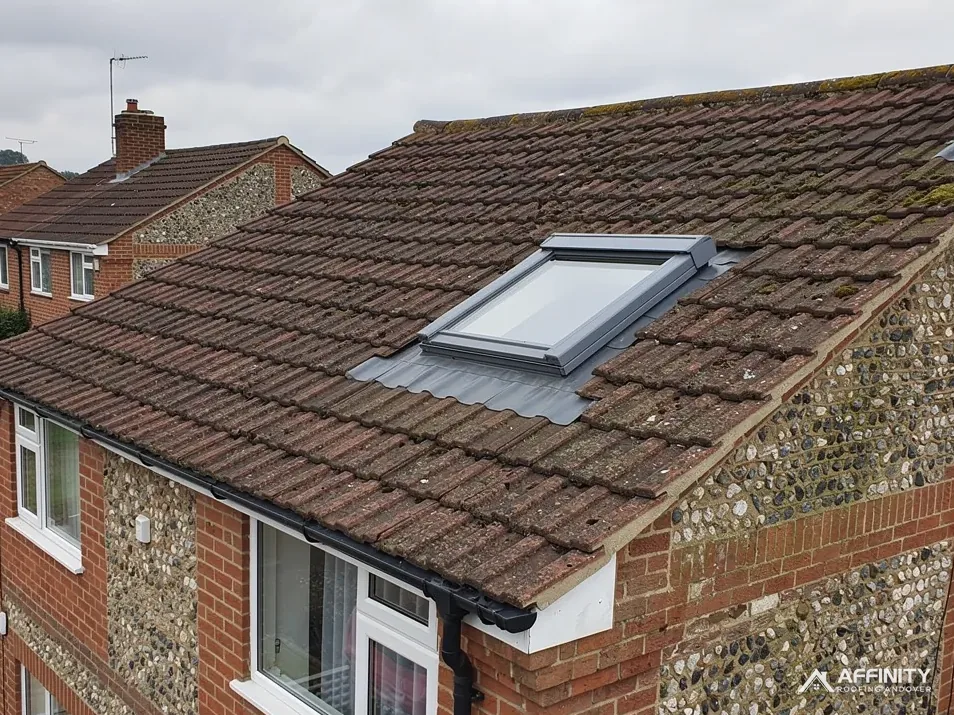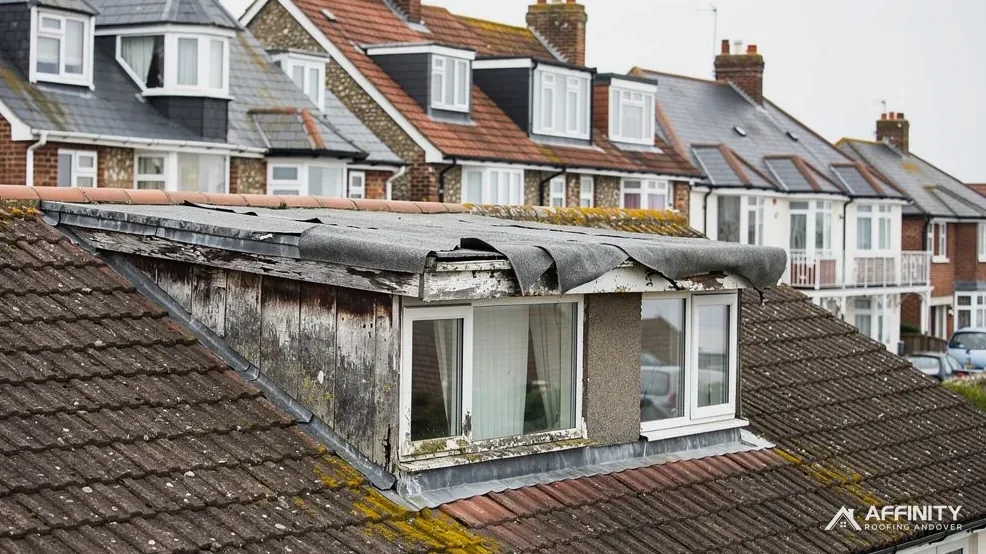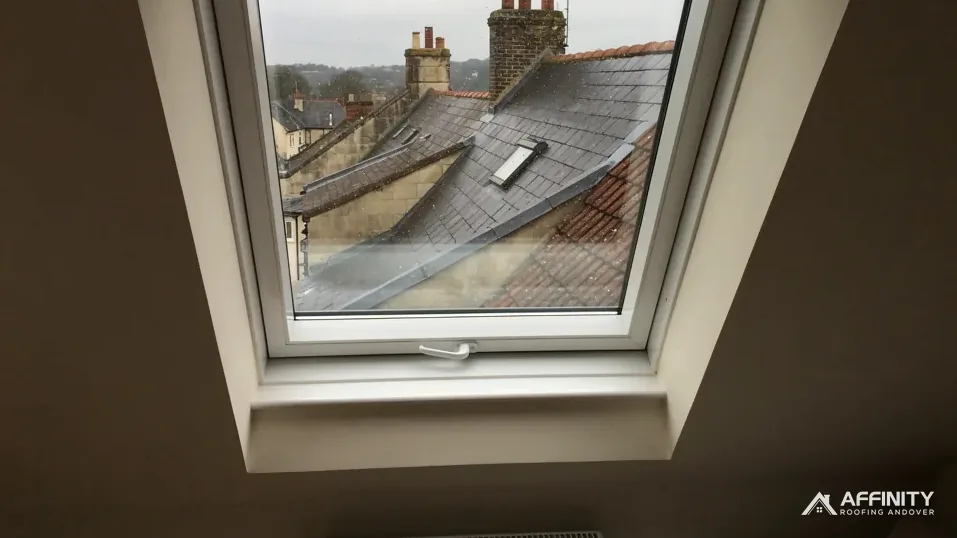
A roof window collects condensation more readily than most windows. It sits in the coldest, steepest part of the house, it is often in a bedroom or bathroom where the air is moist, and its glass is angled so that droplets run down the pane and gather at the bottom of the frame. People notice it on winter mornings and often assume the window is leaking.
Sometimes it is. More often the water is coming from the room, not from outside. Warm air carries moisture, and when it reaches a cold surface the moisture drops out as droplets. The cure is therefore about the air in the room, how it moves and how warm the glass is, rather than about sealant or flashing.
Three situations need separating: condensation on the inside face of the glass, misting between the panes of a sealed unit, and water that really is entering from outside. Each has a different cause and a different remedy. This guide takes them in turn, then explains the ventilation rules and standards that sit behind a dry roof space.
The pattern of the wet glass, and the time it appears, usually shows which of the three you have.
Why roof windows mist up
Air holds water vapour, and warm air holds more than cold. When damp warm air touches a surface cooler than the temperature at which the vapour starts to condense, the vapour turns to droplets. A pane of glass in a winter roof is often that cool surface.
Where the moisture comes from
Every household makes it: breathing, cooking, showers, drying washing indoors and unflued heaters. A bedroom full of sleepers adds a surprising amount overnight, and a bathroom without a working extractor releases it in minutes.
Why roof windows suffer
Warm air rises to the ceiling, and a roof window is set in the sloping ceiling. It meets the wettest, warmest air first. The glass and frame are the thinnest part of the roof, so they run colder than the plaster around them. Angled glass also makes droplets run to the bottom rail, where they pool and can stain the lining.
What it tells you
Condensation on the inside face is a sign that the room has more moisture than its ventilation removes, or that the glass is cold, or both. It is a problem of the room and the window together.
Why it matters
Occasional misting on a cold morning is normal. Constant streaming water can lead to black mould, stained or swollen linings and decay in the frame or the roof around it. Approved Document C, paragraph 6.2, wants roofs built so that hidden condensation inside the construction does not harm their strength or insulation.
The remedies in the next sections start with the least costly and most likely.
Ventilation: moving damp air out
The first and most effective fix is to remove moisture before it reaches the glass. That means ventilating the room, and doing it in the right order.
Everyday habits
Use the extractor fan in the bathroom and kitchen while you shower or cook, and leave it running for a while afterwards. Close the door of those rooms so that the steam does not drift upstairs. Dry washing outside or in a vented space where possible. Open a window briefly for a few minutes each morning to swap damp air for drier air.
Keep the window vent open
Many roof windows have a ventilation flap or slot in the top of the frame. Keep it open, particularly in winter. Closing it to save heat tends to trap the moisture.
Check the extractor works
A fan that is blocked, undersized or ducted into the loft instead of outdoors moves little air. Test it with a tissue: if it does not hold the paper to the grille, it is not working well.
Heating
Steady low background heating warms the glass and the room surfaces. A cold room that is heated only briefly makes things worse, because the air warms faster than the glass.
Furniture and blinds
A heavy blind drawn tight across the window creates a pocket of still, cold air in front of the glass, which is where droplets form. Leave a gap, or open the blind during the day.
These steps cost little. If the window still streams after a few weeks of changes, the cause lies elsewhere in the sections below, and it is worth keeping a note of the weather each time so that patterns show up.
Trickle vents and the roof space
Ventilation of the room is one half of the picture. The other half is the roof space and the building fabric around the window.
Trickle vents
Some roof windows have a small controllable vent in the head of the frame, often called a trickle vent. It lets in a measured flow of fresh air even when the sash is shut. Open, it helps to carry moisture away without a draught. If yours has one and it is closed, opening it is the simplest step you can take.
Cold roof ventilation
A cold roof keeps its insulation at ceiling level and relies on air moving through the loft above. BS 5250:2021 is the current moisture standard, and AD C paragraph 6.11 treats ventilating a cold deck roof as meeting the requirement. Under HR (non-breathable) underlay, Marley gives a 25 mm eaves opening for roofs at 15 degrees or below and 10 mm for steeper ones. Insulation stuffed into the eaves, or soffit vents painted over, leaves the loft unable to breathe.
The loft hatch
AD C paragraph 6.12 wants loft hatches fitted with a proper draught seal. A hatch that leaks warm moist air from the house into the roof space adds to the moisture around the window and the timbers.
Why a roof window cools
A window set into insulation needs the lining and the insulation around it to be continuous. Gaps let cold air bypass and chill the frame, which makes the condensation worse.
If you suspect poor insulation or blocked eaves, a survey that includes the loft can find it.
Glazing age and the sealed unit
A different kind of misting appears between the two panes of glass and cannot be wiped away. It means the sealed unit has failed.
How to tell
Wipe the inside face and then the outside. If the cloudiness is still there, the moisture is inside the unit. It often starts as a faint haze or a ring at the edge on cold mornings, then spreads and leaves mineral stains.
What has happened
A double-glazed unit has a sealed gap between its panes, normally filled with dry gas or a drying agent. Over many years the edge seal can break down, and humid air gets in. Once moisture is inside, it cannot be removed. The unit's insulating value falls, and the pane is colder, which can make surface condensation worse.
Age and the fix
Older roof windows, especially those from before modern low-emissivity glass, lose performance more quickly. The answer is to replace the sealed unit or the whole window. Replacing just the glass keeps the existing frame, which is sensible if the frame is sound. Replacing the whole window makes sense where the frame, seals or flashings are tired too.
Approved Document L sets the window figure for a new roof window at 1.4 W/(m2K), or at the least Band B on the energy-rating scale, with 2.2 reserved for rooflights. Our guide to replacing a roof window like for like covers that job.
Better glass means a warmer inner pane, and that is the other half of the answer to condensation. If the window is old, the glass may be a bigger part of the problem than the ventilation.
When it is really a leak
It is easy to mistake condensation for a leak, and sometimes a leak for condensation. A few checks help.
Condensation clues
It appears on cold, still mornings and in damp weather, and it dries when the room warms. It forms on glass and frame alike, and it is worst in rooms with the most moisture. It does not depend on rain.
Leak clues
A leak follows rain, especially heavy or wind-driven rain. Water appears at the corners or along the side of the frame, or a stain grows on the lining beneath. It does not respond to opening a window. The cause is usually the flashing, the seals or the sash, not the air in the room.
A simple test
Note the weather and time whenever you see water. If it appears on dry days, ventilation is the cause. If it follows each downpour, look at the flashing kit and lead apron around the frame. Our guide to why a roof window leaks explains how to tell, and our page on roof windows and skylights covers the full range of work.
Both together
The two can occur together. A frame that leaks slightly will keep the lining damp, and damp timber is cooler, which encourages condensation. The two feed each other, so a survey looks at both.
Do not simply seal around the window with mastic. That can trap moisture and hide the real cause, and a leak behind the lining then goes unseen for months until the plaster stains or the timber softens.
Fixes in a sensible order
With the causes separated, the order of fixes follows from cost and effect.
Step one: habits and vents
Use extractors, keep the window vent open, avoid drying washing indoors, and heat steadily. This costs nothing and fixes many cases.
Step two: the room
Check that fans are ducted outdoors and work. Make sure the window blind lets air pass. Consider a dehumidifier for a persistently damp room as a temporary aid, though it treats the symptom.
Step three: the roof space
Clear blocked eaves, make sure the loft hatch seals, and check that insulation does not smother the ventilation path. These are things a survey of the loft will find.
Step four: the glass
If the unit is misted between the panes, replace it. If the frame is also tired, replace the whole window. A roof window of modern specification runs warmer, which reduces condensation.
Step five: the construction
If there is rot, stained lining or a persistent leak, the window needs lifting and the surrounding timbers checked. That job belongs to a roofer and not to a tube of sealant.
Costs and the order of work
MyJobQuote puts a standard mid-range roof window at around £1,100, and a straightforward swap at around £100 less (22/09/26). Habits and ventilation cost little by comparison, which is why they come first.
If you would like a second pair of eyes, send us a photograph of the window and the lining, with the weather on the day, and tell us which room it is in and how it is heated.