Roof window prices are easy to find and hard to use. A web search gives a spread of numbers, most with no explanation of what they include. What helps more than an average is knowing what would make yours differ from it.
This guide starts with the one national figure we can point to for a standard roof window, from MyJobQuote, and the saving it gives for a straightforward swap. It then sets out the factors that push a price up or down: the size and type of window, the glazing, the flashing kit and the roof covering, the access, what is found under the old window, and the finishing inside.
The figures are typical UK numbers from a national guide, with a date. Nobody can price a window without seeing the roof it goes into, so treat them as a way of knowing roughly where you stand before you pick up the phone.
If your window is leaking and you are deciding whether to replace it, our guide on why a roof window leaks will help you decide whether replacement is needed at all, or whether a repair will do.
The published figure and the swap saving
MyJobQuote's page on roof window costs (updated 22/09/26) puts a standard roof window in the mid-range at £1,100, with a straightforward swap coming in around £100 less. The page does not state whether the figure includes VAT, so we do not add or subtract anything from it.
What "standard mid-range" means
We read it as a typical size of window in the middle of the manufacturer's range, with ordinary double glazing and a standard flashing kit, fitted into a roof that is ready to take it. It is not a budget unit and it is not a premium one.
What a straightforward swap means
A swap is the replacement of an existing window in the same opening, with no change of size or position and no structural work. It saves labour because the rafters, headers and trimmers are already there. The published saving is around £100, which is small compared with the cost of the window, because most of the job is the window and the flashing, not the carpentry.
How to use the figures
Use them as a rough check. If a quote comes in at a fraction of £1,100, ask what has been left out. If it comes in at several times that, ask what makes your job unusual. Either may be reasonable, but both deserve an explanation.
What the figures do not tell you
Do not assume they cover scaffolding, a larger window, a new opening or a roof in poor condition; they are one guide among many. The like-for-like swap guide explains what a straightforward job involves.
Size, type and glazing
The window itself is a large single cost, and three choices drive it.
Size
Roof windows come in a range of sizes, and a larger one costs more to buy and more to fit. The size also affects the flashing kit and the amount of covering to be cut and relaid. A window bigger than the old one needs a wider opening, and that makes the job structural.
Type
A centre-pivot window turns on a pivot in the middle of the sash. A top-hung window opens outward from the top. A fixed window does not open at all. There are also combination units, balcony types and windows with electric opening and rain sensors. Each step in function adds to the price.
Glazing
Standard double glazing meets the current Approved Document L figure, 1.4 W/(m2K) or WER Band B. Triple glazing, laminated glass for safety or noise, and special coatings cost more. A better-performing window runs warmer on the inside, which reduces condensation, and may be worth the difference.
Frame material
Timber frames, painted or lacquered, and polyurethane or PVC-coated frames differ in price and in how they age. Dark finishes for conservation settings can cost more.
Accessories
Blinds, shutters and extra vents are optional extras that add to the total. Pleated and blackout blinds are made to fit each window size, and so are insect screens, so order them against the actual product code, not a rough measurement. Decide before the survey which extras you want, so that the written price includes them from the start and nothing is added later.
A conservation-style window, slim and flush, is often priced above a standard one, and the type is covered in our conservation roof windows guide.
Flashing kit, covering and the roof around it
The window is only part of the job. The roof it sits in changes the price as much as the window does.
The flashing kit
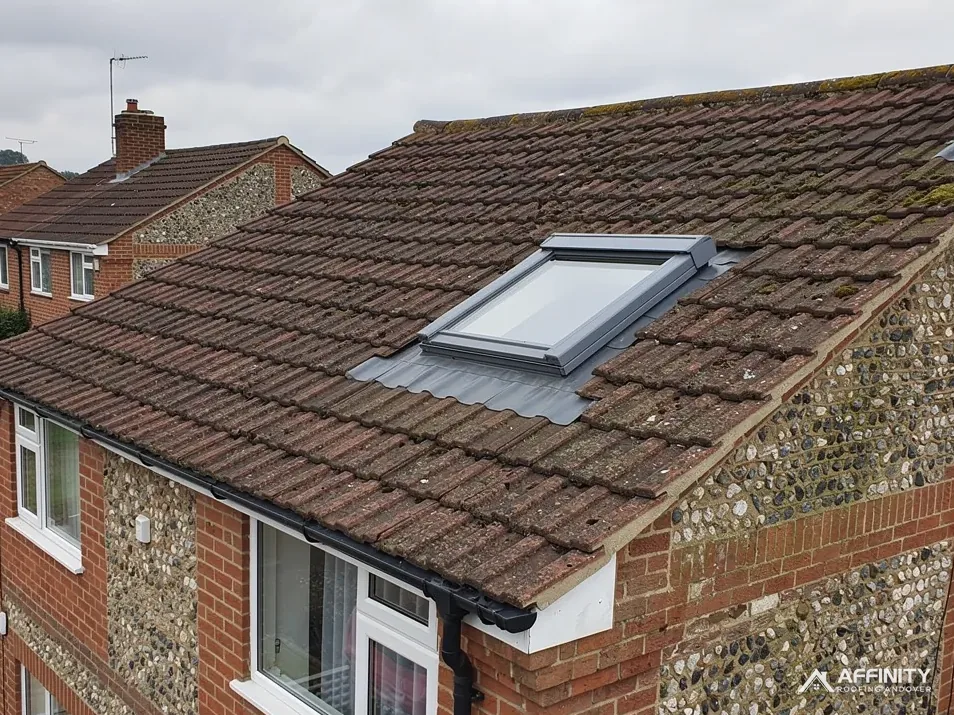
The kit must match the covering. Flat tile and slate kits are simpler. Deeply profiled coverings need a different kit, and many installers use a lead apron for them. Lead is worked by hand, and thicker codes cost more. See our guide to flashing kits for tiles and slate.
The covering
Tiles or slates around the window are lifted and relaid. Brittle old tiles break in the process, and replacing them with matches takes time. A natural slate roof needs more care than a modern concrete tile, and a clay roof falls somewhere between.
Battens and underlay
If the battens around the old frame are soft, or the underlay is torn, they are renewed. This is a common find on a window that has leaked for years.
Timber around the opening
Long-term leaks can rot the header, sill or neighbouring rafters. Timber repair adds cost and sometimes a structural check.
Pitch
A steep roof is harder to work on and may need extra staging, while a shallow roof limits which kits and tiles can be used, as each product has a published minimum. The window itself also has a pitch range stated in its instructions, and fitting one outside it is a recipe for leaks.
Condition of the roof
Where the tiles around the window are nearly spent, replacing the window alone may be poor value, and planning roof and window together may serve you better.
These are the unknowns a survey tries to remove, so that the written price does not change when the tiles come off.
Access, scaffolding and the room below
Where the window sits and how the crew reaches it can matter as much as the window itself.
Reaching the roof
A window on a rear slope of a bungalow can be reached by ladder, and the job is quick. A window high on a three-storey house, or on a roof with a steep pitch, needs a scaffold or a tower. Scaffolding can be a large part of the cost of a window job, so ask whether it is in the price.
Licences
Scaffold that obstructs the footway or carriageway needs the highway authority's licence under s169 of the Highways Act 1980. Hampshire County Council quotes £211.90 for the first 2 weeks and £72 per further 2 weeks, and expects the scaffolder to apply. Scaffold wholly on private land is outside that rule. For other authorities, ask who applies.
Inside the room
The room below must be protected, and the lining around the window finished afterwards. A tall room, a bed beneath the window or a staircase underneath all affect the time taken.
Plasterwork and decoration
New linings are usually part of the window kit. Filling, plastering and painting the reveal afterwards is sometimes included and sometimes not, so check. Redecorating a whole room is never part of the window price, but a patch of damaged plaster beside the lining usually is, and it is worth asking how it will be finished.
Waste
The old window, flashing and any broken tiles must be taken away, and the site left clear. Old timber frames and glass units are bulky.
A firm that has looked at the access can tell you in advance whether the job needs more than a ladder and a pair of hands, and can say so in the written price.
When a replacement is bigger than a swap
Some jobs start as a swap and turn out to be more, and a few are more from the outset.
Enlarging the opening
A wider or taller window means new trimmers and a new header. Such framing is structural work under the Building Regulations, and it adds carpentry and time. Under Class C the planning limit on projection, 0.15 metres, still applies.
A new opening
A window where none existed is a different job entirely. It means cutting rafters, framing the opening and meeting Part L, and the Building Regulations checks are covered in our guide to new openings.
Loft rooms and escape
A window serving a bedroom in the roof may have to double as an escape route, which fixes its minimum size and its height above the floor. Check those limits before the order goes in.
Conservation areas and listed buildings
Slim, flush windows cost more, and consent may take time to arrive.
More than one window
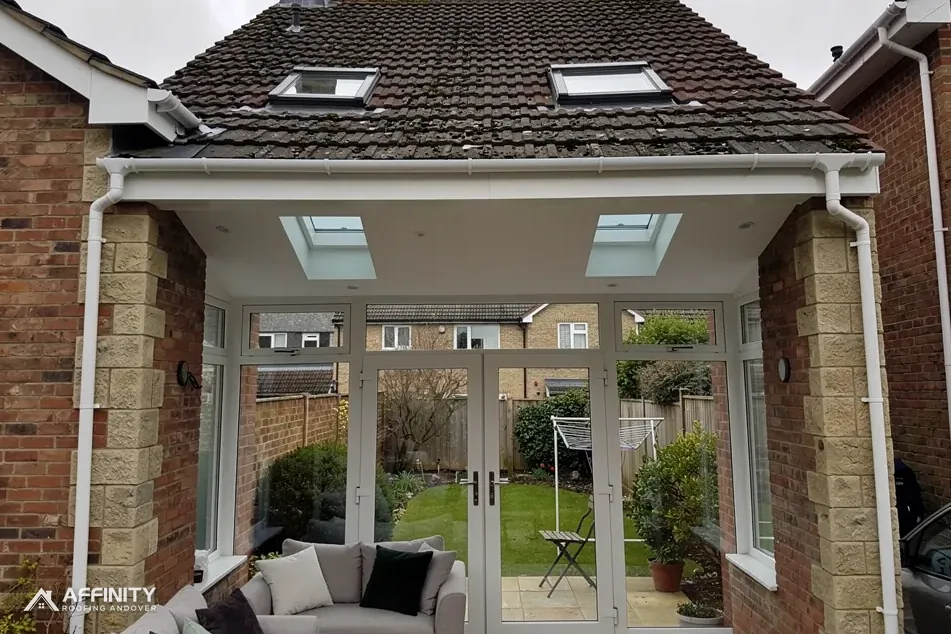
Doing two or three together saves on access, because the scaffold or tower is put up once and the crew works across the whole slope. The second and third usually cost less to fit than the first, though each window still needs its own flashing kit and its own making good of the covering.
Roof work at the same time
If the roof needs attention, a window is a good moment to deal with it while the access is in place.
None of these is a reason to avoid replacement. They are reasons to expect a survey before a price, and to see the opening before the window is ordered.
Turning a range into one price
The only way to turn a national figure into a real one is to have the window and the roof looked at.
The survey
At the survey we examine the existing window, the opening, the flashing and the roof around it, and from inside at the lining, the timbers and the loft. We measure the opening, identify the covering, and note the access. You see photographs of what we find.
The written price
You then receive one total for the whole job, covering the window, the flashing kit, the making good of the covering, the finishing inside and the removal of waste. It states whether scaffolding and VAT are included. The standard VAT rate is 20 per cent, so a figure quoted without VAT is a sixth lower than one with it.
Comparing quotes
Citizens Advice recommends at least 3 written quotes. Set totals side by side only where the scope is the same: window, kit, access and finish.
Cancelling
If you sign at home, the contract counts as off-premises and carries 14 days to cancel, unless you asked for an urgent visit.
Timing
Choose a dry spell if you can. A good crew covers the opening at the end of each stage, but a settled forecast makes things easier.
The roof windows and skylights page covers the whole range of work, and the survey is the way to turn it into a number for your roof.