The short answer
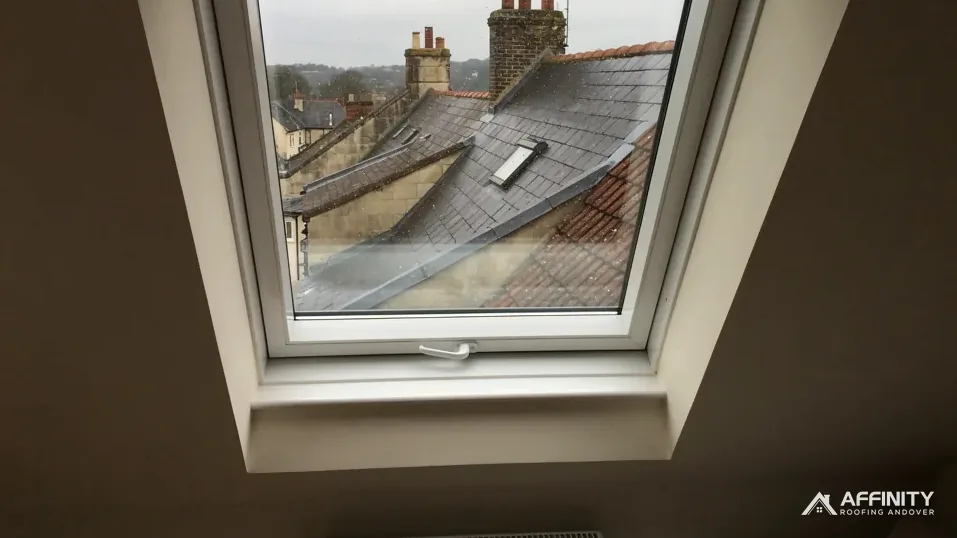
Yes. Roof windows go into natural slate roofs regularly, but the slate surface is flat and thin, so the usual flashing for profiled tiles does not suit it. The window calls for flashing made for slate, with lead soakers worked into the courses beside it. Slate is easily cracked, so the roof is opened and relaid by someone used to handling it. A conservation area changes the planning rules.
Why slate needs its own flashing
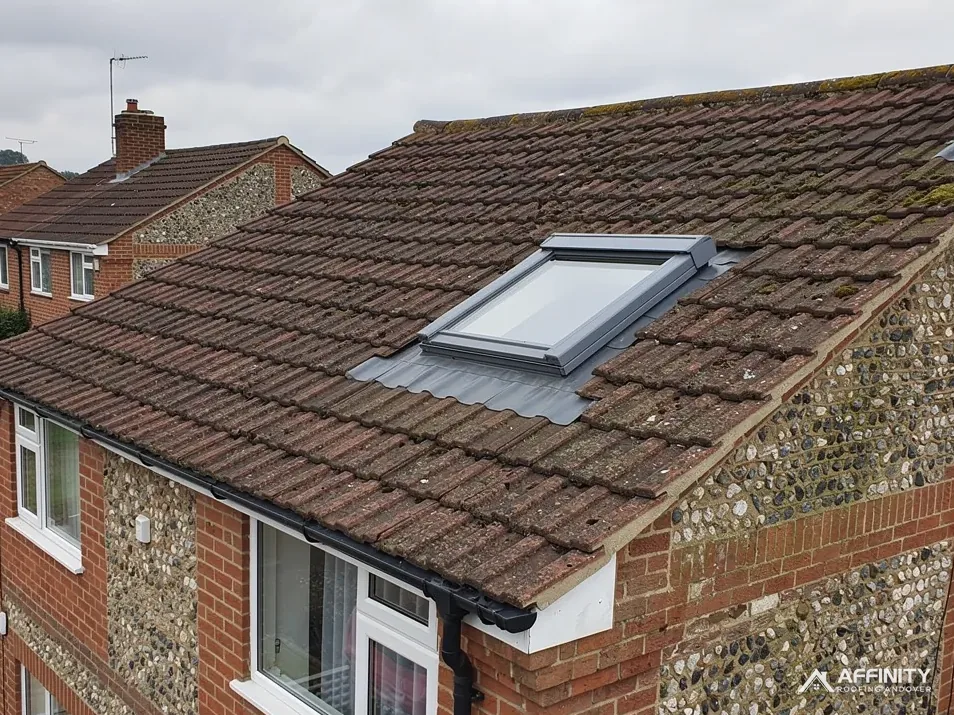
Many roof coverings are profiled. Pantiles and Double Romans have rolls and troughs, and a flashing kit made for them has matching ribs. Slate lies flat, in overlapping courses, so flashing for a slate roof is made to follow that surface closely and to lap under the slates above and over those below.
The frame sits on a timber upstand fixed to the rafters, with the slates cut to fit around it. The kit comes in pieces, an apron at the bottom, side pieces and a head flashing at the top, and each piece must lap the next so water runs down and off. Get the order of the laps wrong and water runs behind.
That detail is why the choice of flashing kit is not a matter of taste. A kit for the wrong covering will not seal, and the weak point is usually the junction between the side flashings and the slates. Our answer on roof window flashing kits explains how the parts interlock and why the kit must match your covering.
Lead soakers, and the codes behind them
Along the sides of the window, each course of slates is joined to the flashing by a soaker. Each soaker is a small square of sheet lead folded to an L, with one leg under the slate and the other turned up the side of the frame. Every soaker sits in its own course and overlaps the one below, so the sides of the window are waterproofed as the slates go on.
Lead is sold in numbered codes, each with a set thickness and weight. Royston Lead's brochure for cast lead sheet lists Code 3 (1.32 mm, 14.97 kg per square metre) for soakers only, and Code 4 (1.80 mm) for soakers as well, with flashings, valley gutters and dormers on top. Code 5 (2.24 mm) suits flashings and gutters. Which one goes into your roof is settled by the part of the detail it has to serve.
For lead work, the Building Regulations guidance in Approved Document C points to BS 6915 for lead sheet. MyJobQuote notes that lead flashing can last for over 80 years, a lower limit and no prediction. A sound lead surround is the reason a slate roof window can outlast the glass.
Cutting into slate without breaking it
Slate is brittle across the grain, and the nails that hold it are driven through holes near the top edge. Lift slates carelessly and they crack, and a cracked slate is a leak waiting to happen. Opening the roof for a window means removing the slates in the area, setting them aside, and relaying them with new nails to the pattern they came from.
The courses around the window need to be cut with a slate cutter, or a grinder with the right disc, so the edges are clean and sit snug against the soakers. Slates with a lot of damage or nail sickness are replaced as the work proceeds, and our answer on replacing a single slate shows how that is done.
The pitch of the roof matters too. BS 5534 indicates a minimum pitch of 20 degrees for natural slate, and the window itself has a range set by its maker. Both must be satisfied. On the survey we measure the pitch, check the slates and the battens beneath them, and show you photos so you can see what the roof is made of.
Planning, conservation areas and slate
On a house, a roof window is usually covered by permitted development under Class C of the General Permitted Development Order, which allows alterations to the roof provided it projects no more than 0.15 metres out from the original slope. Class C has no exclusion for conservation areas, but a National Park, a National Landscape or a listed building brings other controls into play, and Article 4 directions can remove rights locally.
A roof window on a slope facing the street in a conservation area is often what a council looks at hardest, so speak to the planning team at your local authority first. Some councils prefer a conservation-style window set flush with the slates. Our answer on conservation roof windows sets that out.
Flats have no permitted development rights, and a listed building needs listed building consent as well. We never assume. Before we price a window in a slate roof we ask where the house is, look at the slope and tell you which route to check. For the service as a whole, see roof windows and skylights.