The short answer
A re-roof is planned around the weather, so a shower should not soak the house. The roof is stripped and re-covered in sections, and each section is made weathertight with new underlay or heavy sheeting before work stops for the day. A passing shower is manageable. Sustained rain or strong wind is a reason to pause, and a sensible roofer tells you before it happens.
Sheeting and membranes over open timbers
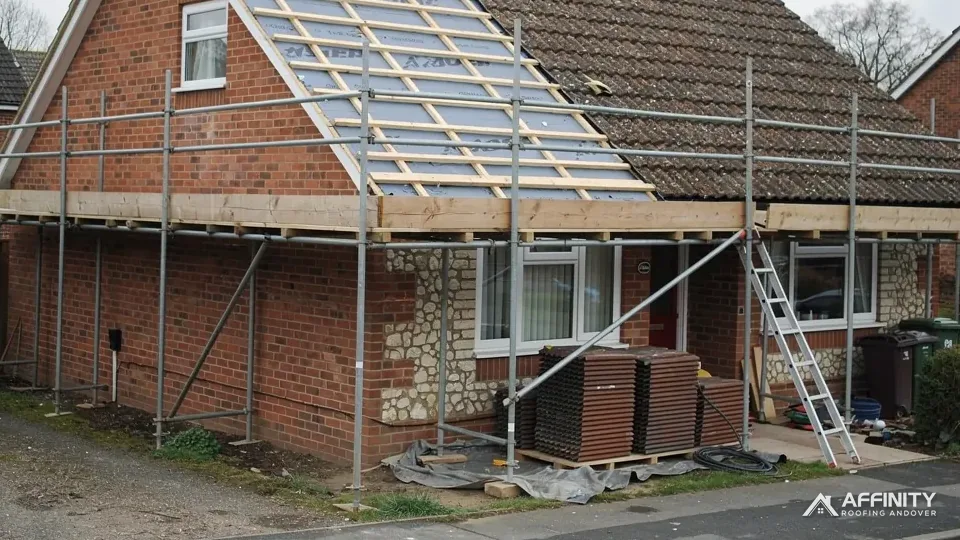
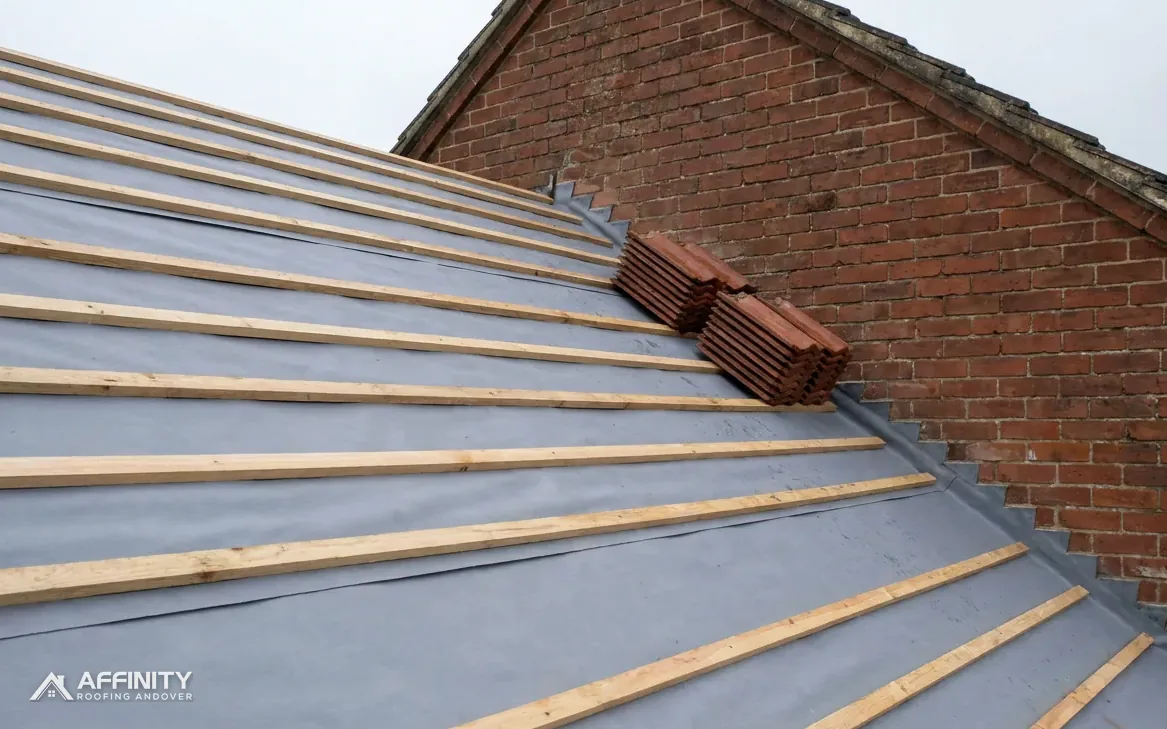
Once the old tiles or slates are off, the sloping timbers underneath, the rafters, are exposed. Nothing keeps rain out at that point except what the roofer puts there. That cover is either the new underlay, the waterproof membrane that sits beneath the battens (the thin timber strips the tiles hang from), or a temporary sheet.
Where a section will stay open overnight, a heavy tarpaulin is stretched over the whole area and fixed down along its edges so wind cannot lift it. It runs over the top line of the roof, the ridge, and down to the gutter line, so water has a continuous path off the roof and never pools in a fold.
New underlay is not a permanent cover on its own, and it is not meant to be left exposed for long periods. It is laid as the battens go on, so the roof moves from open timbers to a protected surface quickly. Ask the roofer which method they use on the morning the old covering comes off, and where the spare sheeting is kept on site, so you can see it is there before the first tile moves.
Working in sections
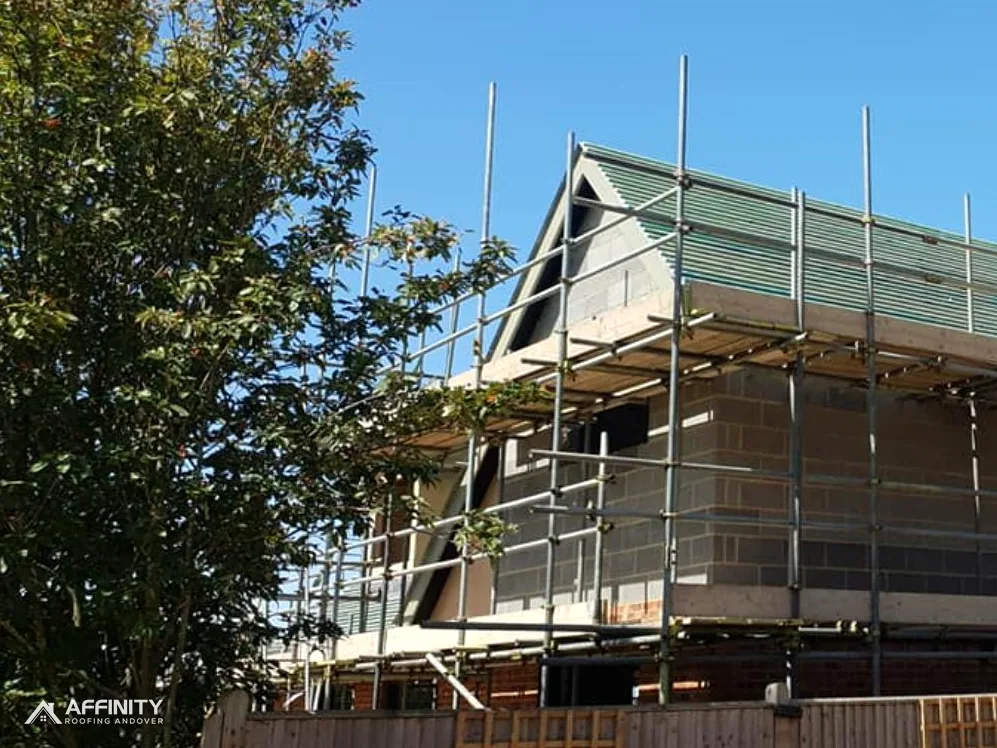
The safest way to re-roof is to strip only as much as can be covered again before the crew leaves that evening. A roof is rarely taken off in one go. One slope, or part of a slope, comes off, is checked, is battened and underlaid, and is then tiled or at least sheeted before the crew moves on.
That is why a sensible programme looks slower on the first morning than you might expect. Rafters are looked at as they are uncovered, and the job does not outrun the cover available to protect it. On a terrace or a house with several roof pitches, the order matters even more, because one open slope can drain water towards a lower roof or a neighbour's wall.
When rain is forecast, the programme can be reshuffled. The crew might tile a finished slope instead of stripping a new one, or spend the day on the lower work such as fascias and gutters, the boards and channels along the eaves. Our page on how long a roof replacement takes explains why a calendar estimate is only ever an estimate, because weather moves the days around.
What you will see from inside the house
From indoors, a well-run re-roof is noisy and dusty rather than wet. Old tile fragments and dust fall into the loft, so loose stored items should be cleared or covered first. Most of the disturbance is on the ceiling side, not the weather side, and a few dust sheets over furniture in the rooms directly beneath the work are worth the effort.
If rain does arrive, the first place to check is the loft, with a torch, at the point where the roof was open. A drip mark on the underside of the new underlay is a sign to tell the foreman at once, not to wait for the end of the day. Photograph it, so the position can be matched later against the work done, and note the time you saw it.
It is also worth asking before the job starts who is responsible for the contents of the house and the ceilings if weather gets in during the works. Get that answer in writing alongside the quote. Our answer on living in the house during a roof replacement covers what daily life looks like while the work goes on.
When the work should stop
Rain is not the only reason to pause. Wind is a bigger problem for the people working, because a gust can catch a sheet or a tile on the way up and turn it into a hazard for anyone below. Wet slates and tiles are also slippery, and a roofer working on a wet slope with open timbers underfoot is taking a risk for no benefit.
A good roofer stops when conditions are wrong, makes the open area safe, and rebooks. Be wary of any promise that weather will never delay the job: no one controls the sky. A realistic roofer talks about contingencies, such as spare sheeting, extra battens to hold it down and a decision about who calls a halt, before the scaffold goes up. That conversation tells you more than a confident date does.
For the same reason, it is fair to ask whether the season matters. Our guide to the best time of year to replace a roof sets out the trade-offs. If you are not sure the roof needs replacing at all, the main roof replacement page explains how we look at the roof, send photographs and set out a single written total.