There is a popular idea that roofs are replaced in summer and nothing happens the rest of the year. The truth is less tidy. A stripped roof is exposed only until it is dried in again, and a competent crew works in sections so that nothing is left open overnight.
That does not make every week of the year equal. A run of settled weather makes a big job calmer, because there is less covering to protect and fewer interruptions. Short winter days leave fewer working hours. Wind limits what can safely go up a scaffold, whatever the month.
Three other things shape the date more than the season does. Birds that nest under eaves and bats that roost in lofts are protected by law, and checking for them comes before stripping. Scaffolding on a public road needs a licence that takes time to arrange. And a good roofer's diary fills ahead, so the date you want and the date you get can differ.
This guide sets out how each of those works, so that you can pick a start that suits your house and nothing about the timing comes as a surprise.
How the weather really affects a re-roof
Rain is the obvious enemy, but the answer is not simply to wait for a dry month. On a pitched roof the covering comes off in stages, usually one slope or one section at a time. Each stage is dried in with a new waterproof layer before the crew leaves site, so a shower during the job is a nuisance and not a disaster.
What an open roof needs
While tiles are off, the exposed timbers and the loft below depend on temporary sheeting. A careful crew checks the forecast for the working week, strips only the area it can cover, and keeps sheeting and weights on site for the unexpected.
Wind is the awkward one
High wind makes lifting tiles, slates and sheets up a scaffold unsafe, and it can lift sheeting that has not yet been fixed. A day that is dry but gusty may be lost where a damp but calm one is workable.
Materials and temperature
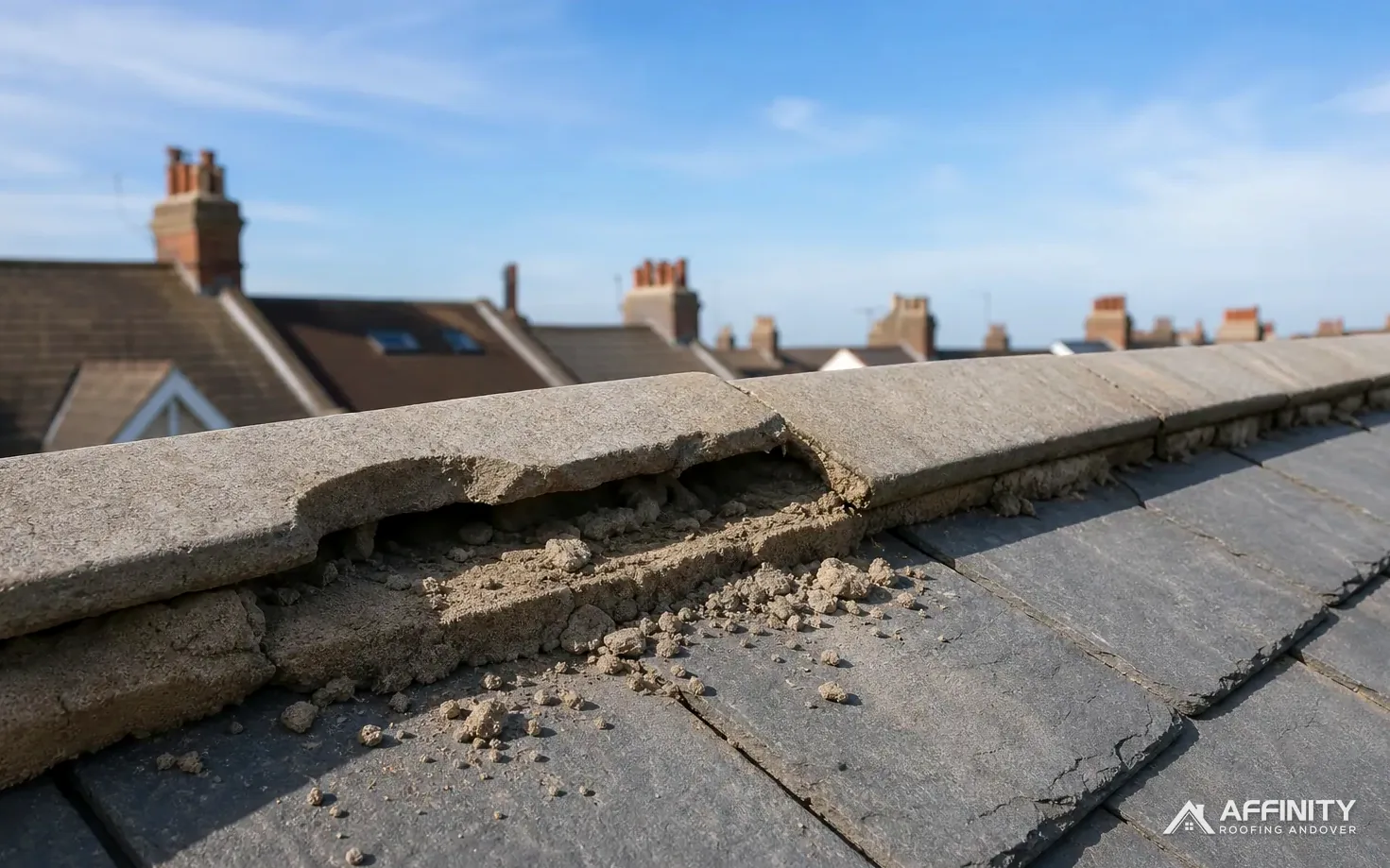
Some products are fussy, and a few are a poor match for a cold, damp week. Mortar, sealants and adhesives each have working limits for cold, damp or heat, and the manufacturer's data sheet sets them. Dry-fix ridge and verge systems, which hold with mechanical fixings instead of mortar, are less sensitive to this.
The practical upshot is that any season can work. A calm spell makes it easier, and a survey in the weeks before tells you what the roof needs so that the crew arrives with the right materials. A roof with a lot of lead work, for example, may need a different order of working from a plain tiled slope, and that is easier to plan when the survey has already picked it up.
Winter, summer and the months between
Each part of the year has its own trade-offs, and none of them rules a re-roof out.
Spring and autumn
Moderate weather suits many jobs. Days are long enough for a full shift, and temperatures are kinder to products with working limits. These months also follow a hard winter or come before the next one, so it pays to book early.
Summer
Long days give long shifts. Heat has its own effects: working on a hot roof is tiring, tiles can be uncomfortable to handle, and a dry spell still has to be watched for a thunderstorm. A hot dry week is a good time to open a large area, as long as the dry-in is planned.
Winter
Short daylight is the main constraint. A job that takes a week in long days can take longer in short ones, and a frozen or wet morning may push the start back. The advantage is availability: some owners find it easier to get a start date outside the busy months.
Replacing in an emergency
A roof that is already leaking cannot wait for good weather. In that case the first move is to make it safe with a temporary repair, and the full replacement is planned once the weather settles.
If your roof is failing but not leaking, you have a choice, and the wiser choice is usually to book a survey and then fix a date that suits both the weather and your diary. Our guide on the signs you need a new roof shows how to tell which situation you are in.
Nesting birds under the eaves
Many roofs hold nests: house martins and swallows build under eaves, and sparrows and starlings use gaps in the verge and soffit. Whether you can start work then depends on whether a nest is in use.
Under section 1 of the Wildlife and Countryside Act 1981 the offence is committed by someone who intentionally damages or destroys an active nest, meaning one with birds in it or one under construction. The word intentionally matters. It is the reason the Act is not read as a flat ban on touching a roof, and it is also the reason a crew cannot shrug at a nest it can see.
GOV.UK states that licences are not issued so that development or construction can proceed. An active nest therefore stays untouched until the young have flown, and the work is re-ordered around it.
No fixed dates
Birds do not keep a calendar, and this guide will not give season dates for nesting. The only reliable method is to look. A competent roofer inspects eaves, verges and soffits before work begins, and again before a section is stripped.
What to tell your roofer
If birds have been flying in and out along the edge of the roof, mention it at the survey. It changes the order of work and sometimes the start date, and it is far better to know before the scaffold goes up than after.
A nest found after the work has started is a stop-and-assess moment, not a judgement call made in a hurry. The crew leaves that corner alone, tells you what has been found, and moves on to a section where work can continue, so the delay is usually a matter of reordering and not of abandoning the job.
Bats in lofts and under tiles
Bats are a different case from birds. Their roosts are protected all year, whether or not a bat is in at the time, and many roost in the gaps behind tiles, under ridges and in lofts that look empty.
GOV.UK's bat guidance treats every species and every roost as fully protected, and it lists re-roofing as an activity that can interfere with a colony.
The two laws involved
Under regulation 43 of the 2017 Habitats Regulations, deliberately disturbing a bat is an offence, and so is harming a roost, where no intent has to be shown. The 1981 Act adds a second layer in section 9(4): intentionally or recklessly disturbing a bat inside its roost, or blocking its way in, is also an offence.
What to do
If you have seen bats near the house, found droppings in the loft, or know the building is old and has a lot of gaps, tell us at the survey. We will not strip until the roof has been checked for signs of a roost, and if a bat or a roost turns up, work stops and you take specialist advice on what can happen next.
We cannot say that a licence is needed for every bat roof, or that none is. That depends on what is found.
The point for planning your date is simple, and it applies to any house with an old roof, a large loft or open eaves. A bat check is part of the lead time on an older roof, so it goes into the diary at survey stage, well before any scaffold is booked.
Scaffold licences and other lead times
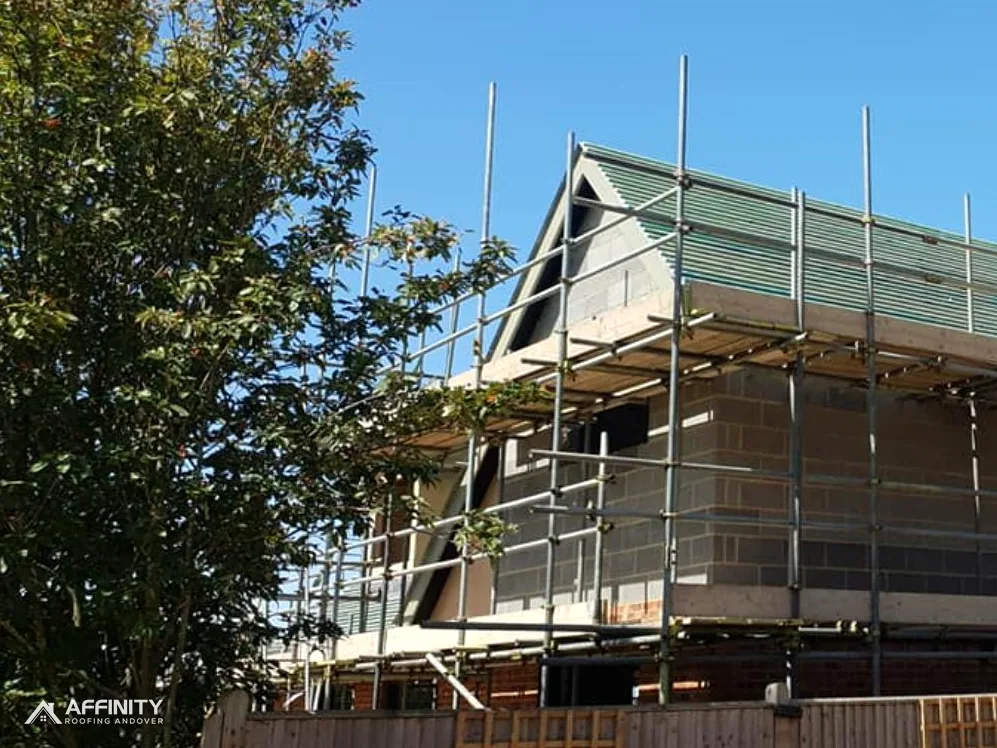
Scaffolding that obstructs a pavement or road needs the highway authority's licence, under s169 of the Highways Act 1980. Your own driveway or a private road falls outside it, so only houses that front the street are affected.
For Test Valley and the rest of Hampshire, the highway authority is Hampshire County Council. Hampshire County Council's scaffolding page says the scaffolder applies on the customer's behalf, and the county needs the application in 10 clear working days ahead. Silence from the council does not count as consent, and extensions are not offered. That builds a wait of roughly 2 weeks into any job fronting the road, before the roofers arrive.
Wiltshire Council and West Berkshire Council have their own systems. West Berkshire sets a 10-working-day minimum of its own. Wiltshire prices its licence by the notice given, so a late application costs more. For other highway authorities, ask who applies.
Other things that set the date
- Building control notice, where the job needs it
- Lead time for the chosen covering, since some tiles and slates are made to order
- The survey itself, which comes first
- A structural check if you are changing to a heavier covering
- Any consent needed for a listed or conservation area house
- Whether the neighbours have been told about the scaffold
None of these is hard, but they stack. Taken together, a roof you want done in a given month often needs the survey several weeks earlier, and the first conversation with the council or the scaffolder should happen as soon as the survey is back.
Booking ahead without rushing the decision
Because the date depends on so many outside things, the sensible time to start is when the roof first worries you and not when it first leaks.
A sensible order
Start with a survey. It tells you whether the roof needs replacing, repairing in part, or simply watching, and it gives you photographs to look at in your own time. Then get a written price, and compare it with the written quotes you gather from other firms. Citizens Advice recommends three or more traders' quotes before you decide.
Only then choose a window, and be wary of any firm that asks you to commit to a date before the roof has been seen. If the roof is stable, you have room to pick a calm spell. If it is failing, choose the earliest date the paperwork allows and ask for a temporary measure meanwhile.
Things to confirm when you book
- Whether scaffold and its licence are in the price, and who applies for it
- What happens if the weather stops work for a day or two
- Who checks for nests and roosts before stripping
- How the loft and the contents below are protected
- When you will see the photographs of what is found
You should also ask what happens to the date if building control or the council needs to be told. A firm that has thought about this will have an answer ready, and will tell you who is responsible for each step so that nothing sits waiting for someone else to move.
For the full run of a job once the date is set, our roof replacement process guide goes through each stage in order, and the roof replacement overview covers the choices before it.