Ask three sources what a new roof costs and you get three different answers. That is not carelessness. A roof is priced from its area, its covering, its access and whatever is found underneath, and a national figure has to average over houses of every size.
This guide sets out what three published cost guides say, with the month each one was written, so that you can see the spread for yourself. It then explains why the figures disagree and what actually moves a price. What follows are typical UK ranges drawn from national guides. Treat them as a frame of reference, since nobody can price a roof they have not seen.
Where a figure is given, you will see the source and the date beside it. Which? figures exclude VAT. For the others, check what is included before you rely on them.
If you are weighing a new roof against a repair, our guide to the signs you need a new roof is the place to start. If you already know you need one, read on, and then book a survey so the number becomes one for your house.
What three published guides say
These are the figures as the guides published them, with their dates. None is a price for a roof in Andover or the Test Valley.
Which?
Which? puts a whole-roof replacement on an average three-bedroom house at £7,000 to £21,000. The figures come from a Which? survey of 11 traders in November 2025. They include labour and materials, and they exclude VAT.
HomeBuilding
HomeBuilding & Renovating (updated 30 September 2025) works an example: a three-bedroom semi with a roof of 65 square metres. In plain concrete tiles, with labour, scaffolding and insulation counted in, it gives £10,000 to £15,000. Choose Welsh slate for the same house and it says the figure might reach £18,000.
MyJobQuote
MyJobQuote (page updated 06/10/26) gives a figure of around £5,250 for a new roof. Its page gives an average rather than a worked example, so the house and covering behind it cannot be matched to the other two.
Laid side by side, the guides run from around £5,250 to £21,000. That is a factor of four, which is the first thing to understand about this subject. If a single number is quoted to you without a survey, treat it with caution, and treat a very low one with the most caution of all. A figure given over the phone can only be an average.
The next section explains why the range is so wide, and later ones show which factors you can influence. One thing is common to all three: each figure is for a complete new roof, not a repair, and none is tied to the state of your timbers.
Why the figures disagree so much
The gap comes from differences in what each guide is pricing. Four things account for most of it.
Different houses
Which? prices an average three-bedroom house and says so plainly. HomeBuilding prices a specific semi-detached with a 65 square metre roof. MyJobQuote gives an average and does not describe the house behind it. A larger roof, an extension roof or a hipped plan raises the number.
Different coverings
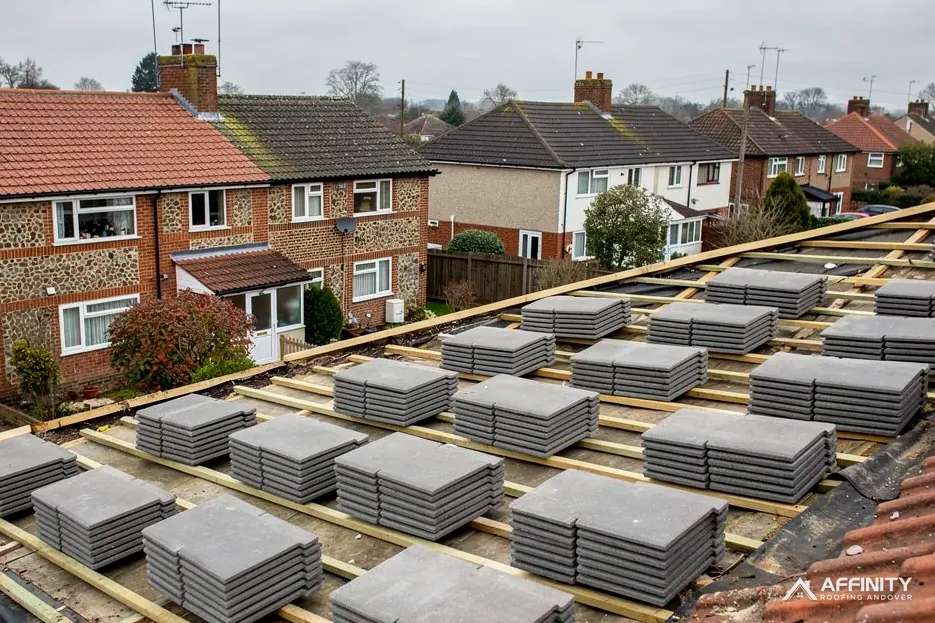
HomeBuilding's own example shows it: plain concrete tiles come in at £10,000 to £15,000 and Welsh slate at up to £18,000 for the same roof. Covering choice alone moves the total by thousands of pounds, and so does a decision to renew fascias and gutters in the same visit.
Different scope
Does the price include scaffolding? Insulation? New fascias and gutters? Lead flashings? Waste removal? A guide that includes scaffolding and insulation will not match one that prices tiles and labour alone. HomeBuilding states that its example includes labour, scaffolding and insulation.
Different VAT bases
Which? says its figures exclude VAT, and the standard rate is 20 per cent. A homeowner will usually pay VAT on top, so a Which? figure of £10,000 would come to £12,000 with VAT added. MyJobQuote does not state its basis, so no adjustment can be made to its figure.
Put those four together and a fourfold spread stops being surprising. Every one of them can be checked against the written quote you receive. The useful point is that none of the published figures can be applied to your roof directly. They tell you the region, and a survey tells you the number.
For the covering side of the question, see choosing a covering for a re-roof.
Size, shape and complexity
After the covering, the largest single driver is the roof itself: how much of it there is and how complicated it is to work on.
Area
Area is measured along the slopes, not across the floor plan. A steeper roof has more surface over the same house. A bungalow carries its roof over the whole footprint, and our guide to re-roofing a bungalow explains why that matters.
Shape
A plain gable roof is two rectangles. A hip roof adds triangular slopes and hip tiles. Valleys, where two slopes meet, need flashing or lead work that is cut and fitted by hand. Every dormer, chimney, roof window or abutment against a wall adds a junction to finish.
Pitch
Pitch affects the covering you may use, because each product has a minimum angle published by its maker. It also affects safety and the time taken, because steep slopes need extra staging.
Everything attached
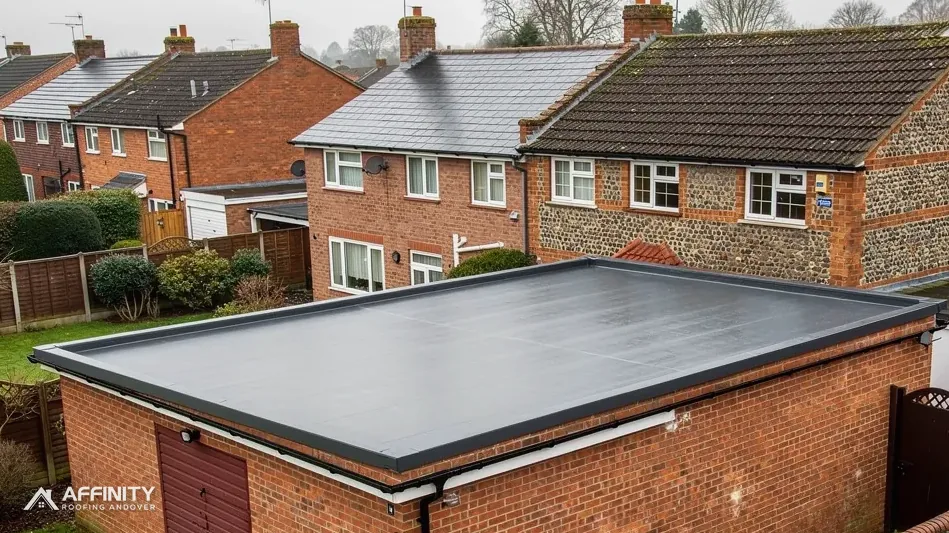
Extensions, porches and garage roofs that join the main roof are often included in a re-roof. They are part of the same waterproofing and they change the count of junctions. Say at the start whether you want them covered, so that the survey measures them and the written price reflects the whole scheme.
None of this can be judged from a photograph on the internet. It needs someone to measure the roof, count the junctions and look at what the rafters are doing.
Expect the survey to take in the whole building, loft included. The result is a measured description of the job, and that description is what a fair price is built from. If a firm quotes without measuring, ask how it arrived at its number.
What lies under the old covering
A roof price is only as firm as the knowledge of what is underneath. A good survey reduces the unknowns, but some things only appear when the tiles come off.
Battens and underlay
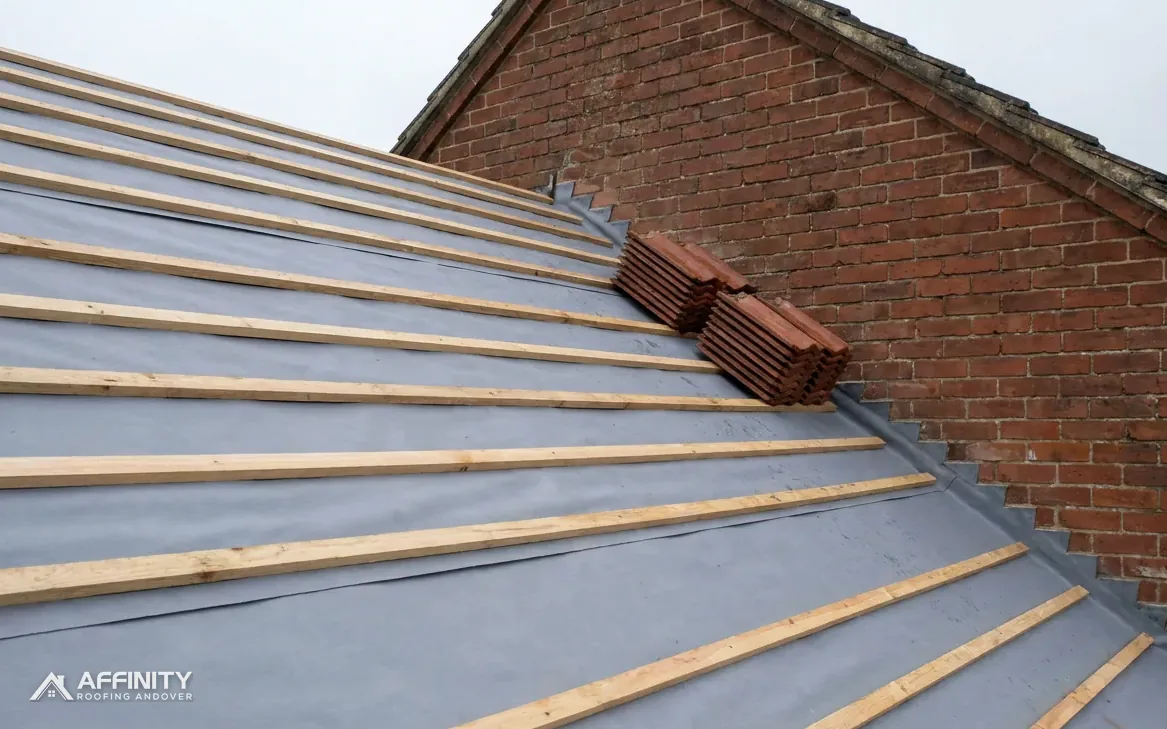
Old battens, the cross-timbers that carry each tile, may be soft or too slim for the new covering. The underlay, the layer under the battens, is often torn or perished on an older roof. Both are normally renewed in a full re-roof. See pitched roofing for how a roof is built up.
Rafters and structure
Rafters can be rotted at the wall plate where water has run in for years. Cracked or sagging timbers need repair before anything is laid on them. A heavier covering may need a structural check as well.
Edge details
Verges, ridges and eaves may have been mortared poorly. Modern dry-fix systems hold them mechanically, and BS 8612 is the test specification for such systems. Fascias, soffits and gutters often need renewal at the same time.
Hidden materials
For a building dating from before 2000, HSE advises treating any unidentified board or sheet as possibly containing asbestos until it has been checked. If something suspect turns up, the work stops in that area and the cost changes with the route needed.
That is why a firm will either give you a price after a survey that includes a close look from the loft, or explain how it deals with surprises. A price that ignores them is not a price you can rely on. Photographs of what is found, shared with you at the time, keep the conversation honest.
Scaffold, access and waste
Some costs sit outside the roof itself, and a good comparison keeps them in view.
Scaffolding
Scaffold cost follows the height, the length of edge being worked and how long it stands, so confirm that it sits inside the written price. Where it obstructs the pavement or road, s169 of the Highways Act 1980 requires the highway authority's licence. Hampshire County Council's page gives £211.90 for the first 2 weeks and £72 for each further 2 weeks, and expects scaffolders to apply for their customers. Your own drive or garden needs no licence.
Access and delivery
A narrow passage, a steep drive, a long carry through a house or a roof that fronts a busy road all cost more to supply. Hoists or extra hours may be needed.
Waste
An old roof produces a great deal of material, and it must be taken away properly. Waste that contains asbestos is double-wrapped and labelled, travels on a consignment note and stays out of a general skip.
Programme
Each extra week on hire adds to the cost. A roof where weather stops work or where extra repairs are needed takes longer. A firm that has planned the job gives you a realistic number of days.
All of these are covered by one written total. You should not be handed a list of separate parts, and you should not discover later that the scaffold or the skip was left out. If a firm says an extra will be charged for scaffolding or waste after the event, ask it to put the position in writing before you agree a date.
From survey to one written total
The route to a reliable price is short, and it does not start with a phone call.
The survey
We inspect the roof from the ground and from inside the loft, take photographs of what we find and measure each slope. You see the pictures.
The written total
You then receive one written price for the whole job: covering, scaffolding, labour, waste and edge work. It states whether VAT is included. At 20 per cent, VAT is a sixth of the total you pay, so a figure without it is not a fifth lower than one with it.
Checking the scope
Before you sign, read what the price covers: the covering named, the scaffold, the waste, the edge work and any repairs to timber. If something you expected is missing, ask for it to be added in writing, not by promise.
Comparing quotes
Citizens Advice recommends collecting at least 3 written quotes. Compare totals only when the scope matches: the same covering, the same scaffold, the same edge work, and the same VAT basis. Be wary of a figure that is far below the rest.
Cancelling
Signing at your own home counts as an off-premises contract, which carries a 14-day cancellation period. A repair visit you request as urgent is the exception.
Written prices are valid only as long as the facts match what was surveyed, so tell the firm promptly about anything that changes, such as a decision to move to a different covering. If you want to see how a job runs once a price is agreed, our roof replacement process guide goes through it, and the roof replacement overview sets out the choices.