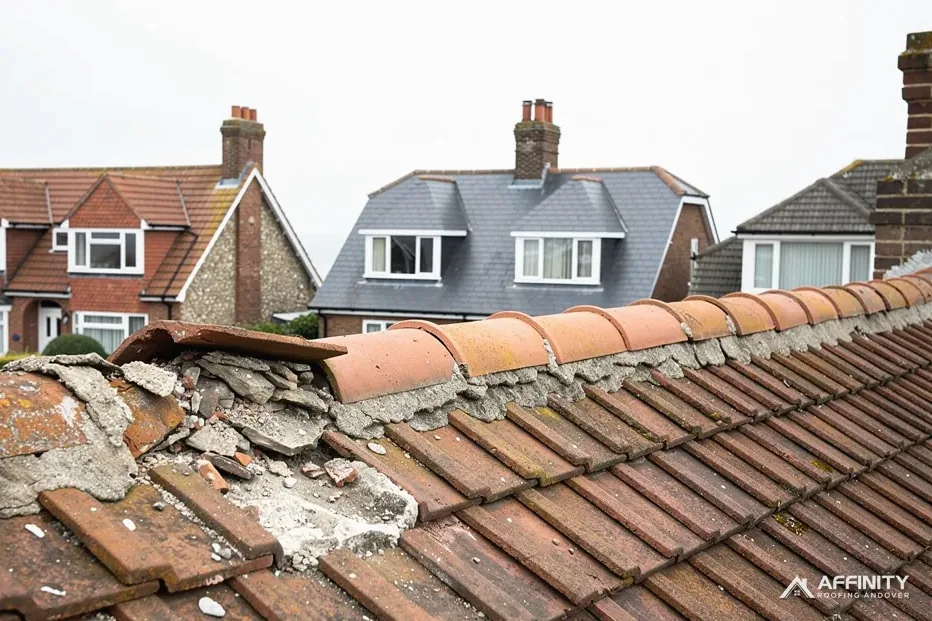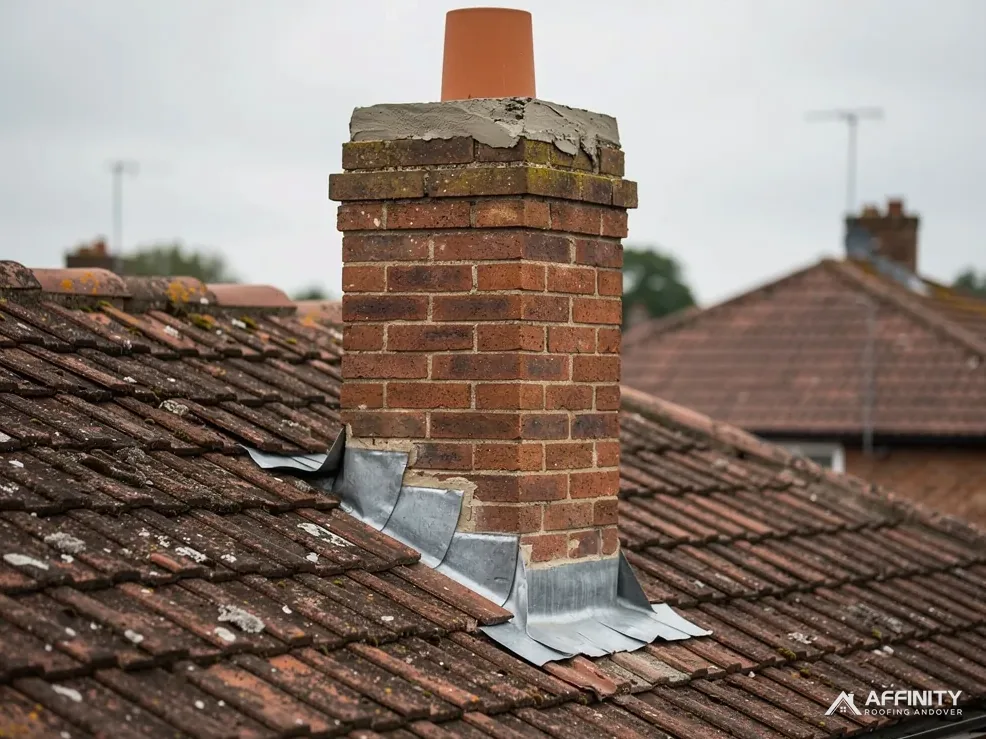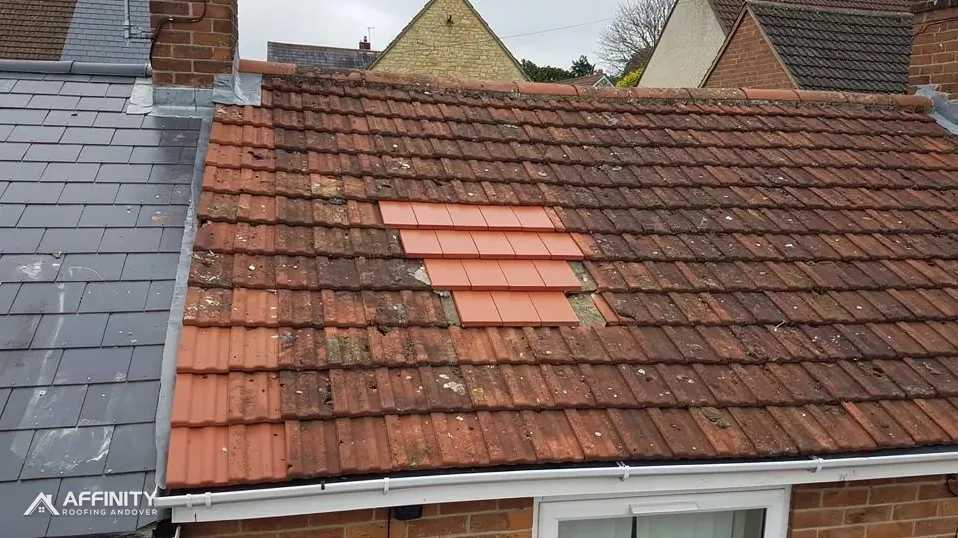
A roof leak in a let property raises questions an owner-occupier never faces. Someone else lives under the damage and needs to be told. The tenant must allow access, perhaps to a loft hatch in their hall. The costs may go to an insurer, a managing agent or a lender, each of whom wants evidence. And the work itself sits in a legal frame: contractors, building control, the freeholder if it is a flat.
Good practice for a landlord is therefore a matter of order. Find out what is wrong with photographs, agree a single written price before the work starts, arrange access properly with the tenant and keep the records. The roof repair itself is the easy bit if the groundwork has been done.
This guide covers what a landlord should ask for, how access to tenants' homes should be arranged, what records to keep, what applies to flats and shared roofs and a few legal points that arise on rental repairs: CDM, asbestos, VAT and building control. Treat it as background and not as legal advice: your own tenancy terms are a matter for a solicitor or your managing agent. The prices come from national guides and show typical UK ranges.
What a landlord should expect from a roofer
Whether you own one flat or a dozen houses, the same basics apply, and they are worth asking for before you let anyone onto the roof.
A survey before a price
The roofer should inspect the roof, and the loft where possible, before quoting. A figure given on the phone is a guess. At the survey you want photographs of the actual faults, with a note of where each is, so you can see what the roofer saw. Those pictures also let you show the tenant, your agent or an insurer exactly what is wrong.
A plain explanation
For each fault, the roofer should say what it is, how it will develop and how soon it needs attention. A leak above a bedroom is pressing. A scatter of slipped tiles over a shed may wait a while. A report that makes everything an emergency deserves a second opinion.
One total written price
You should receive a single price, in writing, for the whole job, after the survey. Check what it covers: access equipment, VAT and clearing up. Extras that appear after the survey are a warning.
A named person on site
For a tenanted property, ask who will attend, how the tenant will be told and who is responsible for locking up and leaving the site tidy.
Several opinions where time allows
Citizens Advice advises collecting three written quotes where time allows. For an emergency, a make-safe visit comes first, and quotes for the permanent repair follow. See our guide to a temporary roof repair for how that runs.
One total price for each job
The price matters more to a landlord than to most, because it is checked by others: an accountant, a lender, an insurer, a co-owner. A clear single price makes that easy.
What goes into one price
A roofer's price depends on the covering, the area, the number and type of faults, the access needed and what has to be carried away. It is fixed after the survey and written down as a total. A single number is easier to approve, compare and file.
Typical ranges for scale
MyJobQuote gives an average roof repair at around £650 (Oct 2026), and its emergency roofer pages give a call-out range of £150 to £300 (Oct 2026). Which? gives £75 to £400, ex VAT, for a handful of broken tiles (Nov 2025). Treat them as scale and nothing more, since your property will have its own price.
Several properties, several prices
If you manage a portfolio, each property is its own job with its own survey and total. A bulk discount cannot be promised, and a roofer who offers a flat rate for roofs they have not seen is guessing.
Small jobs deserve the same care
A small repair on a let property still needs a survey, photographs and a written price. Our guide to small roof repairs explains how those are priced.
VAT
The standard VAT rate is 20%. Check whether a quote includes VAT. Whether you can reclaim it depends on your own VAT position, so ask your accountant.
Access to tenants' homes
The roof belongs to you, but the rooms underneath belong to the tenant for the length of the tenancy. Getting in is a matter of courtesy and, in many cases, of the tenancy terms.
Tell the tenant early
As soon as a repair is likely, tell the tenant what is wrong, what will happen and roughly when. A tenant may be the first to spot a leak, and an informed tenant is easier to deal with. Confirm arrangements in writing, by email or text, so there is a record.
Agree the visit
Arrange a time that suits the tenant where you can. Ask the roofer for the likely duration and which rooms they will need. A loft hatch in a hallway, a bedroom ceiling that has to be opened up or a bathroom with a roof window all mean going into the home. Your tenancy agreement and the law set out when and how a landlord may enter, so check them or ask your agent.
Protect their belongings
Ask the tenant to move furniture and valuables from under the damage. Dust sheets help, but the tenant's own things are their responsibility to shift, and your insurer will ask.
Photographs inside
Photographs of ceilings, lofts and damage are useful, but the tenant's possessions and private spaces should not feature. Agree what will be photographed.
Safety on the day
Tell the tenant where scaffolding will stand, what parts of the garden or drive are affected and how long the front door will be unavailable. Children and pets should be kept clear.
Records and photographs worth keeping
A repair file pays for itself the first time somebody asks what was done, when and by whom.
What to keep
Keep the photographs from the survey, the written explanation of the faults, the written price you accepted, any variation agreed in writing, the invoice and proof of payment. Add dated notes of the tenant's reports and your replies. Keep photographs after the work too, showing the finished repair.
Why it matters
An insurer may ask for evidence of the damage and the repair. A buyer's surveyor and solicitor may ask about the roof history. A tenant may raise a damp problem months later, and the file shows what was done and when. If a roofer's work fails, you have the evidence of what was agreed.
Photographs as a baseline
Before-and-after pictures from the same angles make comparison easy. They also show the state of the roof when the repair was done, which is useful if a later fault is argued to be the roofer's responsibility.
Receipts for temporary work
If a make-safe visit was needed first, keep its receipt and photographs separately. Insurers commonly ask for them.
Where to keep it
A folder per property, on paper or in cloud storage, with dated file names. If you use a managing agent, ask them to send copies, since records held by one party can be lost when agents change.
Our answer on a written roof repair quote shows what a good one contains.
Flats, shared roofs and consent
Many lets are flats or terraced houses, where the roof is shared or owned by someone else.
Flats
A leaseholder usually does not own the roof. The freeholder or management company does, and repairs are arranged through them and recovered through service charges. If you let a flat and the leak starts above you, report it to the freeholder in writing and keep a copy. Flats have no permitted development rights for roof alterations, because the planning rules define a dwellinghouse as excluding a building containing flats.
Terraces and semis
Party walls come into play where work touches a shared chimney breast or wall. The Party Wall etc. Act 1996 requires notice at least two months before certain work begins, and party wall questions go to a party wall surveyor, not to building control. A like-for-like repair may not need a notice, but a chimney breast cut-away does.
Listed buildings and conservation areas
A listed property keeps its permitted development rights, yet separate consent is needed for works touching its character. In a conservation area, ask the planning team whether an Article 4 direction applies. At Andover addresses the planning team is Test Valley Borough Council's.
Building Regulations
A repair to part of a roof normally needs no application. Re-roofing larger areas can: the Planning Portal's test is less than 25 per cent of the building envelope and less than 50 per cent of the roof. The roofer should confirm the route.
Our guide to the roof repairs service sets out the wider picture.
CDM, asbestos, scaffold and other legal points
A few legal points apply to rental repairs more than to a home owner's own roof. None replaces advice on your own position.
CDM 2015
The Construction (Design and Management) Regulations 2015 treat you as a domestic client only when the work is on your own home, or a relative's, and is no part of a business. A let property is neither of those, so a landlord should not assume the domestic rules cover them and should read the HSE's CDM guidance. Once more than one contractor is on a project, a principal designer and principal contractor are appointed. A lone contractor still prepares a written construction phase plan.
Asbestos
For a building put up or refurbished before 2000, the HSE says to treat asbestos as present until shown otherwise. A cement-sheet garage or outbuilding roof is a typical example. Nobody should drill, cut or break such material until it has been identified, and the HSE describes asbestos cement roofs as fragile.
Scaffold licences
Scaffolding that blocks the highway falls under section 169 of the Highways Act 1980, with the highway authority issuing the licence. Our answer on who applies for a scaffold licence explains who arranges it.
Consumer rights
Rights such as the 14-day cooling-off period apply to consumers, and whether a landlord counts depends on whether the letting is run as a business. The Citizens Advice consumer helpline, 0808 223 1133, can advise.
VAT
The domestic reverse charge applies between VAT-registered businesses reporting within the Construction Industry Scheme, so ask your accountant whether it touches your jobs.