The short answer
Fairly soon, though not usually as an emergency. A cracked tile no longer sheds water reliably, so rain can reach the underlay and battens below, and a crack can widen or let the tile slide. Replacing one tile is a small job. It becomes urgent when water is already entering, when pieces could fall, or when the crack is one of several.
How rain gets past one tile
A tiled roof sheds water in layers. Each tile overlaps the one below, rain travels down the face and leaves at the eaves, and the underlay beneath acts as a second line of defence. A crack interrupts the first layer. Water that runs into the split no longer follows the face of the tile. It can slip through and land on the underlay, the battens and the timber.
Underlay is built to catch the odd drip, not to carry a steady flow for years. If a cracked tile sits where water collects, such as at the foot of a valley or in line with a gutter, the underlay beneath can stain, rot and tear. A leak may take weeks to show on the ceiling because the loft insulation and timbers soak up the water first.
A crack also weakens the tile. Frost can get into it and widen it, wind can lift a broken half and the tile can slide out of place. The hairline you see today may be a missing piece after the next cold snap. Our answer on a slipped roof tile describes what follows when a tile moves.
Temporary cover and permanent repair
If rain is coming in and a visit is not immediate, a temporary measure can hold it back. A roofer can tuck a slip of lead or a repair strip under the broken tile, or cover the area while the weather is bad. These are stop-gaps, and they are not repairs. Our guide to a tarpaulin on a leaking roof shows the limits.
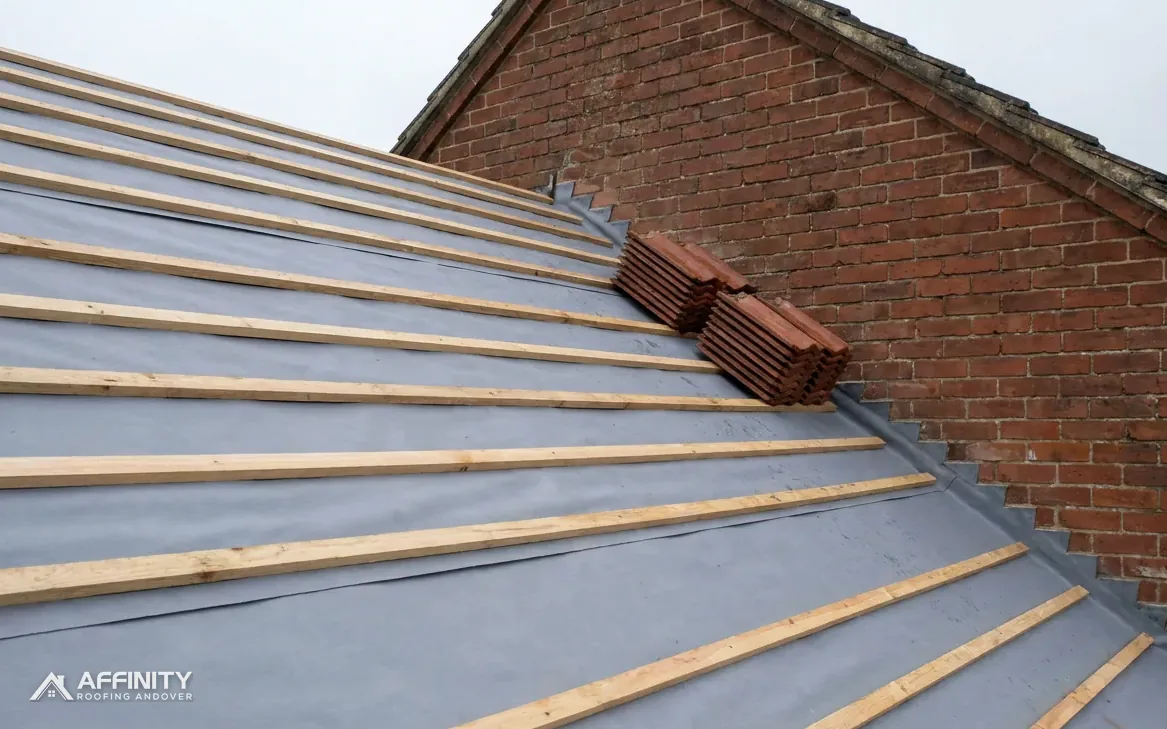
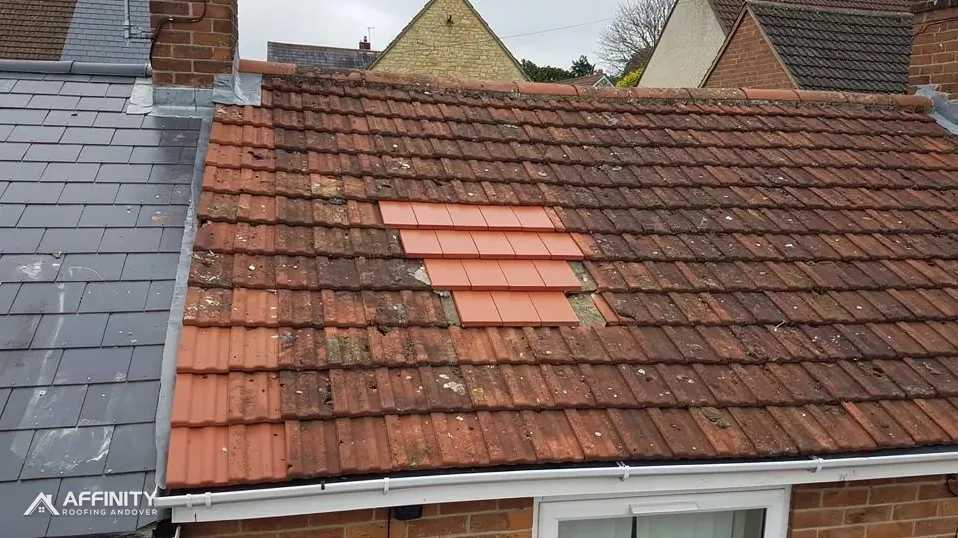
The permanent repair is simple. The cracked tile is lifted clear of its neighbours, taken out, and a matching tile is fitted in its place. Tiles are held by nibs, or hooks, that sit over the batten, and in many roofs by nails or clips as well. The new tile has to hook onto the batten and be fixed as the roof requires, so it neither slips nor lifts in wind.
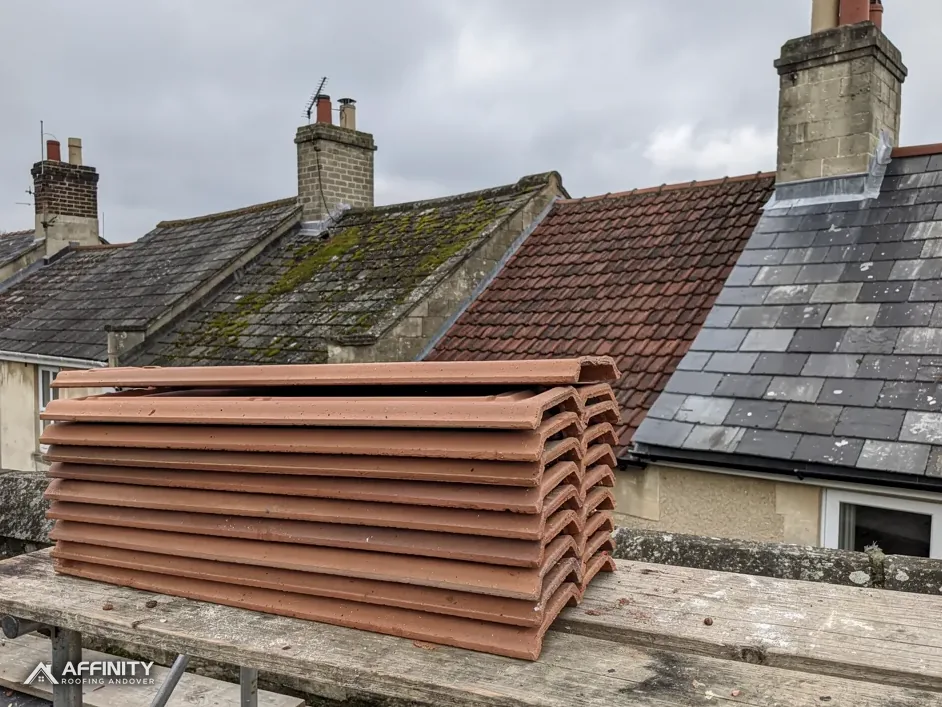
Matching matters. An old tile that has weathered will look different from a new one, and a different profile may not sit flat. We source a tile that fits, and where the colour is a close call, you will hear it from us before the tile goes on. Our page on matching old roof tiles explains the options.
When one tile points to a wider problem
One crack on its own is often the result of a knock: a fallen branch, a ball or a ladder. Several cracks in a line, or a scatter across one slope, suggest something else. The tiles may have reached the end of their life, frost may have got into porous faces, or someone may have walked on the roof. Fixings can be failing too, which lets tiles shift and chip each other.
Look also at what is under the cracked tile. If we lift it and find the underlay torn, or a batten dark and soft, the repair grows. A damp batten cannot hold a nail properly, and a short length of timber may have to be replaced.
The photographs we take at the roof show you exactly what lies beneath. If the roof is sound apart from the one tile, you pay for a small repair. If it is not, you see why and what the options are, from a handful of tiles to a re-roof, before anything is priced.
Do not climb up to replace the tile yourself. Tiles break underfoot, and a fall from a roof is serious.
Cost and access for a single tile
For a small job, national guides give a useful idea. A Which? cost guide from November 2025 puts a small tile job, covering a handful of broken or missing standard tiles, at £75 to £400 for the whole visit, excluding VAT. MyJobQuote, in October 2026, gives around £215 for replacing roof tiles, based on five tiles. Both are typical UK figures from national guides.
What moves the figure is access and the tile itself, and the number of tiles matters less than how hard they are to reach. A low roof reached by a ladder is simple, and a tile near the eaves rarely needs more than that. A high slope may need a tower, and a repair above a path or a glazed extension may call for scaffold. Rare or old tiles cost more than standard ones, since a reclaimed match has to be found and checked for soundness. Time on site is short for a single tile, and we clear away the broken pieces as we go. Our page on replacing roof tiles without scaffolding explains what decides the access.
One written price follows the survey. For a wider look at tile work, see the pitched roofing hub.