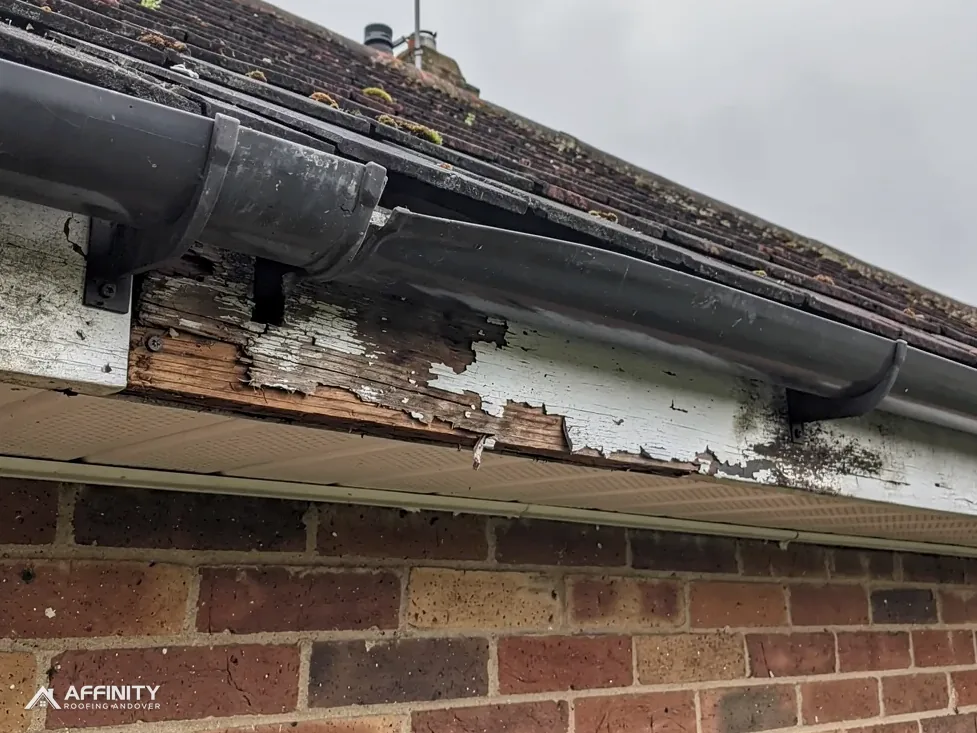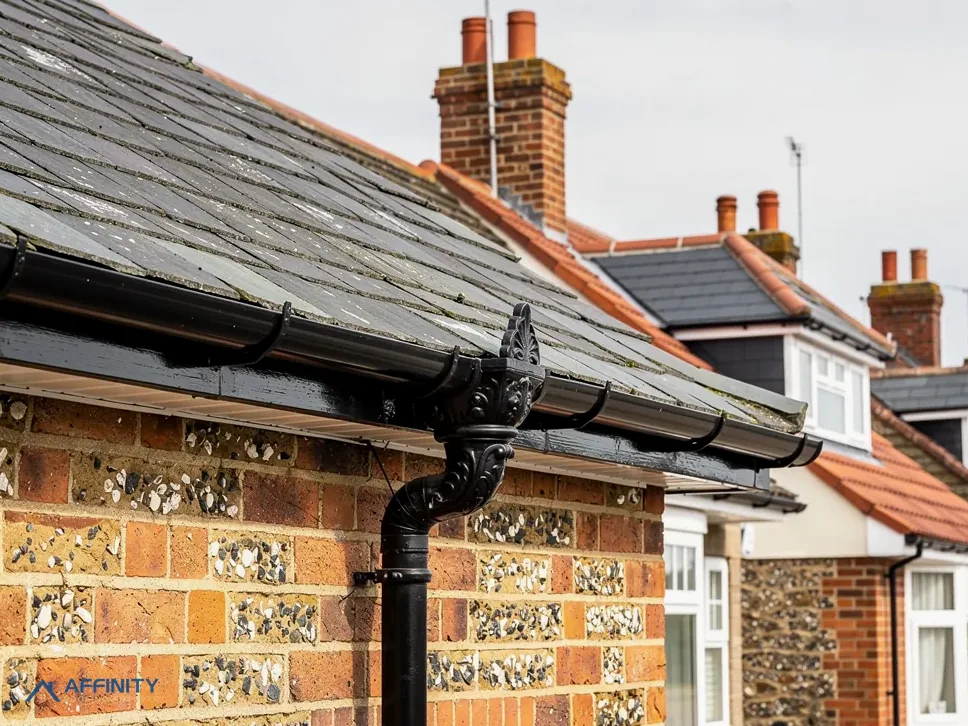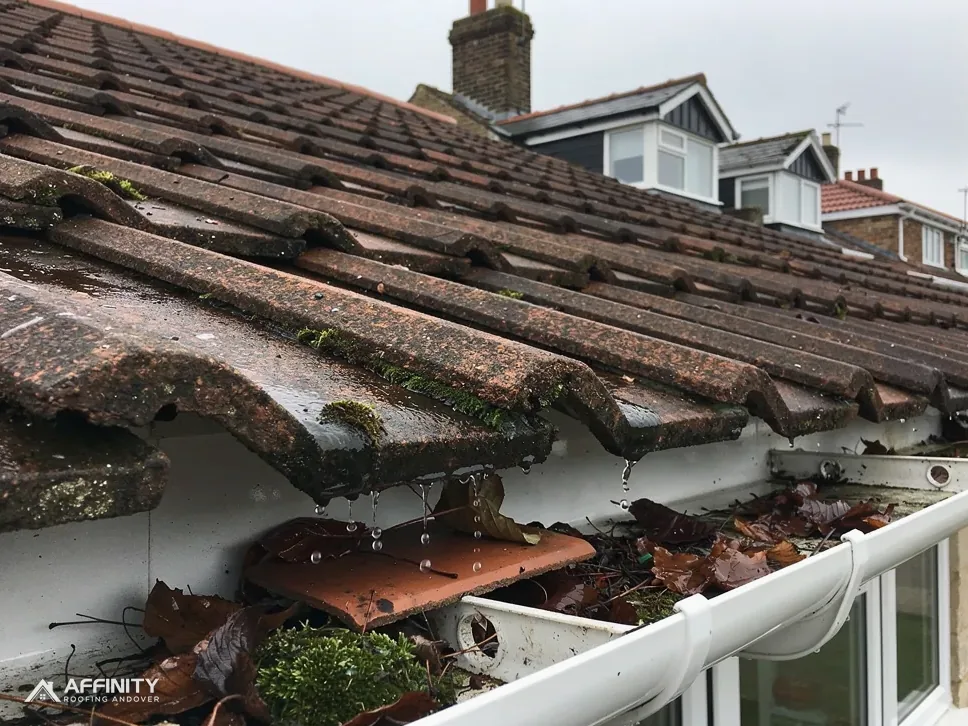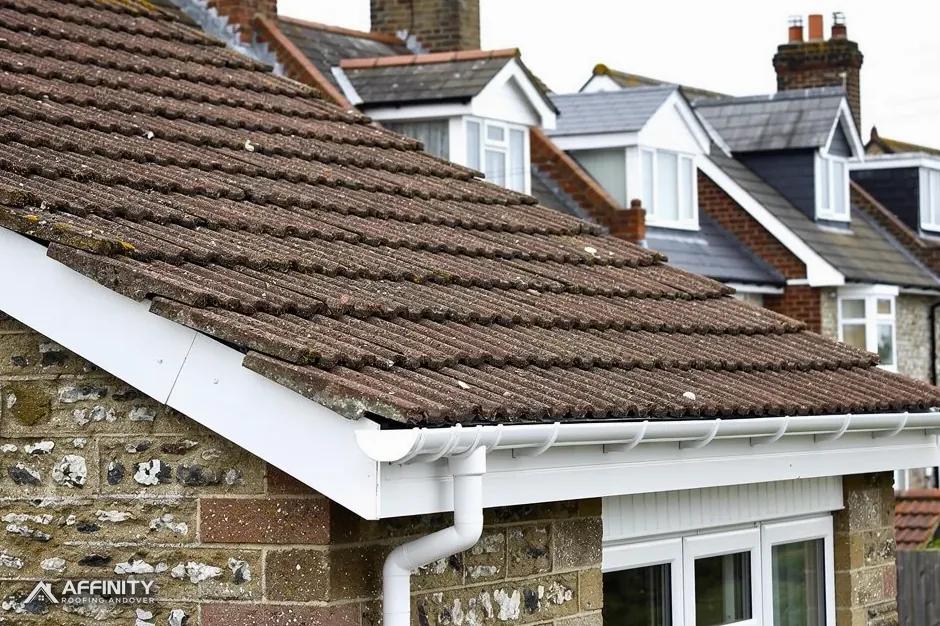
The short answer
Normally no. Renewing gutters and fascias like for like leaves the outside of the house looking much as before, and that kind of maintenance is not planning development. There are exceptions. An Article 4 direction can remove that freedom, as in four Basingstoke town conservation areas, and a listed building needs listed building consent too. Check with the planning team first.
The normal position
Planning control applies to development. Section 55 of the 1990 planning Act puts work that leaves a building looking much the same outside that definition. Swapping a worn gutter for a similar one, or renewing fascias and soffits in the same style and shade, generally falls on that side of the line.
Changing the look is a different question. Moving from timber boards to plastic, fitting a deeper profile that alters the roofline, or choosing boards in a clearly different colour could change the external appearance, so the answer becomes less certain. For a house, Class C of the permitted development rules deals with alterations to a roof, with limits, and the Planning Portal is the place to read it.
Flats are treated differently, because the rights granted to houses do not extend to a block containing flats. A leaseholder should also look at the lease.
None of this is legal advice, and a council's own answer outranks anything a contractor can tell you. Your local planning authority makes the call, and a short email or phone call to the council will tell you whether your address needs an application. The question costs nothing, and a written reply is worth keeping with the quote.
Basingstoke's town conservation areas
Conservation areas and Article 4 directions change the answer, and they are the reason this question is worth asking before you order. A direction of this kind is how a council takes named permitted development rights away from one area, so work that would be allowed elsewhere needs an application there.
Basingstoke and Deane has applied it in four town conservation areas, among them Fairfields and South View. Its published advice lists replacing fascias, soffits or guttering among the works now needing permission, together with solar panels and changes to the roof itself. The council also wants original slate and clay roofing kept rather than swapped for concrete or artificial substitutes.
If your house is in one of those areas, new guttering is no longer a free choice. Apply first and match the existing materials unless the council agrees otherwise. The same council publishes a map of its conservation areas, so look up your street on the council's own map and check it before you order anything.
Our answer on fascia colours covers the same ground for a change of finish.
Other councils and protected areas
Outside those four areas, what a council's Article 4 direction covers is for that council to say, and a roofer reading a map cannot settle it. Directions are in place in parts of Wiltshire, West Berkshire, the New Forest and Southampton, and addresses in Test Valley, Winchester, Eastleigh and Swindon need the same check.
So for any address, ask the council whether an Article 4 direction applies. If one does, ask whether it names guttering, fascias, soffits or roof materials, and get the answer in writing. Living in a conservation area does not by itself require permission for like-for-like gutters, but it is the cue to ask, because the next step depends on the wording of the direction.
If the house is inside a National Park, ask the right office. In the South Downs, the national park authority is the planning authority and Winchester City Council handles most applications for it as host. Inside the New Forest National Park, you apply to the Park Authority.
Our answer on aluminium or uPVC guttering helps you pick a material that suits the house and the area.
Listed buildings
Listing leaves a house its permitted development rights, but work that alters its character needs listed building consent as well, under section 7 of the Planning (Listed Buildings and Conservation Areas) Act 1990. Gutters are part of that character, and replacing cast iron with plastic is the textbook example of a change that calls for consent.
Like-for-like repair, using the same material, profile and fixing, is the safest route. Even then it pays to talk to the council's conservation officer before work begins. Doing the work first and asking afterwards risks enforcement and the cost of putting things back, which is a poor trade for a few minutes spent on an enquiry.
The conservation officer can often tell you which materials and profiles are acceptable, which saves time later. Keep the reply with the quote, so everyone is working from the same scope.
On listed homes we also check the timber behind the gutter, because an old fascia may be part of the fabric of the building and need a repair that follows the original. A photographed survey records what is there before any decision. The guttering, soffits and fascias page explains the survey, and one written price follows it.