The short answer
Follow the gutter manufacturer's own instructions, because the correct spacing depends on the product, its size and its material. Brackets also go at every joint and at both sides of an outlet or corner. Where snow, ice or a long run puts extra weight on the gutter, the brackets are set closer. Wide gaps are the usual reason a gutter sags between supports.
Why the maker sets the spacing
Gutter systems are designed and tested as a set: the channel, the brackets, the unions, the stop ends and the outlets. The maker publishes a maximum spacing for each profile, and that figure assumes their own brackets, their own gutter and a sound fascia behind. A different brand's bracket, or a cheaper replacement, may not carry the same load at the same distance.
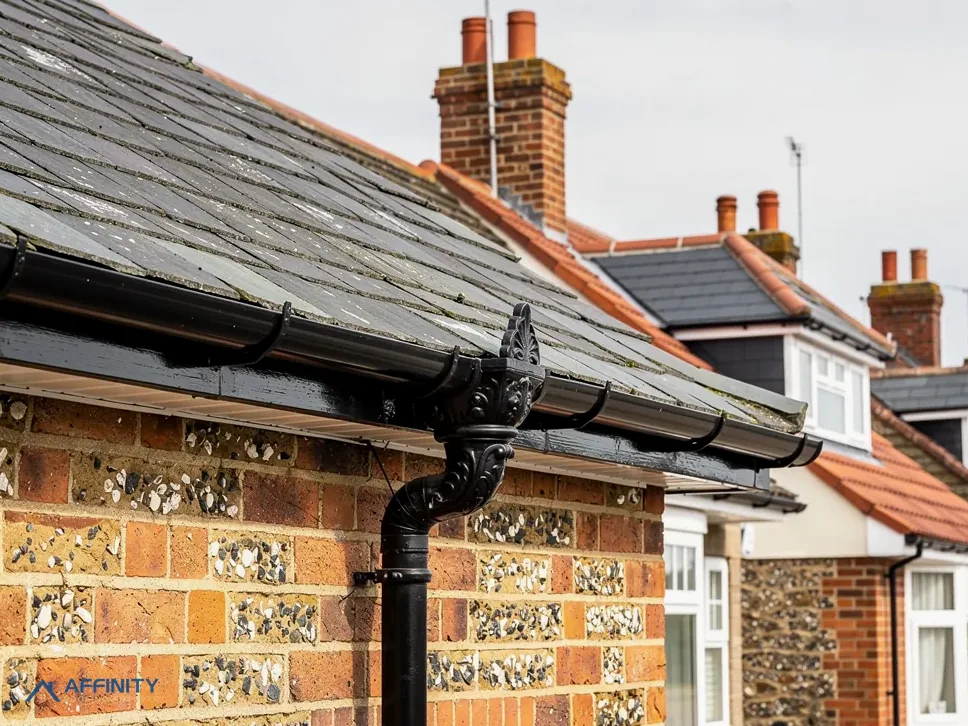
Material changes the answer as well. A plastic gutter flexes under weight and warms and cools with the weather, while a metal one is stiffer but heavier when full. Cast iron is far heavier still, which is why our guide to cast iron guttering mentions stronger fixings.
For that reason, anyone quoting a rule of thumb without looking at the product should be treated with caution. The plain answer to the question is to read the fitting instructions for the system you actually have, then add brackets rather than stretch them.
Where the gutter was fitted years ago and the brand is no longer made, a fitter works from similar products of the same profile and a margin of safety.
Where brackets must go regardless
Some positions need a bracket whatever the spacing figure says. A bracket sits close to each union, so the joint is supported on both sides and does not open under load. Corners, stop ends and outlets also need one either side, because these are the points where the weight of water gathers.
An outlet, where the water leaves for the downpipe, takes the heaviest flow, so a gutter that slips away from it will dump water over the lip. Bracket placement near the outlet is one of the first things we check when a gutter overflows at one spot. The causes of an overflow beyond brackets are covered in our answer on overflowing gutters.
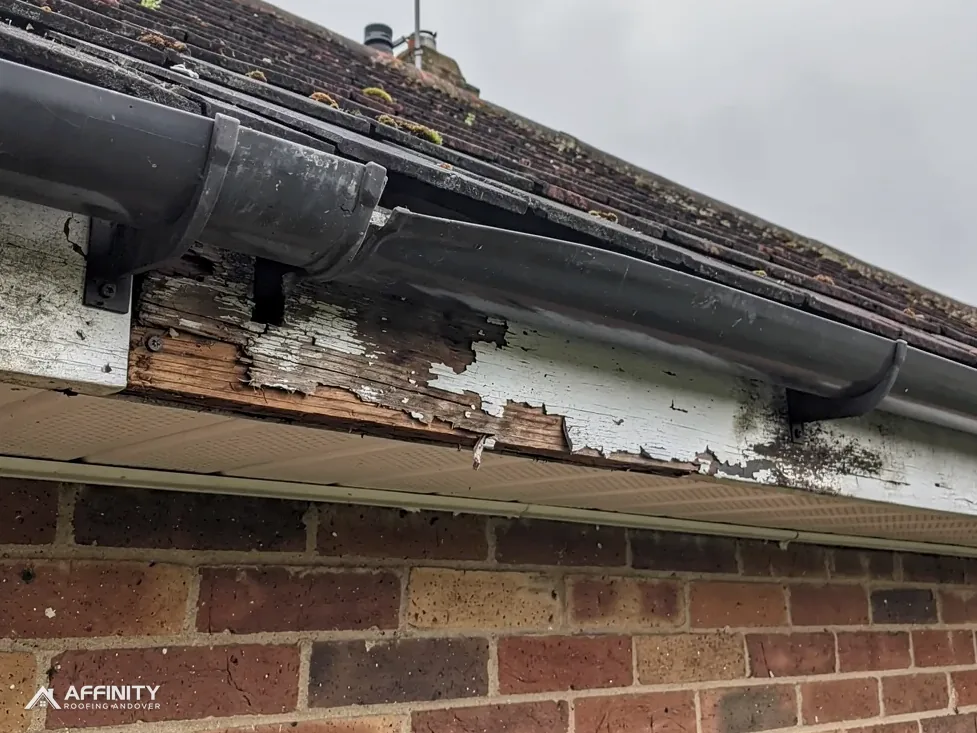
Brackets must also bite into something solid. A bracket screwed into soft or rotten fascia board holds nothing, however neatly it is spaced. If the timber is crumbling, adding brackets does not help; the board has to be repaired or replaced before the gutter goes back.
Fixing into rafter ends where the fascia is thin gives the strongest hold, although it needs careful alignment with the roof timbers.
Each bracket should be checked for a straight, level seat, since a bracket that is twisted or bent pushes the gutter out of line and sets up a leak at the next joint.
Snow, ice and long runs
A gutter that is fine in summer rain can be put under strain in winter. Frozen water inside the channel is heavy, and snow sliding from the roof can land on a gutter with a force it was never designed for. Brackets set at the wide end of the maker's range are the first to bend or pull away in those conditions.
Where a roof sheds a lot of snow, such as a steep slope above an entrance, closer brackets help the gutter survive. Snow guards on the roof can reduce the load, though they are a separate job.
If the gutter has been damaged by ice before, tell the fitter, who can plan stronger or closer fixings from the outset.
Long runs matter too. A single length of gutter running the full width of a house carries more water than a short one, and it is harder to keep straight. Extra brackets near the middle help hold the line and the fall, since the gutter must slope gently towards the outlet. Brett Martin gives 1 mm of fall for every 600 mm of run, and a sagging run loses it at once, which is covered in the answer on gutter fall.
Spotting sag and putting it right
Stand across the road in dry weather and look along the gutter. A smooth line is good. A dip between two brackets, or a run that droops towards a corner, shows spacing that is too wide or a bracket that has let go. After rain, water standing in the channel marks the low points.
Repairing sag starts by finding the cause. If the brackets are sound but too far apart, new ones can often be added between them. If they are bent or have loosened from a soft fascia, they come off, the board is repaired and the gutter is rehung at a fresh, even fall. Our answer on sagging gutters goes through that in more detail.
Brackets cost little compared with the damage a sagging gutter can do, which is stained walls, rotten fascias and damp reaching the rafter ends. Putting a few more in at the right places is often the smallest part of the whole job. A survey photographs each bracket position, so you can see what is loose, bent or missing. The guttering, soffits and fascias page explains how that works.