The short answer
There is no automatic rule. Who is responsible for a shared gutter depends on your title deeds and on where the gutter sits, so check them first and speak to your neighbour before anyone is instructed. Agree in writing who pays and who arranges the work. If the job touches the party wall itself, the Party Wall etc. Act 1996 may apply, and notice rules follow.
Start with the deeds and the position
Shared guttering is common on terraces, semi-detached pairs and flats, where one run of gutter or one downpipe drains roofs belonging to two properties. Responsibility is not set by a single national rule. It turns on your title deeds, any covenants and the physical layout of the gutter, which is why neighbours sometimes remember it differently.
Start by reading the deeds and the plan, or the lease for a flat. Some deeds say which owner maintains which part of the roofline, or require owners to share costs for anything that serves both. Others are silent. If there is a managing agent or a freeholder, ask them as well, since in a block the roofline normally belongs to the freeholder's structure.
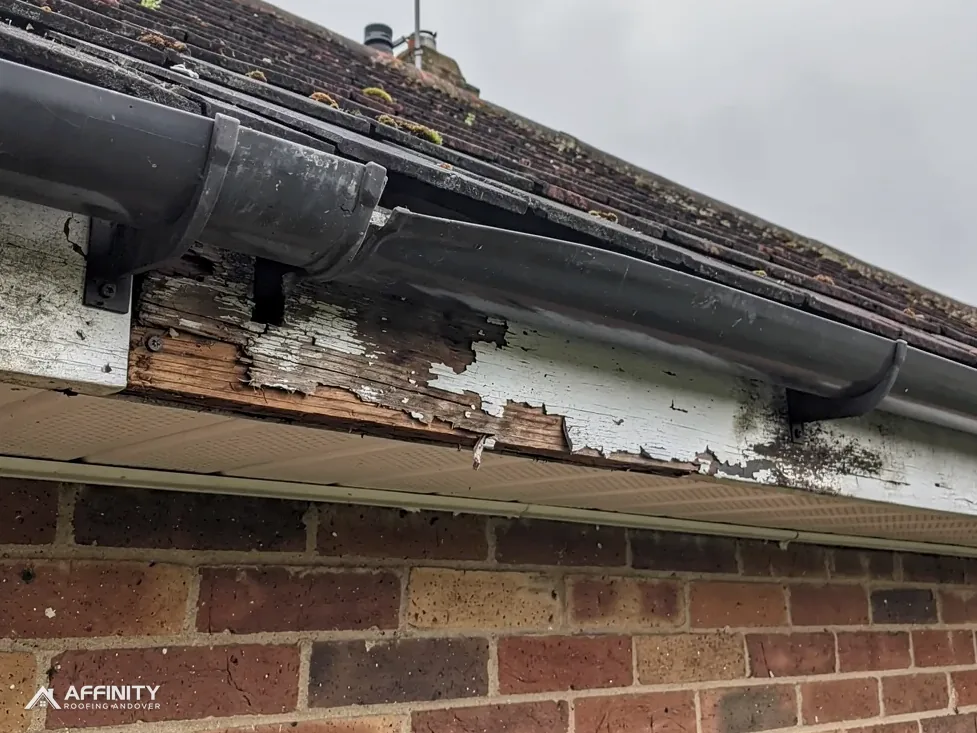
Then look at the gutter itself. A run along one side of a house is normally one owner's. A valley or a central run where two roofs meet, or a downpipe that takes water from both, is where sharing is most likely. Photograph the fault and the route the water follows, because pictures help both sides see the same problem and give a roofer a head start at the survey.
Agreeing the work and the cost
Talk before you instruct anyone. Show your neighbour the photographs, explain what is failing and what it is doing to your wall or theirs, and suggest a fair split. Equal shares are common where both houses benefit equally, though the split can reflect who uses the gutter more.
Put the agreement in writing, even if it is only an email that both of you answer. It should say what work is planned, who will organise it, who pays what, and what happens if the price changes after the survey. A short note now saves an argument later.
Ask for a written quote that covers the whole shared job. A single total price is easy to divide, because both of you can see what you are agreeing to. We share the survey photographs with you, so you can pass them to your neighbour and show them what we found.
If your neighbour disagrees, stay polite and keep a record of every message. A managing agent or landlord may be able to help. Our guide to gutter replacement cost shows what moves the price of a larger job.
Access, safety and neighbours
Work on a shared gutter often needs access from both sides. A fitter may have to stand a tower or scaffold in your neighbour's garden, cross their path or reach across their roof. That needs their consent, and it is courteous to say when, for how long and what will be moved.
You cannot assume you may enter someone else's land. Without permission the work has to be planned from your own side, which may mean a longer tower or a different method. Settle access in the same note as the cost.
If a frame will stand on the public footway or road, the council's scaffold licence applies, and the scaffolder and we sort it out together. Tell your neighbour as well, since boards, poles and falling debris can affect them.
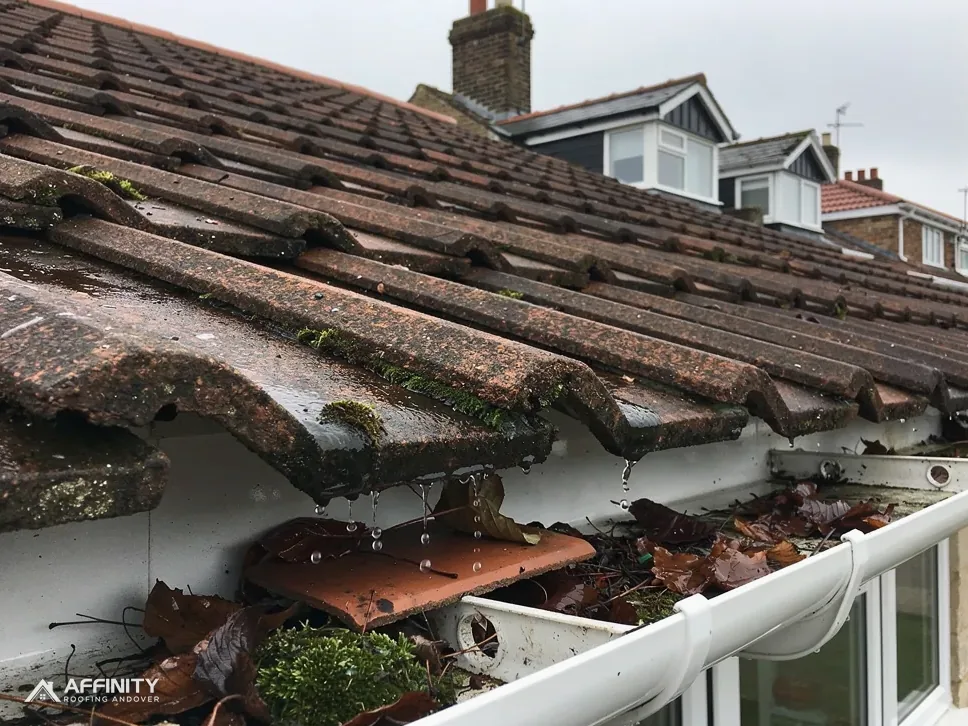
If a leak is already soaking a neighbour's wall or ceiling, say so quickly, because damp spreads and the longer it runs on, the harder the conversation. Our answer on a leaking gutter joint explains a first repair, which can stop the water while you settle the rest.
When party wall rules matter
Replacing a gutter does not normally touch the party wall, the wall standing on the boundary between two properties. If a job does reach into it, the Party Wall etc. Act 1996 may apply. Cutting away a projecting chimney breast is one example the Act mentions, and its notice period is two months before work begins.
GOV.UK says a neighbour's silence is not agreement, and that if the two owners cannot agree a surveyor has to be appointed. A neighbour's written consent can settle matters without one. The rules are about the wall and the building work, so they are separate from any agreement on a gutter.
Party wall questions go to a party wall surveyor, not to building control. If a shared gutter job involves the wall, the survey notes it, and any work that needs notice waits until it has been served.
Treat all of this as general guidance, not legal advice, and ask a solicitor if the dispute grows. The guttering, soffits and fascias page explains how a survey of the shared roofline is carried out, from the brackets to the boards behind.
Often a shared gutter needs nothing more than a friendly agreement and a clear written price, and that is where to start.