The short answer
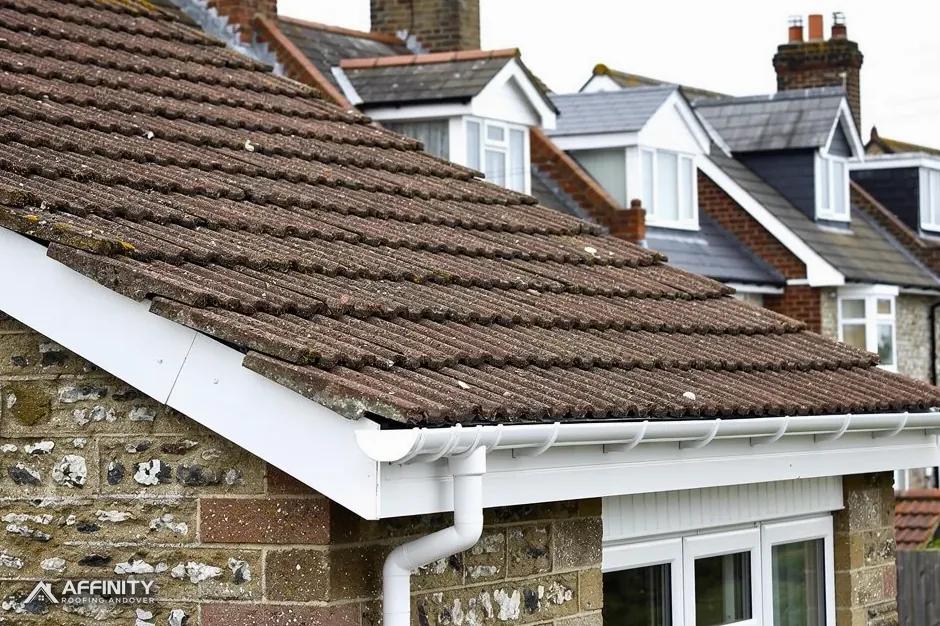
An eaves protection tray is a rigid plastic liner fitted at the bottom edge of the roof, below the underlay and across the top of the fascia. It supports the underlay so it cannot sag behind the gutter, and it carries any water that runs down the underlay into the gutter instead of onto the timber. That keeps the fascia and rafter ends dry.
What the tray is for
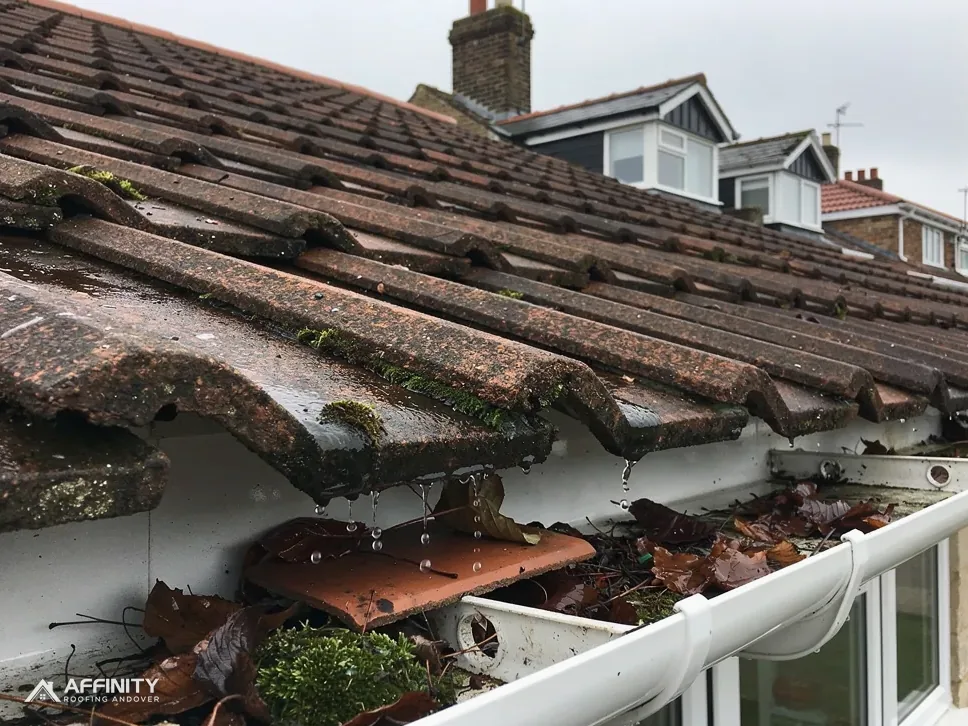
Every pitched roof has a waterproof layer under the tiles called the underlay. Rain that gets past a tile, or condensation forming on the underside of the covering, runs down that underlay. It is meant to reach the gutter at the bottom edge. Without help, it can fall short.
The tray itself is a moulded strip with a flat section lying on the fascia and a raised lip. The underlay is laid over it, so the water that drains down the underlay drops into the gutter even if the underlay has stretched or moved. It also holds the underlay up at the edge, which stops it drooping into a trough that collects water.
It is a small component with a plain purpose. It gives the underlay a firm shelf at the exact spot where water turns from a steep slope into a gutter, which is where sagging underlay tends to give up. The tray is hidden under the tiles, so you will never see it once the roof is finished, but its work carries on every time it rains.
Rot it helps prevent
The timbers at the eaves are the most exposed on the whole roof. The fascia, the soffit and the rafter feet, the ends of the sloping timbers where they rest on the wall, share a damp corner of the building. Rain, splashback and condensation all reach them. If underlay hangs down behind the gutter, it channels water straight onto them instead of away.
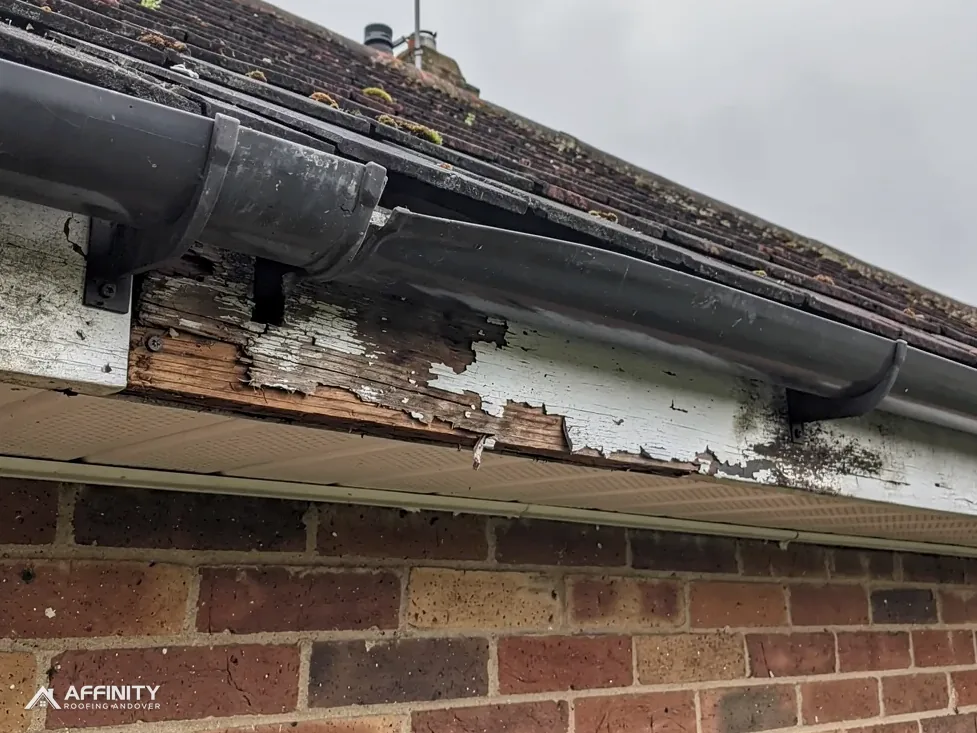
Left alone, that moisture soaks into the fascia board and the ends of the rafters, and the wood begins to rot over a number of seasons. A rotten board will not hold a gutter, and rotten rafter feet are a repair that goes well beyond new trim. Our guide to rotten rafter feet shows what that looks like.
A tray cannot cure a leaking gutter or a blocked downpipe, and it will not protect a board that is already soft. What it does is remove one common cause of damp at the very edge of the roof. For that reason the underlay and the tray are looked at whenever a fascia is opened up, as well as the trim you can see. If there is no tray and the underlay is hanging into the gutter or sitting on the board, the survey notes it and we show you the photograph.
Can one be added later
Trays are easiest to fit when the lowest rows of tiles are off the roof or the fascia is being replaced. At that point the underlay is lifted and the new tray is slid in under it, with the gutter fixed afterwards. Done at the same time, it adds very little to the work.
Retrofitting to a roof that is otherwise sound is harder. The lowest courses of tiles have to be lifted, the underlay checked and trimmed, and the tiles relaid. On a typical house that is realistic only when the fascia and gutter are coming off anyway, or when the underlay at the edge has already failed.
If you are replacing fascias or soffits, ask whether the underlay is lapping into the gutter and whether a tray is being added. Our guide to fascias and soffits cost explains what drives the price of that job, and the quote is one total price for the work in front of us.
Where the old underlay is brittle or torn, a new strip lapped over the tray is better than leaving it as it was. The new strip should overlap the old by a generous margin and sit so water drains towards the gutter, not behind it.
Ventilation and the tray together
The tray sits close to the point where air enters the roof space, so the two have to be planned together. BS 5250 is the code on moisture in buildings. For a cold roof over a non-breathable HR underlay, Marley gives a ventilation opening of 25 mm at the eaves for pitches of 15 degrees or less, and 10 mm above that.
A tray must not block that opening. Good trays are shaped to leave the gap clear, and a vented soffit or over-fascia vent supplies the air. If a tray and a continuous vent are both needed, the order and spacing are agreed before the roofline is closed, so nothing is covered up that the roof needs.
The soffit ventilation guide explains the options, and the guttering, soffits and fascias page covers the whole roofline. A survey photograph of the eaves, taken with the gutter off, shows you what is there before you decide anything.