The short answer
Leave an active nest alone and wait until the young have left before the soffit is repaired. The Wildlife and Countryside Act 1981 section 1 makes it an offence to intentionally harm or remove an occupied nest, or one being built. Once the nest is empty, the gap can be closed. If you suspect bats, stop and ask a specialist first.
What the law actually says
Section 1 of the Wildlife and Countryside Act 1981 (WCA) is the nest provision, and its test is whether someone acts intentionally. The offence is deliberate removal, damage or destruction of a nest by a person, and it applies only while the nest is occupied or under construction. The word intentionally is doing real work here.
That is different from the loose phrase that it is illegal to disturb a nest, because the offence needs an intentional act. The statute is narrower: a deliberate act against a live nest. It also means a nest that is finished with, with no eggs, no young and no birds returning, is not protected in the same way. The difficulty is knowing for certain, because some birds reuse the same hole and raise more than one brood.
GOV.UK's wild birds guidance lists no licensing purpose covering development or construction. So you cannot apply for permission to work around an active nest simply because the job is inconvenient. The route is to wait, not to seek a licence.
Timing the soffit work
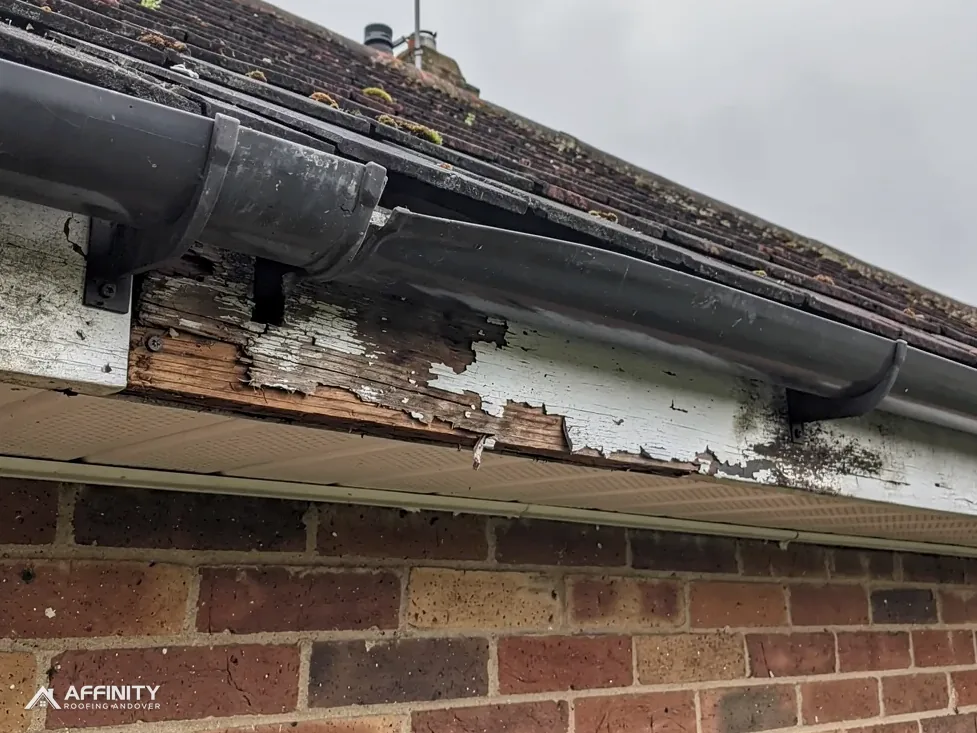
Birds get in where the soffit board has split, dropped or come away from the wall, or where the fascia has pulled off the rafter ends. They are not the cause of the fault. They exploit it.
If you can hear chirping, see adults flying in and out with food, or find droppings and nest material below the gap, treat the nest as active. A responsible roofer will agree a later date with you, after the birds have gone, rather than sealing the hole on top of them. We would rather move the visit than put a live nest at risk, and we tell you plainly what the survey shows.
While you wait, you can still arrange the survey. Looking at the board from a ladder or tower, without touching the nest, shows whether the damage stops at the soffit or has reached the timber the roof rests on. Our guide to rotten rafter feet explains why that is worth knowing before the roofline is opened up, and why a short delay rarely changes the repair itself.
Do not stuff the hole with rags or foam in the meantime, as that can trap birds or harm a roost.
If the board is hanging loose and you are worried about it falling, tell us when you ring, and we can advise on making the area below safe without touching the nest.
Bats are different
Bats also use soffit gaps and the spaces behind fascia boards. GOV.UK lists roof repair and replacement as work that can affect bats, whose roosts and breeding places carry full legal protection.
The offences are stricter than for birds. Under section 9(4) of the WCA, disturbing a bat in its shelter, or obstructing access to that shelter, is an offence when done intentionally or recklessly. Regulation 43 of the 2017 Habitats Regulations separately covers harm to a roost or breeding site, and no intent has to be shown for that offence.
So if you see small dark droppings below the eaves, hear squeaking around dusk, or watch something emerge in the evening, do not block the gap. Stop the work and speak to a bat specialist. Whether any licence is involved is a question for them, not something a roofer can decide on the day.
We would rather pause a job than risk damaging a roost, and a pause costs far less than a mistake here.
Photographs taken from a distance, showing the gap and any droppings, are useful to a specialist and to us, and they cost nothing to take.
Closing the gap afterwards
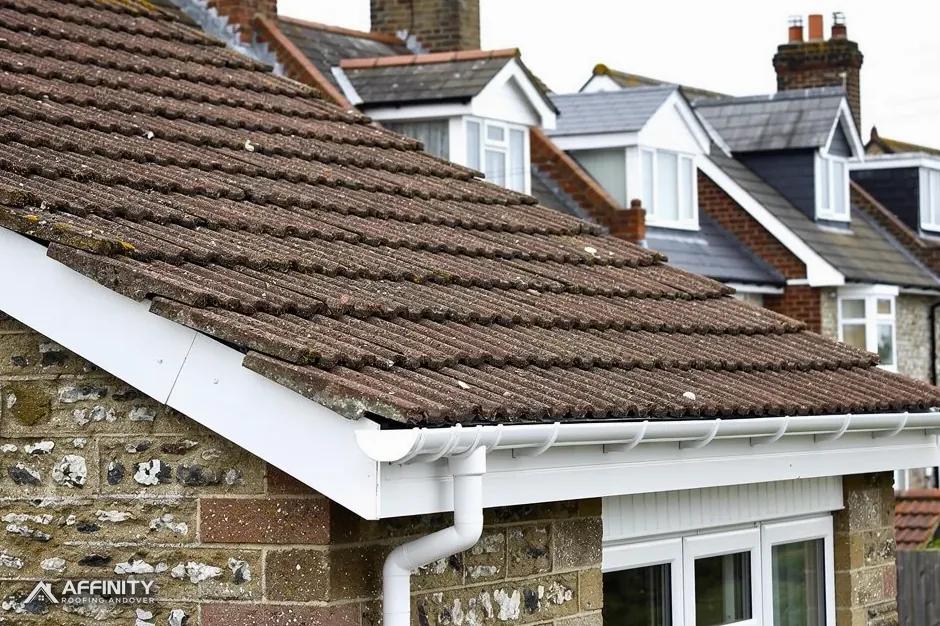
Once the roof edge is clear of nesting birds, the repair itself is straightforward. Damaged soffit boards are cut out, any rotten timber behind them is replaced, and a new board is fixed with a ventilation strip so the roof space can still breathe. Our answer on the difference between a fascia and a soffit shows where each board sits.
Where the opening was the entry point, the new board closes it, and a vented soffit with mesh at the eaves stops the hole being reopened next spring. The mesh keeps birds out while letting air through, and the ventilation is checked against what the roof needs.
Older soffits may be asbestos insulating board, which is identified before any cutting. If it turns out to be asbestos, the work follows a different method, and our asbestos soffits guide covers that. The guttering, soffits and fascias page lists the whole roofline service and how a survey is carried out.