The short answer
Occasional, careful access is fine on a sound, fully supported flat roof, as long as you know what the covering is. Never walk on old cement sheet roofing, since HSE says asbestos cement roofs are always fragile, or on any roof that feels soft. Use boards to spread your weight, keep to dry weather, and keep regular traffic for roofs with a walkway. Routine foot traffic wears every covering.
Which coverings take occasional footsteps
A flat roof is designed to keep water out, not to be a terrace. Even so, the main coverings differ in how much light traffic they tolerate when the deck beneath is sound.
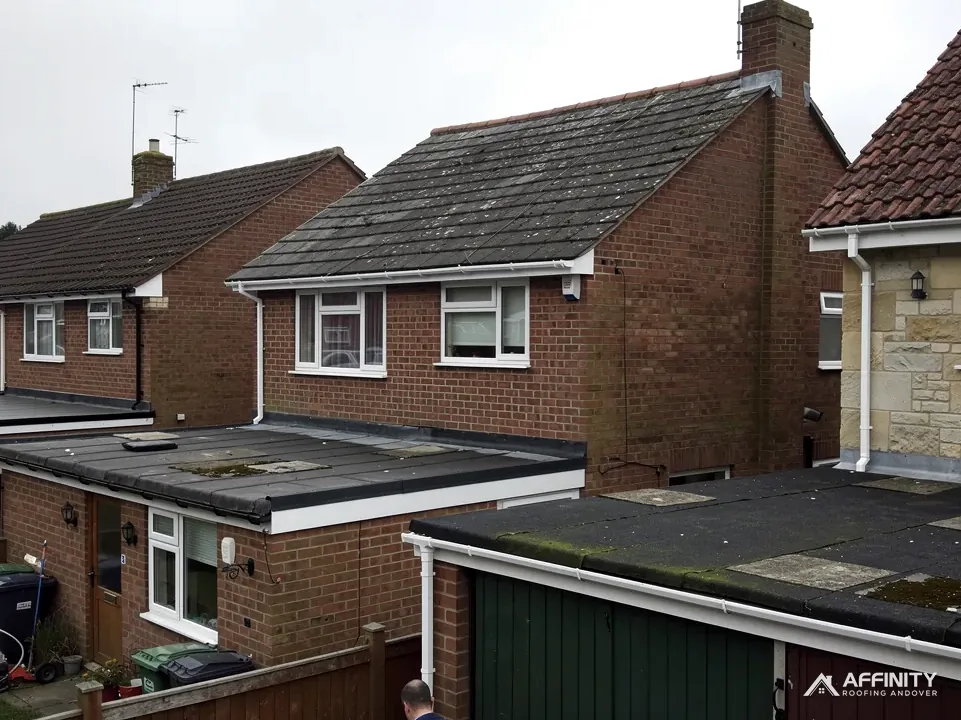
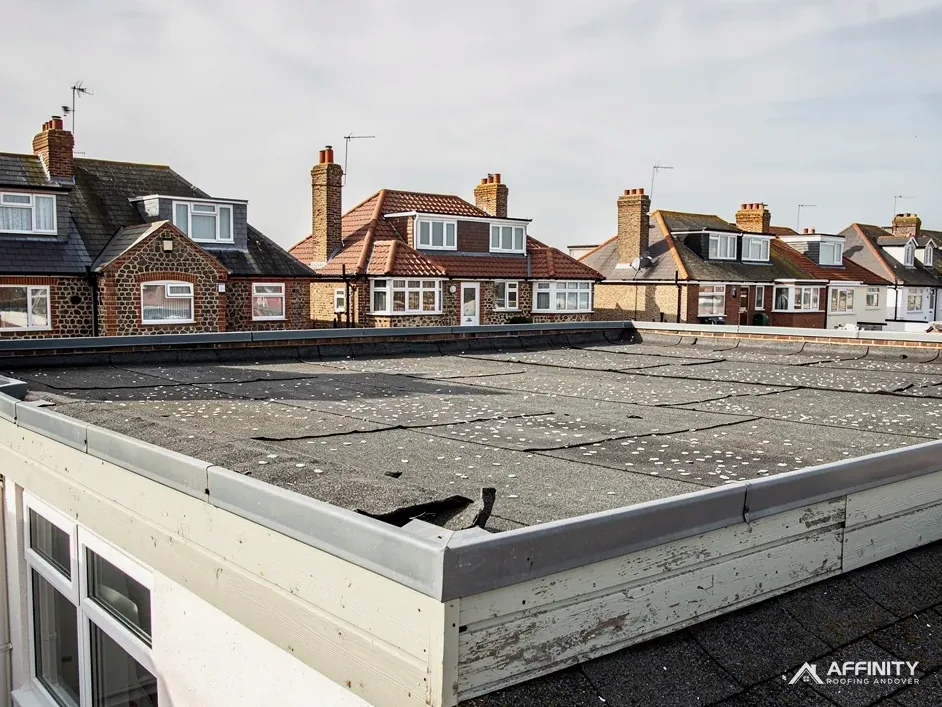
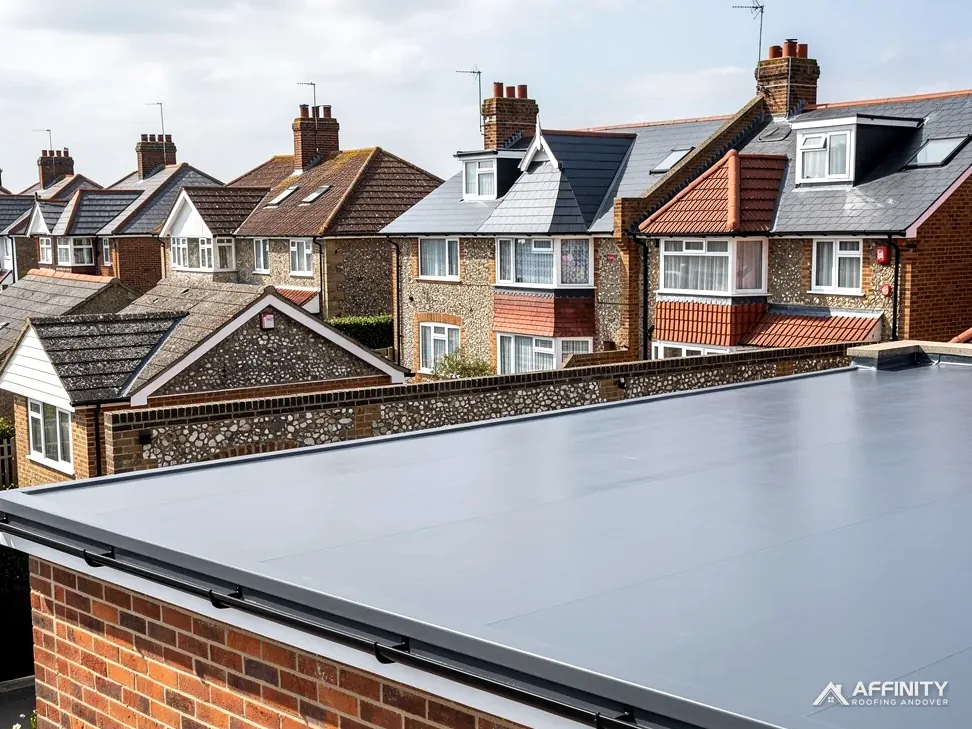
EPDM rubber is flexible and forgiving underfoot, though sharp heels and dragged ladders can score it. GRP fibreglass forms a hard shell that carries weight well on a firm deck, but a moving deck can crack it, and cold weather makes it less tolerant of knocks. Felt is softer and scuffs more easily, especially in hot weather when bitumen softens, and cold weather when it turns brittle.
Whichever the covering, the deck must be fully supported. A roof with rotten boards or a sagging section can give way. Our answer on rotten flat roof decking covers the warning signs, and if you suspect them, do not step out.
Treat any roof as fragile until you know its covering. If you are not sure what the surface is, or the garage is old, HSE treats an asbestos cement sheet roof as always fragile, so it must not be walked on. Our asbestos garage roof answer explains.
Makers publish their own guidance for traffic on their products, and where the original product is known, that guidance rules.
Walkways and routes
If people will cross the roof regularly, for gutter clearing, plant maintenance or access to equipment, a walkway is the answer. A walkway is a designated route of tougher material, such as tiles or pads or a bonded layer, laid over the covering so that wear falls on it and not the membrane.
A walkway should be fitted when the roof is laid, and chosen to suit the covering. Loose slabs set directly on a membrane can puncture it, and a pad system spreads load. Edges of the route should be marked, so that people keep to it.
Where the roof is used as a terrace or balcony, the build-up is designed for it from the start. That is a different type of roof, with a deck and covering selected for sustained traffic, and drainage that works beneath the paving.
For one-off access, laying boards across the surface spreads weight, and you must keep the boards clean so grit does not grind underneath. Take care at edges, where there is often no guarding, and keep away from outlets and upstands, where the covering is most delicate.
Our flat roof maintenance answer explains a safe yearly check.
Damage from occasional access
Small knocks add up. Grit trapped under a boot sole scratches a topcoat. A ladder foot or a dropped tool can puncture rubber or crack fibreglass. Heavy loads in a spot can compress the insulation beneath a warm deck covering.
Damage often goes unnoticed at the time. A scuff on felt exposes the layer below to sun, and a puncture can leak weeks later, with the stain appearing far from the spot. If you have been on the roof, look for marks afterwards and tell a roofer about any you find.
Weather matters. Wet roofs are slippery, frosty ones more so, and no roof should be walked on in ice or high wind. A hot day softens felt, and a cold one makes it brittle.
Edge protection is the main safety issue. A flat roof may have no guarding, and a fall from even a single-storey roof can cause serious injury. Do not go near the edge without a harness and proper protection, and do not use a roof alone.
For a quick look, looking from a bedroom window, or from a ladder footed at the eaves, is safer than stepping out.
When to leave it to someone else
Leave the roof alone if it is old and the covering is unknown, if the surface is wet or frosty, if you can see blisters, splits or a sagging deck, or if you cannot get on and off safely. Roofers carry the equipment to work safely on roofs, and they know where the weak spots tend to be.
When we survey, we record the roof with photographs, test the deck where we can safely reach it, and tell you what the surface can bear. If access is a regular need, for plant or a satellite dish, a walkway is the suggestion.
Foot traffic also shapes the replacement decision. A roof that gets regular use may suit a tougher covering. HomeBuilding gives EPDM and GRP 25 to 30 years each, and felt 10 to 15, and Less gives EPDM 30 to 50, GRP 25 to 40 and felt 10 to 20, though heavy use can shorten any of them.
Our flat roofing page sets out the coverings, and any walkway or repair is priced as one written total, agreed before work begins.