The short answer
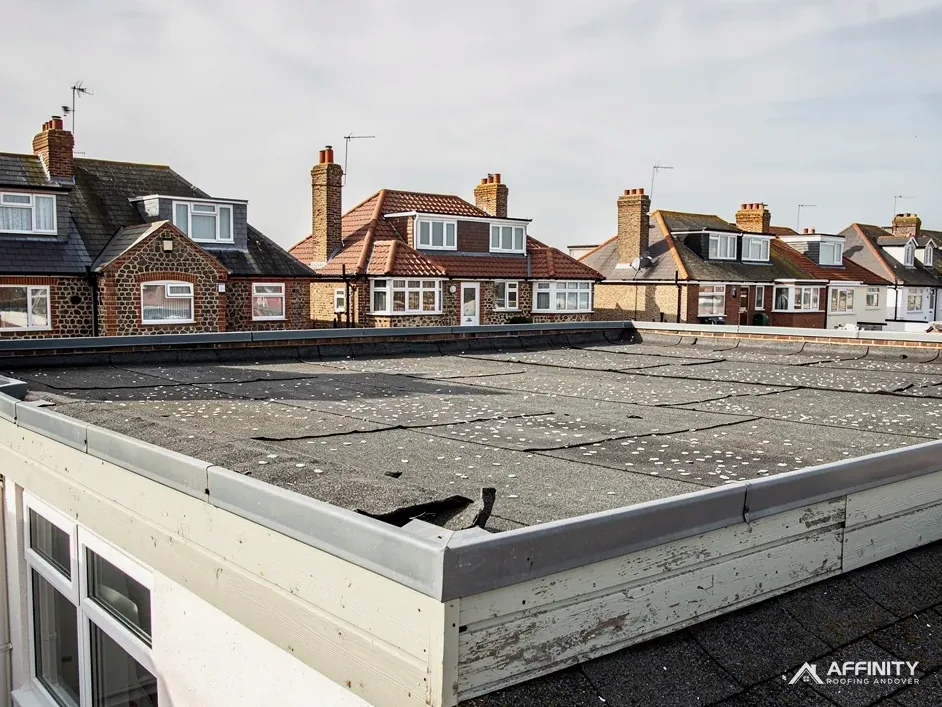
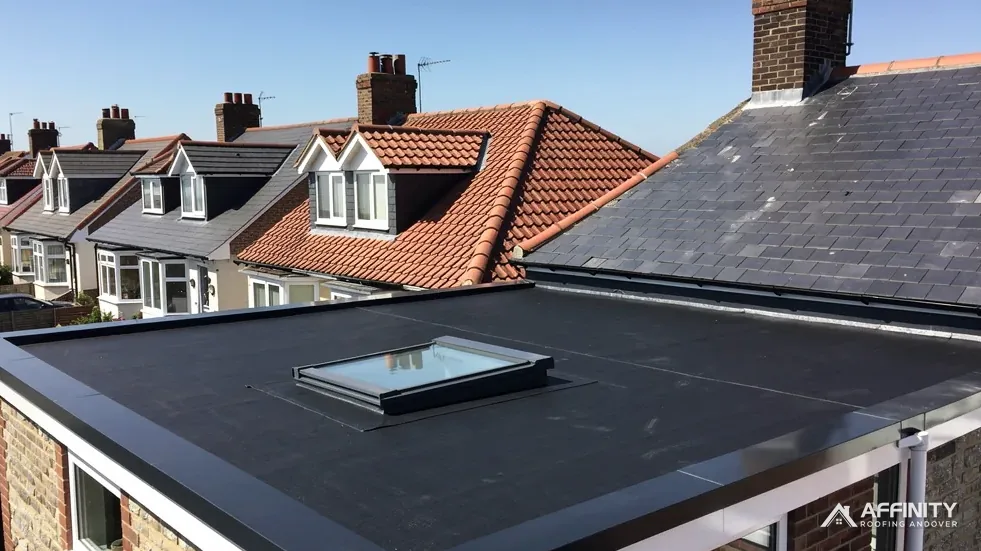
A new covering on the flat roof of a house is normally permitted development under Class C, so no planning application is usually required. For flats the position is different, since they carry no such rights. Listed houses need listed building consent too, and a brand-new flat roof on a new extension is judged with the extension. Conservation areas and Article 4 directions can alter the answer, so ask your local planning authority.
Re-covering, and why Class C usually applies
Planning law begins with a simple idea, and it is worth setting out first. Section 55(2)(a) of the 1990 Town and Country Planning Act excludes works that do not materially affect how a building looks from the outside. Swapping a tired felt roof for new felt, or rubber for rubber, is the obvious case.
The General Permitted Development Order adds householder rights on top. Class C of Schedule 2, Part 1 covers any other alteration to a house roof, and re-roofing sits within it, which is why a change of covering is normally permitted.
Class C comes with conditions. Nothing may stand more than 0.15 metres proud of the original roof plane. A window in a side-facing slope must always be obscure-glazed. Separately, it must not open unless its opening parts sit more than 1.7 metres above the floor. Height may not rise above the original roof, and the class does not take in chimneys, flues or soil pipes.
Planning is one system and building control another. A re-cover that needs no planning application may still involve the Building Regulations, as our overlay answer explains.
A new roof on a new extension
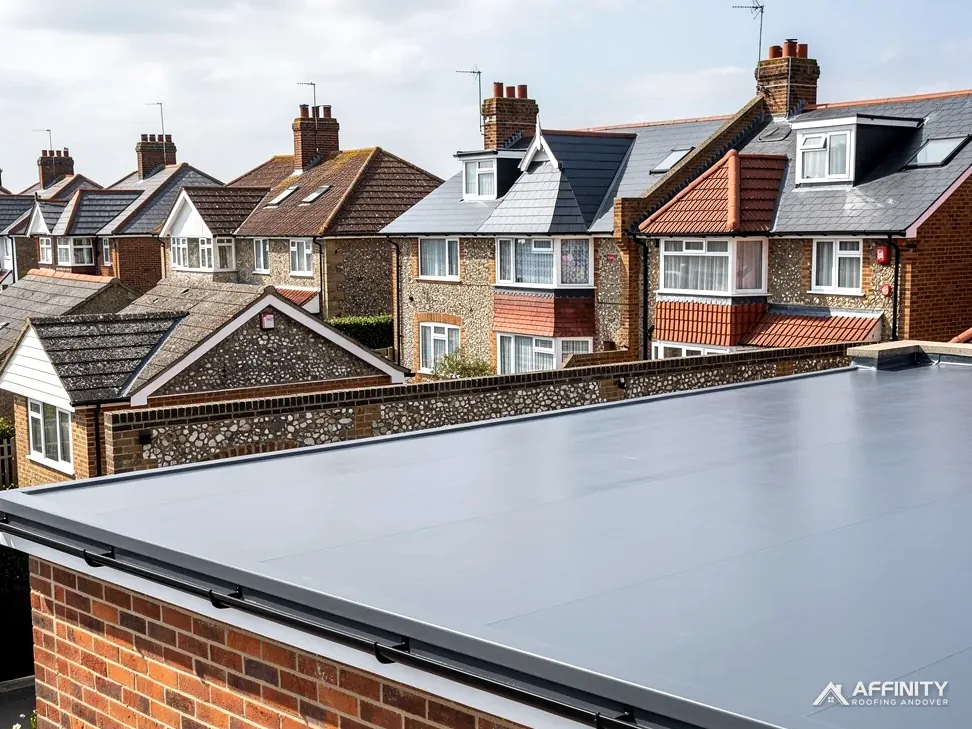
A flat roof built as part of a new extension is not a re-cover. It forms part of new development, so the rules for the extension decide whether permission is needed. Permitted development allows some extensions up to set limits, with conditions on materials, height and distance from boundaries, and larger or more prominent ones need an application.
The roof form matters in that decision. A flat roof can present differently from a pitched one in height and in how it reads from the street. The planning team at your council can advise, ideally before drawings are fixed.
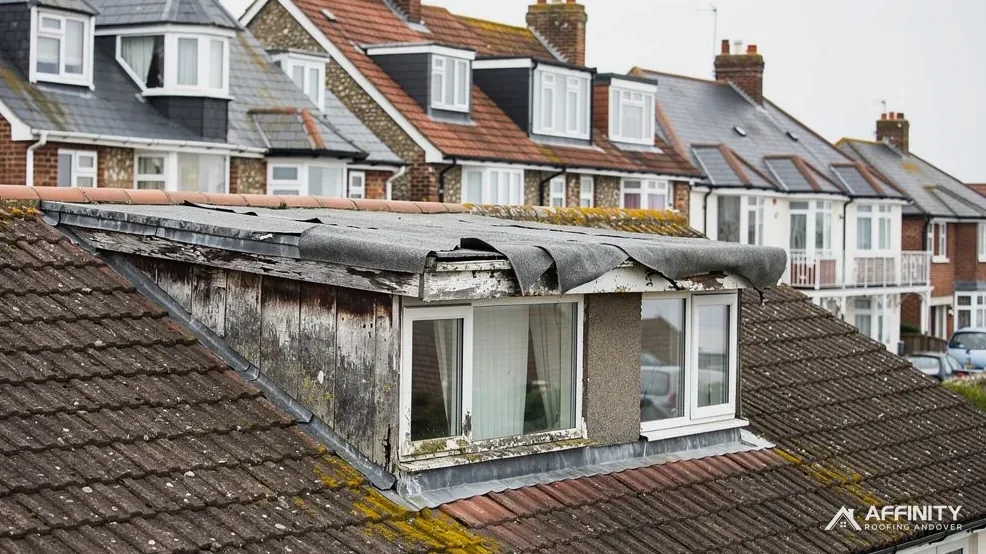
Dormers fall under Class B, a separate class. It allows some roof extensions up to a volume limit, 40 cubic metres in a terrace and 50 otherwise, though not on a principal elevation facing a highway, and not at all on article 2(3) land, which takes in conservation areas, National Landscapes and National Parks.
Flats are treated differently throughout. The legal definition of a dwellinghouse leaves out a block of flats and any flat inside one, so a flat's roof has no such rights. Check with the freeholder and the council before changing how it looks.
Special cases: listed homes, conservation areas, directions
Designations add controls. A listed house keeps its Class B and C permitted development rights, yet works that affect its character also call for listed building consent under section 7 of the Planning (Listed Buildings and Conservation Areas) Act 1990. A flat roof that is visible, or part of the original design, can matter.
A conservation area counts as article 2(3) land. Class C re-roofing has no article 2(3) exclusion, whereas dormers do. Some conservation areas also carry an Article 4 direction, which withdraws chosen permitted development rights across a defined area.
Directions differ by council. In Basingstoke and Deane, directions covering four town areas bring roof changes, fascias, soffits and guttering under control: Brookvale West, Basingstoke Town Centre, Fairfields and South View. Hart's directions date from 1998 and cover frontage roof slopes and chimneys. In every other council area, ask whether a direction touches your address, and ask to see the conservation area map.
None of this makes a like-for-like re-cover hard, but it explains why a quick call to the council is worth making. Our flat roofing page covers the work itself.
Planning, Building Regulations and what to ask
It helps to keep the two systems apart. Planning asks whether a change is acceptable in principle. The Building Regulations ask whether it is built soundly. A flat roof can be permitted development and still need building control.
On the building control side, the Planning Portal's guide is that a re-roof normally needs no application while it affects under 25 per cent of the building envelope and under 50 per cent of the roof. If the new covering weighs 15 per cent or more extra, approval and a structural check come into it. Insulation comes into play too, as our flat roof insulation answer explains.
Put three questions to your local planning authority: does the property have permitted development rights, is it within a conservation area or under an Article 4 direction, and is it listed. Put one to your building control body: what does it need to see.
The survey records the roof and its build-up with photographs. If a consent route looks likely, that is raised before any price is set, and the written quote then covers the agreed work as one total.