The ridge runs along the top of your roof and the verge finishes the slope at each gable end. Both are held on by mortar, by fixings or by a mix of the two, and both sit where the wind pulls hardest. When their hold weakens, the first signs are small and easy to miss.
A little grit on the patio, a thin dark line along the ridge or a gap where a tile used to sit tight can all mean the same thing: the bed is breaking down. The risk is not only the repair that follows. A loose tile can slide, fall into a garden or onto a path, and let rain into the roof space.
Everything below can be seen safely from the ground or from inside the loft. Please keep your feet on the ground while you check. This guide sits under our dry ridge and dry verge pages and is meant for the first look, before anyone calls out a surveyor. It also covers what to do after a storm, because the insurer will ask specific questions.
Reading the ridge from the lawn
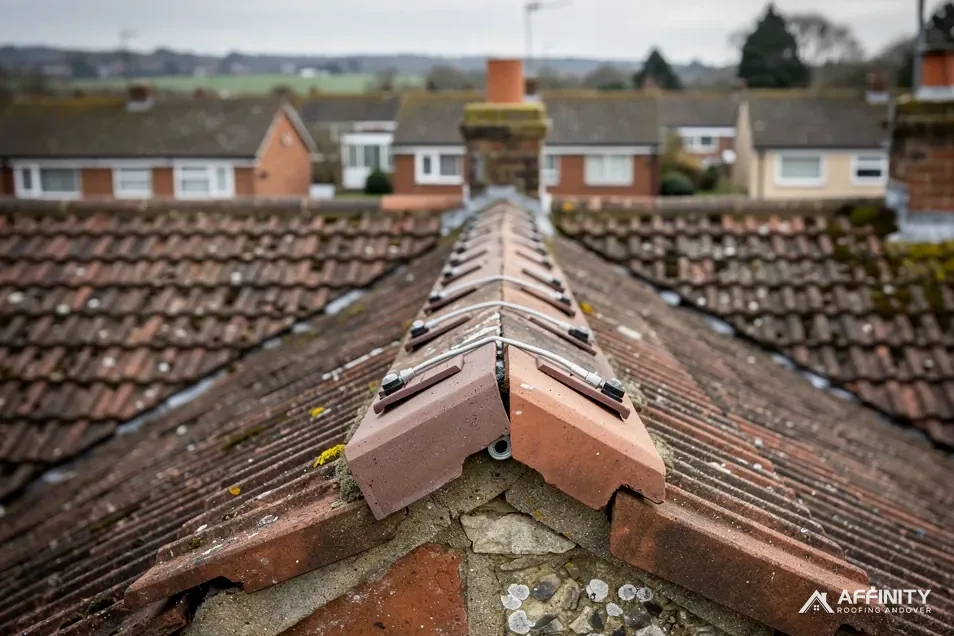
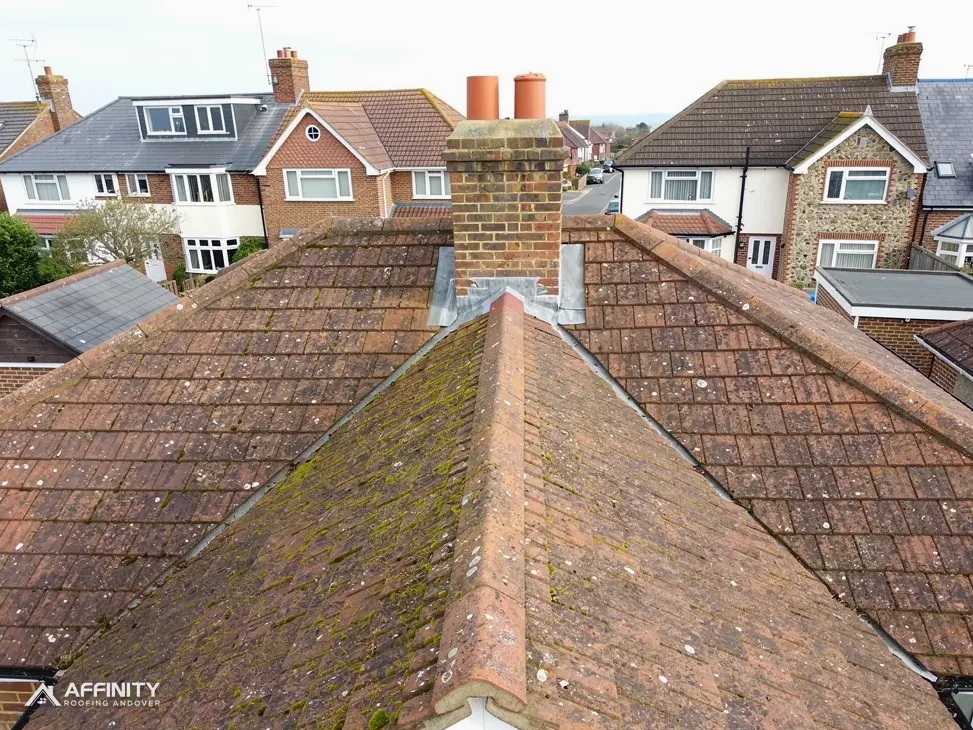
Move far enough back to take in the full ridge at once, then follow it with your eye as you would the edge of a shelf. A ridge in good order is a straight, even line with a continuous strip of mortar or a neat dry trim beneath the tiles.
The line
Dips, humps and a visible kink in the line suggest tiles have shifted or the timber beneath has moved. A tile standing proud of its neighbours or tilted to one side is probably no longer held at one end.
The mortar
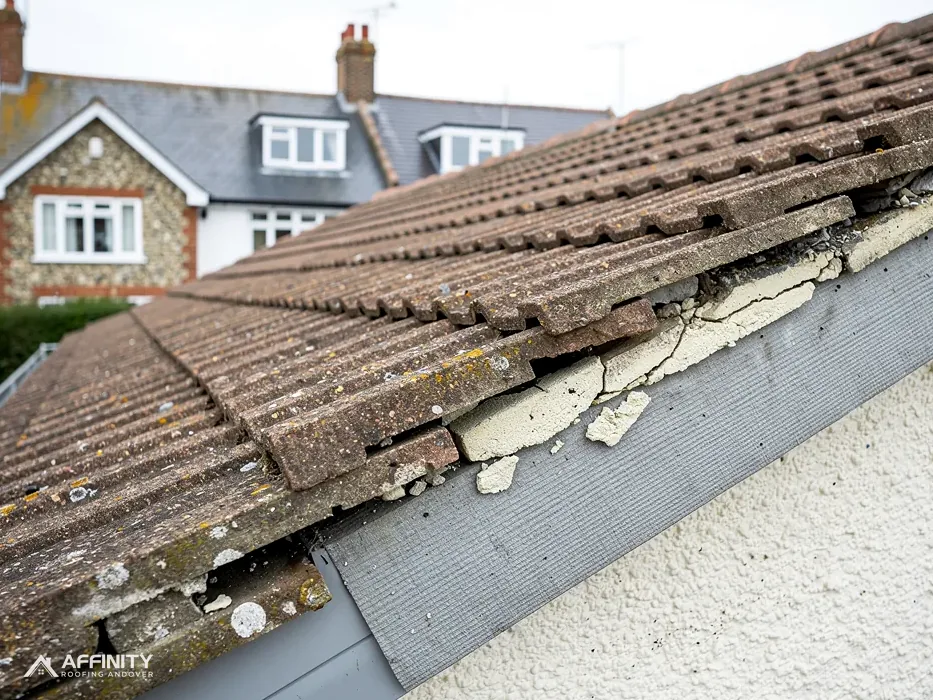
Look for dark gaps between the tiles and the roof below, hairline cracks in the mortar and sections where the bedding has gone completely, leaving the underside of the tile visible. Moss and lichen sometimes hide the damage, and fresh pale patches on the roof tiles below show where mortar has recently fallen. Compare today's view with an old photograph of the house if you have one.
Missing pieces
A gap where a ridge tile once sat, an end cap that has gone from the end of a ridge or a verge tile that has dropped away are obvious failures. Check the lawn and the beds under the gable for fragments, because a small piece of tile can be the first evidence.
Binoculars help
A pair of binoculars shows much more than the naked eye, and a phone camera zoomed in gives a record to send us. Photograph the ridge in good light from several spots, and take one from each gable end looking along the roof.
What the loft can tell you
The underside of the ridge is as informative as the top. If you have a safe, boarded route, or can look through the hatch with a torch, check the ridge from inside.
Daylight
Thin lines of light along the ridge mean there is a gap between the tiles and the structure. A pin-prick of daylight at a hip or a verge is the same story. Light is the clearest sign that water can get in as well, and a gap wide enough to see through is wide enough for wind-driven rain.
Damp and staining
Dark patches on the timbers near the ridge, damp felt, tide marks on the rafters and insulation that is wet or clumped near the top of a slope all point to water entering from above. They may have been building up for a long time before a stain showed on the ceiling.
Debris
Grit or crumbs of mortar on the loft insulation, on the ceiling boards near the eaves or in the top of the cavity are signs that bedding is breaking up and falling through. Our answer on why mortar falls off ridge tiles explains the causes.
Safety in the loft
Keep to boarding, or put your weight on the joists alone, since the plasterboard between them will not take a foot. Take a torch. If you are not confident, photograph from the hatch and send the pictures. A survey will include the loft side.
Rattles, rocking and other things you can hear
Not every sign is visual. A loose ridge can be heard.
Noise in the wind
A repeated tapping or a faint scraping from the top of the house on a blustery night often means a ridge or verge tile is moving against its neighbours. It may stop when the wind drops, which can lead to the problem being ignored until the next gale.
Rocking
A roofer on a secured ladder can test a ridge tile by hand, and one that rocks is no longer held. That is a test for a professional, not for an owner. If you have had a tradesperson up for another reason, ask them what they noticed.
Cracks across the tile
A crack across the barrel of a ridge tile is a failed tile, not a failed bed. It may sound the same in the wind, but the repair is different, and our short answer on what to do about a cracked ridge tile sets it out. Frost is a common cause: water soaks in, freezes, expands and splits the clay or concrete.
Why noise matters
A tile that moves under wind loads will work loose faster, and every movement breaks more of the bed. A rattle that starts on a windy night is a reason to book a look, not a reason to wait for spring.
The same signs at hips and verges
The ridge gets the attention, but hips and verges fail in the same way and for the same reasons.
Hips
A hip forms the sloping edge along an outward corner where two roof planes join. Its tiles try to slide down the slope all the time, so look for a hip tile sitting lower than the ones beside it, an opening where the hip meets the ridge and crumbs of bedding on the slope beneath. How the foot of a hip is held is covered in a separate page on dry hip fixing.
Verges
A verge runs down the gable end of a pitched roof. Look for cracks along the mortar fillet, a visible gap between the edge tile and the wall, tiles that tilt outwards and lumps of mortar in the gutter below. A verge that has started to open lets wind get under the edge tiles, and the edge is where uplift is strongest.
The wall beneath
Water entering at a verge may run down inside the gable wall, causing damp patches on a bedroom wall near the ceiling. Check the top corners of the gable wall inside for stains or blistered paint.
Gutters and downpipes
Debris at the foot of the downpipe or in the gutter beneath the verge is worth a look. Blocked gutters can make a leak worse, and the mortar in them is a clue that the edge is losing its hold.
After a storm: loss, evidence and your insurer
A gale is the usual moment when a weak ridge finally lets go. If you find ridge or verge tiles missing after one, a short sequence helps.
Make safe and photograph
Keep people clear of the ground beneath the damage. Photograph the roof from the garden, note the date and keep any fallen pieces. IStructE advice on storm damage treats a dated set of photographs as the backbone of a claim. A temporary cover that stops further damage is sensible, and what you spend on it should be receipted.
Tell the insurer first
Phone the insurance company before ordering permanent work, because each policy words its storm cover differently. The Financial Ombudsman Service describes a storm as usually violent wind, often accompanied by rain, hail or snow, and it adds that the Beaufort Scale is considered. When it reviews a refusal it asks three things: did a storm happen, does the damage fit one, and was the storm the main cause?
Why condition matters
A complaint about a roof that was already in poor shape, where the owner knew it, or where the storm only revealed a fault that was already there, is unlikely to be upheld, according to the Ombudsman. Policies commonly exclude wear and tear and damage that builds up gradually. No outcome can be promised, as the insurer decides. Our answer on ridge tiles blown off and insurance covers the basics, and a dated survey with photographs shows what condition the ridge was in.
Free help
The Financial Ombudsman Service helpline is 0800 023 4567 if a claim is refused.
Why acting early costs less
Loose tiles do not get better. Each gust adds a little movement, each frost widens a crack and each shower runs into a gap. A repair that would have been a re-bed in spring becomes a rebuild by the following winter.
What delay allows
Water that gets under the ridge wets the felt, the battens and the ridge timber. Wet timber softens and the fixings loosen. Insulation soaks and stops working, and the ceiling stains. By then the work includes more than the ridge.
What an early look finds
A survey in good time often shows that a tired but sound ridge needs only a re-bed with fixings, which is the lighter option. If the tiles have failed or the line has gone, a dry-fix ridge usually makes more sense. Our guide on re-bedding ridge tiles when the mortar is still fine explains which roofs qualify.
Making a leaking roof safe
Where rain is getting in, a leaking roof gets made safe first. The survey and photographs of the damage follow once it is covered.
Not every sign means the same job
A single missing end cap, a cracked tile or a loose verge piece is a small repair. A sagging line, a ridge full of gaps or a run of loose tiles is a bigger one. Sorting one from the other is the point of the survey, and you will see the evidence for whichever we find.
What to send us
Photographs of the ridge and any gable ends, taken from the garden, with a note of when you noticed the problem and whether there was a recent storm. Mention the age of the roof if you know it, and whether anyone has repaired the ridge before, because earlier patches often show up as a different colour of mortar. That is enough to book a survey.