The short answer
Yes, in many cases. Dry ridge systems exist for clay ridge tiles, but each is built around certain tile shapes, so the data sheet decides. Clay is often chosen for its look, so the finished ridge should keep the same profile and colour. In a conservation area a council can ask for clay to be kept, so check with the planning team first.
Systems that suit clay
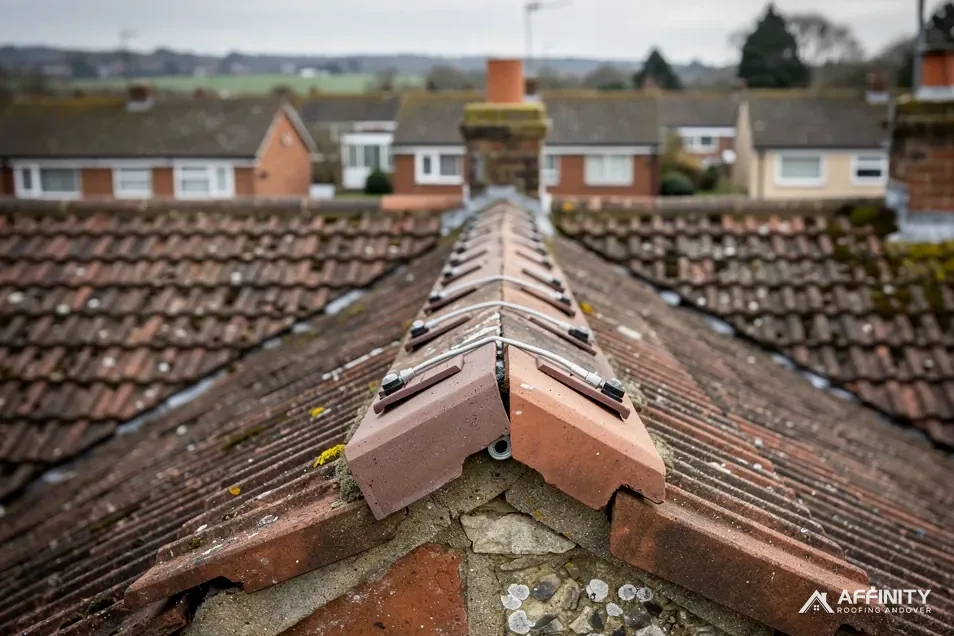
Clay ridge tiles come in several shapes and sizes, and a dry system is designed around a range of them. The units that carry the tiles, the clips that hold them and the strip beneath all have to fit the profile in front of you. A system that suits a half-round clay ridge may not suit an angled one.
Makers publish the tile types each system covers. Marley, for one, produces both clay and concrete tiles and publishes guidance for each. Check the data sheet for your ridge tile by name or shape, and for the batten and rafter details it assumes.
The system should be tested to BS 8612:2018, which lets a maker say it has been assessed. Clay is no barrier to that, because the standard applies to the system as a whole.
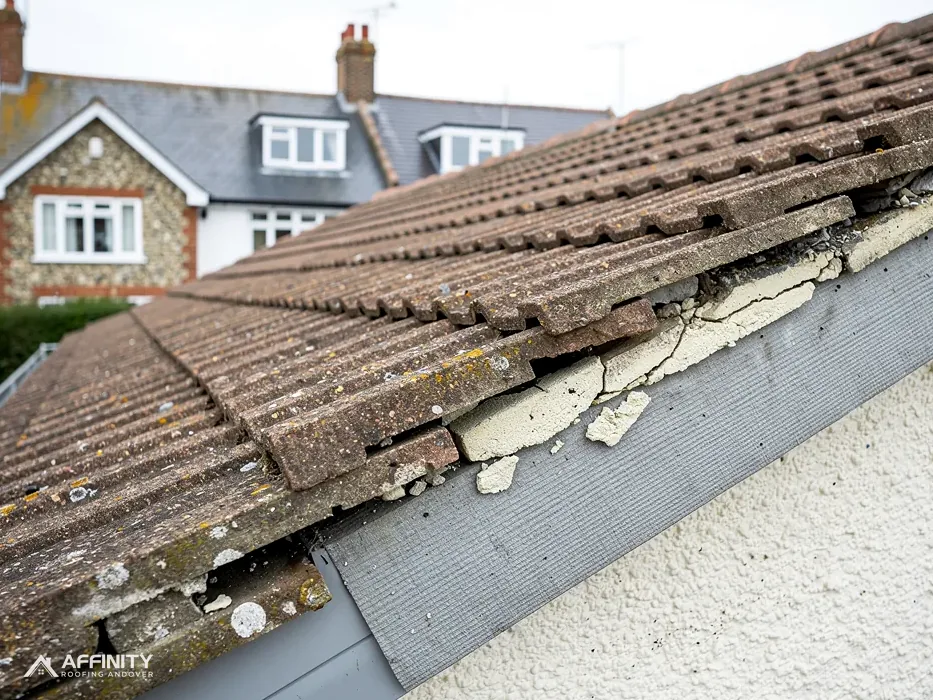
If your ridge tiles are reusable, the roofer can often keep them and refix them into the dry system. That saves matching, and it keeps the weathered look. Chipped or cracked tiles can be replaced one by one. Reusing sound ridge tiles is a fair request.
If no dry system suits your profile, a mortar bed with mechanical fixings is the alternative.
Keeping the look
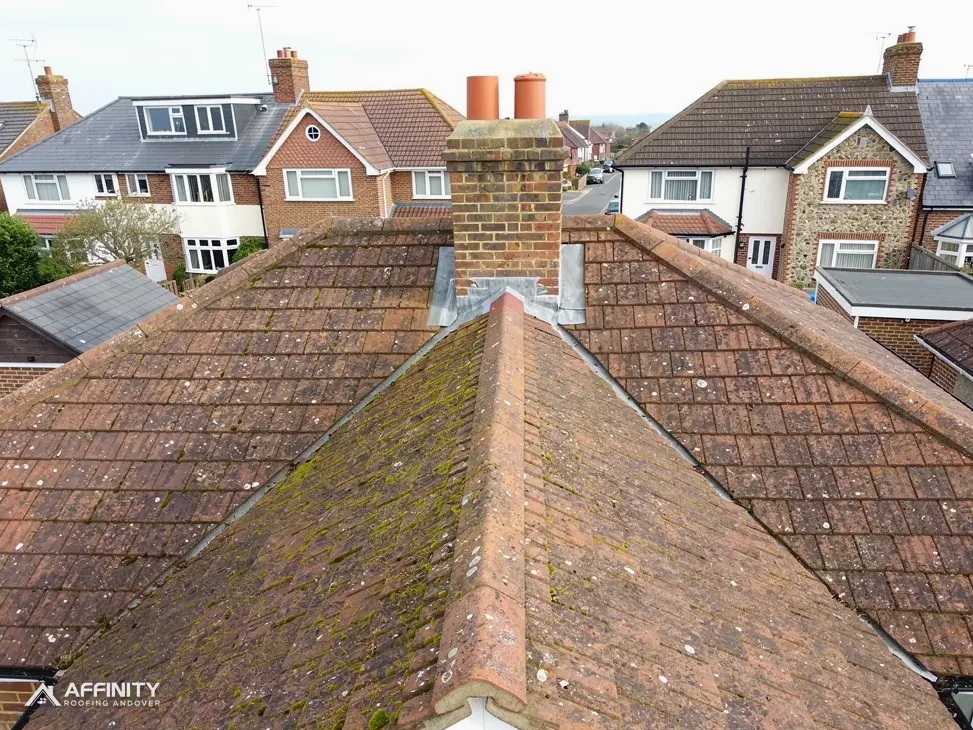
A clay ridge has a texture and colour that change over time. New tiles are brighter, and weathered ones carry moss, lichen and patina. Mixing the two leaves a patch that stands out for a few seasons, though it settles as the new ones age.
The profile matters as much as the colour. Rounded, angular and crested ridges each give the roof line a different character, and a dry system that changes the shape changes the look from the street. The best result keeps the original shape, with the dry parts hidden underneath.
Visible parts need thought. End caps, ridge-to-hip junctions and any ventilation strip should be chosen to match the tile colour, so they do not catch the eye. Our guide to types of ridge tiles explains the shapes.
Mortar pointing, where used, is part of the look too. Some owners want the mortar line to remain visible, and a dry system can leave it out. If the look matters, say so at the start and we will photograph options against your own roof.
An honest dry job is one you can barely tell from the old ridge at ground level.
Conservation areas and clay roofs
Clay roofing is often what a council wants to keep. Basingstoke and Deane's guidance for its Article 4 areas wants its original slate and clay roofing to remain, and treats modern substitutes as unlikely to win approval. That guidance is Basingstoke's, for its own areas, and no national rule says the same.
In general, re-covering a house roof is permitted development under Class C, and Class C is not removed in a conservation area. An Article 4 direction, which removes chosen rights inside a mapped zone, can change that. Listed houses need listed building consent as well.
Planning and the product are separate questions. Keeping the clay tiles and changing only the fixing underneath is usually a smaller change than replacing clay with concrete. Our answer on a dry ridge in a conservation area explains the checks.
For councils other than Basingstoke and Hart, the planning team can say what a direction covers. Ask your planning team if any direction reaches your street, and file their answer.
Photographs of the existing tiles and the proposal make the answer quicker.
What we check on the survey
The survey covers the ridge tiles, the mortar, the fixings and the timbers beneath. We note the tile profile and the pitch, photograph each, and compare them with the data sheets of the systems that could suit.
If the existing tiles are sound, we say how many can be reused. If some are cracked, we say how many need matching and where a close match can be found. If the ridge timber is soft, we say what has to be put right first.
We also say when a dry system is not the best answer. A short ridge in good condition, on a roof where the look is critical, may be better served by re-bedding in mortar with fixings. Our guide to ridge tile re-bedding covers that choice.
Costs depend on length and access. Which? puts one new ridge tile at £80 to £300 ex VAT, and MyJobQuote puts a replacement ridge at £225 to £550, both typical UK ranges. The price for your roof comes as one written total after the visit, with scaffold included where needed.
The dry ridge and verge hub explains each system and how it is fixed.