The short answer
Ridge tiles are bedded on a sand and cement mortar, mixed to the standard and the tile maker's guidance rather than to a number from memory. The more important point is that mortar no longer works alone. Since BS 5534 was revised in 2014, every ridge and hip tile is expected to carry a mechanical fixing too, so the mix is a bed and a seal, not the thing holding the tile down.
What goes into a ridge bed
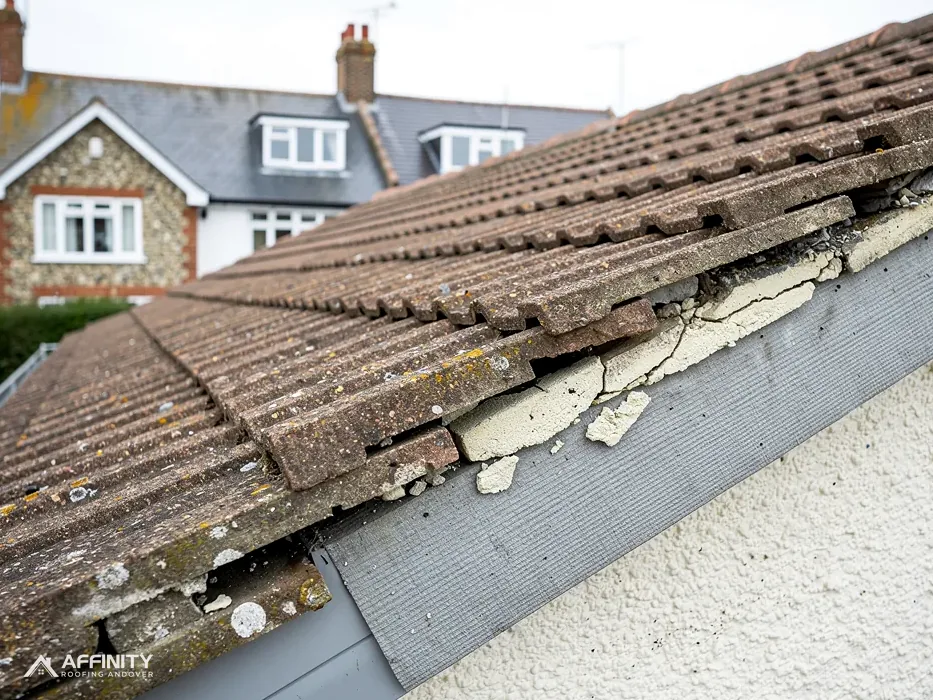
Curved tiles cap the crest of a roof, and the line they make is the ridge. Each one sits in a bed of mortar, a mix of sand, cement and water, spread along the join with the slope below. The exposed band along the edge is called flaunching, and it is shaped to shed rain away from the joint.
The proportions come from the standard and from the tile manufacturer, and you can ask the roofer which one is in use. BSI shows BS 5534:2014+A2:2018 as current, and it covers laying roof slates and tiles. Manufacturers publish their own advice for their own tiles, and where the two differ, the maker's data sheet for the product in your hand is the one to follow.
A ratio copied from a web page is the wrong tool for a real roof. The right mix depends on the tile, the sand, the exposure and what the bed is for, and a roofer who guesses at it may do harm, so we work from the maker's data sheet.
What does matter is that the mix is made fresh, kept workable, and laid onto clean, damp tiles. Old mortar that has started to set should never be knocked back up with water.
The mortar is no longer the main hold
Mortar carries weight well and resists a squeeze. It does not resist being pulled, and the load on a ridge tile in a high wind is a pull. That mismatch is the whole reason the rules of thumb moved. Marley describes the 2014 revision of BS 5534 as the point where a mortar bed stopped being accepted as the sole grip on a ridge or hip tile.
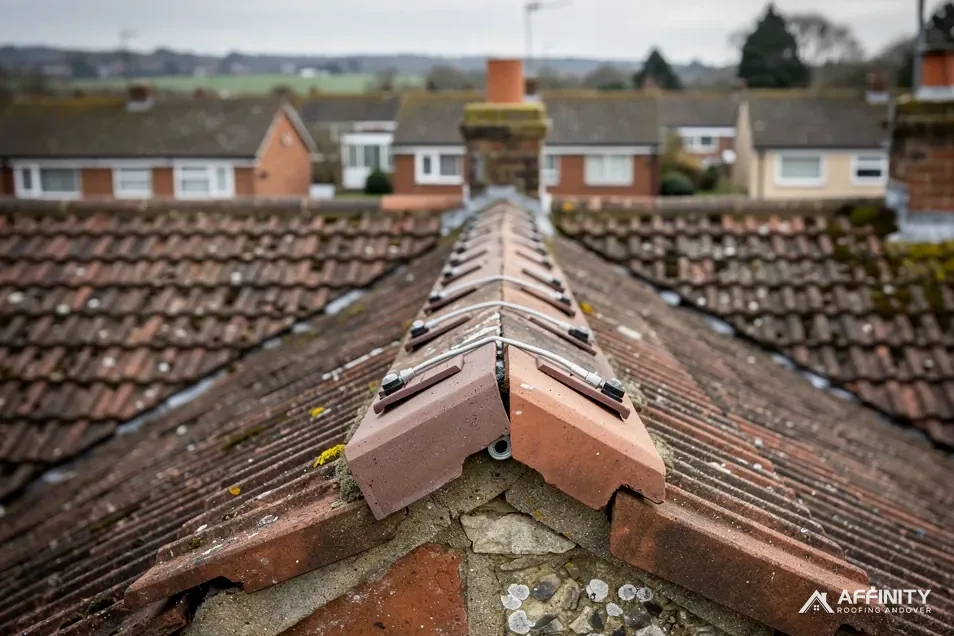
The consequence is simple. Every ridge tile needs a mechanical fixing, and the mortar sits alongside it. It fills the bed, seals the joint and gives the roofline a neat finish, but it is no longer asked to resist a lifting wind unaided.
Mortar itself is not banned. A ridge bedded on mortar with proper fixings is a sound way to build one, and it suits houses where the look of a traditional ridge matters, such as older terraces and cottages. The point is not to choose a better mix. It is to stop asking any mix to resist a pull.
A fully dry system takes mortar out of the structural role altogether, as our answer on BS 8612 explains.
Weather and workmanship on the day
Mortar needs time to cure, and the conditions during that time affect it, which is why mortar work and the weather are always talked about together. A bed laid in strong sun can dry too fast and weaken. A bed laid just before a downpour can wash out its fine material, and one laid before a frost can be spoiled while still soft.
So the day for a mortar ridge is chosen with the forecast in mind, and the length of ridge opened in a session is kept to what can be finished and protected. If rain is coming, we cover the fresh work.
Workmanship counts as much as the mix. The tile and the bed should be damp enough to bond without being sodden. The bed should be full, without voids, so water cannot track up behind it. The flaunching should be trowelled to shed water and finished cleanly with no feather edge that will break away.
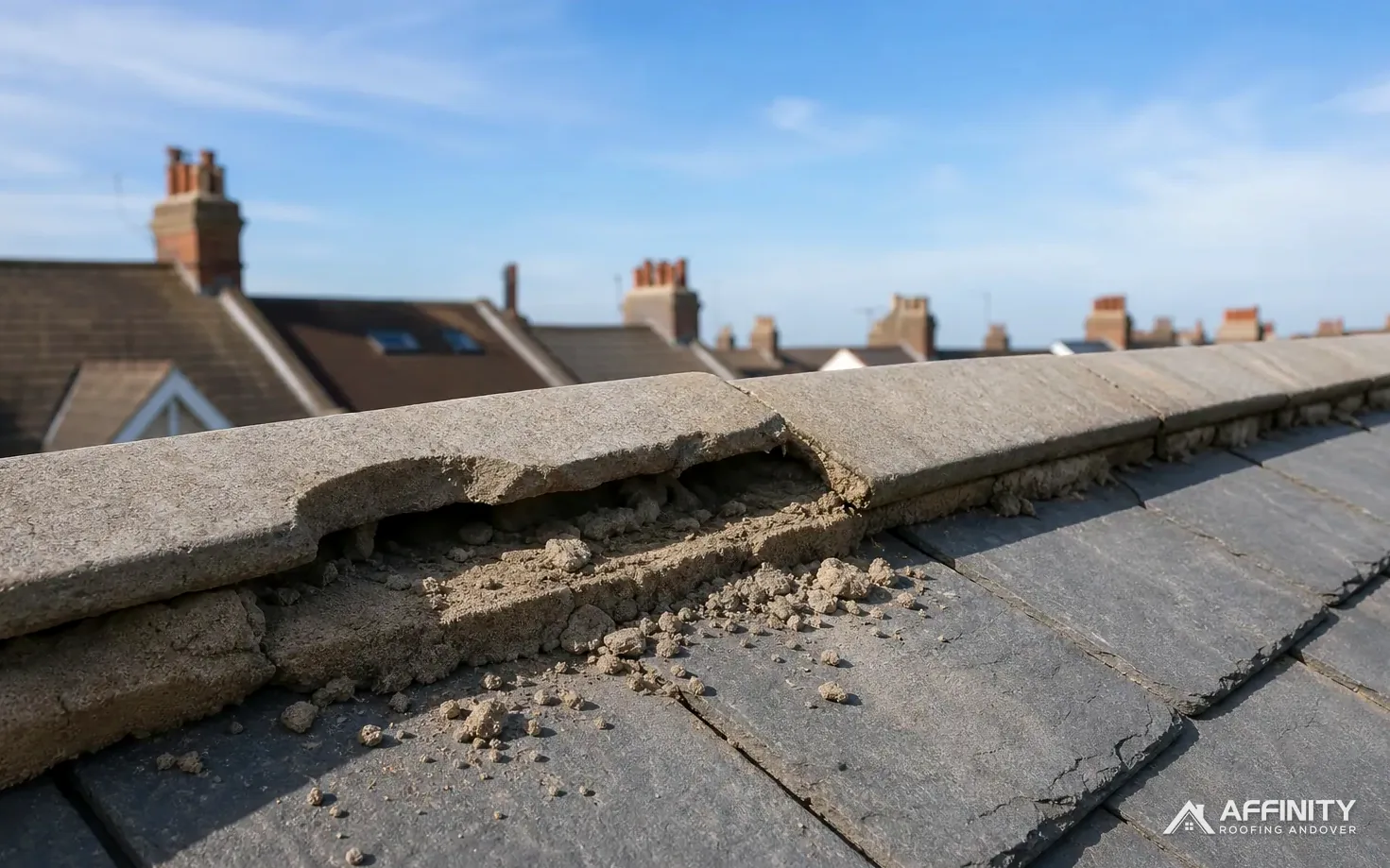
These details are why a patched mortar ridge often fails soon after, and a properly bedded and fixed one does not. Our answer on mortar falling off ridge tiles explains the failure from the other side.
Mortar bed or dry system
The choice between a mortar bed with fixings and a fully dry ridge comes down to the roof. A dry system keeps its fixing role entirely mechanical, uses a ventilated strip under the tiles in place of the bed, and needs no curing time. It is the more common choice on newer roofs and where speed or cold weather matter.
A mortar bed with fixings keeps the traditional look of a rolled, flaunched ridge. On an older house, or one in a conservation area, that look may be the reason to choose it. Check with the council's planning team whether your address has any control over changes to the roofline.
Either way, the survey comes first. We look at the existing bed, the batten underneath and the tiles, and tell you which build suits the roof. The dry ridge and verge page covers both.
On cost, Which? lists a new ridge tile at £80 to £300 excluding VAT (November 2025), and MyJobQuote gives £225 to £550 for a ridge in its October 2026 guide. The length of the line and the access move the price more than the mortar does.