The short answer
There is no fixed time, because a dry ridge is measured in metres of ridge line rather than in days. A short ridge on a bungalow is a far smaller job than the ridge and hips of a detached house. Four things decide the time on site: the length of the line, how the roof is reached, the condition of the batten underneath, and the weather on the day.
Length of line, and the hips that come with it
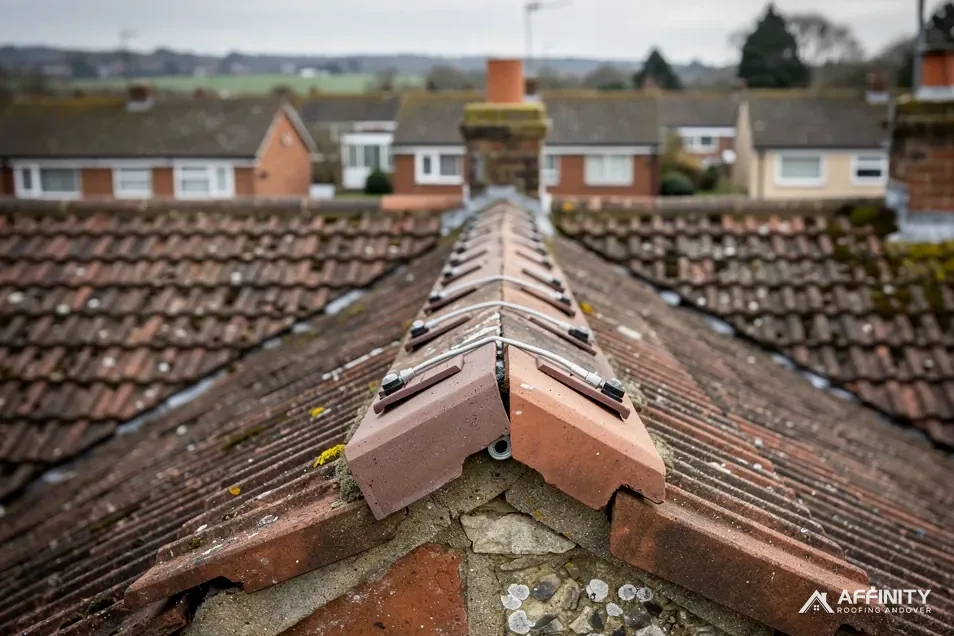
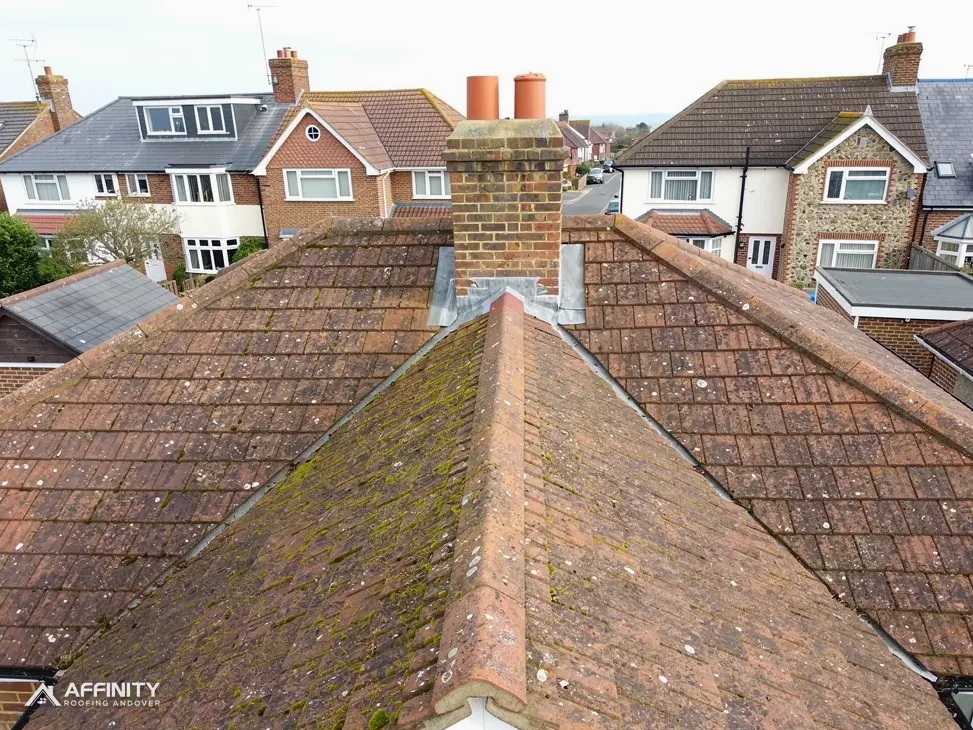
Along the crest of the roof, curved tiles sit as a cap. That cap is the ridge. A hip is the slanting crest that runs down to an outside corner of a hipped roof, and it is capped the same way. A simple gable-ended house has one ridge and nothing else to cap. A hipped roof has the ridge plus a hip running down each corner, and every metre of that line has to be stripped, re-set and fixed.
So the first question we ask is how much line there is. A garage or a porch roof is soon done. A long terrace roof, a roof with several ridges, or a house with a crossing wing takes longer, because each junction between lines needs its own cut and fit.
Dry-fix also has a few steps that mortar work does not. The old mortar bed is removed, a batten is checked or fixed along the apex, a ventilated strip goes down, and the tiles are clipped or screwed through to the batten. Each step is quick on its own, but they run in sequence along the whole length, and the run cannot be hurried by adding a second pair of hands at the same spot.
When we survey, we measure the line and put the number of days we expect on the quote.
Reaching the ridge
A low roof can often be reached with a roof ladder hooked over the crest and a secure footing. On a two-storey house the ridge is a long way up, and a proper working platform has to come first, with edge protection and room to stack the old tiles.
Where a scaffold would stand on a road or pavement, the highway authority licenses it under Highways Act 1980 s169. For Hampshire addresses that means Hampshire County Council, which wants ten full working days between application and start, and expects the scaffolder to apply for you. Inside your own boundary, with nothing over the footway, no licence comes into it. That gap in time is often what sets the date of a ridge job.
That lead time is separate from the roofing itself, but it is why the date of a ridge job is sometimes set by the scaffold rather than by the roofer. Our answer on scaffolding for ridge tile repairs explains when a ladder is enough.
With the platform up, the work itself moves steadily. Tiles come off in order and are stacked safely. The old bed is cleared into bags, so nothing lands in your garden or on the neighbour's side of the fence.
Weather decides more than the roofer does
A dry ridge does not need mortar to cure, which is a real advantage. Mortar wants dry, mild conditions to set, and a frost or a downpour soon after laying can spoil it. Mechanical fixings do not have that problem, so the work is less bound to the forecast than a mortar ridge would be.
Wind is still a limit. A ridge is the highest line on the roof, and lifting long curved tiles into a gust is a poor idea for the person holding them and for the people below. Rain matters less for the tiles than for what is underneath: once the old bed is off, the apex is open until the strip and tiles go back, so we do not strip more line than can be closed again before the weather turns.
That sequencing is why a ridge job rarely feels dramatic from inside the house. We work in lengths, close each one, and move along. If the forecast turns, the open section is covered and the rest waits for another day, which is a delay worth accepting. Our answer on dry ridge in cold weather covers the colder months in more detail.
Planning the visit with you
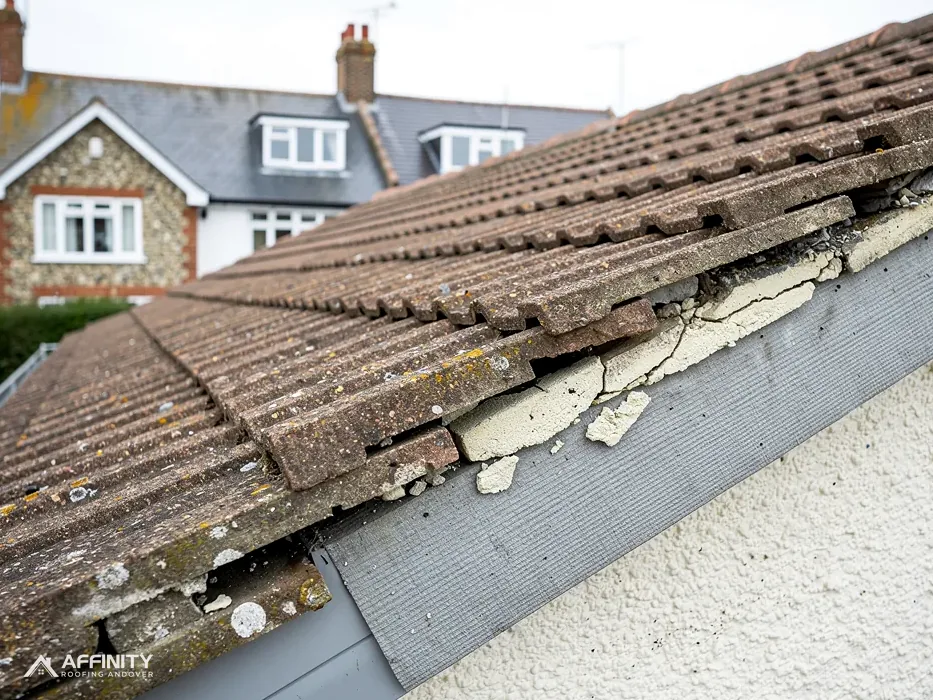
Before any date is fixed, we survey the ridge, photograph what is there, and measure the line. That tells us whether the old tiles can go back, whether the batten is sound, and how the ridge meets the verge, the sloping edge of a gable wall.
If the timber underneath has gone soft, the job grows, and you see the photographs of it before we change the plan. A ridge that is sound underneath is a shorter visit than one that turns out to need new timber. If the tiles are whole and the batten is good, the work is re-fixing, which is quicker than supplying and laying new tiles. The dry ridge and verge page sets out the whole job.
The cost follows the same logic. The ridge length, the access, the tiles and what the survey finds set the price, and MyJobQuote's guide, updated in October 2026, gives a typical UK range for a ridge of £225 to £550. Your written quote gives a single total, and the days we expect to be on site are named in it.
Once work starts, you are told each morning what has been done and what comes next.