The short answer
In most conditions, yes. A dry ridge has no mortar to cure, so frost cannot ruin fresh bedding as it can on a mortar ridge. The limits are ice on the tiles, strong wind at the crest of the roof, and any sealing strip or adhesive with a minimum working temperature on its data sheet. The job waits when the roof is icy or the gusts are up.
No mortar to cure
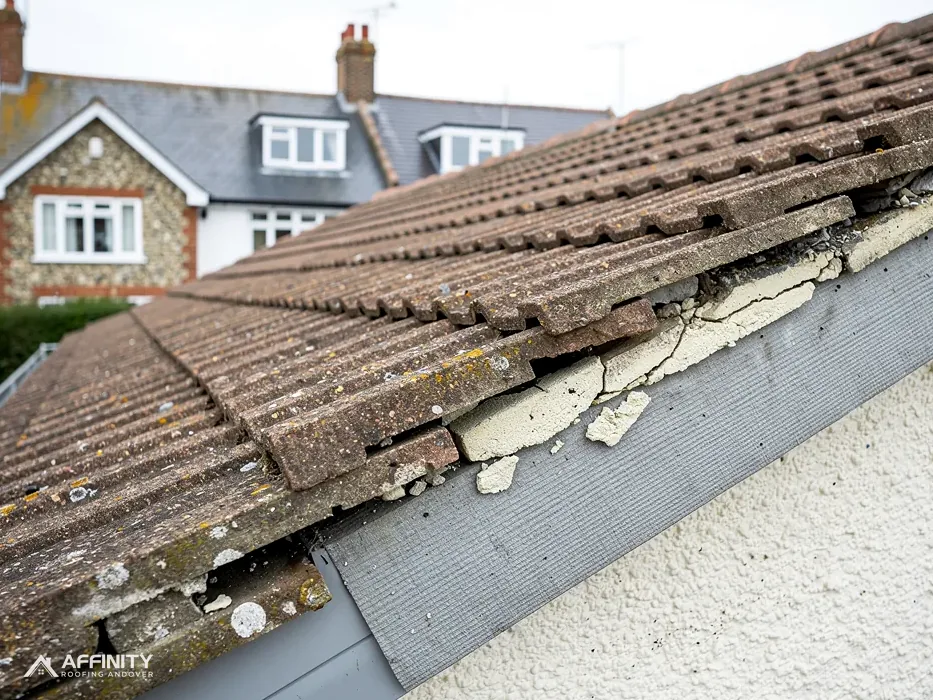
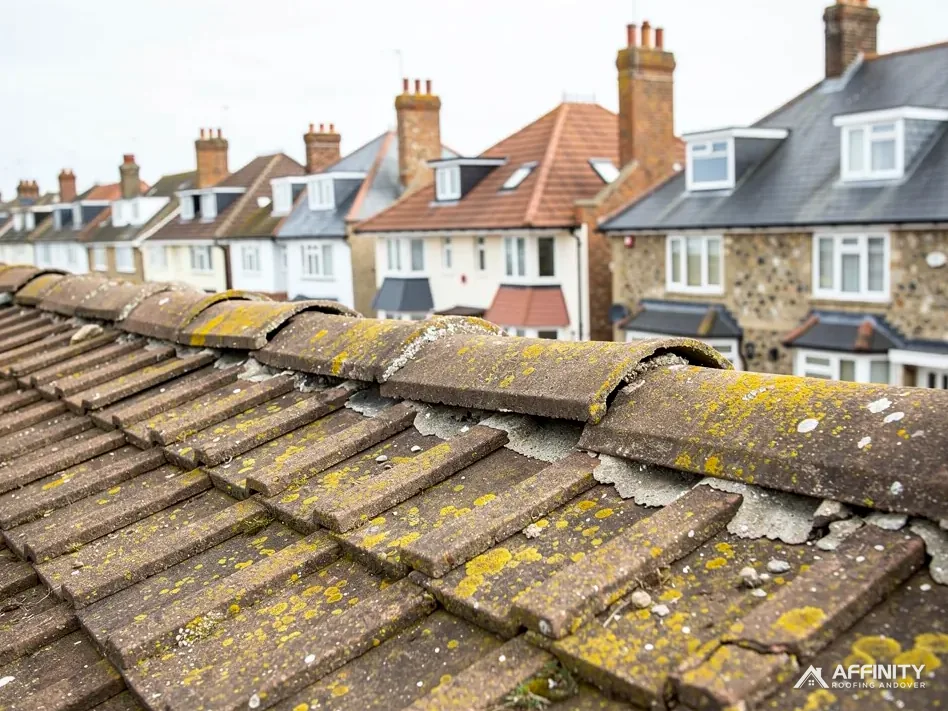
Mortar sets by a chemical reaction that needs water and a reasonable temperature. In freezing weather the water in fresh mortar can turn to ice before it has set, which damages the bed and leaves it weak. A mortar ridge laid in a cold snap can fail within a season, so roofers avoid it or protect it.
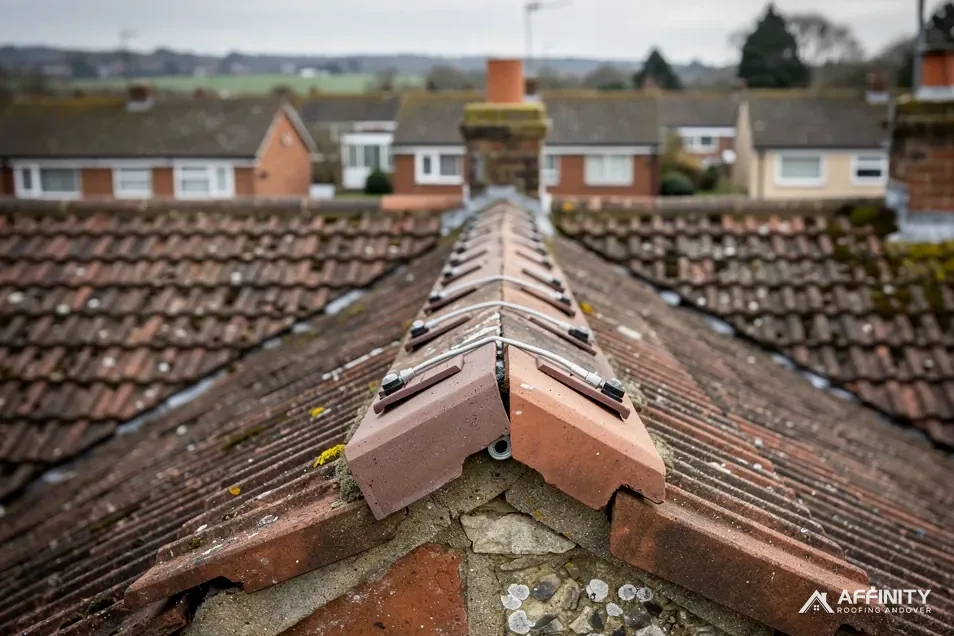
A dry ridge sidesteps that problem. The tiles are held by mechanical fixings, so there is nothing to cure and nothing to protect from frost overnight. That is one of the practical reasons the trade has moved towards dry systems, and the 2014 revision of BS 5534 pushed it further by ending reliance on mortar strength by itself for ridge and hip tiles.
That does not mean a dry system ignores the weather altogether. Some include a bedding strip, a sealing tape or a ventilation roll that has its own handling temperature, and the maker's data sheet states the range. Our guide to a ventilated dry ridge explains those parts.
The point is that cold on its own rarely stops a dry ridge. The conditions that come with it do.
Ice, frost and wind
The first limit is the surface. A roof with frost or ice on it is slippery, and the ridge is the highest point on the house, with the longest fall. A cold, bright morning can leave a film of frost on the tiles that lasts until the sun reaches it. We wait for that to clear, and in a hard freeze the job waits.
The second is wind. A cold front often brings gusts, and gusts are stronger at roof height than on the ground. Ridge tiles are light enough to be caught by the wind as they are carried up and set, and a worker on a ridge is exposed to it. Wind stops work on its own.
Rain and snow add to it. Wet tiles are slippery whatever the temperature, and snow hides the edges and the fixings. The roof is closed up before we leave each day, and the forecast is checked before a ridge is opened.
These limits apply to any work at height, not just dry ridge. They are why a firm that promises a fixed date in winter without conditions is making a promise it cannot keep.
Cold and the parts of a system
Cold can affect some components. Plastic clips and strips become less flexible, and a sealing strip with an adhesive face may not bond properly if the surface is damp or frozen. The data sheet sets the working range, and following it is part of fitting the system as tested to BS 8612.
Tiles themselves are less forgiving when frozen. Clay and concrete can be brittle in the cold, so a dropped or knocked ridge tile is more likely to chip or crack. Careful handling is normal, and it matters more in January.
Fixings need the right batten. Frozen or very wet timber is harder to drive into, and screws can split a batten that is brittle with cold. A pilot hole or a pause may be needed.
Short daylight is a practical limit too. A ridge is a long run, and a job started in the morning must be finished and made safe before dusk. If it cannot be, we do not open it.
None of these limits mean a winter job is unwise. They mean it is planned around the weather.
Deciding whether to wait
Ask the roofer three questions. What does the data sheet say about working temperature? What will they do if there is ice or wind on the day? How will the ridge be left if the job is interrupted? A clear answer shows the firm has planned for the season.
If the ridge is already failing, waiting has a cost as well. Loose or missing tiles can let rain into the roof, and a temporary repair may be needed to hold the line until conditions allow a lasting repair. Our answer on cracked ridge tiles covers the stopgap.
If the ridge is sound and only due for upgrading, a spring job is often a calmer choice. There is no rule for it, and a settled cold spell in winter can be as good as a wet week in April.
We look at the forecast, tell you what the weather allows, and move the date when it does not. You get the programme with the survey, and the price is a single written total that does not change because the day did.
The dry ridge and verge hub explains the systems.