The short answer
A hip iron is a metal bracket fixed at the foot of a hip, where the sloping hip line meets the eaves. It supports the lowest hip tile and stops the line of tiles above it creeping down the slope. It is screwed to the hip rafter or the roof structure, not just bedded in mortar. A missing or loose hip iron is a common reason for slipped hip tiles.
What a hip iron does
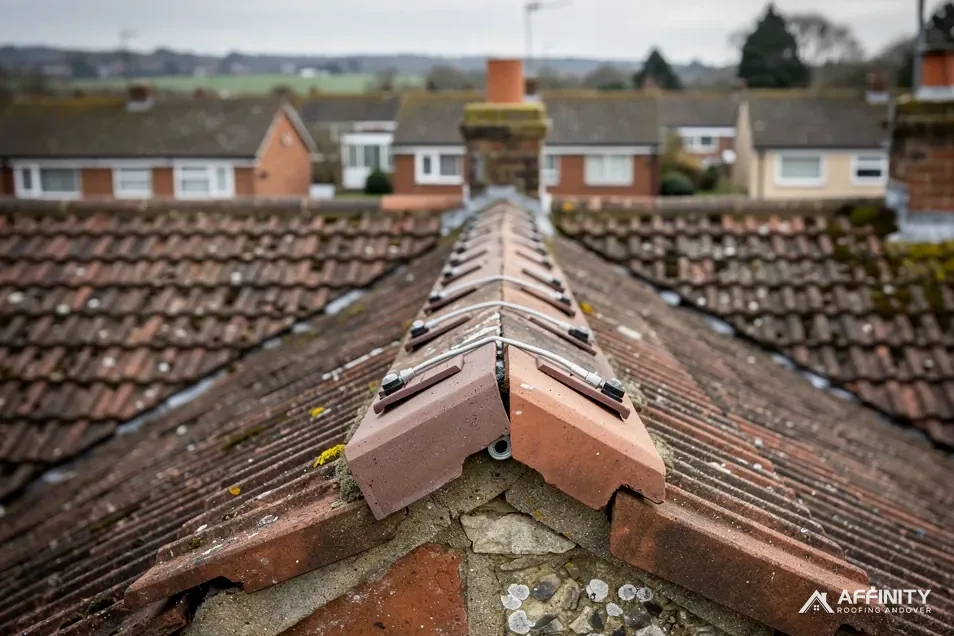
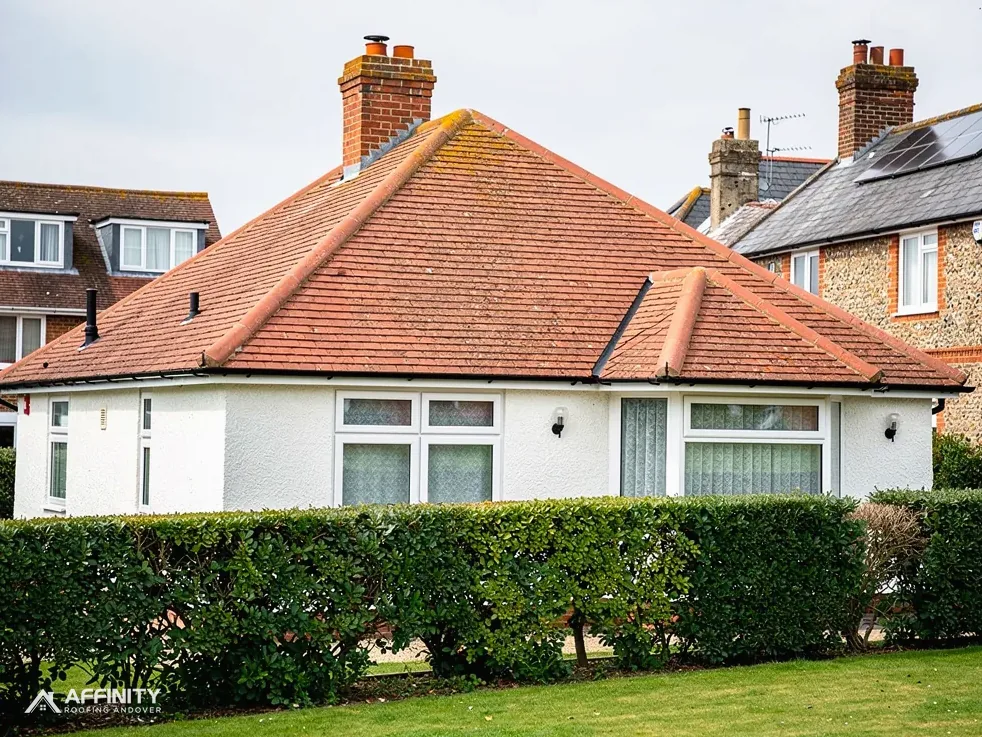
A hip is the sloping line on the outside corner of a roof, running from the ridge down to the eaves. The tiles along it are cap tiles, set over the meeting of the two slopes. Because the hip is steep, those cap tiles want to slide downhill, pulled by their own weight and by vibration in the wind.
The hip iron is the stop at the bottom. It is a bracket, shaped to cradle the end of the lowest hip tile, and it is fixed to the structure so that the whole run above rests against it. Without it, the weight of the line of tiles is carried by the mortar bed alone, and the mortar slowly gives way.
Hip irons are usually made of galvanised steel or stainless steel, so they resist rust. They are small enough to be missed from the ground, tucked under the end of the hip at the eaves.
The idea is simple. A tile on a steep slope needs something to stop it, and the hip iron is that something. It does not do the main fixing, which is the job of the clips or nails along the hip, but it is the safeguard at the bottom.
How it is fixed
A hip iron is screwed or nailed to the hip rafter, the sloping timber that forms the backbone of the hip, or to a suitable part of the roof structure at the eaves. The fixing must go into sound timber, because the load on the iron builds up as tiles settle against it.
The shape varies. Some irons are a flat strap bent into a hook, some are a small cradle, and some form part of a wider hip tray or a dry-fix hip system. The right one depends on the tile and the system, and the maker's data sheet states which to use.
On a traditional mortar-bedded hip, the iron sits beneath the lowest tile and the mortar bed is built around it. On a dry-fixed hip, the system has its own parts, and the iron is part of that set. Our guide to the dry hip system explains how the parts go together.
Fixings should be corrosion-resistant. A steel screw in a damp eaves position will rust, and the iron will lose its grip. Stainless or coated fixings last longer.
It grips only as well as the timber behind it allows, so a soft or rotten hip rafter has to be repaired first.
Signs that a hip iron has failed
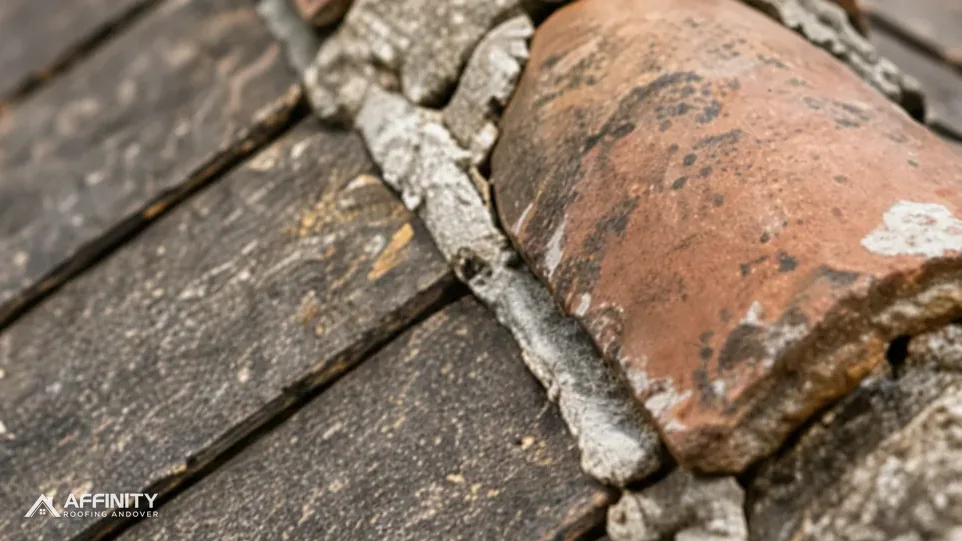
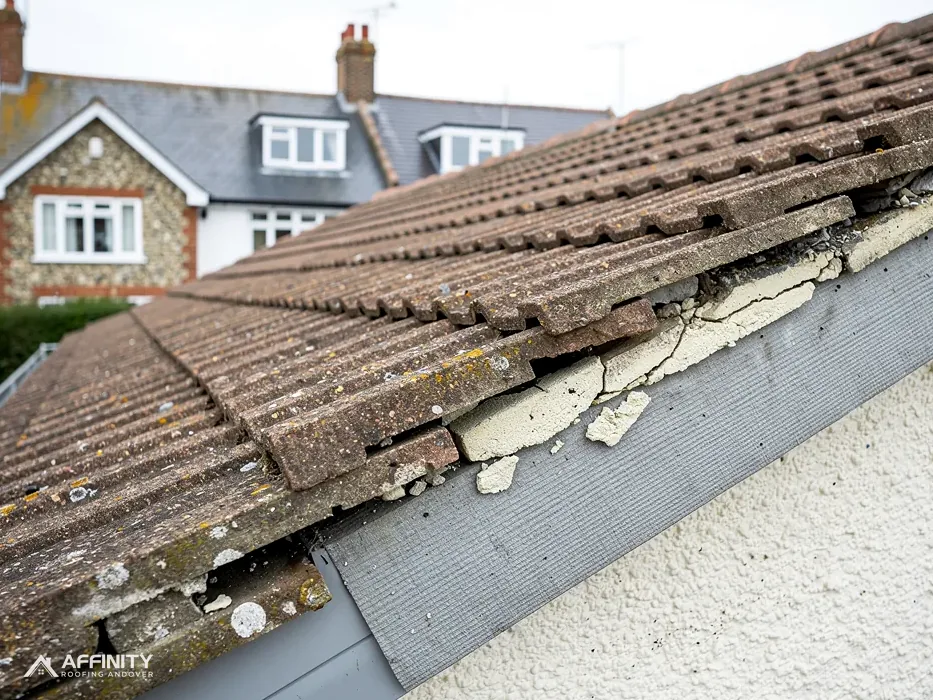
A failed hip iron shows in the tiles. The lowest hip tile may have dropped, leaving a gap at the eaves, or the whole line may have crept down so that the top of the hip shows a gap below the ridge. Tiles may tilt or sit out of line, and the mortar between them may be cracked.
From the garden, check the foot of each hip. If you can see the iron, check that it is straight, firmly fixed and not rusted through. If you cannot see it, a lowest tile that has slipped or lifted is a good sign that it is missing or loose.
Our guide to the signs of loose ridge tiles covers other things to look for. Hip tiles and ridge tiles fail in similar ways, and a roof with one problem often has the other.
A slipped hip tile is a safety issue as well as a leak risk, because a tile that comes off can fall. Keep people clear if you can see one hanging.
Do not climb to check. The eaves end of a hip is hard to reach, and a ladder placed at the corner of the house is difficult to make safe.
Repair and renewal
First we inspect the whole hip. We check the iron, the hip rafter beneath it, the bedding or fixings along the line, and each tile. We photograph them so you can see what we have found.
If the iron is missing or loose, the lowest tile is lifted, the iron refixed or replaced to the right pattern, and the tiles are reset against it. If the hip rafter is soft, it is made good first. If the line has crept far, the tiles are lifted and relaid from the bottom.
Where the hip has failed because the bedding has broken down, the better answer may be to convert it to a dry-fixed hip system tested to BS 8612:2018, which holds the tiles mechanically. We tell you when a spot repair will do and when a full refix is the sounder choice.
MyJobQuote's 1 October 2026 guide puts replacing a ridge at £225 to £550, a typical UK range that shows the scale of this kind of work. Your price arrives in writing once we have surveyed, access included.
The dry ridge and verge hub covers the systems in full.