The short answer
Dry verge units come in a range of colours chosen to sit beside common roof tiles, and the range differs by maker. The aim is to match your tiles or trim as closely as possible. New parts are brighter than weathered tiles, so a perfect match on day one is not realistic. Ask for the colour chart and a sample, and judge it in daylight.
How the range is arranged
Makers of dry verge systems produce their units in colours designed to go with the tiles they sell, and with the tiles that roofs commonly carry. The range is usually a handful of shades, running from dark greys and blacks through browns to reds and terracottas, though each maker publishes its own chart and the names differ.
We do not list a range here, because a chart changes from year to year and from one maker to the next. The maker's current colour chart is the source to use, and it will name the exact shade, the finish and the tiles it is intended to match.
The unit's colour is only part of what shows. A verge system has a cap or cloak that covers the edge, a trim along the gable and end pieces at the eaves and ridge. These parts may be offered in the same colour or in a matching set, and it is worth asking whether all of them come in your shade.
Some finishes are matt and some have a slight sheen, and the finish affects how the colour looks in sun. Choose the finish to match your tiles, not only the shade.
If your roof has a mix of colours, such as a patchwork of old and new tiles, choose to match the main body of the roof.
Matching new parts to old tiles
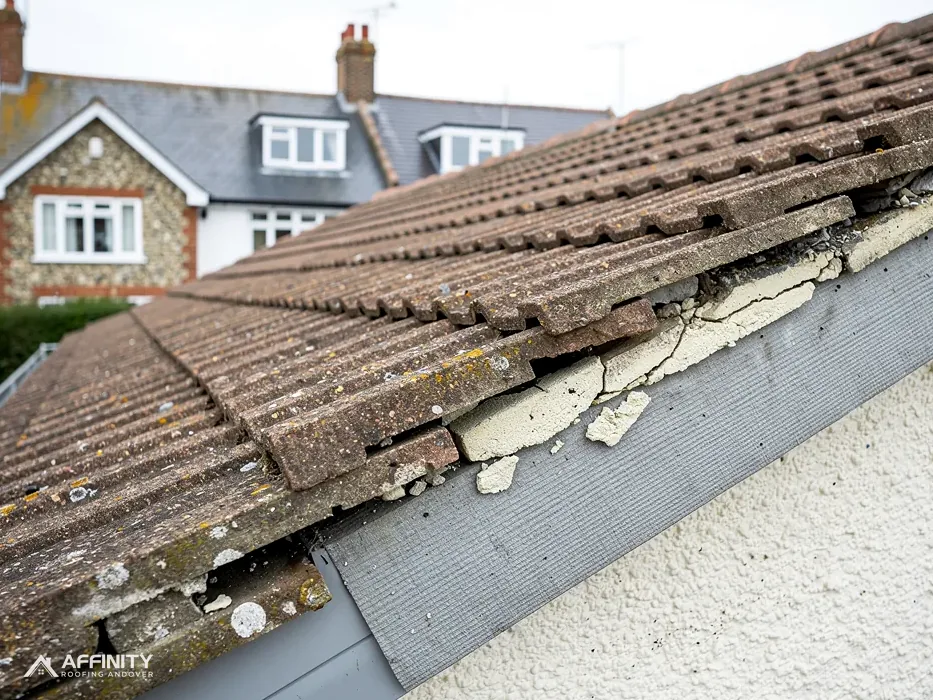
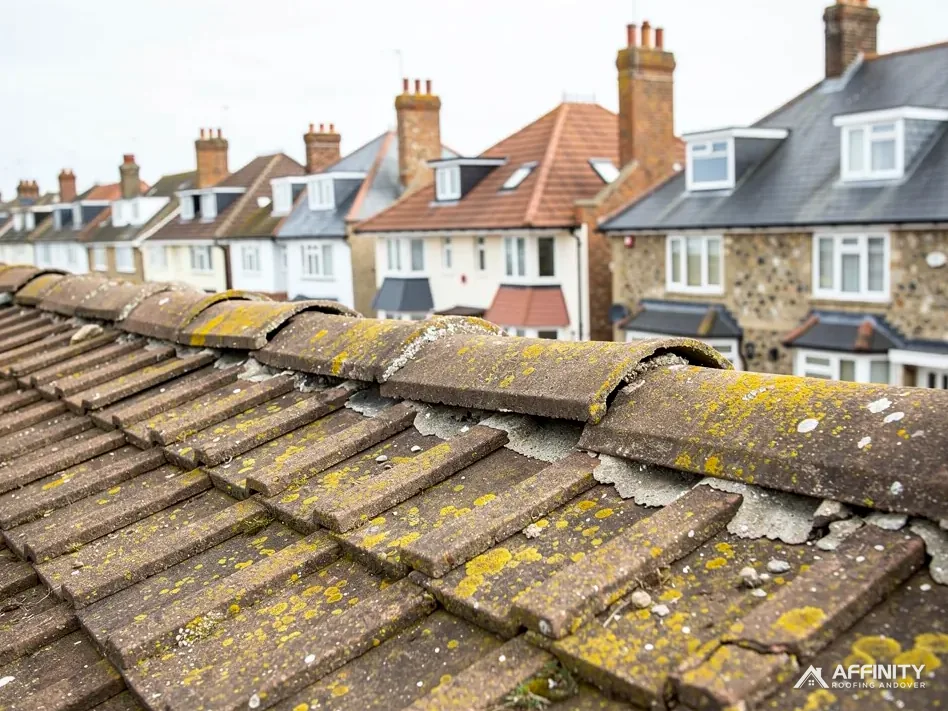
A new dry verge unit is fresh and uniform, and tiles that have weathered for decades are not. Rain, sun, moss and lichen change the colour of concrete and clay over time, and a new unit will look brighter and cleaner for a good while.
On an older estate, with roofs that have aged evenly, the new verge may stand out for a season or two before the weather levels it. Choosing a shade that is a touch darker or more muted than the nearest match can help it settle in.
The reverse can be true too. Some units are made to weather in a way that matches the neighbouring tile, and a sample left outdoors for a few weeks will show you how it ages.
Photographs help. A picture of the verge in daylight, taken square on and with nothing else in the frame, lets us compare it with a colour chart. Phone cameras alter colour, so a chart or sample held up on the roof is the better test.
Our answer on dry verge rattling covers another thing to check after the work is done.
Samples, charts and checking in daylight
Ask for a physical sample of the unit, not only a picture. Hold it against your tiles outdoors, in the morning and the afternoon, and in sun and cloud. Colours look different under shop lights, and the same shade can change from one hour to the next.
Check the chart name against the sample. If a roofer uses a name from a chart, ask to see the maker's printed version, and compare it with the sample. Where the roofer is offering a close match rather than the same shade, ask them to say so.
Look at the neighbours. A row of terraced houses with matching verges will show a mismatch immediately, and the same is true of semis. If the roof is part of a group, the colour should sit with the rest.
Conservation areas and listed houses add another check. Basingstoke and Deane asks for original roofing to be kept in its Article 4 areas, and a listed building needs consent when work alters its character. Check with the planning authority before ordering anything.
The dry ridge and verge hub explains the systems and parts.
Fixing the choice
When you have a sample you like, confirm it in writing: the maker, the product name, the shade and finish, and the parts it covers. That avoids a surprise when the pallet arrives.
Order enough from one batch. Colours can vary slightly between production runs, and mixing batches on a single verge can show as a stripe. Roofers normally order the full set in one go and keep a spare unit.
Check the fixing parts as well. Clips and screws are mostly hidden, but end caps and trims are visible, and their finish matters. Ask for caps in the same colour as the cloak.
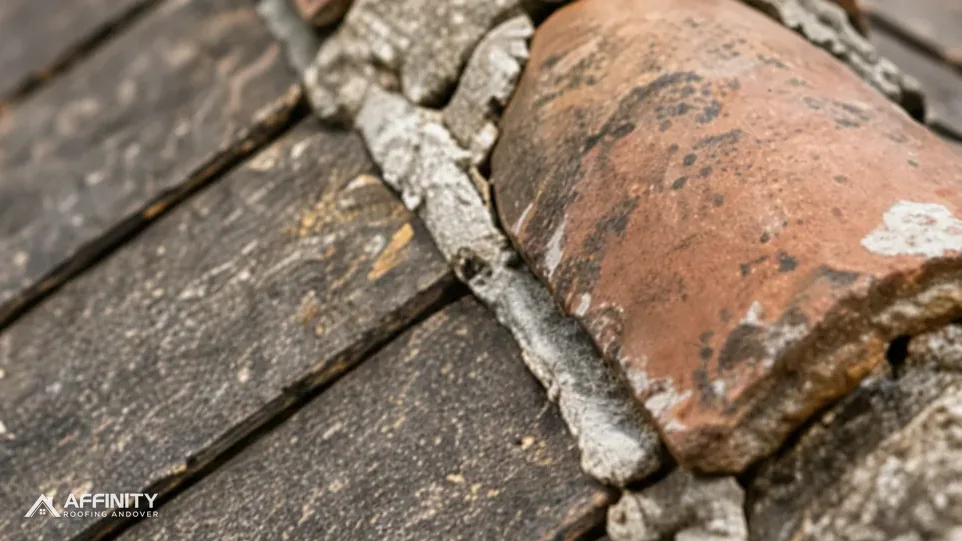
If you are matching an existing dry verge, perhaps because one unit has cracked, take a clear photo of the maker's mark or product code on the back of the unit. A close match is easier to find when the maker is known.
We photograph the verge before and after, so you can see how the result sits on the roof. The written total follows the survey, and we settle the colour before any order is placed. Our guide to dry verge cost covers the price side.