The short answer
You can buy a kit, but fitting one is another matter. The ridge runs along the summit of the house, so the fall is the longest, and a ladder cannot reach it safely. A kit must match your tile, with the right fixings at the right spacing, or it fails. The money saved is small next to the risk, so a roofer with proper access is the sensible choice.
Where the real danger lies
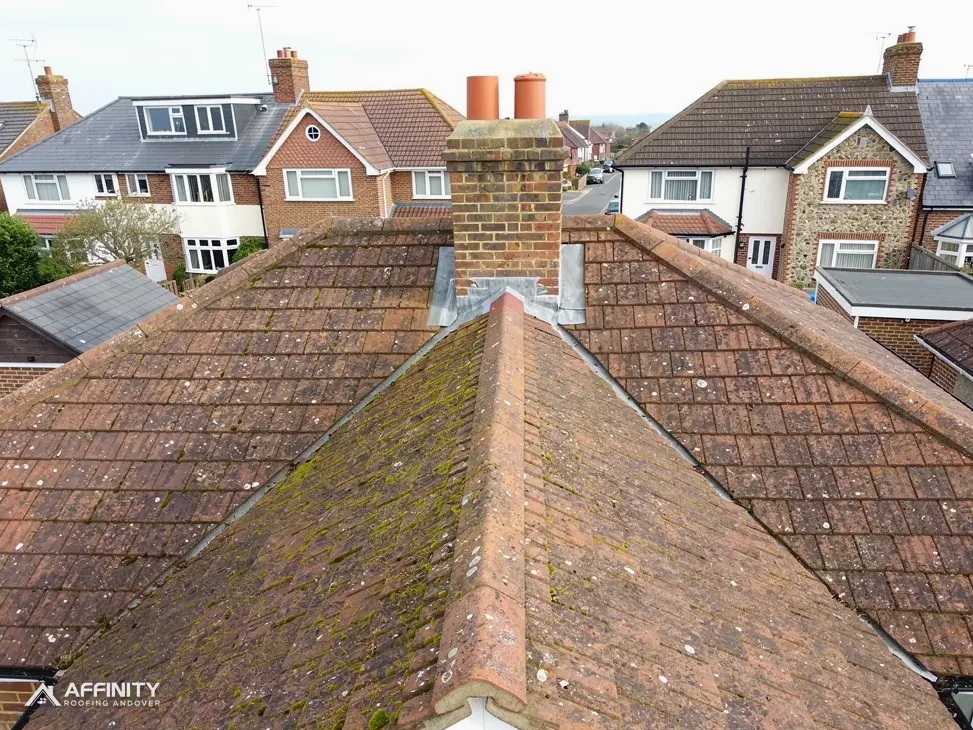
A ridge job is done at the very top of the roof, usually five or more metres above the ground on a two-storey house. A slip there means a slide down the whole slope and a drop from the eaves. A fall from a roof can cause serious injury, and the ridge is the hardest part of the roof to work on.
A ladder against the eaves does not get you to the ridge. To work there safely you need a roof ladder or crawling boards hooked over the crest, edge protection at the eaves, or a scaffold. Where a scaffold stands on the highway, the Highways Act requires a licence, which we arrange with the scaffolder, and none of this is easy to set up for a single afternoon of work.
Tiles are slippery when wet, mossy or frosty, and ridge tiles shift when you put weight on them. Old mortar crumbles underfoot. Gusts catch you off balance at the crest.
You also put at risk what is below. A dropped tile or tool falls onto a path, a car or a person. Work on your own roof is not forbidden, but it is not a place for a first attempt.
What a kit needs to go right
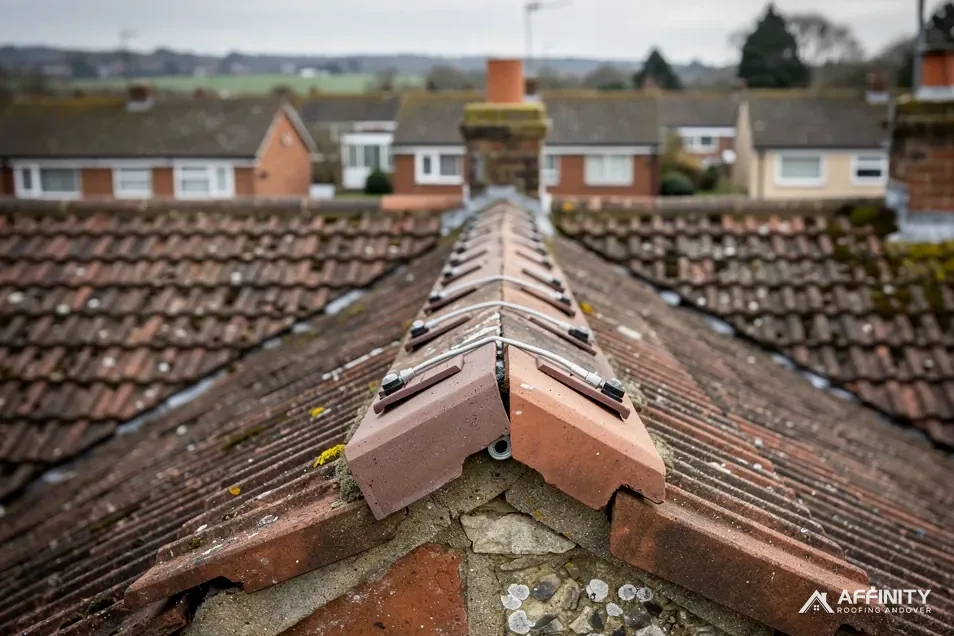
A dry ridge kit is a system, and a system only works if its parts match the roof. The ridge units have to suit the profile of your ridge tiles, the fixings have to be the length the maker specifies and bite into a sound batten, and the spacing has to follow the instructions. The data sheet should state compliance with BS 8612:2018.
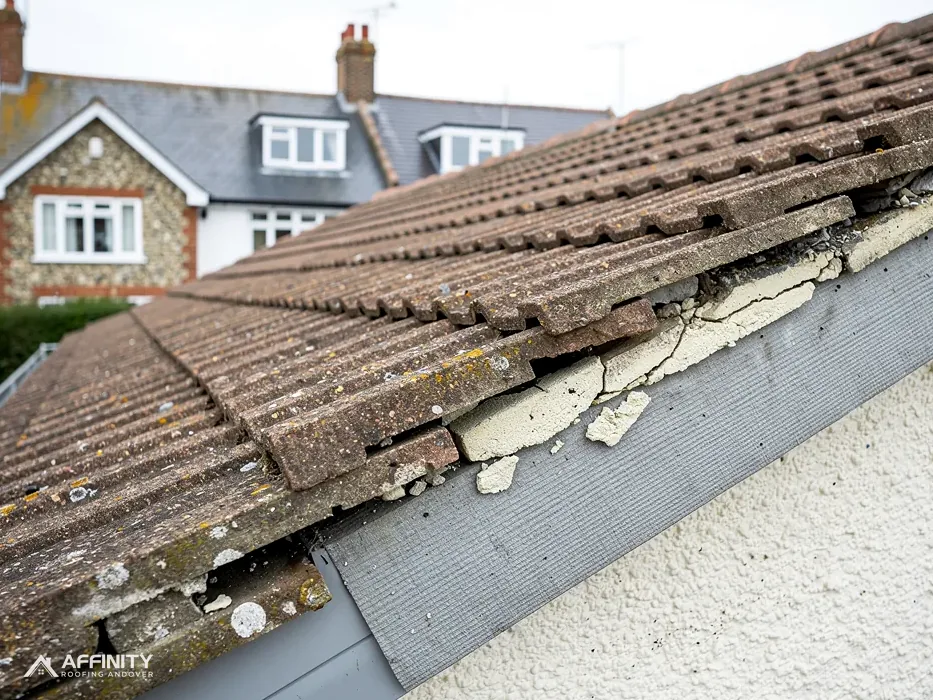
Preparation is a job in itself. Old mortar must be raked out, the ridge tiles lifted and cleaned, and the ridge timber checked. A rotten ridge board or a loose batten makes any fixing useless. Where the ridge turns into hips, the junctions need cutting and fitting to the angle.
Ventilation roll or sealing strip, where the system uses it, has to go down tight along the line before the tiles are set. A gap or a wrinkle lets wind-driven rain past it.
The final test is whether the finished ridge is straight and watertight. A kit fitted by a first-time user often shows a wavy line from the ground, or leaks at a joint that was not seen until the first storm. A ventilated dry ridge guide shows what the parts do.
The saving is smaller than it looks
It is natural to think about cost. Which? gives £80 to £300 ex VAT for supplying and fitting one ridge tile, and MyJobQuote gives £225 to £550 for replacing a ridge, both typical UK ranges. A kit is cheaper than that, but it is only one part of the job.
Add the access equipment, the time, the disposal of the old mortar and tiles, and the cost of putting right a mistake. A ridge laid badly can leak into the loft and soak the insulation and timbers, and the repair is far more than the labour saved.
Scaffold, where it is needed, adds a real sum, and it is the one a householder cannot easily avoid. Work done by a roofer is priced with the scaffold included.
Hiring a roofer also means somebody else is responsible for the standard of the work. If the ridge fails, there is a firm to go back to, and with DIY there is only you.
Compare any quote with the costs above, and ask what it includes. The dry ridge cost guide goes through the figures.
When to call a roofer, and what we do
Call a roofer if any part of the ridge is cracked, loose or missing, if the roof is steep or high, if there is moss, frost or wind, or if you cannot get safe access. That covers nearly every real case.
If you want to be involved, there is plenty you can do from the ground. Photograph the ridge with a zoom, note any lost tiles or crumbling mortar, check the gardens and gutters for fallen pieces, and send us what you see. That makes the survey quicker and keeps you off the roof.
We look at the ridge and the timbers beneath, photograph what we find, and say whether a dry system suits your tile. Our answer on whether a dry ridge is a building regulation explains where the standards stand, and the dry ridge and verge hub covers the systems.
You get a single written price when the survey is done, with access included. Citizens Advice suggests asking at least three traders for written quotes, and we are happy for you to compare ours.