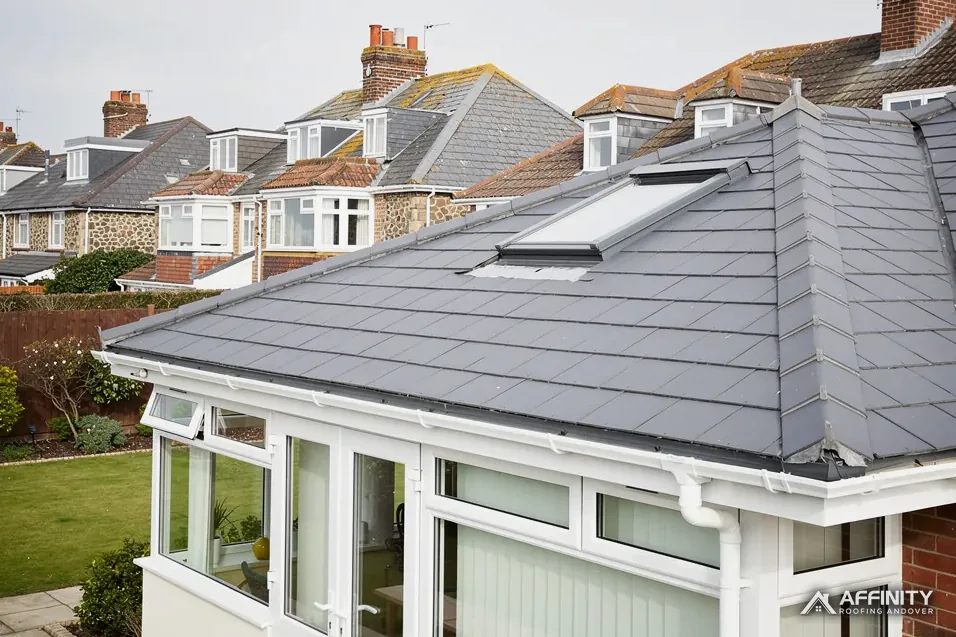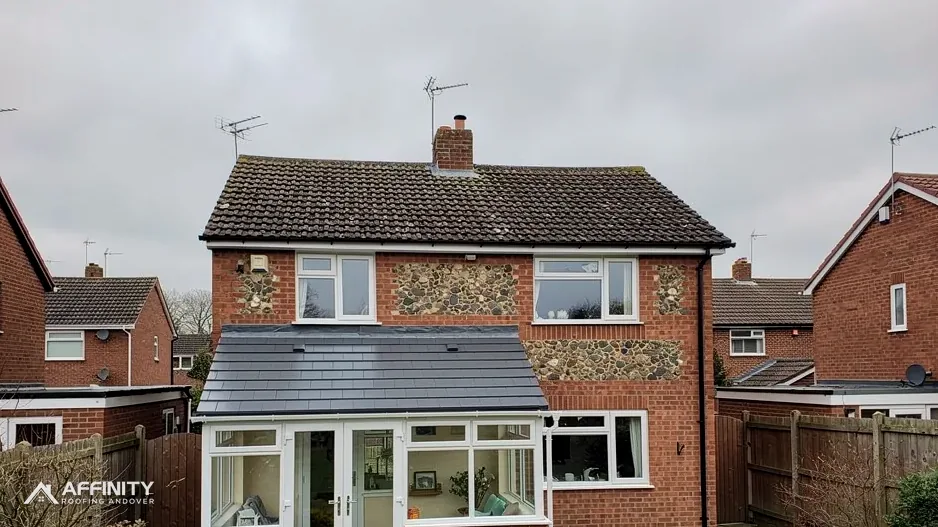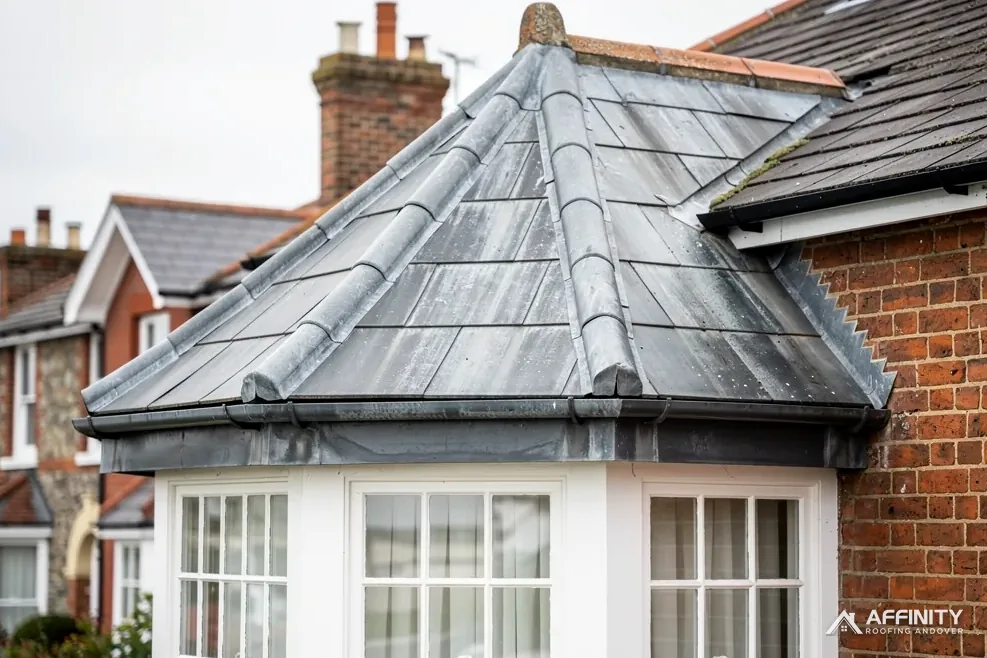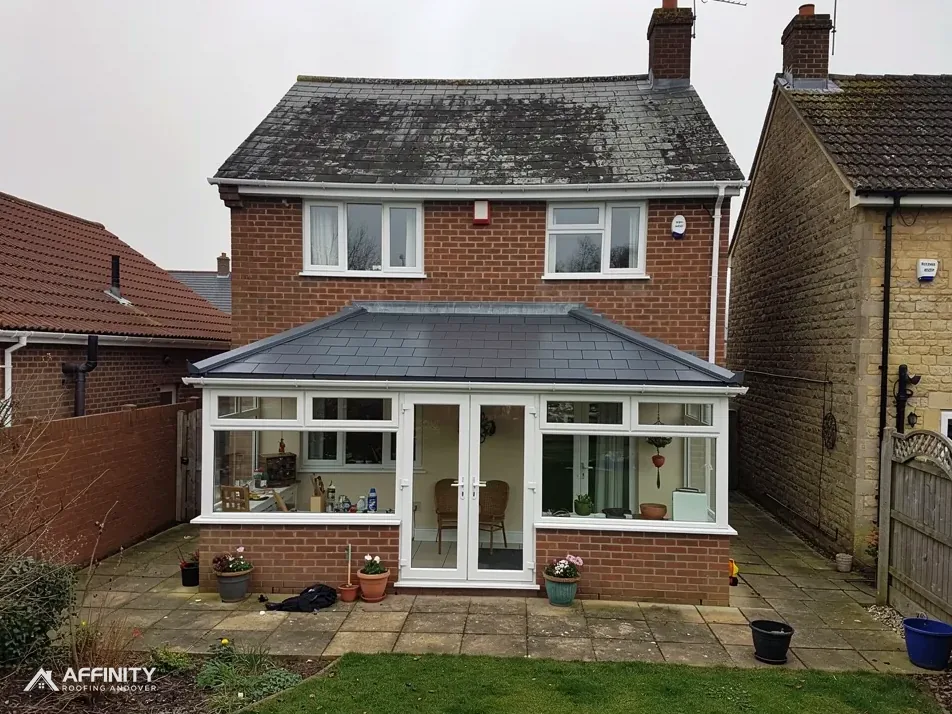
The honest answer to what a conservatory roof costs is that it depends, and the spread is wide. The room can be small or large, simple or complicated. The new roof can be a plastic sheet or an insulated tiled structure with a lantern in it. The old frame may be sound or it may need strengthening. Each of those changes the total, and none of them is visible in a list of average prices.
National cost guides still help, as long as they are read for what they are. They give a feel for the scale of the spend and a sense of how widely quotes can differ. They are not a price for your conservatory, and they are certainly not a price from us. A guide cannot know your frame, your access or the roof you want.
This page sets out the two published ranges we use, with their sources and dates, then walks through what moves a conservatory roof price up or down, what else tends to be in the bill, what to look for in a written quote, and how we work from survey to a single written total. It also covers VAT and the question of grants.
The published UK ranges, with sources and dates
Two national guides give figures for replacing a conservatory roof, and they overlap closely.
MyJobQuote
MyJobQuote gives a typical UK range of £3,200 to £6,000 for a conservatory roof replacement. Its page was last updated on 20 October 2026. The guide does not state whether its figures include VAT, so we do not say either way.
The Eco Experts
The Eco Experts give a range of £2,300 to £6,000. Its conservatory material page is dated updated on 29 April 2024, so it is older than the MyJobQuote figure and may not reflect recent price changes.
How to read two ranges
Both ranges are wide because the work is. A small conservatory with easy access tends to sit lower in either range, and a larger room with a heavier, more substantial roof sits higher. The two agree on the upper figure and differ on the lower, which is what you would expect from sources with different dates and different samples of jobs.
What the ranges leave out
A range also hides how much of the job is labour and how much is material.
Neither range can know whether your frame needs strengthening, whether you need Building Regulations approval, how awkward your access is or how much finishing work you want inside. Each of those can move a job within the range or beyond it. The ranges are typical UK figures, set in the context of a national picture and not a local price for Andover.
Our conservatory roofs page describes the work these figures cover.
What pushes a price up or down
Several factors do most of the work in setting a conservatory roof price, and you can influence some of them.
The type of roof
This is the biggest. A polycarbonate roof is the lightest and lowest in material cost. Glass costs more. A tiled or solid insulated roof costs more again, because it adds a deck, insulation, tiling, a ceiling and usually electrics. A lantern or glazed insert pushes a solid roof higher still. Our guide to conservatory roof options compared sets out the trade-offs.
Size and shape
A larger roof needs more material and more labour. A complicated shape, such as a Victorian or P-shaped conservatory with many facets, takes longer than a simple lean-to and has more joints to seal.
The condition of the frame
A frame that is sound needs nothing. One that needs strengthening, reinforcing or repairing before a heavier roof goes on adds to the job, and may need an engineer's input.
Access
A conservatory at the back of a terraced house, with no side access, takes longer to work on than one a van can reach. Scaffold or a platform adds cost, and so does carrying heavy glass units through the house.
What else is done
Plastering and decorating the new ceiling, electrics for downlights or fans, new gutters, new fascias and making good the wall at the abutment are all extras that may or may not be in your quote.
Other costs that belong in the picture
A roof is not only the roof. Several other items often belong in the total, and a fair quote says whether each is included.
Approval
Swapping glazing or polycarbonate for a solid covering brings in the Building Regulations, so ask your building control body first. That may involve an application fee, drawings and, in some cases, a structural engineer's calculations. The Part L exemption survives only while the room is at ground level, is no larger than 30 m², remains separate from the house and is not heated from the house or by a fixed heater. Our guide to the conservatory exemption from Building Regulations explains what it covers.
Scaffolding and access
If scaffolding is needed, it is part of the job's cost. A scaffold that reaches over the road or pavement needs the highway authority's licence, which we arrange with the scaffolder. Ask whether the quote includes it.
Waste removal
The old roof has to go somewhere. Glass and polycarbonate are bulky, and old tiles or timber add weight. Taking it away is part of a complete price.
Interior finishes
A tiled roof leaves bare insulation or boarding inside unless it is plastered and painted. Decide whether that belongs in the quote or in a later job, and who will do it.
Gutters, fascias and the wall junction
New eaves details and a proper flashing to the house wall complete the roof. They are small beside the main spend and large in their effect on leaks, so see that they are named.
VAT
The standard VAT rate is 20%. Check whether each quote includes VAT, because a figure without it will look lower than it is.
Reading a quote: what a fair one shows
A quote is a document you can learn from. A fair one tells you what you are paying for without burying you in detail.
A clear scope
It should say what roof is being fitted, in what material and specification, what is being removed, what is being made good and what is left to you. It should name any frame work and any approval the price assumes. Vague wording such as supply and fit new roof leaves room for argument later.
One total
Our quotes arrive in writing as a single total for the agreed job, and the scope is described in plain words beside it. If you compare quotes from different firms, compare the scope as well as the sum.
What is and is not included
Check VAT, scaffolding, waste removal, approval fees, interior finishes and guttering. If a quote is silent on any of these, ask.
Several quotes
Citizens Advice advises that you gather 3 written quotes or more before deciding. A big gap between them usually means different roofs, not different honesty, so look at what each covers.
Your rights
A contract signed at home after our survey is an off-premises contract, which carries the 14-day cancellation period. Citizens Advice runs a consumer helpline on 0808 223 1133 if you need advice at any stage of the work.
Questions that help
Before you sign, ask what the quote assumes about the frame, because a roof priced on a sound frame changes if the frame is not.
Ask who will do the work and who will be on site, what happens if the frame turns out weaker than expected, and what the plan is if the weather turns while the roof is open. Clear answers in writing are worth having.
Grants, VAT and paying for the work
Whether any help with the cost is available is worth asking, and the picture is limited.
Grants
No national scheme hands out grants for replacing a roof. Specific schemes exist for insulation and energy efficiency, but they depend on eligibility and change over time. ECO4 runs until 31 December 2026. The Great British Insulation Scheme, known as GBIS, had a final date of 31 March 2026, by which installations had to be complete. Warm Homes: Local Grant can fund insulation where a household passes its income test, which the government states as usually £36,000 a year or less. None of this promises that your project will qualify, and a conservatory roof is not the typical target of these schemes. Check the scheme pages and your eligibility directly.
VAT
VAT at 20% applies to most roofing work. Energy-saving materials installed between 1 May 2023 and 31 March 2027 are zero-rated, reverting to 5% from 1 April 2027. Whether a particular conservatory roof qualifies is a question for the supplier and, if needed, HMRC, so do not assume it.
Paying
Payment terms are agreed in writing with the quote, so you know the stages before work begins. If the survey or the approval changes the scope, the written price changes with it, and you see that first.
The cost of waiting
A failing roof gets worse, and water damage to the frame, walls and contents can cost more than the roof. Where water is coming in, a temporary cover is fitted straight away and the lasting repair is planned once the room is dry.
From survey to written total
Our process for a conservatory roof price is the same as for any job, and it starts on site.
The survey
We inspect the roof, the frame, the dwarf walls, the abutment to the house and the gutters. We photograph what we find. We measure the room, check the access and note the details that affect the price. If the structure needs an engineer's view, you hear that at this stage.
The conversation
We talk through the options for your room: which roof types suit it, what each does for light, heat and noise, and how each compares on cost. You do not have to decide on the day.
The quote
You receive one written total for the agreed roof, with the scope in plain words. If approval is needed, the quote says who applies and what is included.
What a roof costs in the Andover area
The national ranges above are the best published guide. The figure for a conservatory in Andover or the Test Valley comes from the survey, and its drivers are the same here as anywhere in the country: roof type, size, frame, access and extras.
Next step
Describe the conservatory and the roof you have in mind. Photos of the frame, the roof and the wall junction help. Our conservatory roof repairs guide covers the alternative if a repair might serve.