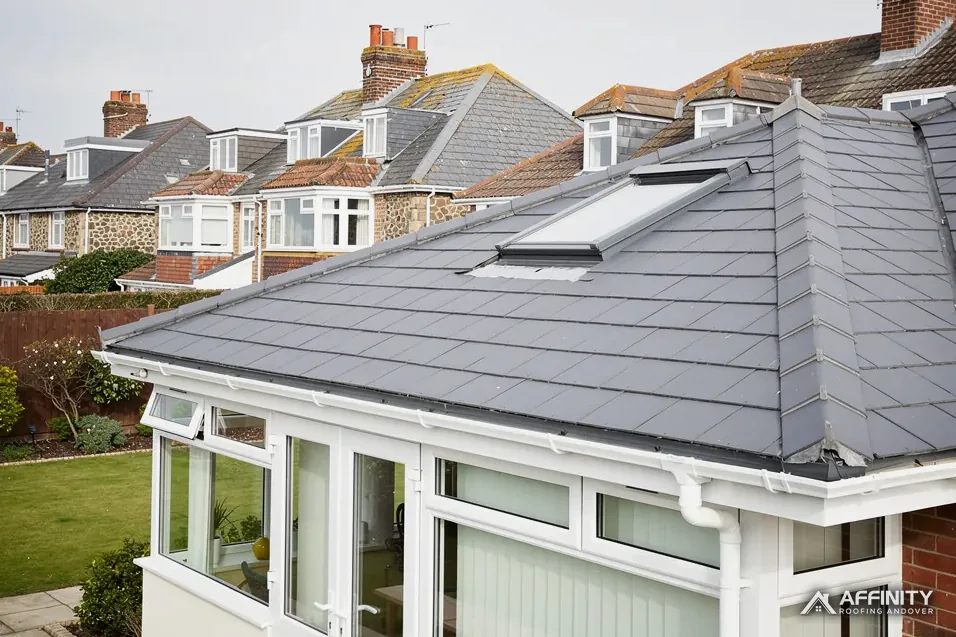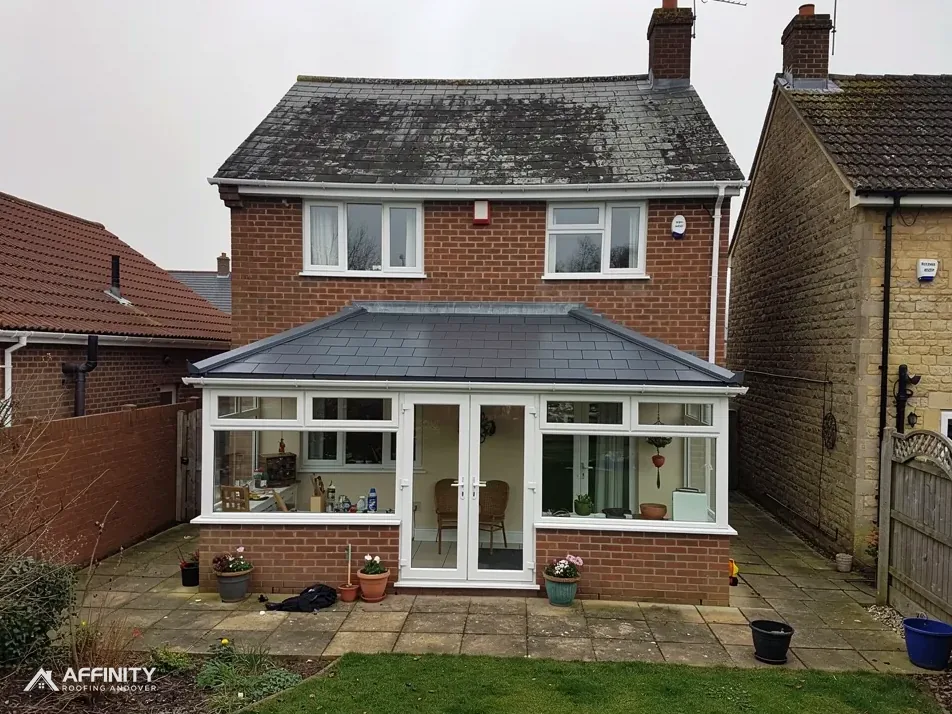
Underneath the glass or plastic, a conservatory roof is mostly joints. Panels or glass units sit in glazing bars. The bars run up to a ridge. The ridge ends at a cap, and the whole roof ends at the eaves on one side and the house wall on the other. Water is shed by overlaps and seals, not by a continuous skin, and every joint is a place where it can get in.
That is why conservatories leak in particular ways. Seals shrink and crack. Bar caps come loose. Sealant dries out. Flashing against the house wall lifts. Gutters at the eaves overflow into the frame. Often the leak is small and the cause is simple, and a repair costs a fraction of a new roof. Sometimes the roof is worn out, the frame is flexing, or the sheets have clouded and cracked, and patching delays the inevitable.
This guide runs through the common leak points in order, explains how each is repaired, how to tell a repair job from a replacement, what a lead or trim flashing to the house involves, and how to find a leak before the repair starts. It also covers the safety point that matters most: a conservatory roof will not take your weight, so never climb on it to look.
Reading a conservatory leak
Finding the true source of a leak is half the repair. Water does not always drip where it enters, and a stain on the frame or the plaster can sit well away from the fault.
From inside the room
Look at where the water appears and when. A drip that begins during heavy rain from a single bar points to that bar. Water running down the house wall inside the room suggests the flashing or the wall junction. Condensation that gathers and runs is a different problem from a leak, and it appears in cold, still weather with no rain. Look for stains at the ridge, at the eaves and along the bars, and for mould at the corners.
From outside
Use binoculars or an upstairs window. Look for missing or lifted bar caps, gaps in ridge sealing, cracked panels, sagging gutters and pooling water. Never climb onto a conservatory roof: the glazing is fragile and it is a classic route to a serious fall. Where access is needed, we use crawling boards, a platform or a ladder set away from the glass.
Testing a suspect joint
When the cause is not obvious, we test one section at a time, running water on a joint while someone watches from inside. It is slow, but it separates a ridge leak from a bar leak from a wall leak.
Photographs help us as much as the water test. A dated set taken from inside during rain, showing the first drip and where it travels, often saves an hour on the day. If you can film the drip, or mark the stain with a pencil line and the date, send that with your enquiry.
The sections below take each usual suspect in turn.
Ridge caps and ridge seals
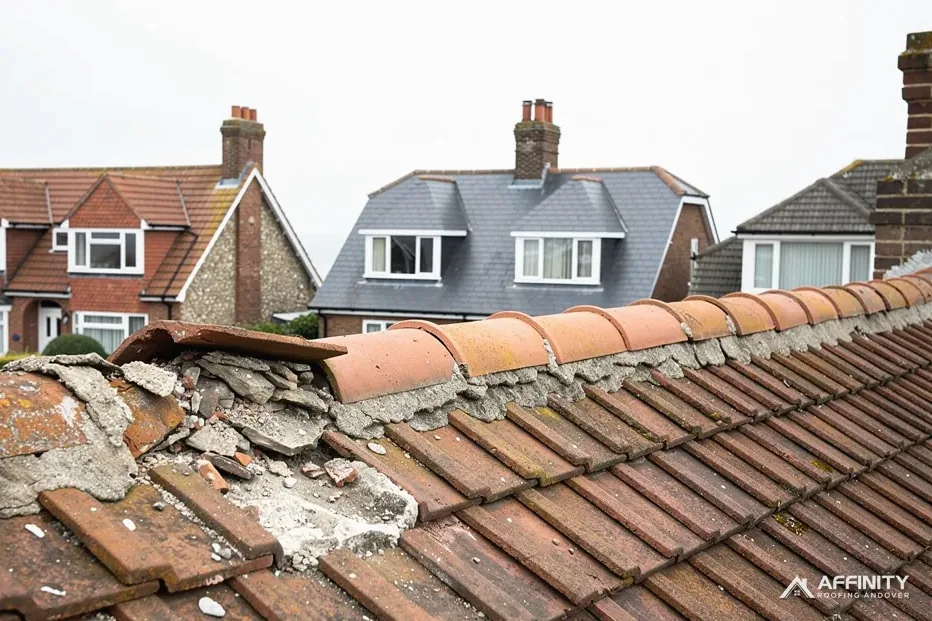
The ridge is the high line where two slopes meet. It is covered by a cap, sometimes with a sealed or vented gap beneath it, and it is exposed to wind and sun.
How ridges fail
The cap can crack, lift or slip along its length. The sealant beneath it hardens in the sun and pulls away from the bars. Sealing strips shrink. On a lean-to or gable conservatory, the ridge also meets a wall or a finial, and that junction is often poorly sealed.
What the repair involves
We remove the old cap, clean the bars and the joint, and replace worn gaskets and sealant. A new cap or ridge section is fitted if the old one is cracked. On a polycarbonate roof, we check that the closure strips at the ridge are intact. On a glass roof, we check the ridge seal and the top of each unit. The work is delicate, since all of it is done close to the glazing.
What it will not cure
A ridge repair cannot cure a cracked panel, a failed double-glazed unit or a bar that has split. It also cannot fix a frame that has moved so the slopes no longer meet. If the ridge is open because the frame is sagging, the structure is the issue.
Polycarbonate roof age
Panel life matters here. On polycarbonate, HomeBuilding quotes a typical lifespan of 10 years and The Eco Experts about 10 to 15. A roof at that age is a candidate for replacement rather than a series of ridge repairs.
Glazing bars, caps and gaskets
The glazing bars carry the panels or glass, and they are one source of leaks along the slope.
Bar caps
Each bar is capped along its top face, and the cap clips on or is screwed down. Caps crack in the sun, work loose in wind and can leave a gap for water to run in. A missing cap exposes the sealing strip to the weather, and that strip then fails. Replacing caps is quick and light work when the underlying seals are sound, though a cap that has been missing for a winter usually means the seal under it needs renewing too.
Gaskets and seals
Between the panel and the bar sits a gasket or a bead of sealant. These shrink, harden and crack with age. When they do, water tracks along the bar and drips into the room. Replacing the gaskets along a bar, or re-bedding the panel in fresh sealant, is the standard fix. It needs the cap and sometimes the panel lifted, so it is best done in dry weather.
The bar itself
Aluminium bars are durable but can corrode at the joints. Timber bars rot where water lies. A bar with a split, a gap or a rotten section needs more than a seal, and a replacement section is cut in or the bar is renewed. Our answer on why conservatory glazing bars leak goes into the cause.
Panels and units
Cracked polycarbonate and glass units with a failed seal (misting between the panes) are replaced rather than patched. The new panel must match the thickness and the bar system.
Flashing to the house wall
At the line where roof and house meet, a flashing keeps rain out of the joint. It can cause leaks, and it looks the least dramatic from the garden.
What flashing is
Flashing is a strip of waterproof material, usually lead, sometimes a trim in aluminium or plastic, set into the house wall and dressed down over the conservatory roof. It covers the joint so that rain running down the wall cannot get behind. A cavity tray or similar damp-proof detail in the wall above may complete the arrangement.
How it fails
Lead flashing can last for over 80 years, a lower bound given by MyJobQuote, but the way it is fixed may not. Pointing in the wall chase can crumble. The flashing can lift or tear, or never have been fitted properly. Trim systems rely on sealant, which dries out. A gap lets water run down the wall behind the roof.
Lead codes
Royston Lead's brochure lists flashing as an application for codes 4, 5 and 6, with code 4 also suiting soakers. The heavier code is chosen where the exposure demands it.
Repair or renew
A short length of lifted flashing can be re-dressed and re-pointed. Where the lead has torn, split or been poorly installed, we strip and replace it. Our guide to conservatory roof flashing to the house wall covers the detail.
Eaves, gutters and the frame
Not every leak starts in the roof. The eaves and the frame beneath it matter too.
Gutters and overflow
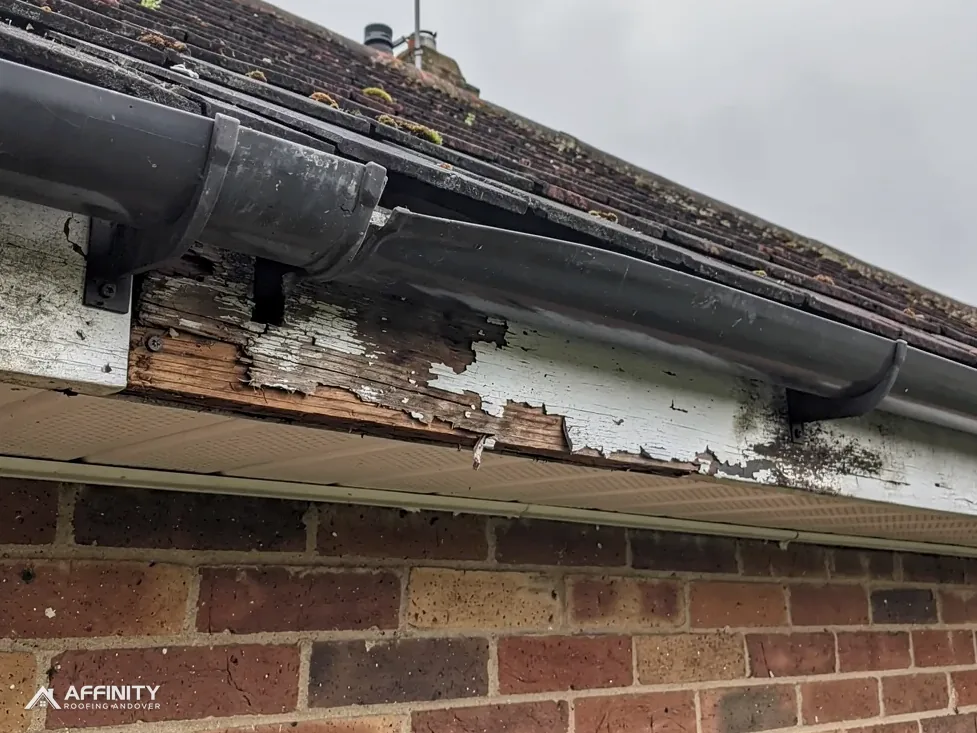
A conservatory gutter that is blocked, sagging or leaking at a joint will spill water against the frame. For rainwater gutters Brett Martin gives 1mm of fall for every 600mm, so a gutter that has dropped will hold water instead of moving it on. The water seeps behind the fascia or into the frame. Clearing and re-aligning the gutter, and renewing seals at joints, often stops what looked like a roof leak.
Eaves beam and cill
Water can get into the structure at the eaves, run down inside the frame and show up at a window head. We check the eaves closures and the seal between the roof and the frame. Timber frames show rot at these points, and uPVC frames show failed seals.
Condensation, not a leak
Some water in a conservatory is condensation. It forms on cold glass and plastic when warm, moist air meets it. It gathers at the bars, drips and looks like a leak. Ventilation and a better insulated roof reduce it. A leak follows rain, whereas condensation follows cold, still, humid weather, and the two call for different fixes.
Frame movement
A frame that has moved, whether through a dwarf wall that has settled or a joint that has opened, can break every seal in the roof. If bars sit out of line or doors stick, the structure needs looking at before the roof.
Repair or replace: how the survey decides
Repair is the right answer when the faults are local and the roof is otherwise sound. Replacement is right when the roof is worn out or the structure cannot support a repair.
Signs a repair will do
One or two leaks, in identifiable places, on a roof that is not old. Panels in good condition, bars sound, seals the only failure. A flashing that has lifted without the wall behind it being damaged. In those cases a repair is cheap, quick and lasting.
Signs the roof is finished
Clouded, cracked or yellowed panels, bars that are corroded or rotting, leaks in several places, repeated repairs that have not held and panels at or beyond their typical life all point to replacement. So does a frame that has moved, or a roof that is too hot, cold or noisy to enjoy.
The numbers
MyJobQuote gives a typical UK range of £3,200 to £6,000 for a conservatory roof replacement (October 2026), so a handful of repairs that add up to a large part of that figure make a case for replacing. Our guide to what a conservatory roof replacement costs sets out the details.
What you receive
The survey gives you photographs of each fault, a plain account of the cause and our recommendation, with a single written price for the agreed work. Describe the leak, and tell us when and where it shows. Our conservatory roofs page lists everything we do.