The short answer
Deal with the cause as well as the birds. Clear the nesting material and droppings that block gutters and outlets, then fit proofing where birds roost or nest: netting, spikes or sloped fittings, chosen to suit the ledge and fixed so that birds cannot be trapped. Look before touching any nest in use, because the Wildlife and Countryside Act 1981 bites on intentional harm.
How birds block gutters and outlets
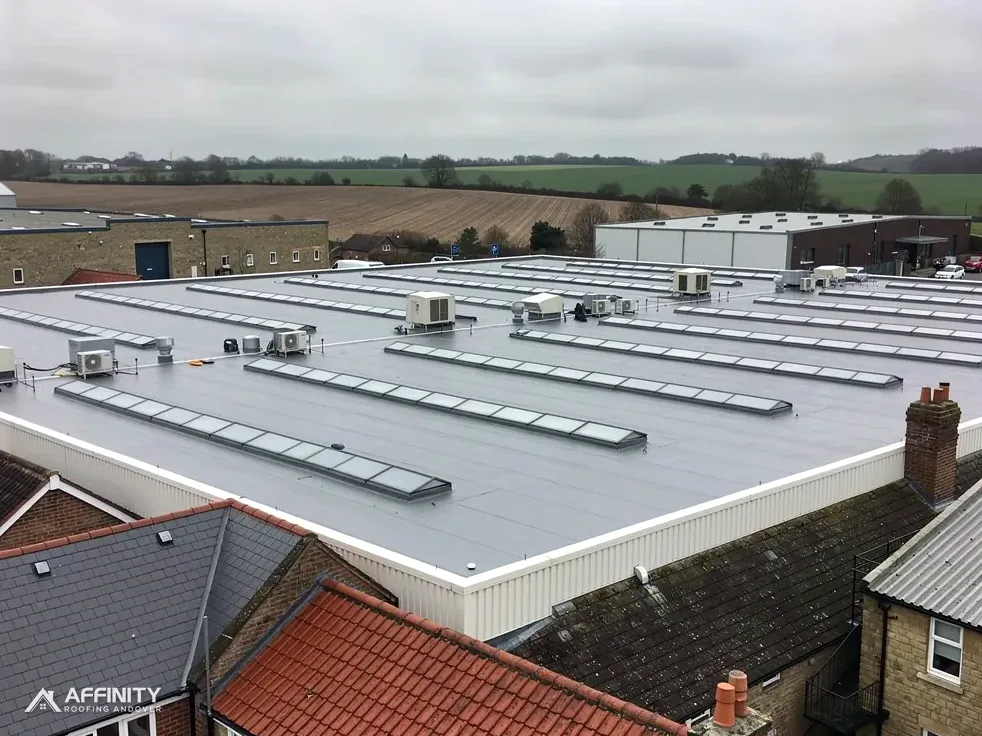
A roof with sheltered ledges, parapets, valley gutters and plant enclosures is a good place for pigeons to roost. They gather where they are out of the wind and can see around them, and a commercial building supplies plenty of those spots.
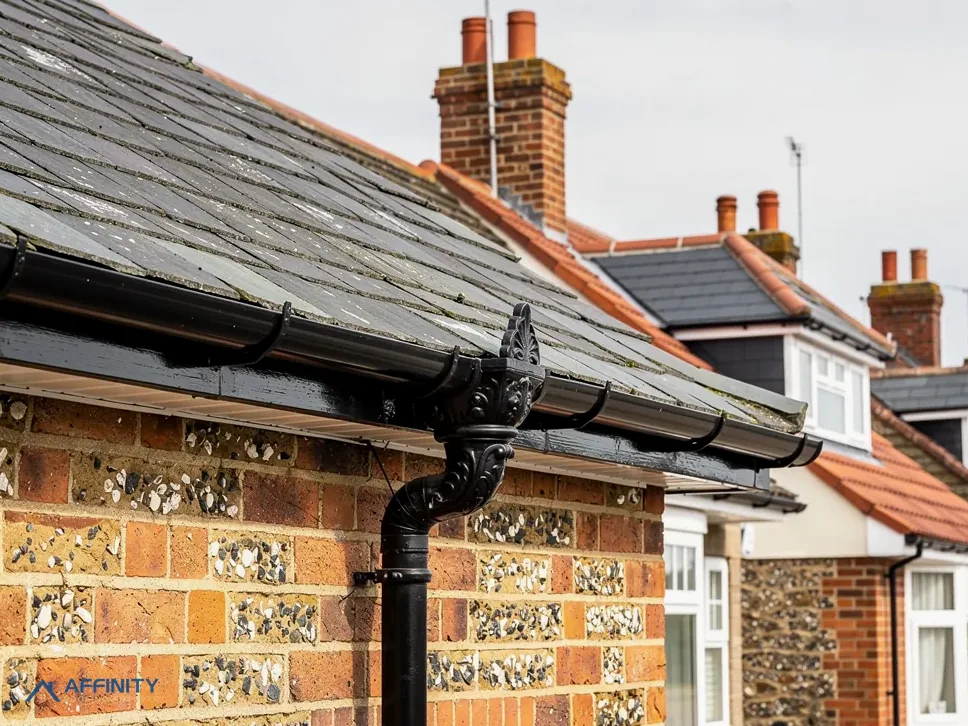
The damage is mostly indirect. Twigs, feathers and nesting material wash into gutters and settle at outlets. Droppings build up and, mixed with moss and silt, form a paste that narrows channels and clogs outlet grilles. A blocked outlet leaves water standing on a flat roof, which is how a bird problem becomes a leak.
Droppings are also acidic enough to attack some coatings and metals over time, and they leave surfaces slippery for anyone working on the roof. A heap of old droppings at an eaves gutter is a sign that birds have been there long enough for it to be a regular roost.
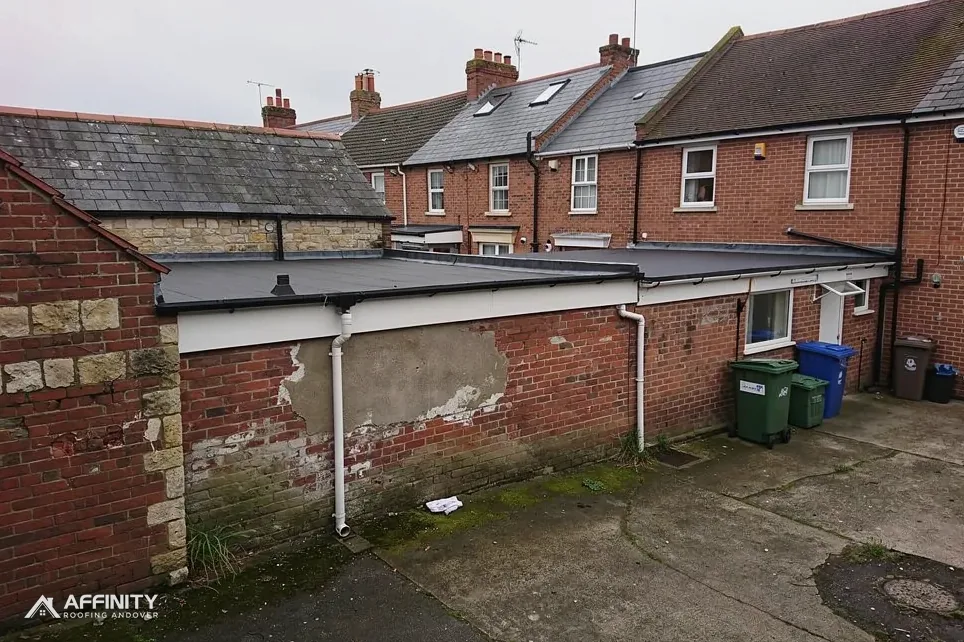
Dead birds or old nests in a valley gutter or behind a parapet can hold water against the covering. Clearing them is part of the job, but rarely the end of it, since birds return to a spot that has worked before, and the same nest site is reused for years. Our answer on commercial roof drainage explains the water side of the problem.
Clearing safely before proofing
Clearing comes first, and it should be done with care. Droppings and old nest material are best removed by people wearing suitable protective clothing and breathing protection, working from a safe platform, and bagging the waste for disposal. Dry sweeping raises dust, so damping down first is sensible.
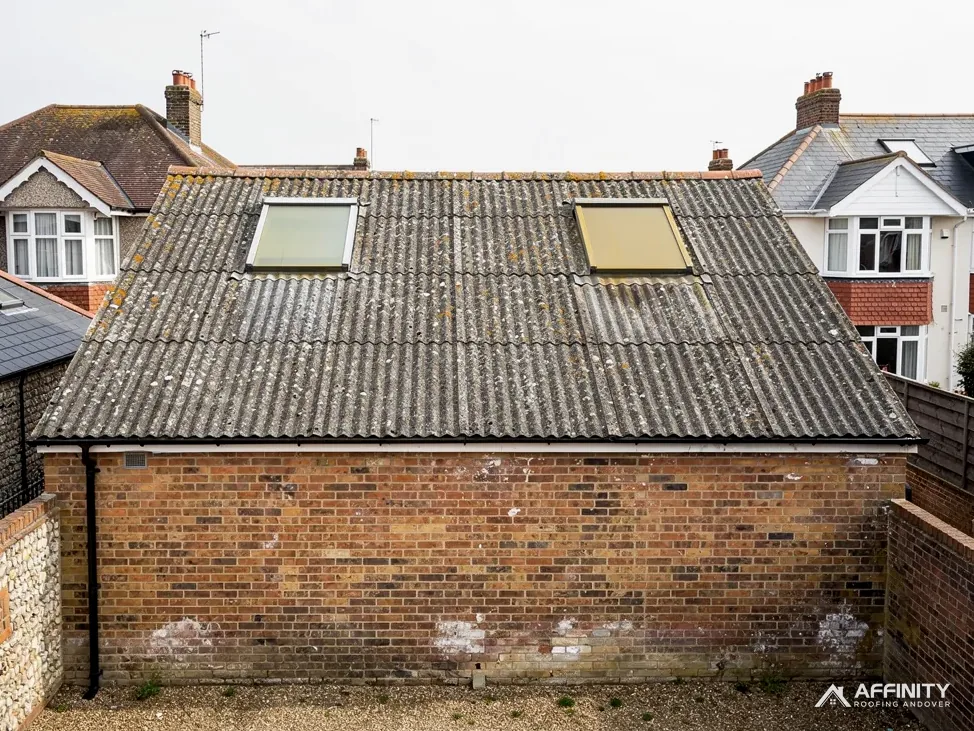
Access is part of the planning. Gutters at height need a tower or access platform, and a roof with fragile rooflights or cement sheeting needs edge protection and crawling boards, with nobody stepping on the sheets. Our guide to fragile roof safety sets out why.
As the roof is cleared, we look for what the birds have already damaged: dented or displaced ridge pieces, lifted flashings, blocked outlets and corroded fixings. Pictures of each go into the report, so the repair list reflects what is really there.
Surfaces should be washed down with a mild cleaner where needed, and the gutters flushed so that the flow can be checked and any slow outlet found before it becomes a pond. Only then is the roof ready for proofing, since fitting netting or spikes over debris traps the problem beneath them.
Proofing that suits the roof
Proofing makes the favourite spots unusable. The choice depends on the shape of the ledge, how exposed it is, and what the building is used for. Spikes stop birds landing on flat ledges and parapets. Netting closes off sheltered spaces such as plant enclosures, under-eaves voids and gaps between roof planes. Sloped fittings turn a flat ledge into one that birds cannot settle on. Gutter guards and outlet grilles keep debris out of the drainage.
Fitting matters as much as the product. Netting has to be taut, correctly sized for the birds and fixed with no gaps at the edges, since birds can become trapped in loose or damaged netting. Spikes must sit in continuous lines, because gaps give birds a place to land. The fixings should not pierce the roof covering, or they will cause leaks of their own.
Proofing should also be fitted with the roof's maintenance in mind. Access for gutter cleaning must remain, and rooflights and vents must not be blocked. Poorly planned netting can create a new drainage problem.
The aim is to prevent birds from roosting, not to harm them. The proofing is chosen to deter, and fitted so that it does no injury to wildlife.
The law, and what we ask first
Wild birds and their nests are protected by law. Section 1 of the Wildlife and Countryside Act 1981 is aimed at anyone who deliberately interferes with a wild bird's nest while it is occupied or under construction, and the word the statute uses is intentionally. GOV.UK adds that building or construction is not a licensable purpose, so work is planned around occupied nests.
In practice that means looking before touching. Where a nest is occupied, work near it waits or is altered to avoid disturbance. The test is whether eggs or chicks are in residence on the day, which only a look can establish.
Other species complicate things. Bats use roofs too, and anything that disturbs a roost is a separate legal matter, which our answer on barn roof replacement touches on. If you are unsure what is living on your roof, ask before any work.
We survey, photograph the roosts and nests, and plan the clearing and proofing around them. Following the survey you get one written total for the job. Our commercial roofing page lists the business-premises work we cover.