Falls through fragile roofs and roof lights are among the most serious accidents in the building trade, and they happen because a surface that looks like a floor is not one. A sheet that carried a man across it last year may snap under the next. A roof light that is flush with the sheeting may be coated in moss and hard to see. A roof with a covering of old paint may hide a cracked panel beneath.
If you own or manage a commercial building, you do not need to be an expert on how to work at height. You do need to know what makes a roof fragile, why that matters before anyone steps out, and what a sensible contractor sets up first. The questions you ask before the work begins are the best protection for the people who do it, and for the people in the building below.
This guide covers the surfaces that cannot take weight, what HSE says about asbestos cement in particular, edge protection, the planning that the Construction (Design and Management) Regulations 2015 call for, how to prepare the building before a roofer arrives and what a sound safety method looks like on the day. It describes our own approach in plain terms.
What makes a roof fragile
A fragile roof is one that cannot be relied on to support a person's weight, or the weight of materials, without risk of failure. The term does not describe a roof that is old or in poor condition alone. Some brand-new coverings are fragile by design, because they were made to keep weather out and not to carry loads.
Surfaces to treat as fragile
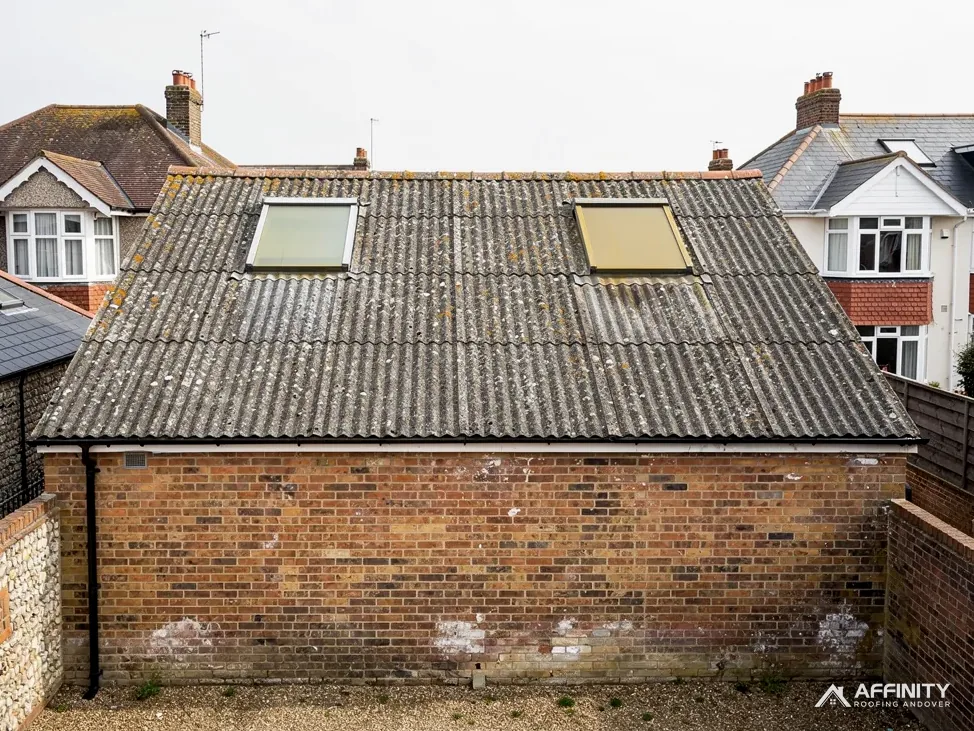
Roof lights are a fall risk. Many are translucent plastic or glass fitted level with the sheets, and many fade or weather until they look like the roof around them. Profiled sheets made from fibre cement can crack without warning. Old or corroded metal sheets can fold or tear. Liner panels, which sit beneath the outer sheet on a built-up system, are rarely designed to carry weight at all. Wood-wool slabs, glass in old factory roofs and some composite panels belong on the same list.
Hidden hazards
Moss, algae, frost and wet sheets are slippery, and a sloping metal profile gives little grip. Fixings may have corroded, so a sheet that looks attached is not. The edges where a sheet is cut or lapped are weaker than the middle.
Assume fragile until shown otherwise
The sound rule is to assume that any roof is fragile until someone competent has established otherwise. That someone looks at the covering, the fixings and the roof lights before anyone walks out. If the answer is unclear, the roof is treated as fragile, and the work is planned around that.
Our answer on what edge protection roof work needs deals with the next question, which is how people are kept from the edge.
Asbestos cement roofs are always fragile
HSE is firm about one material. Its A14 publication states the position flatly: AC roofs are always fragile. There is no condition in which an asbestos cement roof sheet can be assumed safe to walk on.
Why this matters beyond the fall
Asbestos cement is not dangerous in itself while it stays intact. It becomes a danger when it is broken up, because fibres are released. A person who falls through a sheet is hurt by the fall and breaks the material in the same moment, and anyone below may breathe what comes down. So the fragile-roof precautions and the asbestos precautions overlap.
Finding out what the roof is
Corrugated sheets on older industrial and agricultural buildings are often asbestos cement, and they can look much like modern fibre cement. For any building dating from before 2000, new or refurbished then, HSE's starting position is that asbestos is there until information shows it is not. That means asking for the asbestos register or arranging a check before access. The same applies to soffits and linings, where asbestos insulating board is found and is difficult to tell from other board by eye.
What happens if it is confirmed
If asbestos cement is confirmed, the roof is worked on from platforms, cover systems and edge protection, not by walking over the sheets. Careful removal of the sheets in one piece is non-licensed work under HSE's rules, while substantial breaking up is notifiable. Waste from asbestos goes into double wrapping with labels and travels on a consignment note, never into an open skip.
Edge protection and falls from the perimeter
Fragile surfaces are one way of falling. The edge is the other, and it needs its own control.
Why edges matter
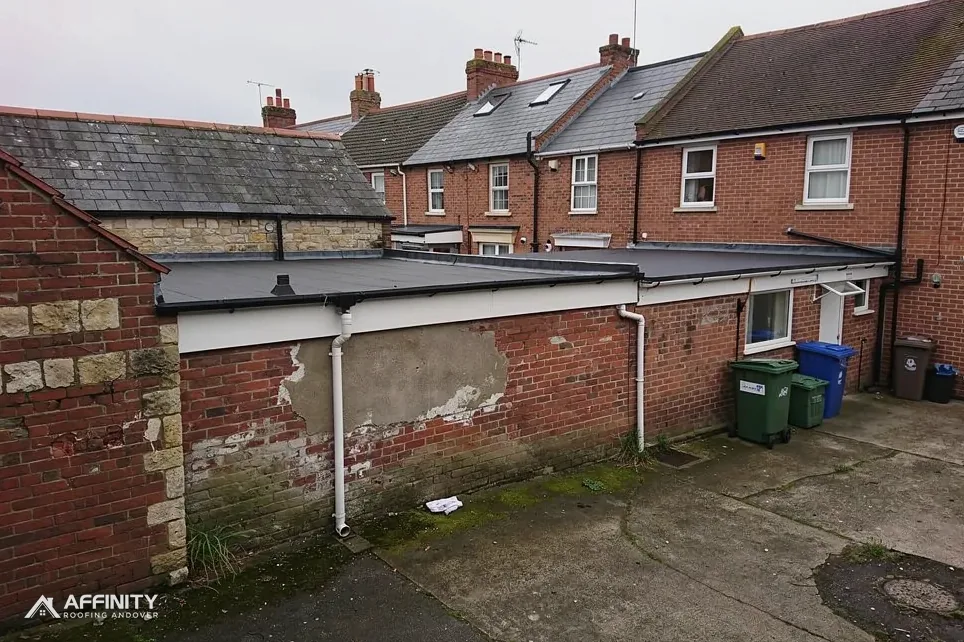
A flat or low-pitched roof with no parapet has nothing between a worker and the ground but the roof's own edge. A drop from roof height can injure badly. Even where a parapet exists, it may be too low, or the coping may have loosened, so it cannot be treated as protection without checking.
What a sound set-up looks like
Edge protection takes the form of guardrails with a toe board, fixed along the perimeter and at any open edge, or a scaffold platform around the building that serves as both access and barrier. On pitched roofs the protection includes a barrier at the eaves and often a catch system. The point is to stop a person before they reach the edge, not to rely on care alone.
Access to and from the roof
Ladders and mobile platforms are secured at the point of access. The route to the work is planned and, where it crosses fragile ground, marked and covered. Stairs and fixed ladders, if the building has them, are checked before they are used.
Scaffold on the highway
Where scaffold edge protection stands on a road or pavement, a licence from the highway authority is required under section 169 of the Highways Act 1980. For West Berkshire addresses, West Berkshire Council has the scaffolding provider apply instead of the resident: £125, plus £71 per week, with the application due no less than 10 working days ahead of erection. Private land is outside the licence.
We plan the edge protection first, before the covering is touched.
Fragile roof lights and covers
Roof lights deserve a section of their own because they are the cause of so many falls, and because they are often missed.
Why they are dangerous
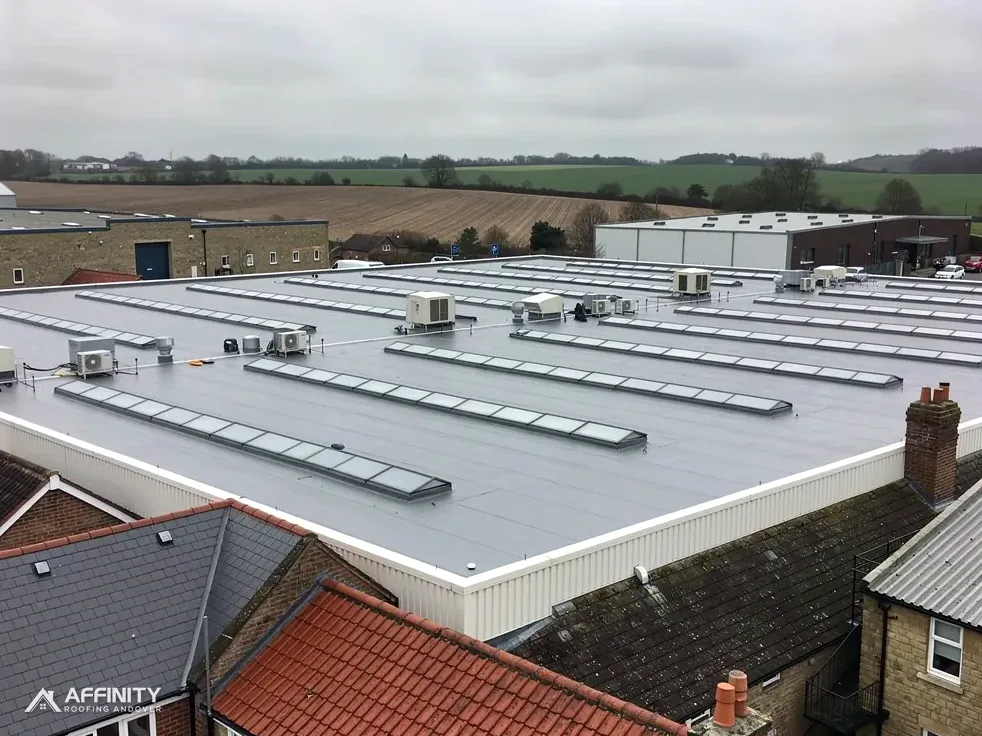
A roof light is built to let in light, not to carry a person. Plastic ones become brittle with age and sunlight. Glass ones crack. They sit in the same plane as the sheets around them, and when weathered, painted over or covered in moss they are nearly invisible from the roof surface. Many falls happen when someone steps backwards or crosses a roof light without knowing it is there.
How they are protected
The usual controls are covers or guards over each roof light, strong enough to take a person, fixed in place for the duration of the work, and crawling boards or a walkway that keeps people on a safe line. Where a roof light has to be replaced, the work is done from below, from a platform, or from boards spanning the supports, never by kneeling on the light itself.
When the roof light itself is the job
Replacing a roof light means opening the roof, which makes the fragile risk greater, not smaller. The new unit has to match the sheet profile, and the opening has to be protected at all times. Our guide to replacing roof lights in metal sheet roofs covers how this is done.
Marking the roof
On a building with many roof lights, it is worth keeping a plan showing where they are. The plan goes to anyone who will be on the roof, including maintenance staff and plant engineers. Keep it with the roof file so it does not go missing.
Planning the job under CDM
Safety on a roof is not only a matter of equipment. The Construction (Design and Management) Regulations 2015 require the work to be planned, and the planning is what turns kit into safe practice.
Who has duties
For a commercial client, CDM brings a set of duties that scale with the project. Regulation 5(1) covers projects with several contractors, which then need two appointments: a principal designer and a lead contractor under the title principal contractor. Where a single contractor is working, regulation 15(5) still demands a construction phase plan from that firm. The plan covers how the work will be done safely, including access, fragile surfaces, edge protection and rescue arrangements.
What the plan should say
A useful plan is specific to the roof. It names the fragile areas, the controls for each, the route onto and across the roof, who will be working and in what order, and how the building's occupants are kept clear. It says where materials will be stored and how they are lifted. It states what happens if the weather turns, because wind and wet change the risk on a roof quickly.
What the client provides
The client's job is to pass on what they know: the asbestos register, any earlier surveys, drawings showing roof lights and the locations of plant, and any known defects. A contractor cannot plan around what it has not been told.
Review as the work proceeds
If the survey finds something unexpected, such as a roof light hidden under moss or a sheet that turns out to be asbestos cement, the plan is changed before work continues. We stop and revise, then tell you what changed and why.
What to ask a roofing contractor
You do not need to audit a contractor's safety, but a handful of questions show quickly whether the planning is sound.
Questions worth asking
How will you get onto the roof, and what will protect the edge? Which parts of this roof are fragile, and how will you stop anyone stepping on them? Is any of it asbestos cement, and how do you know? What is in the plan if wind or rain arrives mid-job? Who is on site, who is in charge, and what happens in an emergency? A contractor who can answer these in plain words, for your roof, has thought about it. One who answers in generalities may not have.
Judge the method
Safety schemes and memberships exist, and some clients require them. Whatever a contractor's badges, the better test is the method: the plan, the equipment and the people who turn up. Ask to see the plan for your roof before work begins.
What we put in writing
Before any commercial job starts, we send the method, the access and edge protection arrangements, the treatment of fragile areas and the asbestos position. If the survey finds something that changes the method, we tell you before work resumes. The quote that follows is one written total price.
If you only remember one thing
Assume the roof will not take weight, and never send anyone onto it without a plan. If you want a second opinion on a roof you have been asked to approve, send us the details and we will look. Our commercial roofing page lists the systems we work on.