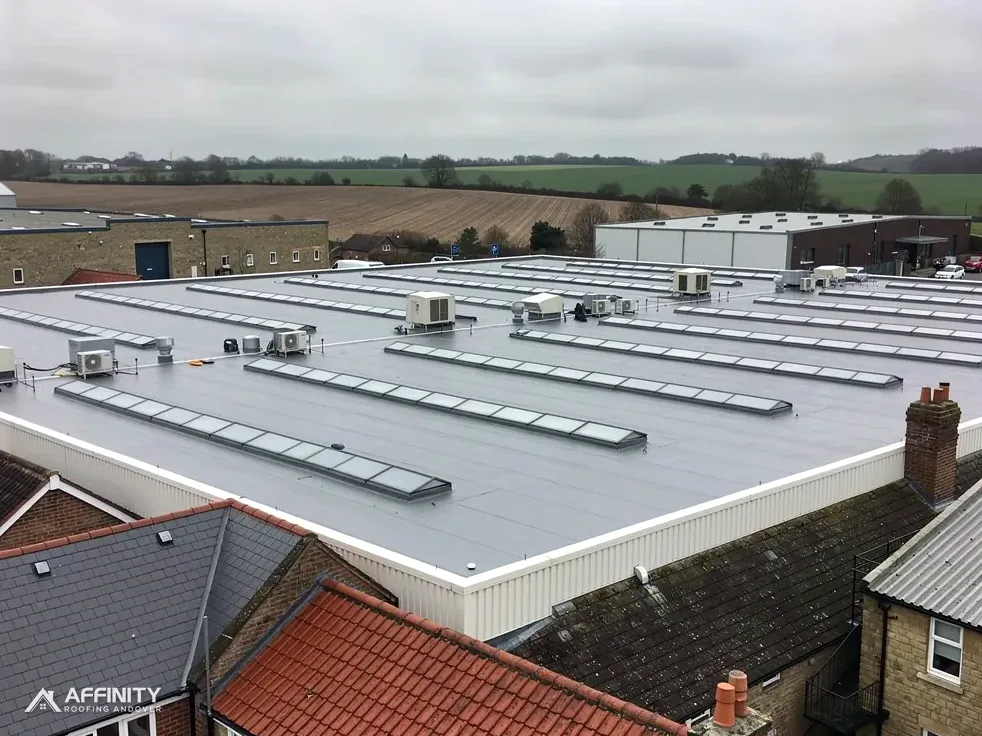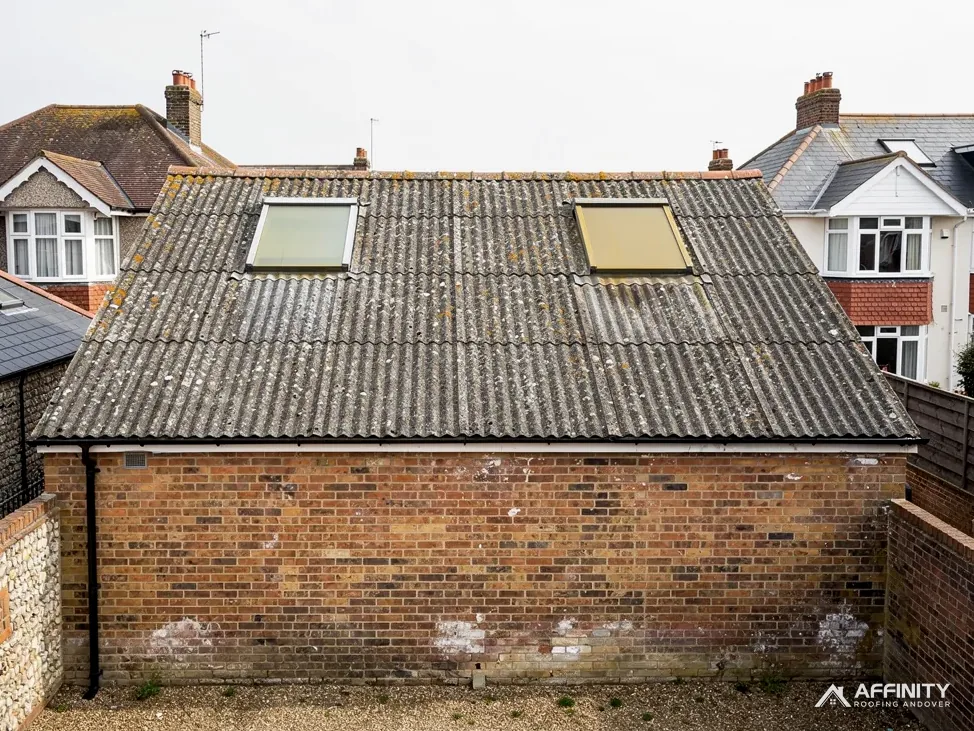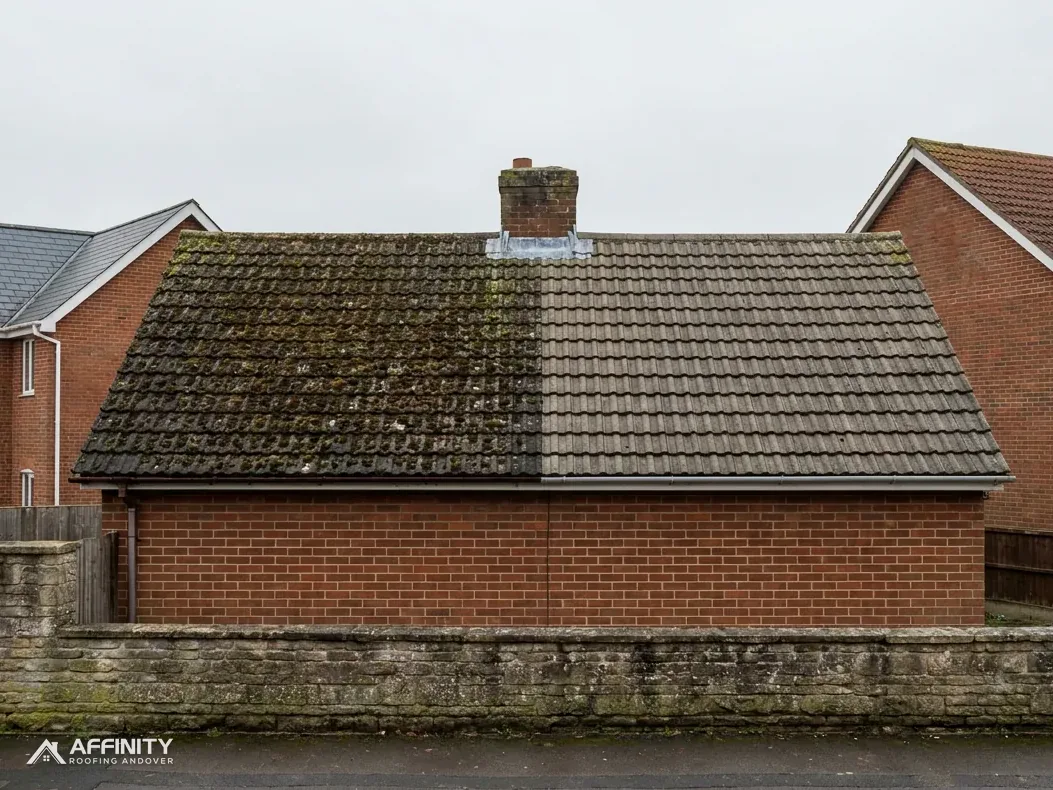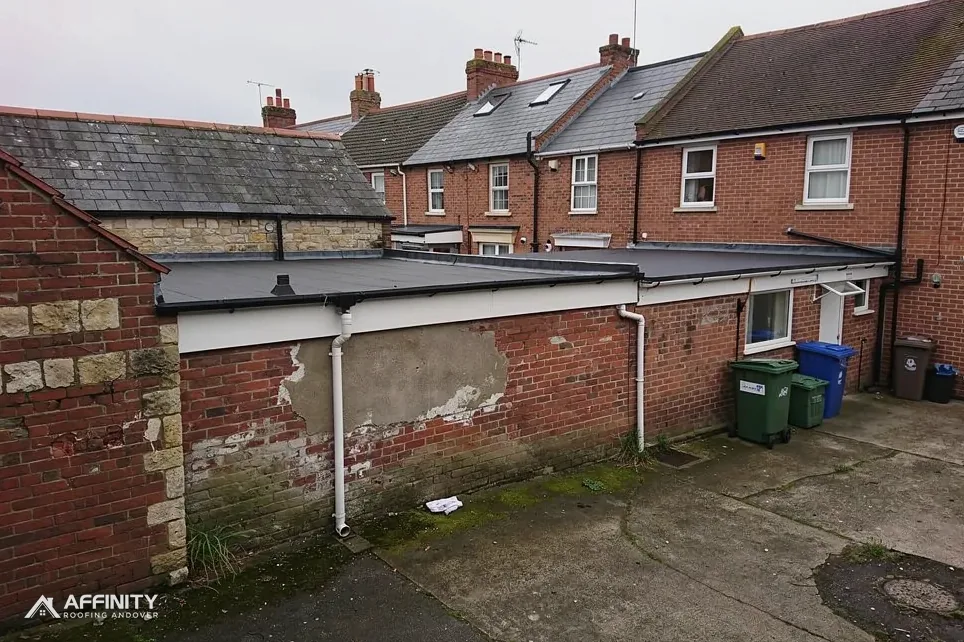
The short answer
A single price per square metre cannot be given for a commercial flat roof, because the figure moves with the covering, the deck beneath, the insulation, the falls, the access and what the roof turns out to need. A rate quoted without seeing the roof is a sales line, not a price. The reliable figure is one written total, produced after a survey of the actual building.
Why one rate misleads
A per-square-metre figure works only when every roof is the same. Commercial flat roofs are not. Two units of identical floor area can need very different work: one has a sound concrete deck and a straightforward membrane to replace, while the other has a rotten timber deck, wet insulation and outlets that no longer drain.
The rate also leaves out what does not scale with area. Setting up access, protecting the building and its contents, and tying the new roof into walls, rooflights and plant all cost much the same on a small roof as on a large one. On a small roof they make up a bigger share of the total, so small roofs usually work out dearer by the metre than big ones.
A rate given over the phone is therefore a guess presented as a fact. If a figure sounds low, ask what it leaves out. Scaffold, edge protection, waste, VAT and the removal of the old layers are the usual omissions, and each can change the total considerably.
For that reason we do not publish a rate or multiply one into a total. We survey the roof and price it as a whole. Our guide to single-ply roofing explains one of the main covering choices.
What decides the price of a business roof
The covering is the first factor. Single-ply membranes such as PVC or EPDM, built-up felt, liquid-applied coatings and metal sheets all differ in material cost, fitting method and expected life. A cheaper covering that fails sooner can cost more over the years than a dearer one.
Beneath the covering is the deck and insulation. If the deck is sound, the work is a recover or a strip and renewal. If it is damaged, boards or sheets need replacing first. Insulation has to meet current thermal standards when a roof is renewed, which can add thickness, and the upstands (the edges where the roof meets walls) must be dealt with to suit.
Falls matter on a flat roof. BS 6229:2025 keeps a minimum finished fall of 1:80 for general areas and internal gutters, and IKO advises designing for 1:40 so that the finished fall still meets that after tolerances. Where a roof is flat in practice, tapered insulation or new outlets may be needed, which adds cost.
Finally there are the building and its use: height, access, rooflights, plant, the need to keep trading, and any asbestos in the existing roof. The page on commercial roof drainage covers how outlets are judged.
What a survey adds
A survey turns a guess into a figure. We go up with safe access and examine the covering, laps, upstands, outlets and any ponding, recording each with pictures. We open small areas where it is sensible, to find out whether the insulation is wet and the deck is sound.
That tells us whether the roof needs patching, overlaying or stripping, and which covering suits the building. It also tells us how the work should be phased if the business has to stay open, and whether the old roof contains asbestos, which changes the method and the waste arrangements entirely.
You see the same photographs, so the logic of the price is visible. If a repair will do instead of a renewal, we recommend it, because the right repair for the roof is the honest answer. Where renewal is warranted, the photographs show why.
The survey also gives you a record for your own purposes, such as a maintenance plan, a landlord's schedule of works or an insurer's request. Our guide to a commercial roof survey goes through what is recorded.
One total, and what it should include
Once the survey is done, you receive one written total for the job. It is based on the area, the covering, the preparation, the access, the waste and the programme. Whatever the roof turns out to need, the price you are given is the price for the whole scheme, not a rate for you to multiply.
When you compare quotes, check what each one includes. Does it cover removal of the old covering and disposal? Does it include scaffold or edge protection? Does it state the insulation to be used, the falls to be achieved and the outlets to be renewed? Is VAT included? Our answer on VAT on commercial roofing explains how it is applied between businesses.
A quote that cannot say what it covers cannot be compared with one that can. The cheaper figure may simply leave out half the scheme.
Citizens Advice recommends collecting written quotes from at least 3 traders, and that suits a business roof too, given how much the schemes can differ. See the commercial roofing page for the range of work we survey and price.