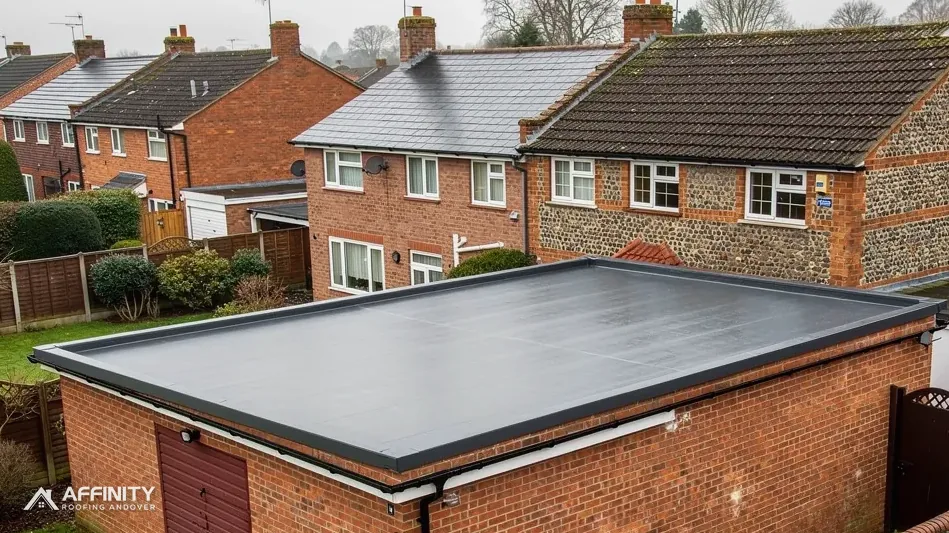
A single-ply roof is covered by one layer of factory-made waterproof sheet, not a stack of felt layers built up on site. The sheet arrives in rolls, is laid across the roof, and is joined at its edges to the next. Because the sheet is made in a controlled setting, its thickness and quality are consistent, and because there is only one layer, a good installation can be quick and clean.
Three types dominate the commercial market. PVC is polyvinyl chloride. TPO is thermoplastic polyolefin, a membrane family that is welded in a similar way to PVC. EPDM is the abbreviation for a synthetic rubber, ethylene propylene diene monomer. The letters sound technical, but the practical differences are straightforward, and they affect how the roof is joined, repaired and expected to age.
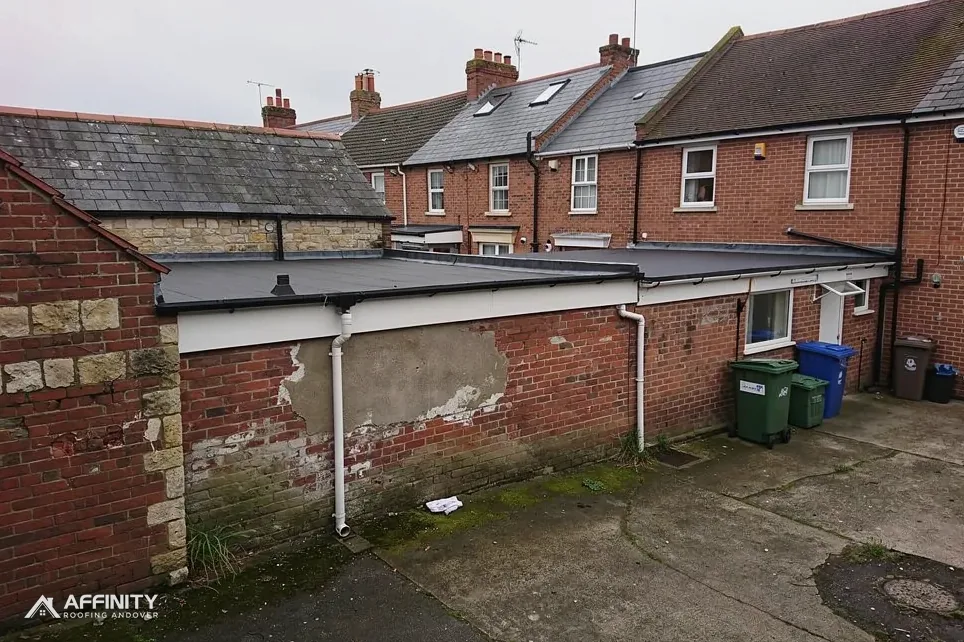
Single-ply is chosen for shops, offices, schools, warehouses and the extensions that sit between them. It suits low-pitched and flat roofs, large areas and roofs with many penetrations. It is also a common choice when a worn felt roof is replaced. This guide sets out how the systems work, what to look at when one starts to leak, and how to read the lifespan figures that circulate.
What makes a membrane roof single-ply
The name describes the waterproofing layer, not the whole roof. Beneath the membrane sit the deck, a vapour control layer where the design calls for one, and insulation. Above it, in some systems, sit ballast or paving. The single ply is the sheet that keeps water out.
One sheet, joined at the edges
Where felt relies on several layers bonded together, a single-ply roof relies on its joints. The sheets overlap, and the overlap is sealed either by welding (for PVC and TPO) or by adhesive and tape (the usual route for EPDM). The roof is therefore only as good as its seams and the details at upstands and penetrations. The open sheet in the middle of the roof seldom causes trouble.
What sits beneath
The membrane is only the visible part of the build-up. A deck of timber, concrete or profiled metal carries the load. Insulation boards add thermal performance, and on a warm roof they sit directly under the membrane. A vapour control layer below them stops moist air from the building reaching the cold side. If any of these fails, the membrane may be sound and the roof still leak or sweat, which is why a survey looks below the surface as well as at it.
Why owners choose it
The sheets are light, which matters on a deck that cannot take much weight. They come in large widths, so there are fewer seams across a big roof. Installation does not need a naked flame, a point in its favour in occupied or sensitive buildings. And the membrane can be laid over a variety of substrates when properly prepared.
Where it sits among the options
Our guide to built-up felt covers the layered alternative, and the commercial roofing page puts the systems side by side. A survey of your own roof tells you which suits it, and whether a membrane is the right call at all.
PVC, TPO and EPDM compared
The three are used in similar places, and the right choice depends on the roof, the budget and the detail.
PVC
PVC membranes are flexible plastic sheets, reinforced with a fabric or glass-fibre scrim. Seams are welded with hot air, which fuses the overlap into a single piece. They are widely used on commercial roofs and come in a range of colours. They tolerate a lot of detail work, and repairs are made by welding on a patch.
TPO
TPO is a polyolefin-based membrane that is also welded with hot air. It is marketed as an alternative to PVC with a different chemical makeup. Properties vary between manufacturers, so the data sheet for the specific product matters more than the family name. Note that TPO here means the roofing membrane, not a Tree Preservation Order, which is a planning term for protected trees.
EPDM
EPDM is a rubber membrane, sold in very large sheets, sometimes wide enough to cover a small roof in one piece. It is stuck down with adhesive or held by mechanical fixings, and the joints are sealed with tapes or liquid sealants. Its flexibility helps on complicated shapes. Our answer on whether EPDM is good for a commercial roof looks at that question more closely.
Choosing between them
Seam method, repairability, compatibility with what lies beneath and the maker's guidance all play a part. We recommend one after the survey and explain why, with the evidence on screen.
How the membrane is held down
Three approaches cover most installations, and each suits different decks and loads.
Mechanically fixed
The sheet is fixed through its edges or through the seams with screws and plates into the deck. This is common on lightweight decks and large roofs, and it means the membrane lies loose between the fixings. Wind uplift is the main design concern, so the number and pattern of fixings are set to suit the building's height and exposure.
Fully adhered
The membrane is bonded to the substrate with adhesive. This gives a flat, smooth finish and is good on complicated shapes. The surface beneath has to be clean, dry and compatible with the adhesive, which is where preparation makes or breaks the job.
Ballasted
The sheet is laid loose and held down by weight, usually a layer of stone or paving slabs. The deck must be able to carry that load, so ballast is a structural decision before it is a roofing one. Ballast also hides the membrane, which is both a protection and an obstacle to inspection.
Why it matters when repairing
The fixing method determines how a leak behaves. In an adhered roof, water tends to stay near the hole. In a loose-laid or mechanically fixed roof, water can travel under the sheet and show itself some way off. A repair has to find the hole, not just the stain.
Seams and details: where single-ply roofs fail
Because the open field of the membrane is tough, the weak points are almost always elsewhere.
Seams
A poorly welded or poorly taped seam can open under thermal movement. Hot-air welds depend on temperature, speed and a clean surface. A seam that looks sealed can still have a channel through it. We probe seams on the survey, and we test welds where repair is being considered.
Upstands and flashings
Where the sheet climbs a wall, a kerb or a pipe, it has to be bonded or mechanically fixed at its top edge and sealed. If the top edge pulls away, water runs behind. Corners are the hardest details, since the sheet has to be folded or fitted with a preformed piece without creasing.
Penetrations
Pipes, flues, cable entries and plant fixings all pierce the membrane. Each needs a collar, boot or patch welded or bonded to the sheet. Plant added after the roof was laid is often sealed badly or not at all.
Outlets and drainage
Outlets are sealed to the membrane with flanges or clamping rings. They collect debris and need regular clearing. Standing water that persists points to a fall problem. The finished fall for roofs of this kind under BS 6229:2025 is 1:80 at minimum, and IKO advises designing for 1:40.
Mechanical damage
Single-ply sheet is thin compared with felt. Foot traffic, dropped tools and sharp edges puncture it. Walkways protect the routes used by maintenance staff.
Lifespans: what the published ranges say
People ask how long a single-ply roof lasts, and the honest answer is a range that depends on the product and the care it gets.
EPDM
For EPDM, two published sources disagree. HomeBuilding gives 25 to 30 years (September 2025). Less gives 30 to 50 years (October 2026). Both are typical ranges, neither is a promise, and the gap shows how much depends on installation and conditions.
PVC and TPO
Manufacturers publish their own service-life statements for PVC and TPO products, and they vary by thickness, formulation and system. Ask for the data sheet and the maker's own wording for the exact product proposed, and treat a stated lifespan as a range for membranes in general, not a promise about your roof. Our answer on how long a PVC roof membrane lasts goes into that question.
Warranty is not lifespan
Makers put warranties on membranes, and each names a term and the conditions attached to it, such as the way the roof is looked after and who carried out the work. A lifespan is a different thing: the period over which the material performs in service. Reading one as the other leads owners to expect too little from a good roof, or too much from a tired one. Ask which number you are being shown.
What shortens the life
Poorly made seams, damage from traffic, standing water, blocked outlets and neglected details all take years off. Regular inspection and prompt small repairs extend the working life, which is why a maintenance routine pays. A planned inspection routine is the most economical way to get there.
Repairing, overlaying and replacing a membrane roof
When a single-ply roof leaks, the survey decides between three routes.
Local repair
A leak at a seam, a detail or a puncture can usually be traced and repaired. The area is cleaned, a compatible patch or sealant is applied and the seam is welded or taped again. Repair needs the right material: a patch has to be compatible with the membrane type and age, and not every product bonds to every sheet.
Overlay
A new membrane can sometimes be laid over an existing one if the old sheet is sound, dry and compatible. This avoids stripping, though it adds a layer, and trapped moisture is a risk. We test the insulation beneath before recommending it.
Strip and replace
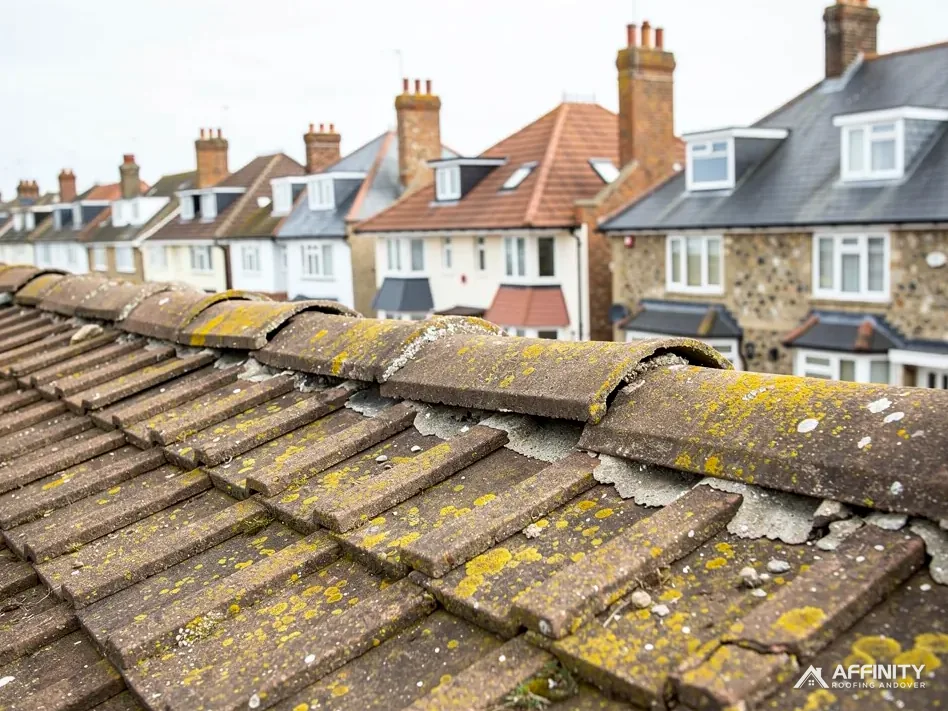
Where insulation is wet, the deck is failing or the membrane is brittle and cracked, the lasting answer is to remove the covering, repair what lies beneath and lay a new roof. A felt roof being replaced is often re-covered in single-ply.
Checking the cause first
Before any of these, we look for the cause. A roof that ponds will fail again. A leaking outlet needs the outlet fixed. A roof damaged by maintenance traffic needs walkways. Treating the symptom and leaving the cause is how repairs fail.
What sets the price
The area of roof, the type and thickness of membrane, the fixing method, how many details and penetrations there are, the condition of deck and insulation beneath, the access and any restrictions from the building's use all feed into the cost. Because details are the labour-heavy part of a membrane roof, a small roof with many penetrations can cost more per square metre than a large clear one, which is why we quote the roof in front of us and not a rate. Our written quote is one total.
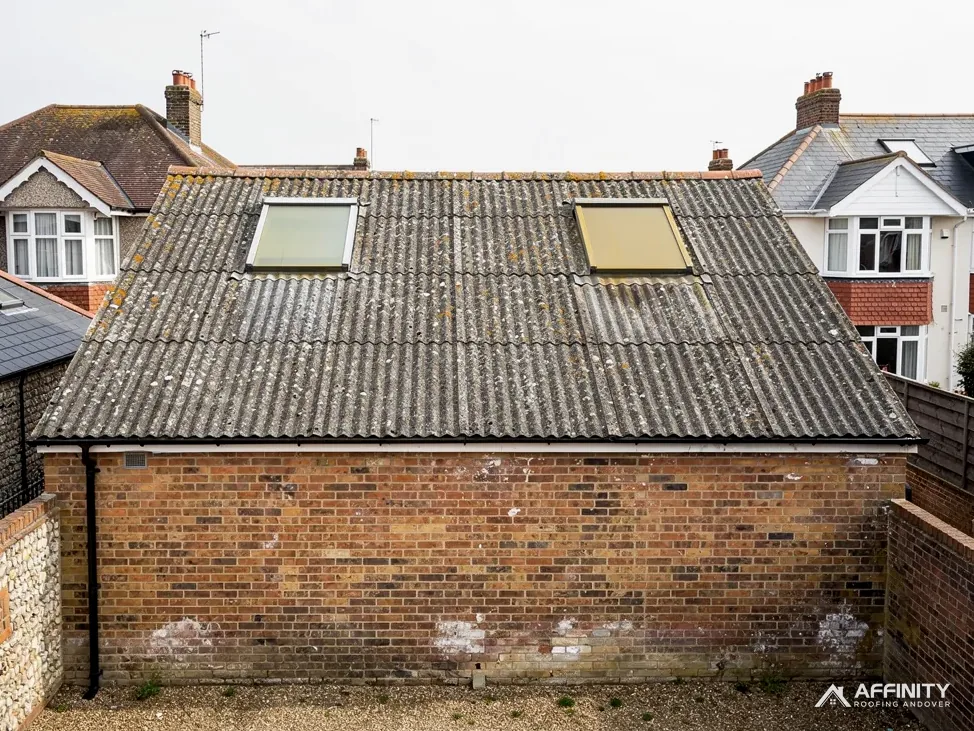
Asbestos is checked first on older buildings, because a roof laid over old asbestos cement sheets or boards raises safety issues for any work above or beside them.