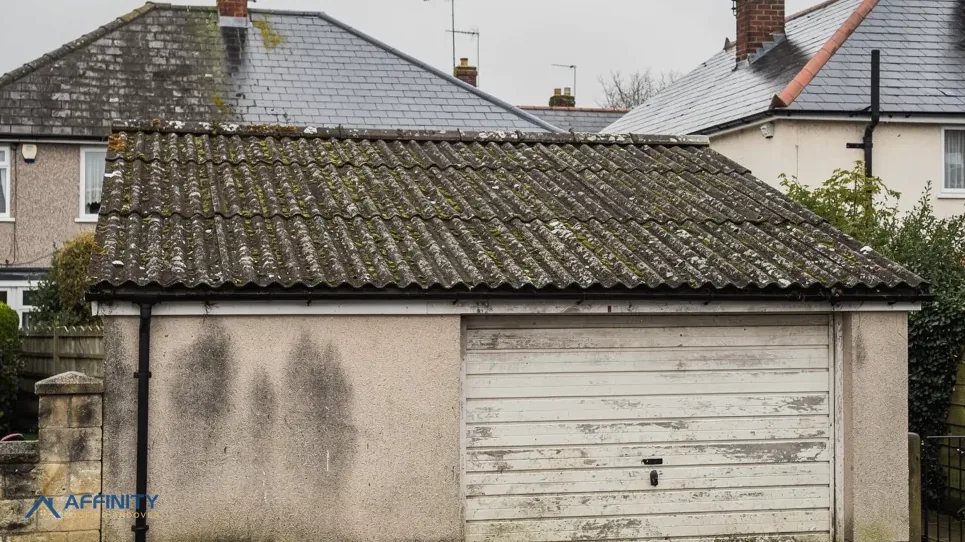
Moss is the green or brown cushion that gathers on a roof that stays damp. It likes the shaded slopes, the laps between tiles and the bottom edge of a slope where water lingers. Lichen, the flat grey, orange or yellow crust, grows alongside it. After a wet winter both can spread across a good part of a roof, and the first thought is often to hire help or to climb up with a brush.
Neither is a safe starting point. Roofs are hazardous for anyone without edge protection and proper access, and tiles are surfaces that cleaning can easily damage. There are also rules about which chemicals may be used, and about wildlife that may be living on or under the roof.
This post works through the job: whether you need a roofer, what the right method is, why you should avoid jet washing tiles, what a biocide is and who may apply one, where nesting birds and bats come in legally, and why the price depends on a survey. It also covers what a roofer can see while the moss is off, which is often the more useful part.
Does moss actually harm a roof?
A thin film of moss does little damage on its own. It matters more when it builds up. A thick mat holds water against the tile surface and keeps the roof damp for longer after rain. In a cold spell that water can freeze, and a tile that stays wet can flake at the surface over time. Moss also grows into the laps between tiles, where it can hold water against the underlay and the battens.
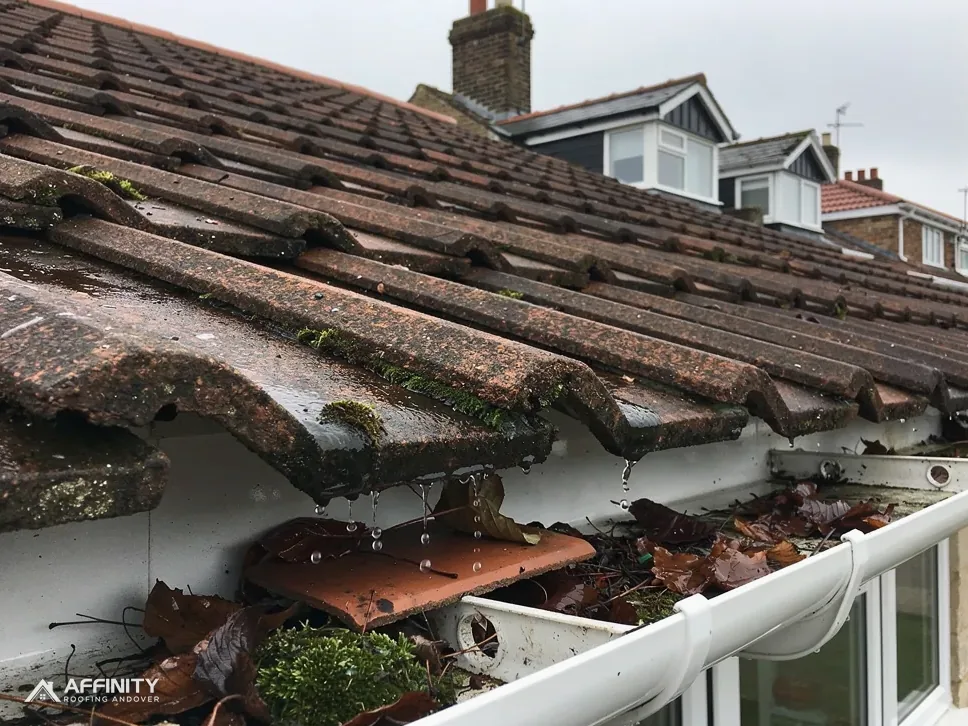
The more practical harm is to the roof's drainage. Moss and the debris that collects in it wash down into the gutters and can block them, and a blocked gutter sends water over the edge and behind it. Lumps of moss can also fall into valleys and clog them.
A roof that grows moss quickly is usually telling you something about its setting. Shade from trees, a north-facing slope, and nearby planting all keep a roof damp. After a wet winter these shaded slopes can green over, and no cleaning will stop that happening again.
None of this means a mossy roof is failing. Many mossy roofs are sound underneath. The point of cleaning is to stop the build-up, to see what is beneath it and to protect the gutters. It is a maintenance task, not a repair, and it is best combined with a check of the roof while someone is up there.
If you see moss and also see signs of trouble, such as slipped tiles, daylight in the loft or stains on the ceiling, deal with those first. Cleaning a leaking roof does not stop it leaking.
Our guide to roof cleaning methods compares the options.
The right method: scrape, brush, then treat
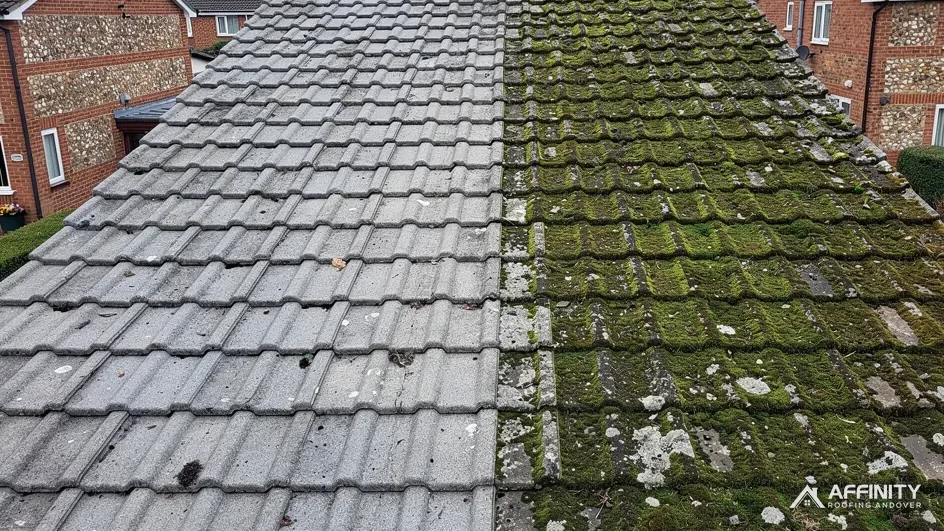
The method we use on a moss-covered roof is gentle and in stages. The bulk of the moss is lifted off by hand with a scraper, working from the ridge downwards so that loosened material falls onto the surface already cleared. The surface is then brushed to remove what is left. The debris is collected and the gutters are cleared of what fell into them.
Once the surface is clean, a biocide may be applied. This is a treatment that kills the spores and roots left behind and slows the regrowth. It is applied after the physical clean and left to work. Moss does not vanish the moment it is treated. It browns and dies back over the following weeks and washes off with the rain.
Hand work takes longer than blasting a roof with water. It is gentler on the surface of the tile, it does not drive water under the laps, and it lets the person doing it see each tile as they pass over it. A cracked tile, a slipped one and a failing hip all become obvious when someone is working along the slope with a brush.
Access is part of the job. A cleaner needs scaffolding, a tower or proper roof ladders and edge protection, because wet moss is slippery and a roof is a long way up. That is a reason to be wary of cold-callers who offer to do it from a ladder at a low price.
Different coverings need slightly different care. Slate, clay and concrete tiles all have their own limits, and a roofer should ask what you have before choosing a method.
Why jet washing tiles does damage
Blasting a roof with water looks quick and satisfying, which is why it is offered so widely. The trouble lies in what it does to the surface. Marley, the tile maker, advises against high-powered jet washes, because it believes they damage the surface of slates and tiles and shorten their working life considerably.
The surface of a concrete tile includes a coloured layer, and a strong jet can strip it. On clay, it can roughen the face and open it to water. On slate, a jet can chip or lift the edges and push water under the laps. In every case a roof that looked clean on the day can age faster afterwards and be more prone to regrowth, since the roughened surface holds moisture and spores better than the original.
There is a second problem. A jet drives water upwards and sideways into places it is meant to stay out of, such as under the laps, onto the underlay and against the batten ends. That water can soak into the roof timbers or come through into the house. A roof can be jetted clean and then start to leak.
If anyone offers to pressure wash your tiles, do not accept until they have shown the manufacturer's guidance. A cleaner who follows the maker's advice will say no to a high-powered jet.
Our guide to pressure washing roof tiles sets out the damage it can do in more detail.
Nor is a cleaned surface a reason to coat it. A coating can trap damp, and it is a decision to take on advice after the roof has been inspected.
Biocides: what they are and who may use them
Biocides are chemicals designed to kill living organisms; the ones sold for roofs go after moss, lichen and algae. They are regulated, and the rules below come from the regulation itself and from the HSE. Two rules matter for anyone choosing a roof cleaner.
First, products must be used according to their authorisation. The Biocidal Products Regulation, article 17(5), ties each biocidal product to the conditions written into its authorisation. That means the dilution, the surface, the method and the safety precautions on the label are legal requirements, not suggestions.
Second, some products are for professionals only. The HSE is clear that a product authorised for professional use only is not one a householder should ever apply. If a product on a shop shelf is labelled for general use, that is a different matter, but a professional-only product is not something to buy or borrow for a weekend. The HSE also points out that it is an offence to deal in an unapproved product at any stage, from advertising and selling it to storing or using it.
What should you ask? Ask the name of the product and check it carries approval for roof use. Ask how it goes on, which way the run-off drains and what shields plants, pets and washing. Ask how long it will take to work.
Treatment should not be expected to stop moss for ever. It slows regrowth, and in a shaded setting the moss returns. Our guide to roof biocide treatment explains what to expect.
Ask also what the roofer does if the moss comes back within the time they said. A clear answer, in writing, is a good sign.
Nests, bats and the law
Before anyone scrapes a roof, they should consider what may be living on or under it. Two kinds of wildlife matter in roofing: nesting birds and bats.
Birds first. Section 1(1) of the Wildlife and Countryside Act 1981 makes it an offence if a person intentionally harms a wild bird's nest that is in use or under construction. The word that matters is intentionally. It follows that you should look for nests before clearing moss from eaves, valleys and gaps, and stop if you find one in use.
Bats are treated more strictly. GOV.UK states that bats of every species are fully protected by law, a protection that reaches their breeding sites and resting places, and it counts roof repairs as work that can disturb them. Regulation 43 of the 2017 Habitats Regulations covers damage to a roost, and unlike the nest rule it does not turn on intent. Section 9(4) of the 1981 Act covers disturbing a bat in a roost or obstructing access to it, where a person acts intentionally or recklessly.
A roof clean works on the surface, yet it can still pass close to a bat roost. But a roof with gaps under the tiles, a loft that bats may use, or a house with known bats needs advice before any work that could block or disturb an entrance. If you suspect bats, stop and take advice.
The rule on the roof is simple: check first, and stop if wildlife is present. The roofer should tell you before the work starts how they will deal with it.
Cost, what else gets found, and what to ask
What a roof clean costs depends on the roof, so the price follows a survey. Size, height, pitch, how thick the moss is, the covering, the access and whether the gutters need clearing all change the work. Neighbouring roofs of a similar size can call for quite different amounts of work, so the survey comes first.
Gutters can be cleared on the same visit. For gutters, Which? (November 2025) gives £75 to £350, excluding VAT, to clear every one on a house, a useful guide if you also want them done. Our page on gutter cleaning explains that side of the job.
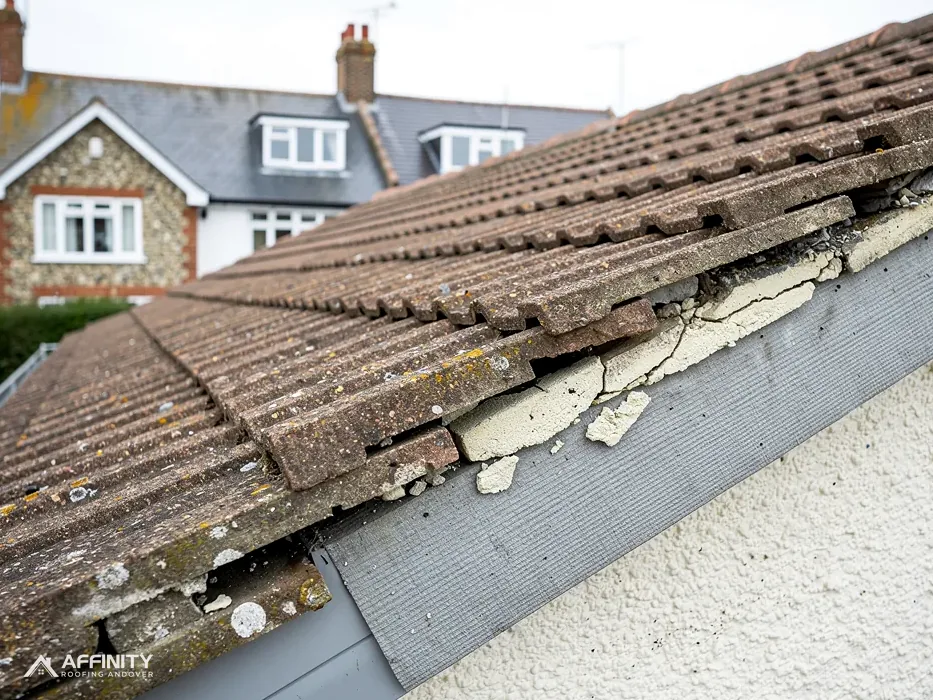
Cleaning is also the chance for a close look. Once the moss is off, cracked and slipped tiles, failing mortar, open hips and worn flashings become visible. Expect photographs of whatever turns up.
These are good questions to put to anyone who quotes.
- How will the roof be accessed, and what edge protection will be used?
- Will the moss be removed by hand, and which tools will be used?
- Which product will be applied, and is it approved for the use?
- What happens to the debris and the run-off?
- What will you do if you find nests, bats or damaged tiles?
- Is the price one total, and does it include VAT and scaffolding?
Ask also for the findings in writing with photographs. Our roof cleaning and moss removal service begins with a survey and closes with one written price.