Leaks tend to start at the worst possible moment. A brown stain spreads across a ceiling during a downpour, or water drips onto a landing carpet at night, and the instinct is to do something about the roof at once. That instinct is the one to resist. A wet roof is slippery, a dark one is hard to read, and the people who are hurt in leak emergencies are often the ones who went up to look.
The first hour is better spent on three things. Stop the water spoiling your belongings, keep clear of anything electrical that has got wet, and record what you can see. Then tell your insurer, and get a roofer to make the roof safe. None of it needs a ladder.
This post sets out that sequence with the reasoning behind each step. It covers what to photograph, how storm claims are judged, how an urgent call-out differs from a planned job in consumer law, and what national cost guides say about emergency work. It makes no promise about how quickly anyone will arrive, because that depends on the day.
Contain the water inside
Start inside the house, where you can act safely. The aim is to catch the water, protect what is below it and keep people away from the wet area.
Put a bucket, a washing-up bowl or a large pan under the drip, with a towel in the bottom to stop splashing. If water is falling in several places, move furniture, rugs and anything fragile out of the room, and cover what cannot be moved with plastic sheeting.
A ceiling that is bulging with water is a particular danger. It can come down without warning, and the water behind it can weigh a good deal. Keep everyone out of the room, put a bucket underneath, and do not stand beneath the bulge yourself.
Think about what else sits in the path of the water. Water on a ceiling may run along timber before it drips, sometimes far from the entry point, so check the rooms below and beside the stain, as well as cupboards and wardrobes on the same wall. Lift rugs and electrical goods onto something dry, and pull furniture away from walls where damp is spreading. A little time spent protecting things now can save a good deal of cost later.
Move wet bedding, clothes and papers somewhere dry. Do not use heaters to dry a wet ceiling.
If the water is coming from the loft, a look through the hatch from a stable landing may show where it drips. Do not climb into the loft in the dark, and do not step between the joists, because the ceiling below is only plasterboard.
Keep a note of the time you first noticed the leak and where. It helps later, when you speak to your insurer and your roofer.
Keep clear of wet electrics
Water and electricity do not mix, and a roof leak puts water in places where wiring runs: ceiling roses, downlights, loft cables and sockets on the wall below. Check this before you do anything else in the room.
If water is dripping near a light fitting, or you can see it running down a wall near a socket, do not touch the fitting. Do not switch the light on or off at the wall. If you can reach your consumer unit, the fuse box, safely and without standing in water, switch off the circuit that serves the wet area, or the whole supply if you are unsure. If you cannot do that safely, leave it and keep away from the wet area.
A ceiling light with water sitting in the shade is a hazard. So is a downlight that is dripping. Treat both as live until an electrician says otherwise. If anything buzzes, crackles, smells of burning or has tripped the supply, leave it off and call an electrician.
Do not use any mains-powered equipment in a wet room, including vacuum cleaners and fans. A wet-and-dry vacuum is for dry power points only, and you should not plug it in near a puddle.
Once the area is dry and the leak is stopped, have the wiring checked by an electrician before you use that circuit again. Water in a ceiling void can reach cable joints you cannot see.
This is the one step where leaving things alone is the right answer. If you are not sure, keep everyone out and make the call to someone who can check.
None of this needs you on the roof. Everything in this section can be done from the floor of your home.
Photographs and notes for your insurer
Evidence is easy to collect now and hard to recreate later. To the Institution of Structural Engineers, photographs are vital evidence in a claim, being the visual record of the damage. Take them before you move anything, and again once the water is contained.
Take a wide shot of each affected room so the damage can be placed in the house. Take close-ups of the stain, the drip, the sagging area and any damaged contents. Photograph the outside of the house, from the ground, to show the roofline and any tiles you can see missing or displaced. Add a short video if water is running, because moving water is hard to show in a still.
Write down the date, the time, the weather and what you saw. Keep receipts for anything you buy to deal with the leak, such as plastic sheeting or a dehumidifier hire, and for any emergency work.
You can use a phone for all of it. Back up the images, and do not delete the first batch once you have taken better ones.
What you see from the ground is not a diagnosis. A stain on a ceiling can be some distance from the hole in the roof, because water travels along rafters and across the underlay before it drops. It is the roofer's job to trace it. Our guide to finding a roof leak explains how that is done.
Once the photographs are saved, you are ready for the next step, which is the call to your insurer. Keep the images in one folder and note the file names against the rooms.
Telling your insurer, and storm claims
Contact your home insurer early. Which? notes that most insurers run emergency helplines, and a claim reference is useful to have when you speak to a roofer. Ask what your policy covers and what it expects you to do, including whether you may arrange a temporary repair yourself and claim back the receipt.
If the leak followed bad weather, the question will be whether it counts as a storm. Policies differ, so start with your own wording. The Financial Ombudsman Service pictures a storm as violent wind, normally joined by rain, hail or snow, while accepting that very heavy precipitation on its own can sometimes count. It also looks at the Beaufort Scale.
Reviewing a refusal, the Ombudsman asks three things: did a storm occur, is the damage what a storm would do, and did that storm do most of the harm. Complaints tend to fail where the owner knew the roof was in a bad state beforehand, or if the storm merely revealed a fault already there. Slow deterioration and wear are routine exclusions in policies.
That is why earlier photographs, receipts for past repairs and a roofer's written findings are worth keeping. They show what the roof was like beforehand.
No roofer can promise a claim will succeed, and claims are handled between you and your insurer. What we can supply is a plain written description of what we find, with photographs. If a claim is refused, the Ombudsman's helpline is 0800 023 4567. Our guide to storm damage and home insurance goes into more detail.
Why you should not climb up
It is tempting to go outside with a torch and look, or to climb onto a flat roof or a porch roof to lay a tarpaulin. Resist. Roof falls cause serious injuries, and conditions are worst in the wet and the dark.
A wet tile, slate or moss-covered surface is slippery, and wind catches a sheet of plastic and turns it into a sail. A ladder footing on wet ground can slide. A fragile roof, such as an old garage or outbuilding with corrugated sheets, can break under a person's weight. The HSE calls asbestos-cement roofs always fragile, and older buildings may contain asbestos, so stay off that kind of roof entirely.
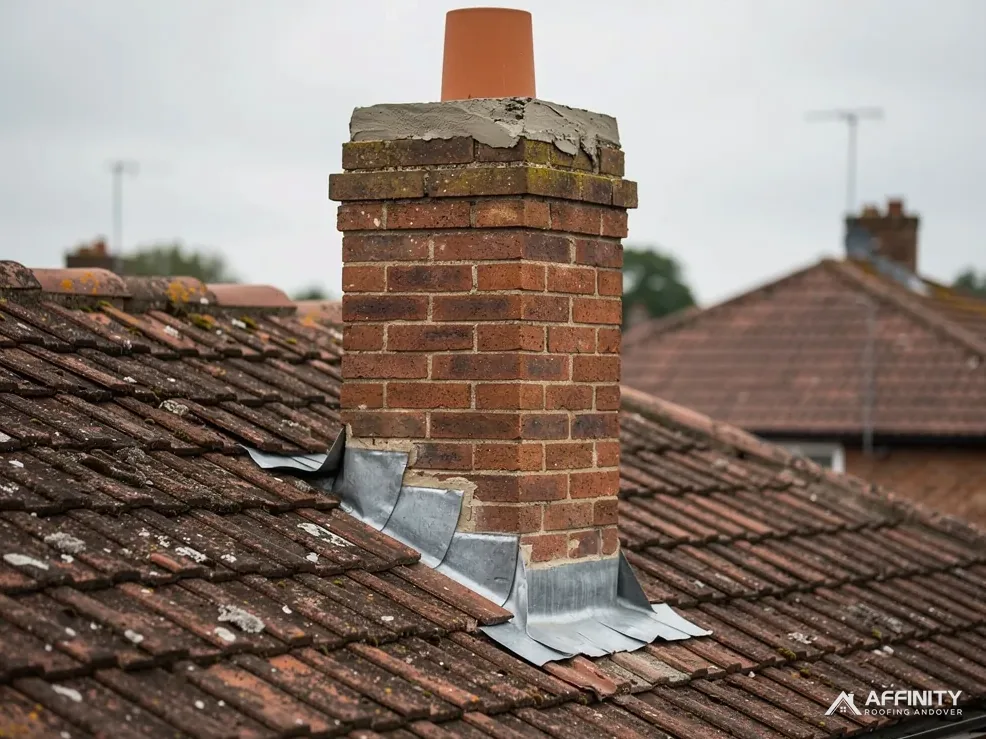
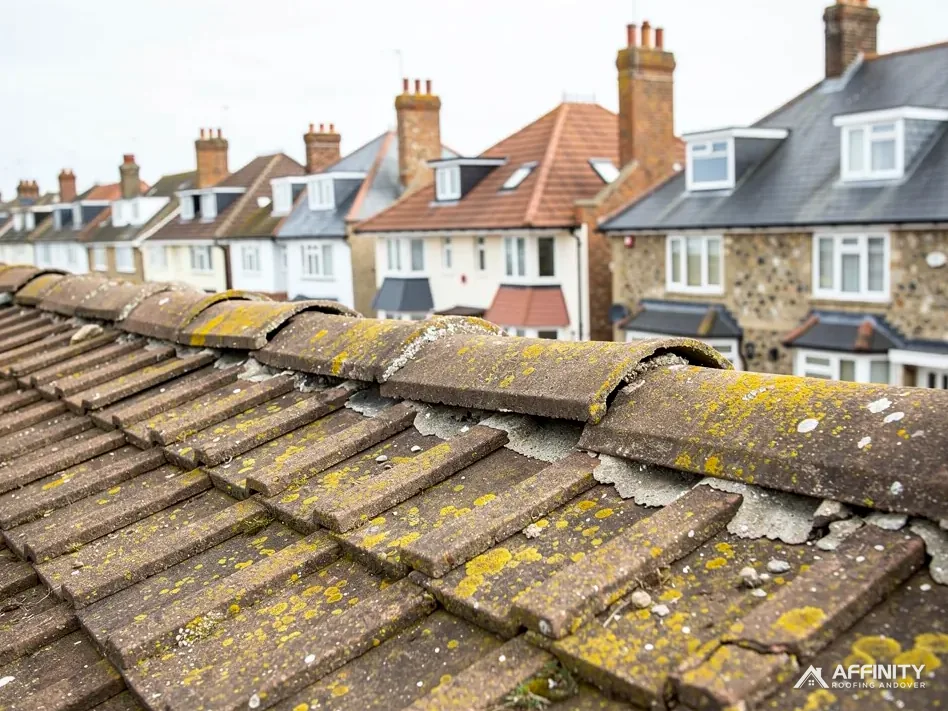
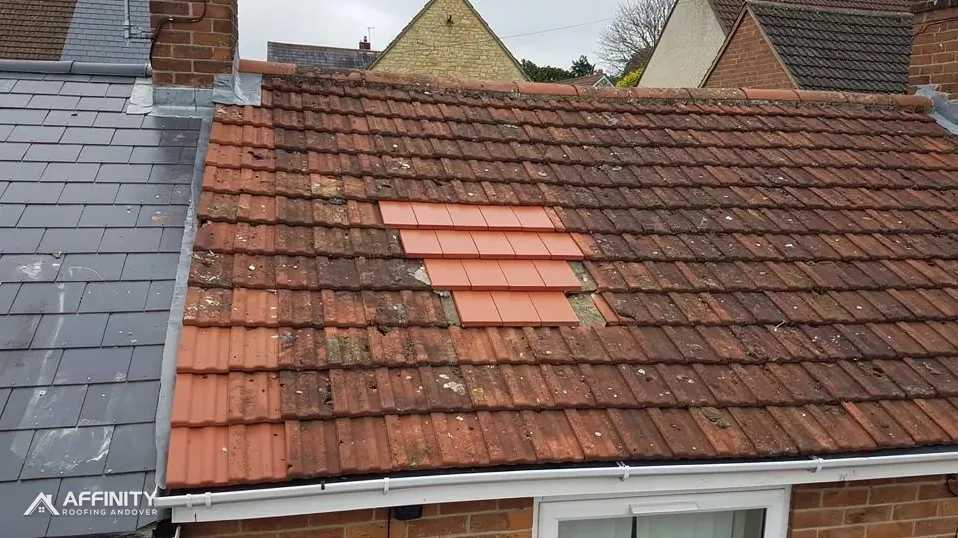
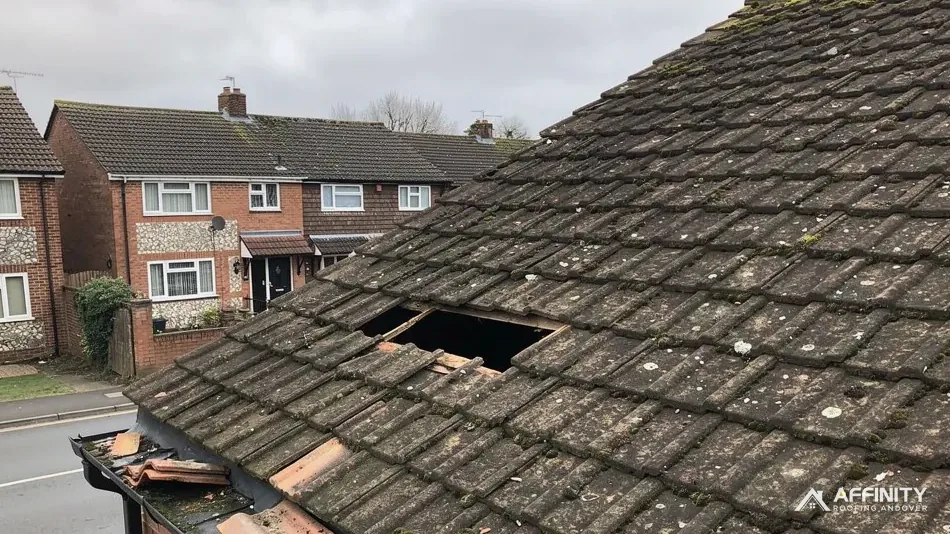
You can look from the ground, though. Use binoculars on the roof from the garden, if it is safe and dry to stand there, and look for displaced or missing tiles, a lifted ridge, a slipped chimney flashing or a blocked gutter overflowing. Do it quickly and do not stand under anything that could fall.
A loose tile can drop at any time, and a damaged chimney can shed bricks. If you can see a hazard above a path or doorway, keep people away from the area below it.
A temporary cover is a roofer's job, done with proper access, edge protection and a plan. The first job is to make the leak safe; the permanent repair follows once the roof can be inspected in daylight and dry conditions. Our guide to temporary roof repair explains what that involves.
If you must do something outside, clear a gutter or downpipe from ground level or a stable step, and nothing higher.
Calling a roofer, cost and your rights
When you call, describe what you know: where the water is coming in, when it started, what the weather was doing, and the type of roof if you know it. Have your photographs to hand. A good roofer will ask for them and explain what happens next.
The first visit is usually to make safe and to find the cause. Make-safe may mean a temporary cover, a few tiles replaced or a blocked outlet cleared. The permanent repair is then priced on a survey. MyJobQuote (Oct 2026) gives a typical UK range of £150 to £300 for an emergency call-out, and about £650 as the average roof repair in 2026. Its figure for storm repairs starts around £300, and extensive storm damage runs to £1,200 or more. These are national guides, not our prices.
Consumer law treats an urgent call-out differently from a planned job. If you specifically request a visit from a trader for urgent repairs or maintenance, regulation 28(1)(e) of the Consumer Contracts Regulations means there is no automatic 14-day cancellation right. Citizens Advice says the same: the automatic cooling-off period falls away when you have called the firm out yourself for urgent repairs. A larger job agreed afterwards, signed in your home, is a different contract with its own cancellation period.
Ask for a written price before work starts, even in an emergency, and ask what it includes. For advice, Citizens Advice runs a consumer helpline on 0808 223 1133.
If a stranger knocks and says your roof is in danger, get a second view from a firm you chose yourself.
Our roof repairs service begins with a survey, photographs and one written price.